City Venice, Italy
Cats in Venice
Venice was a city of cats for a thousand years, and then, in the nineties, most of them went. Where the few that are left live, why the rest are gone, and the shelter on the Lido where the story continues.
Where to find cats in Venice: The back campi and courtyards of Venice, Castello and Cannaregio especially, and the cat shelter at Malamocco on the Lido. When: Early morning, before the day visitors. Autumn and winter for the city; any time for the shelter. Why here: The honest version of a famous cat city: fewer than the postcards say, and a good reason why.
The short version
- Where
- The back campi and courtyards of Venice, Castello and Cannaregio especially, and the cat shelter at Malamocco on the Lido
- When
- Early morning, before the day visitors. Autumn and winter for the city; any time for the shelter
- How long
- A morning for the campi. Half a day with the ferry to the Lido and the bus to Malamocco
- What it costs
- The vaporetto pass. The shelter is free and takes donations
- Why here
- The honest version of a famous cat city: fewer than the postcards say, and a good reason why
What to bring
- Adjusted expectationsVenice had cats on every fondamenta until the nineties. It does not now. This page tells you why and where the rest are.
- Legs for the back streetsThe cats that remain are in the quiet campi of Castello and Cannaregio, a long way from San Marco.
- A vaporetto pass and a donationThe Lido is a boat ride and the shelter at Malamocco is a bus beyond that. It runs on what visitors leave.
- Seven in the morningVenice at dawn is Venetians, delivery boats and cats. By ten it is everyone else.
Why there are cats everywhere
The cats of Venice kept the rats off the grain and the plague out of the city, and the city thanked them for centuries. Then it counted them.
For most of its history Venice was full of cats: brought on the ships, kept in the warehouses, fed in the campi, and credited, fairly or not, with keeping the rats down in a city that had every reason to fear them. They were a feature of the place, on the steps of every bridge and the fondamenta of every canal, and the photographs of the fifties and sixties show them by the dozen.
In 1965 a Venetian association, DINGO, began to look after them, and from the eighties the city and the association ran a large programme of sterilisation and rehoming. It worked. The colonies shrank, the courtyards emptied, and by the two-thousands the city of cats had become a city with some cats, in the quieter corners, well looked after and few. It is the most complete version of what neutering does, and it happened to the most photographed cat city in Europe.
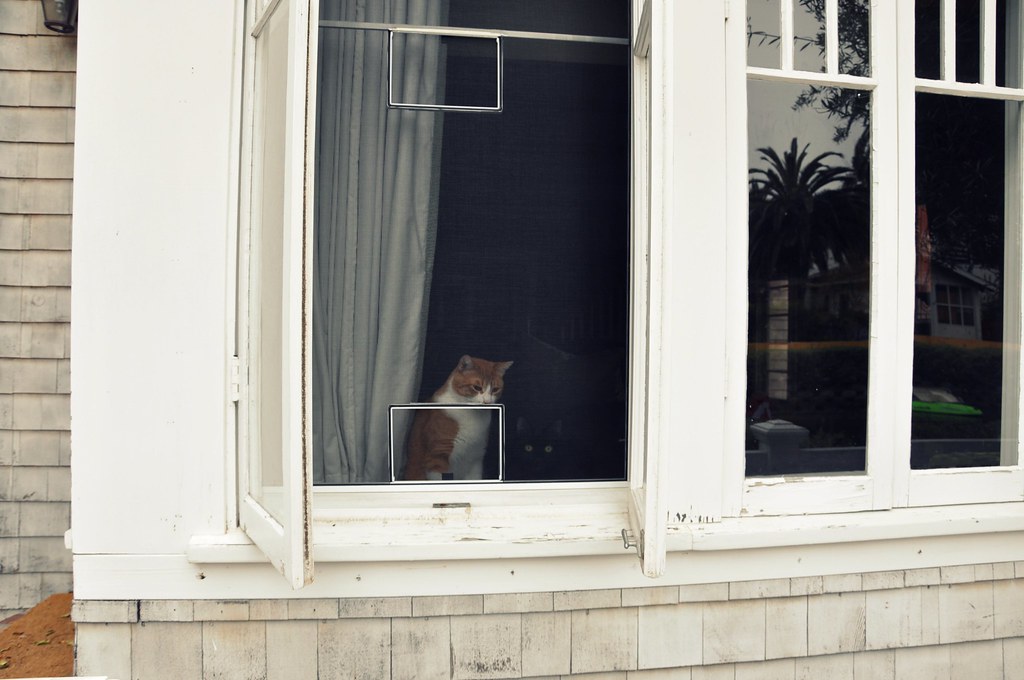
What remains is worth finding. Castello, the working end of the city beyond the Arsenale, has cats in its courtyards and around the boatyards. Cannaregio has them along the quiet northern canals. The Rialto fish market has one or two by tradition. And on the Lido, at Malamocco, DINGO runs the shelter where the city’s strays now go, open to visitors, full of cats, and the one place in Venice where the postcard is still true.
The walk
The Rialto market at dawn, north through Cannaregio, across to Castello, then the boat to the Lido and the bus to Malamocco. A long morning and a short afternoon.
- From Marco Polo airportAlilaguna boat or bus to Piazzale Roma60 minThe boat is slower and better. Every arrival in Venice should be by water.
- From Santa Lucia stationWalk into Cannaregio10 minThe quiet northern canals start a few minutes from the platforms.
- From San ZaccariaVaporetto 1 to the Lido, then bus to Malamocco45 minThe bus runs down the island. Malamocco is the old village near the far end.
The Rialto fish market
Under the arcades by the Grand Canal, open from early morning. The market cats were famous; one or two keep the tradition. Look under the stalls before the crowds come over the bridge.
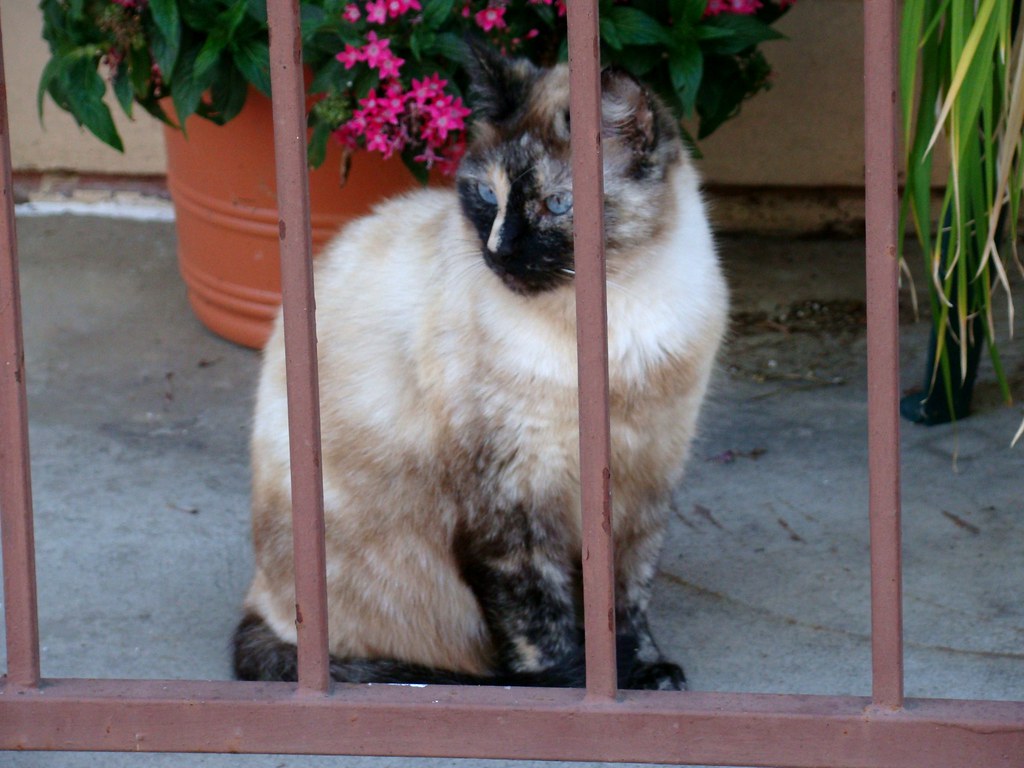
On the stones by the market. Fewer than the fishmongers remember.vmiramontes, CC BY 2.0 Campo Santa Margherita
Across to Dorsoduro and the big student campo, with its market stalls and cafés. Cats in the side courtyards; the campo itself is dogs and pigeons. A coffee and a look down every calle off it.
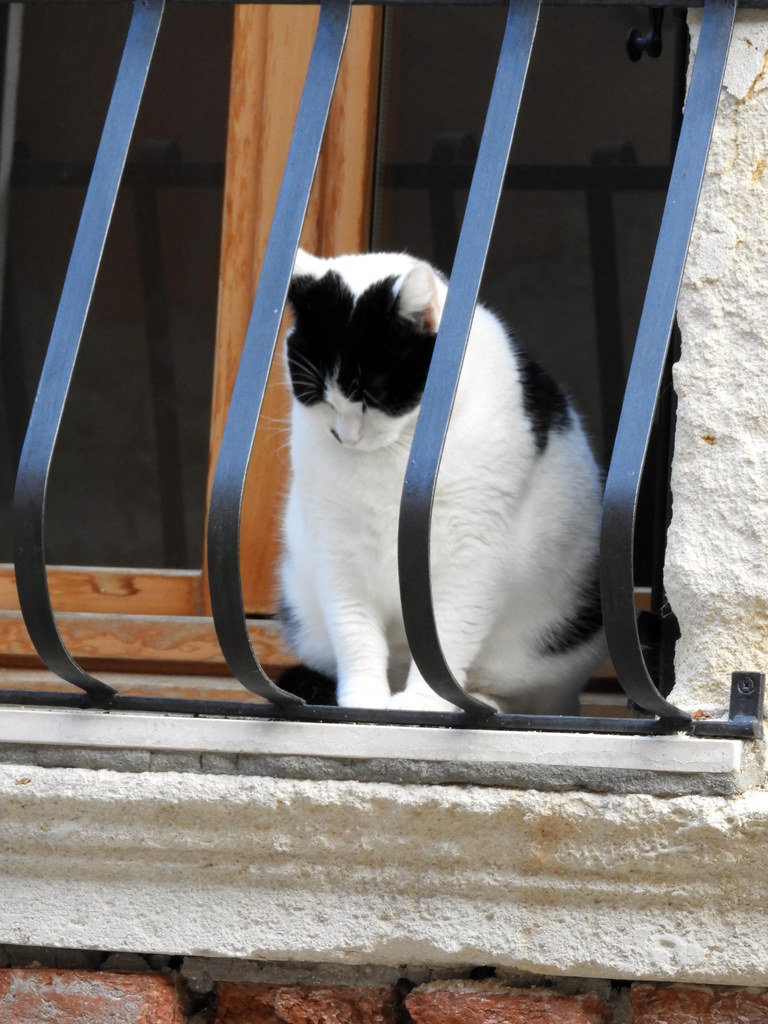
A side courtyard. This is where the remaining ones are.Reading Tom, CC BY 2.0 Campo San Polo
The largest campo after San Marco, and mostly empty of visitors. The courtyards off its corners have cats fed by the residents. Walk the edges, not the middle.
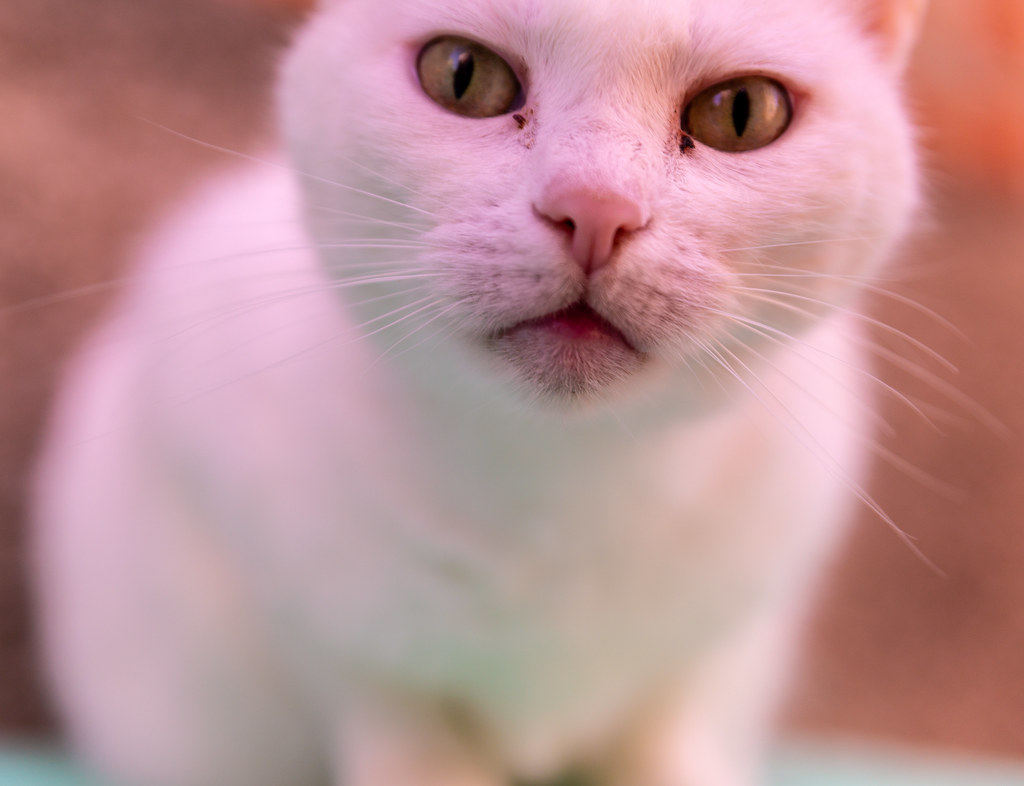
One of the few, looking up. Worth the walk.Clemens Vasters, CC BY 2.0 Malamocco, Lido
Vaporetto to the Lido, bus south to the old village of Malamocco, and DINGO’s cat shelter on the edge of it. Open to visitors; ask at the gate. This is where Venice’s cats are now.
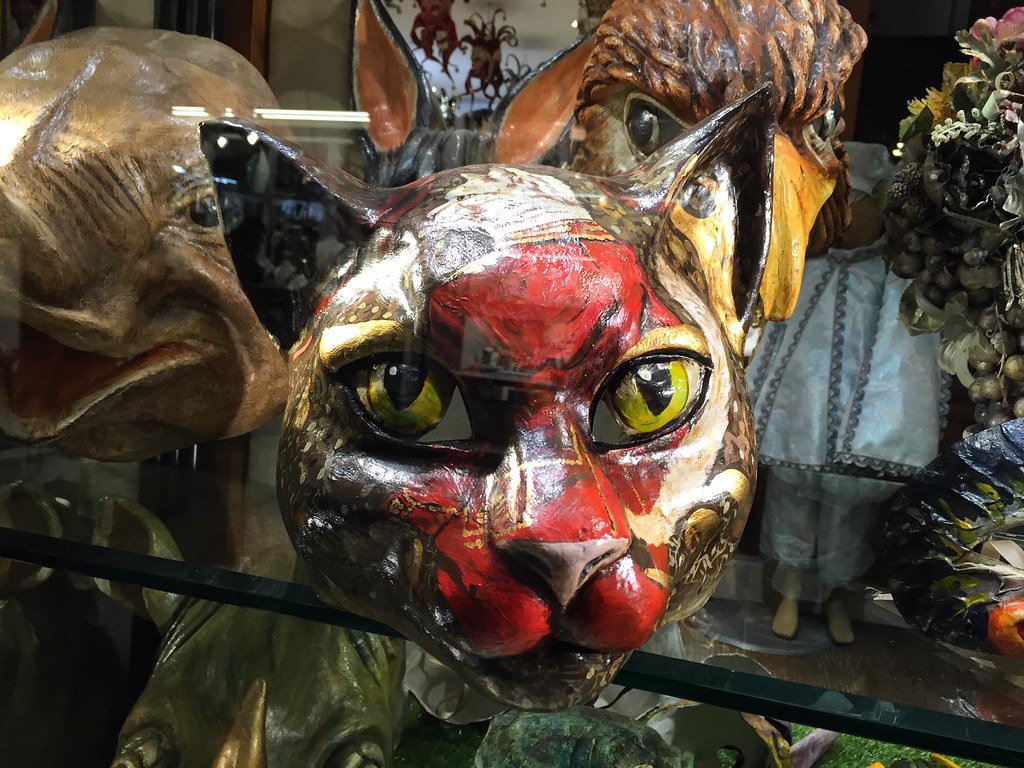
The other Venice cat: the carnival mask, which outnumbers the real ones in the shops.jdlasica, CC BY 2.0
Same numbers as the list. Worth keeping open on your phone.
The cats you will meet
What is left of a great population: a few dozen well-looked-after cats in courtyards and around the boatyards, mostly tabby and white, fed by residents and registered with DINGO, and a full shelter at Malamocco. Private in the city, sociable at the shelter.
Courtyard cats
Behind the gates of Castello and Cannaregio.
Residents’ cats, in the old sense. Look through the gate.
Market cats
Under the stalls at the Rialto, early.
One or two. A tradition, not a colony.
Shelter cats
At Malamocco, in numbers.
Adoptable, some of them. The postcard, relocated.
Everybody says Venice is a city full of cats.
Actually It was. The sterilisation programme that began in the eighties worked completely, and the city now has a few well-kept cats in quiet corners and a shelter on the Lido. Go for the honest version; it is a better story than the postcard.
How not to be the annoying one
- Do not feed in the campi. The residents do, the gulls are ferocious, and the city fines.
- Courtyards behind gates are private. Look; do not open.
- At Malamocco, ask before you go in, and leave something in the box.
- Venice is drowning in visitors. Stay off the bridges for photographs and let the delivery boats work.
- If you want a Venice cat, adopt one from DINGO. The mask is the other option.