Neighbourhood Tokoname, Aichi, Japan
Cats in Tokoname
The pottery town that makes most of Japan’s lucky cats, two train stops from Nagoya’s airport, with a street of ceramic cats set into a wall and a giant one, Tokonyan, looking over the top of it.
Where to find cats in Tokoname: Tokoname, a pottery town on the Chita peninsula south of Nagoya, between the station and the Pottery Footpath. When: A weekday, late morning, when the kilns and galleries along the footpath are open. Any season. Why here: Where the beckoning cat is actually made, in the largest numbers in Japan, with a street to prove it.
The short version
- Where
- Tokoname, a pottery town on the Chita peninsula south of Nagoya, between the station and the Pottery Footpath
- When
- A weekday, late morning, when the kilns and galleries along the footpath are open. Any season
- How long
- Two hours for the cat street and Tokonyan, half a day with the pottery footpath and lunch
- What it costs
- Free. The street, the giant cat and the footpath are public. The lucky cats in the shops are the expense
- Why here
- Where the beckoning cat is actually made, in the largest numbers in Japan, with a street to prove it
What to bring
- Money for a catThis is the town that makes them. A maneki-neko bought here is the real thing, from the kiln, and cheaper than in Tokyo.
- A flight out of CentrairTokoname is two stops from Nagoya’s airport. The last two hours before a flight are exactly this walk.
- Shoes for a slopeThe cat street climbs from the station and the pottery footpath is a hill of kilns and chimneys.
- An eye for the numbersThirty-nine blessed cats along the wall, each named for a wish, plus eleven lifelike ones hidden nearby. Count them.
Why there are cats everywhere
Most of the lucky cats in Japan come from here, so the town built the biggest one.
Tokoname has fired clay for a thousand years; it is one of the six ancient kilns of Japan, and its red clay teapots and drainage pipes are in every old house in the country. In the twentieth century it became the largest producer of maneki-neko, the beckoning cat, the white ceramic cat with the raised paw that sits in the window of every restaurant and shop from Sapporo to São Paulo. If you have ever seen one, it probably came from a kiln within a mile of the station.
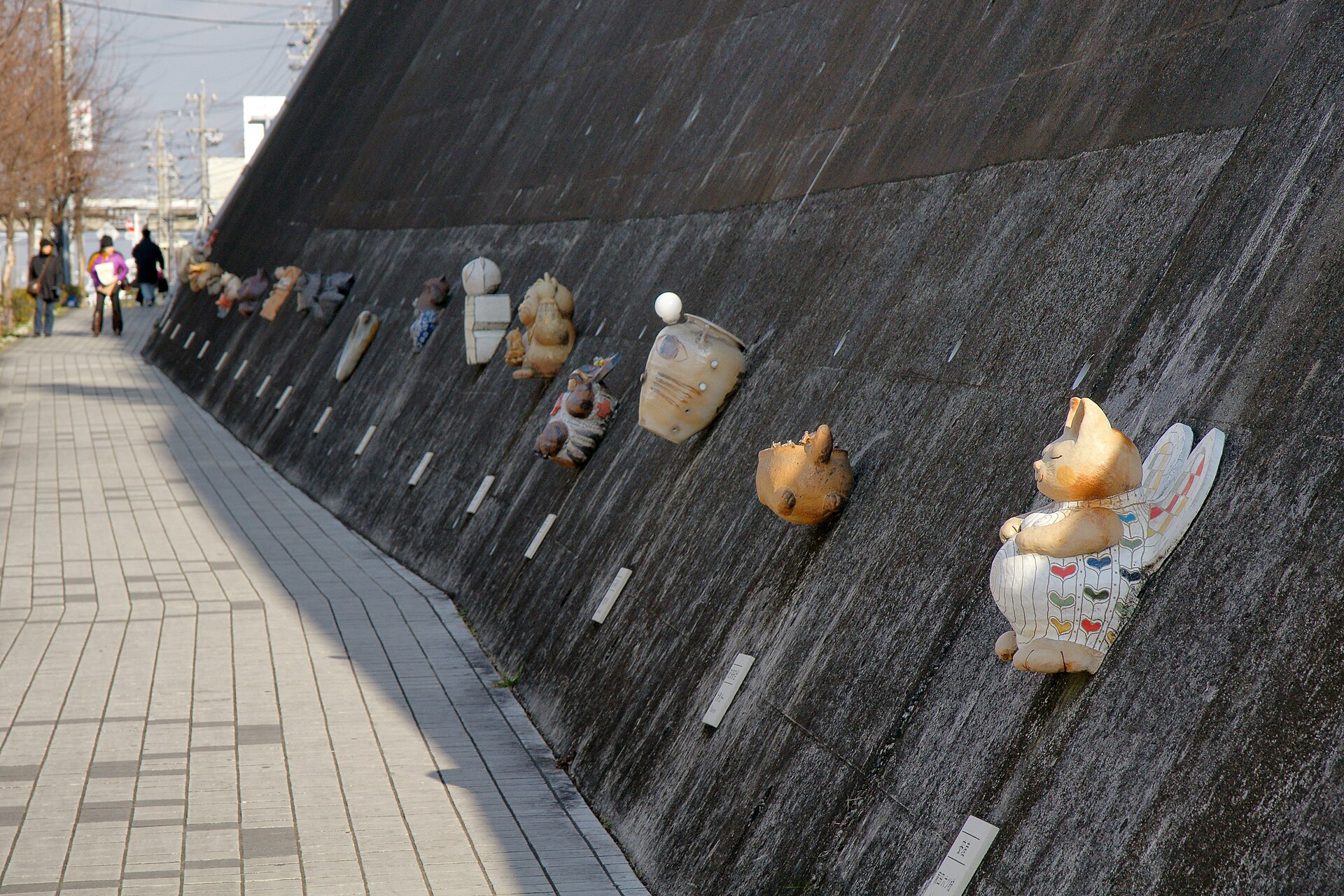
So the town made a street of them. Tokoname Manekineko Street runs up the slope from the station towards the Pottery Footpath, and along one wall are thirty-nine ceramic lucky cats made by local potters, each named for a blessing: safe travel, good marriage, a pass mark in the exam. Eleven lifelike ceramic cats are hidden along the same wall for you to find. And at the top, on the roof of the wall, is Tokonyan.
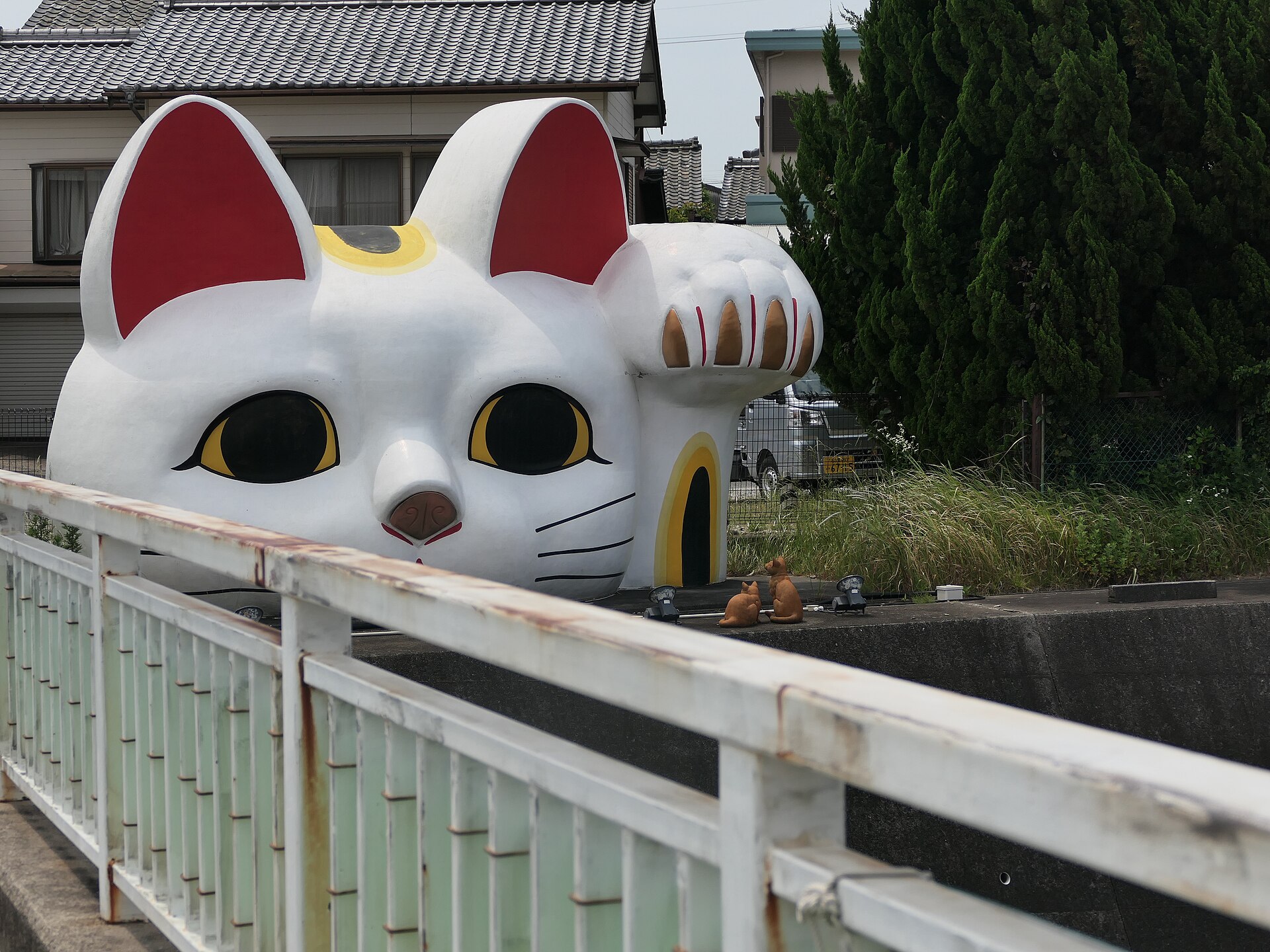
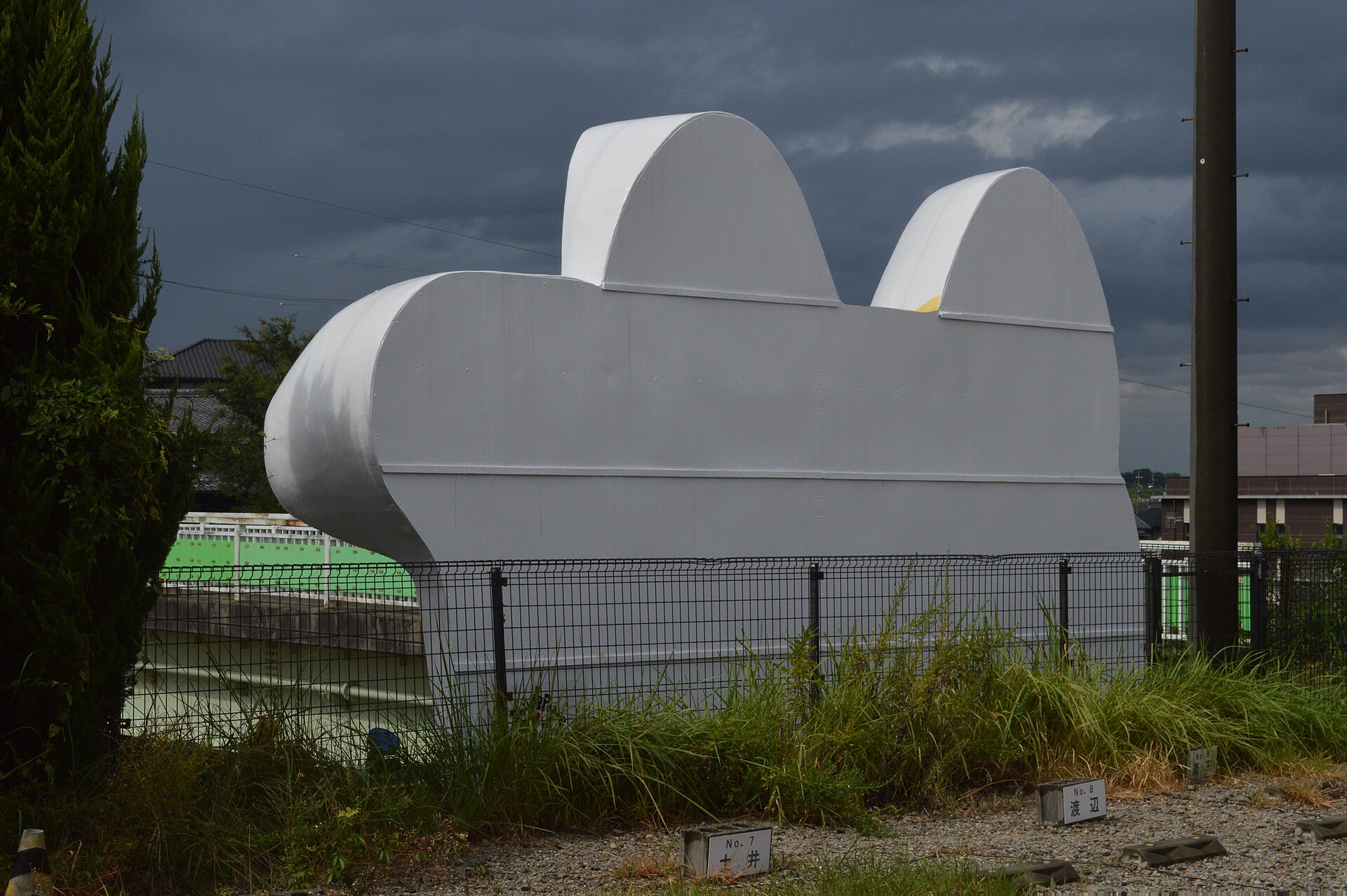
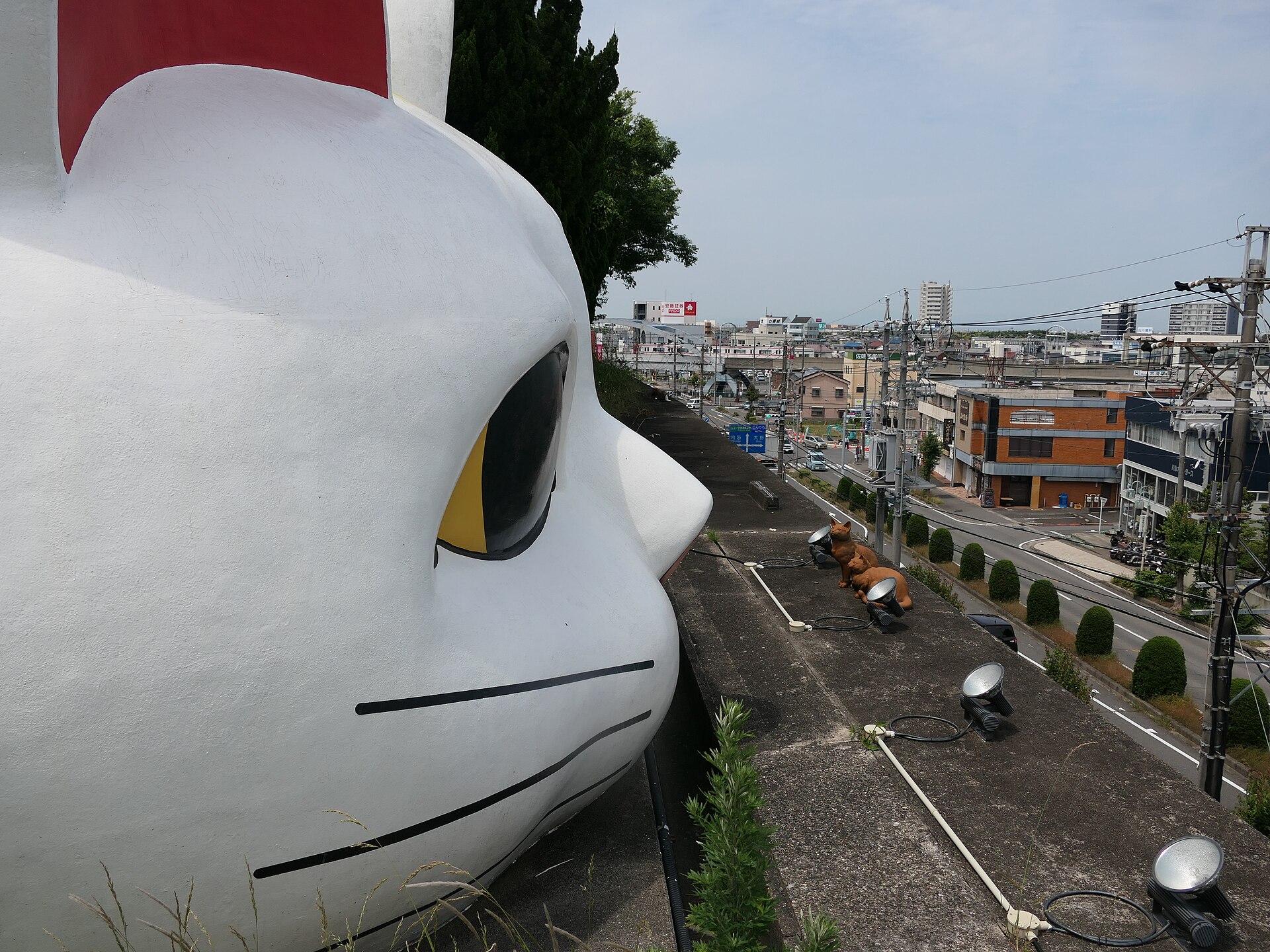
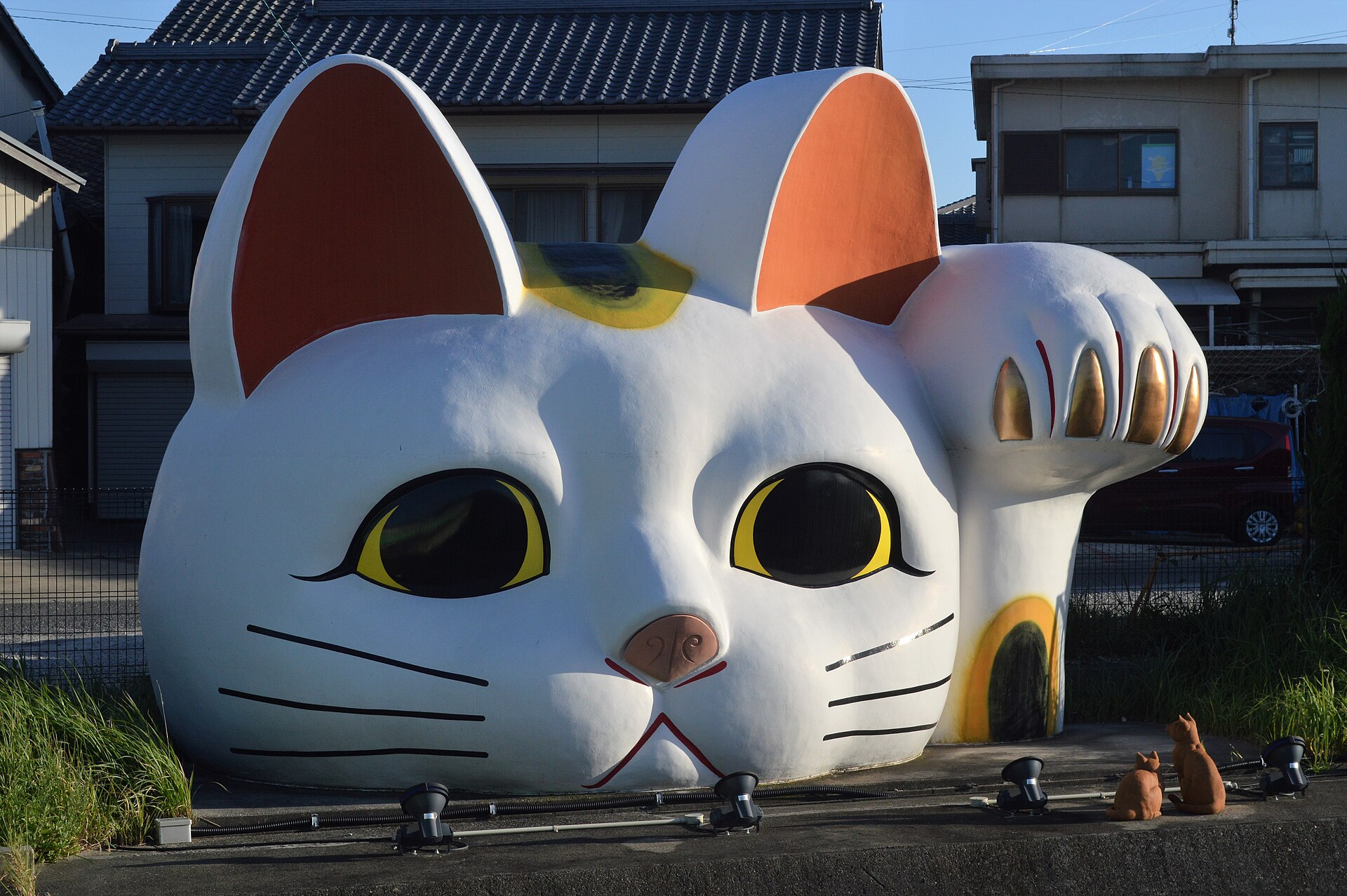
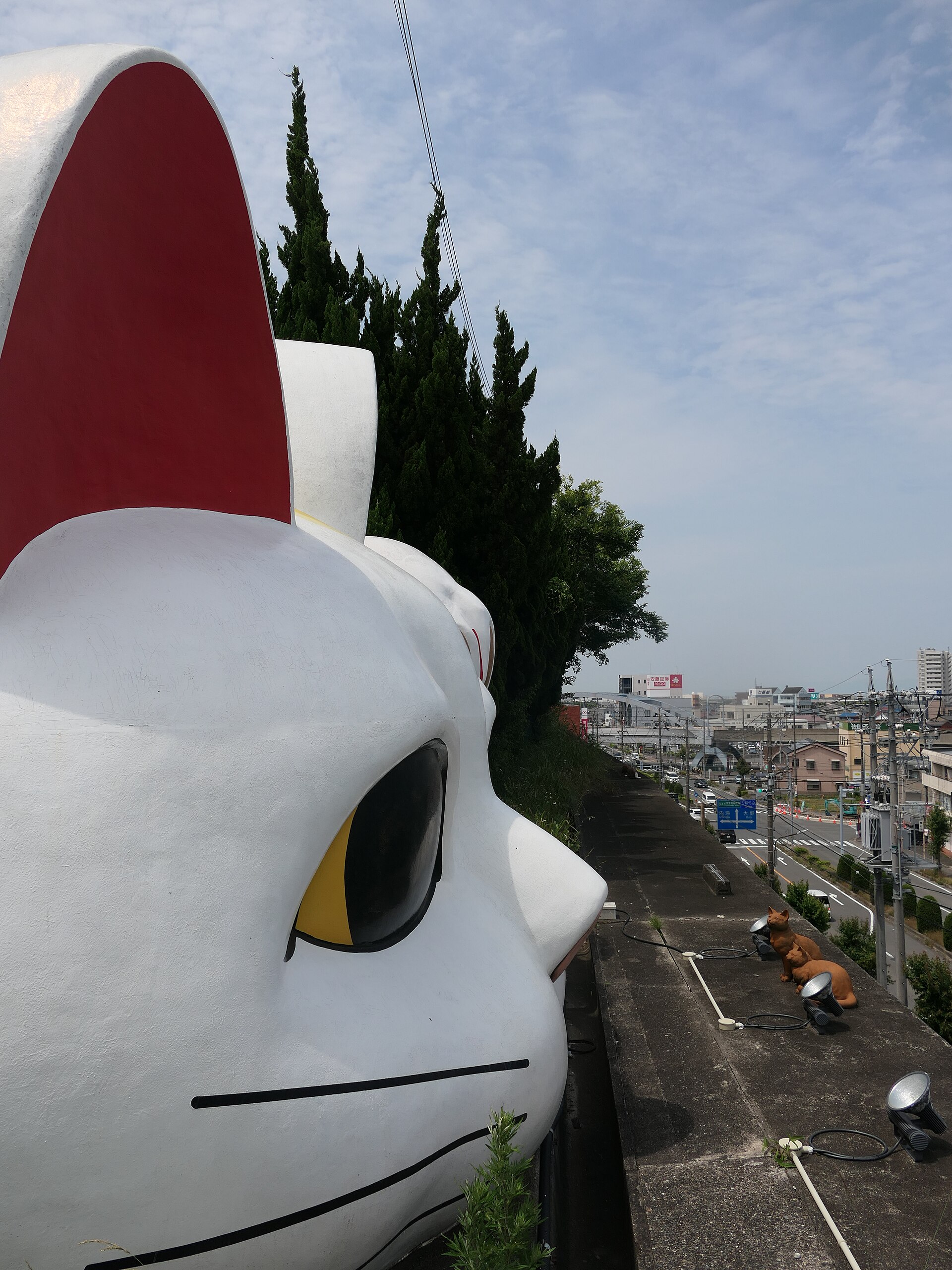
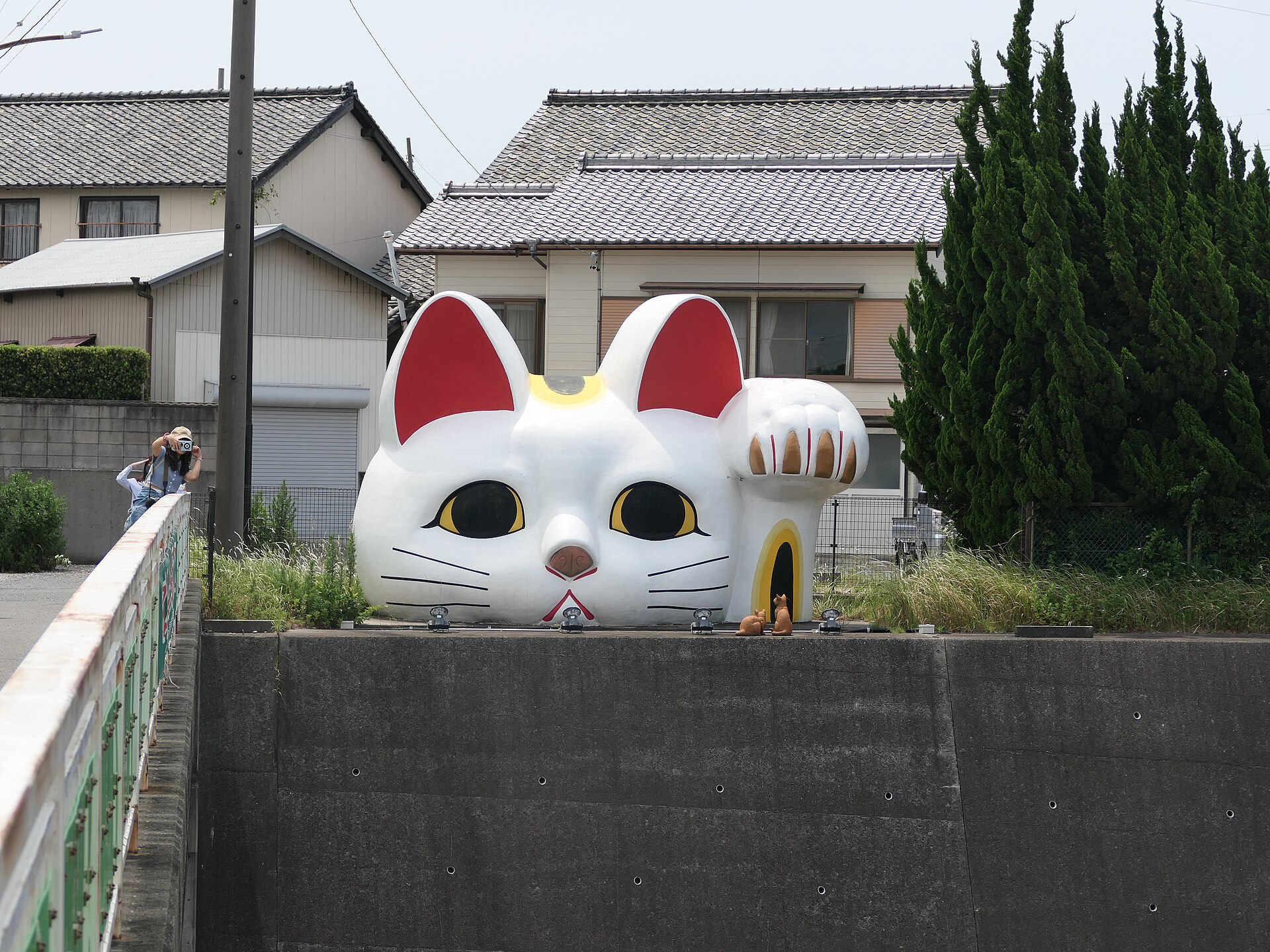
Tokonyan is a giant ceramic cat’s head and raised paw, more than three metres high and six across, peering over the wall at the street below with the calm of something that knows it is the biggest lucky cat in the country. It is the town mascot, the town landmark, and the reason people get off the train two stops before the airport.
Beyond it, the Pottery Footpath winds through a hillside of old kilns, brick chimneys, walls built of stacked pipes and shochu jars, and working potteries you can go into. This is the town that made the cat, and the walk is the point.
The walk
From the station up Manekineko Street, past the thirty-nine cats to Tokonyan, and on into the Pottery Footpath. Two hours, most of them looking up.
- From NagoyaMeitetsu Tokoname line from Meitetsu Nagoya to Tokoname30 minFrequent. The airport trains run through it; get off two stops early.
- From Centrair, Nagoya’s airportMeitetsu train two stops to Tokoname5 minThe reason this page exists. Two hours between check-in and boarding is this walk.
- From Tokoname stationWalk up Manekineko Street5 minOut of the east exit and up the slope. Tokonyan is visible before you reach him.
Tokoname Station
Off the Meitetsu train, out of the east exit, and the cat street starts at the bottom of the slope ahead. The tourist office by the station has the map of the footpath.
The town. Clay, kilns, and cats.663highland, CC BY 2.5 Manekineko Street
The slope up from the station. Along the wall on the left, thirty-nine ceramic lucky cats by local potters, each with a name and a blessing on a plaque. Look between them for the eleven lifelike cats. It is a slow two hundred metres.
From the street, looking up. He is looking down.Hyppolyte de Saint-Rambert, CC BY 4.0 Tokonyan
At the top of the wall, the giant head and paw. Stand back on the far pavement for the photograph; the street is the only place you can get all of it in.
Tokonyan. Three metres of blessing.Hyppolyte de Saint-Rambert, CC BY 4.0 The Pottery Footpath
Past Tokonyan into the hill of kilns: the climbing kiln, the walls of stacked pipes, the brick chimneys, the potteries with their doors open. Buy a cat from the person who made it.
Close up. Ceramic, hand-finished, and made here.Hyppolyte de Saint-Rambert, CC BY 4.0
Same numbers as the list. Worth keeping open on your phone.
The cats you will meet
Ceramic, in the main. Thirty-nine blessed lucky cats on the wall, eleven hidden lifelike ones, one giant, and the thousands for sale in the kilns and shops along the footpath. There are living cats in the pottery town too, in the yards of the kilns, and they are as unbothered by the ceramic ones as you would expect.
The thirty-nine
Ceramic lucky cats along the wall, each a different design.
Named for blessings. Find the one for the thing you need.
The eleven
Lifelike ceramic cats hidden along the same wall.
Harder. Most people find seven and give up.
Tokonyan
A three-metre ceramic head and paw over the wall.
The one. You will not need directions.
Kiln cats
Real, tabby, asleep in a pottery yard.
The footpath has a few. They are not for sale.
Everybody says The lucky cat comes from Tokyo.
Actually The story comes from Gotokuji in Tokyo, and there is a guide to that too. The cats themselves, the ceramic ones in every window, are made here, in Tokoname, in greater numbers than anywhere else in Japan. Tokyo has the legend; Tokoname has the kilns.
How not to be the annoying one
- The wall cats are art by local potters. Photograph them; do not touch them, and do not try to prise one off.
- The potteries on the footpath are workshops. Go in when the door is open, and buy from the maker.
- The kiln cats are working cats in working yards. Leave them be.
- Stand on the far pavement for Tokonyan, not in the road. It is a road.