Neighbourhood Mykonos, Greece
Cats in Mykonos Old Town
The whitewashed maze of Chora, where the cats sit in the blue doorways, supervise the fish market and claim the cafe terraces, and a charity founded in 2005 keeps feeding stations going through the winter when the island empties.
Where to find cats in Mykonos Old Town: Chora, the old town of Mykonos, from the old port through the lanes to Little Venice and the windmills. When: Early morning, before the shops open and the lanes fill. May, June, September, October. Winter if you want the island to yourself. Why here: Cats on every whitewashed step of the most photographed town in the Cyclades, looked after year-round by people who stay when the island empties.
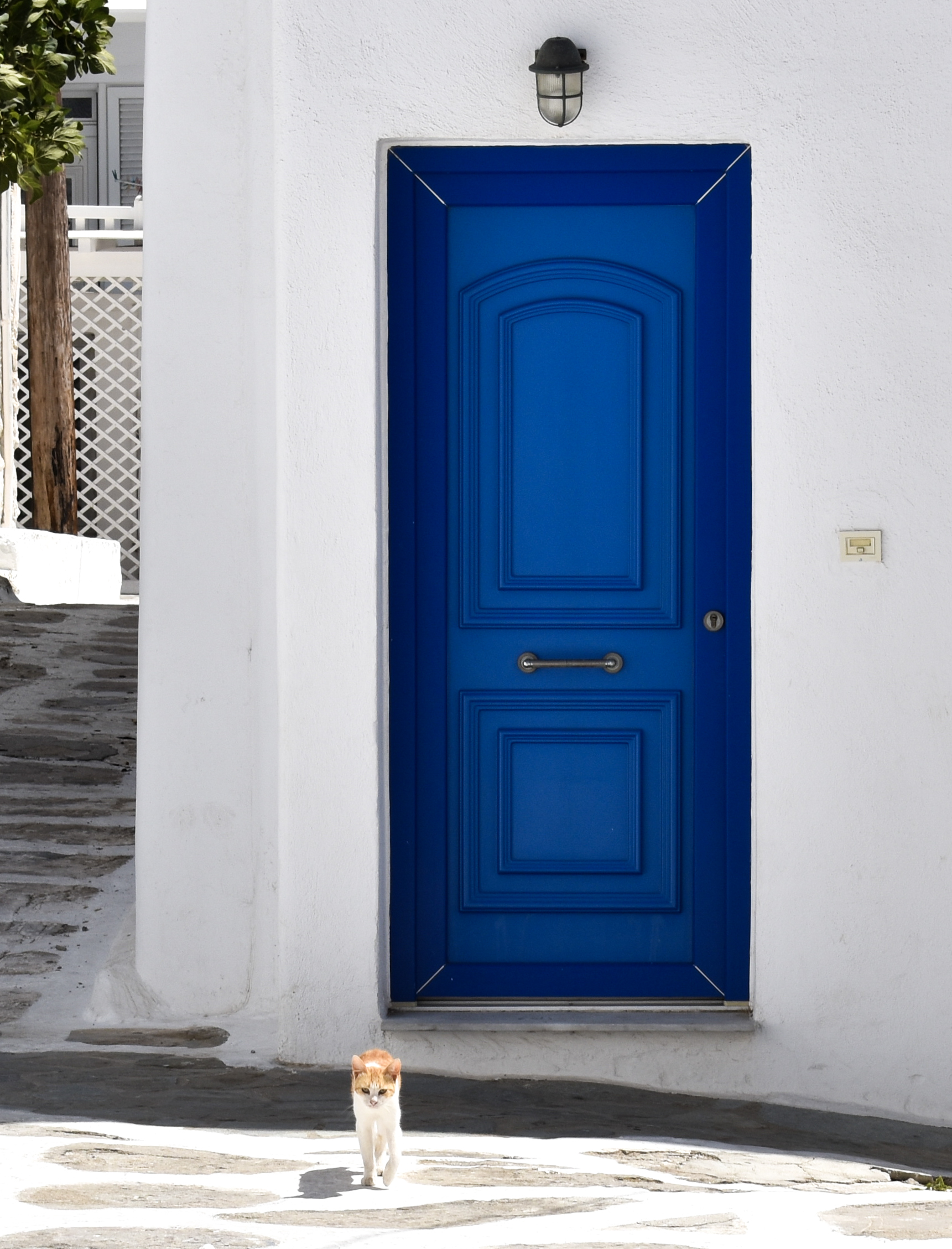
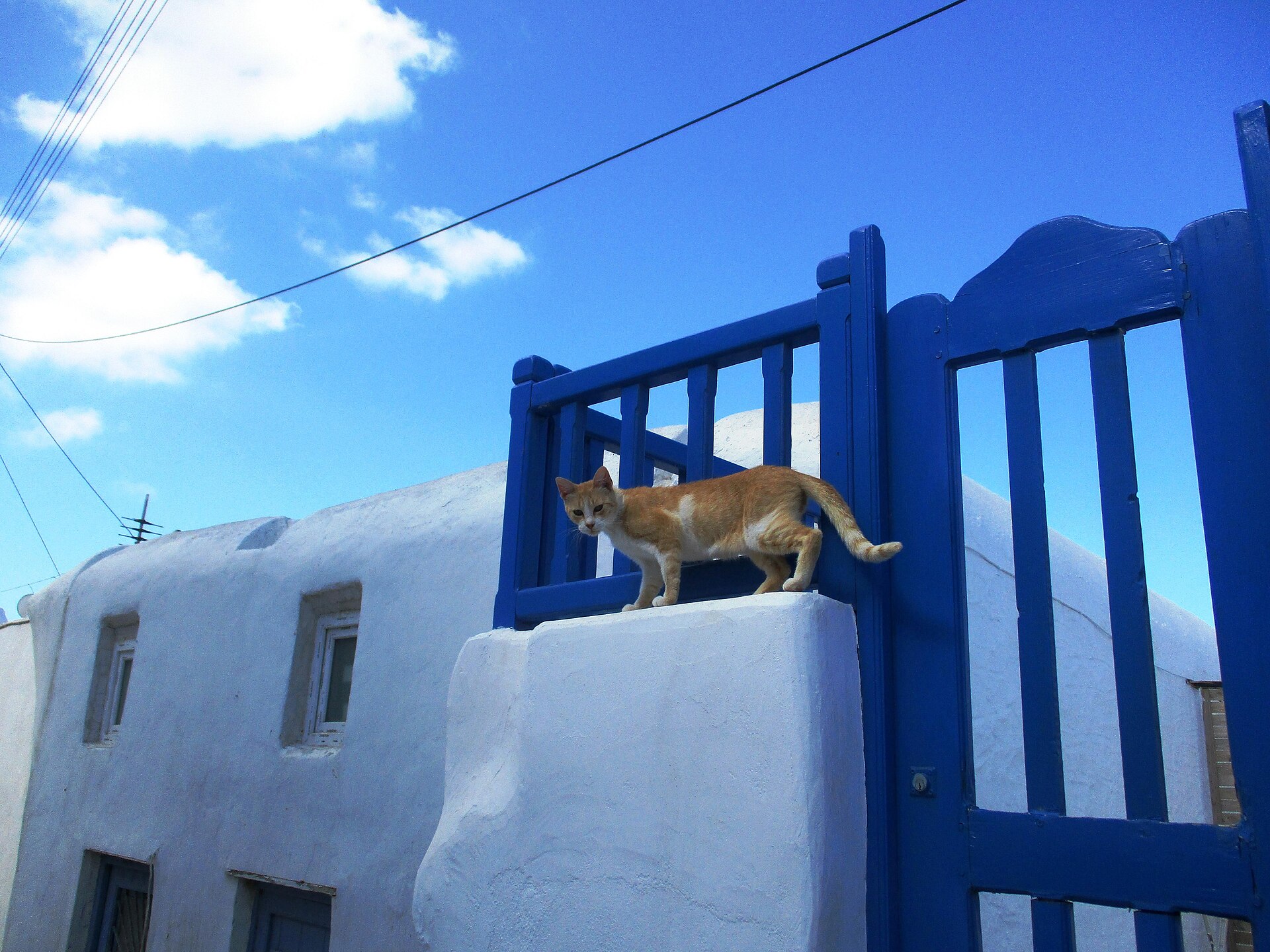
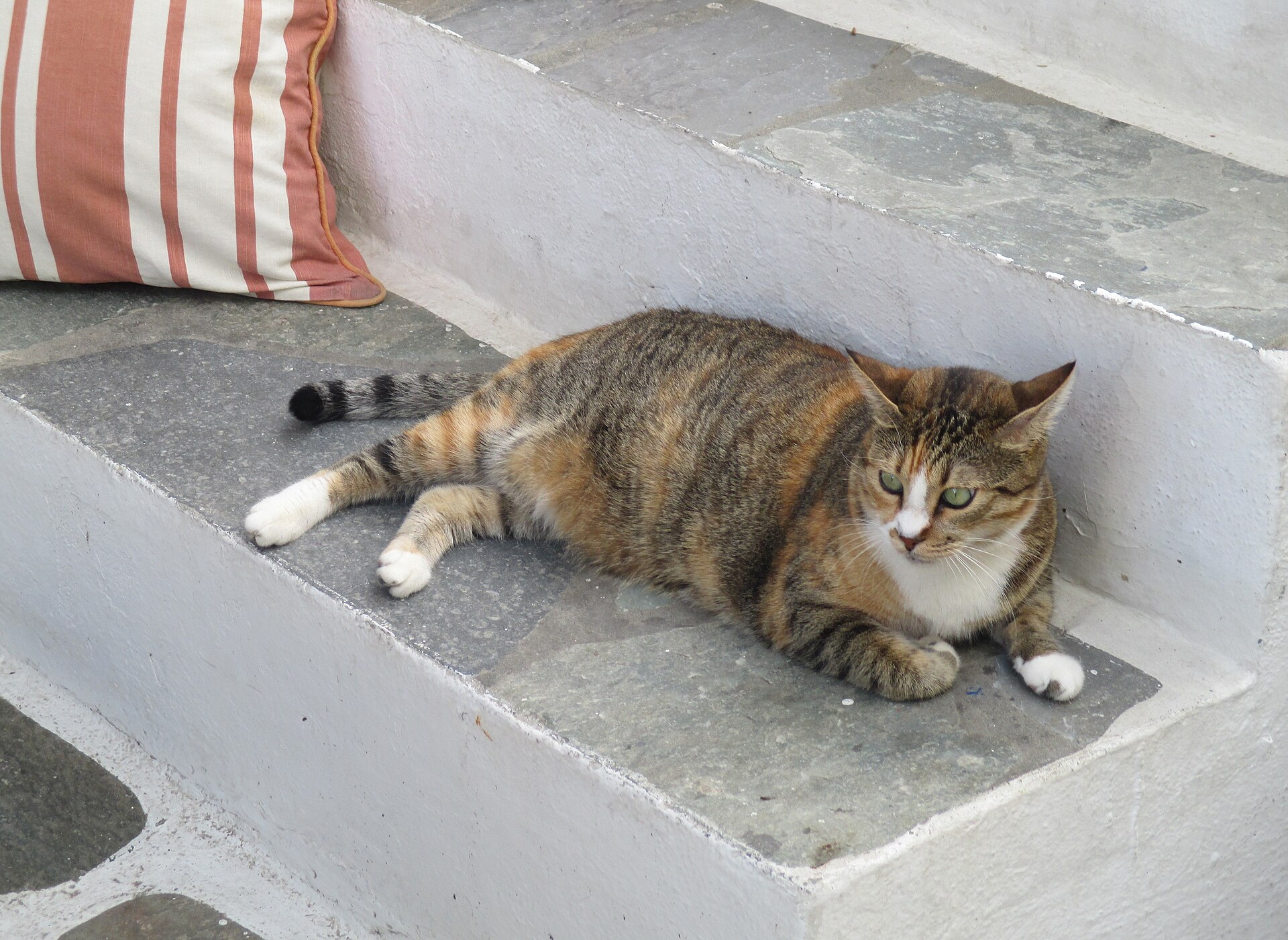
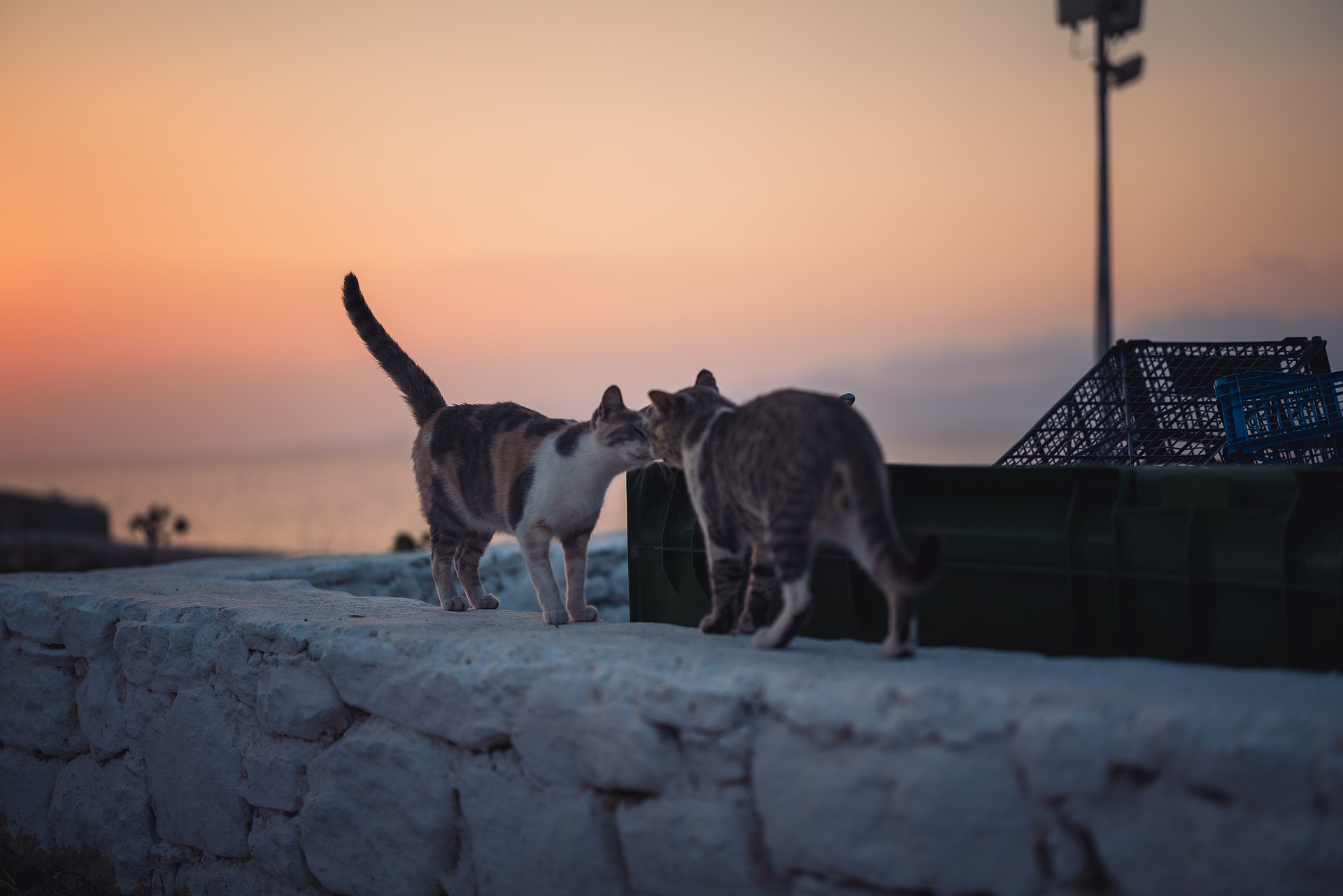
The short version
- Where
- Chora, the old town of Mykonos, from the old port through the lanes to Little Venice and the windmills
- When
- Early morning, before the shops open and the lanes fill. May, June, September, October. Winter if you want the island to yourself
- How long
- A morning for the lanes and the cats. The rest of the day is the island’s problem
- What it costs
- The town is free. Everything else on Mykonos is the most expensive version of itself
- Why here
- Cats on every whitewashed step of the most photographed town in the Cyclades, looked after year-round by people who stay when the island empties
What to bring
- Seven in the morningChora at dawn is white lanes, blue doors and cats. Chora at noon is a queue for a photograph of the same thing.
- Dry food for the stationsMykonos Animal Welfare keeps feeding stations across the island. Top one up; do not start your own.
- Money for the charityThe winter here is the problem. The island empties, the restaurants shut, and the cats are fed by the few who stay.
- Flat shoes for polished marbleThe lanes are whitewashed marble and stone, and after a summer of feet they are as slippery as they look.
Why there are cats everywhere
Mykonos has a great many more cats than the numbers people quote, because nobody has ever counted.
The figure that gets repeated is fifty thousand, which would be more cats than people by a factor of five and is almost certainly folklore. What is true is that the Cyclades are full of cats, that a tourist island with three hundred tavernas has more food than most, and that Chora, the old town, is a maze of whitewashed lanes, blue doors, sunny steps and cafe terraces that is a cat’s idea of an architect’s drawing.
They are in the doorways from first light. They supervise the fish market by the old port, they claim the terraces at Little Venice, where the houses stand in the sea, and they sit on the windmill hill in the evening while the whole island photographs the sunset behind them. In summer they are the best-fed cats in Greece.
Winter is the other story. The island empties in October, the tavernas close, and a cat that was fat on a terrace in August is on its own by November. Mykonos Animal Welfare, a registered charity started in 2005, is the reason that is survivable: it neuters, treats, rehomes, and keeps feeding stations stocked across the island through the months when nobody else is here. Visitors can help by topping up a station, or by giving money for the months they will not see.
This is a page about a summer town, written for the summer. Just know that the cats in your photographs are here in January too, and somebody is feeding them.
The walk
From the old port through the lanes of Chora to the church of Paraportiani, along the water at Little Venice, and up to the windmills. An hour on the map, a morning in the doorways.
- From Mykonos airportTaxi or bus to Chora15 minFour kilometres. Taxis are scarce in season; the bus is fine.
- From The new port at TourlosSea bus or local bus to the old port15 minWhere the big ferries and cruise ships land. The sea bus is the pretty way.
- From Piraeus or RafinaFerry180 minThree to five hours depending on the boat. Rafina is closer and cheaper to reach from the airport.
The old port and the fish market
Where the small boats land and the fish is sold on the quay in the morning. The cats are here first, waiting for the sorting, and the pelican, if it is about, has the same idea.
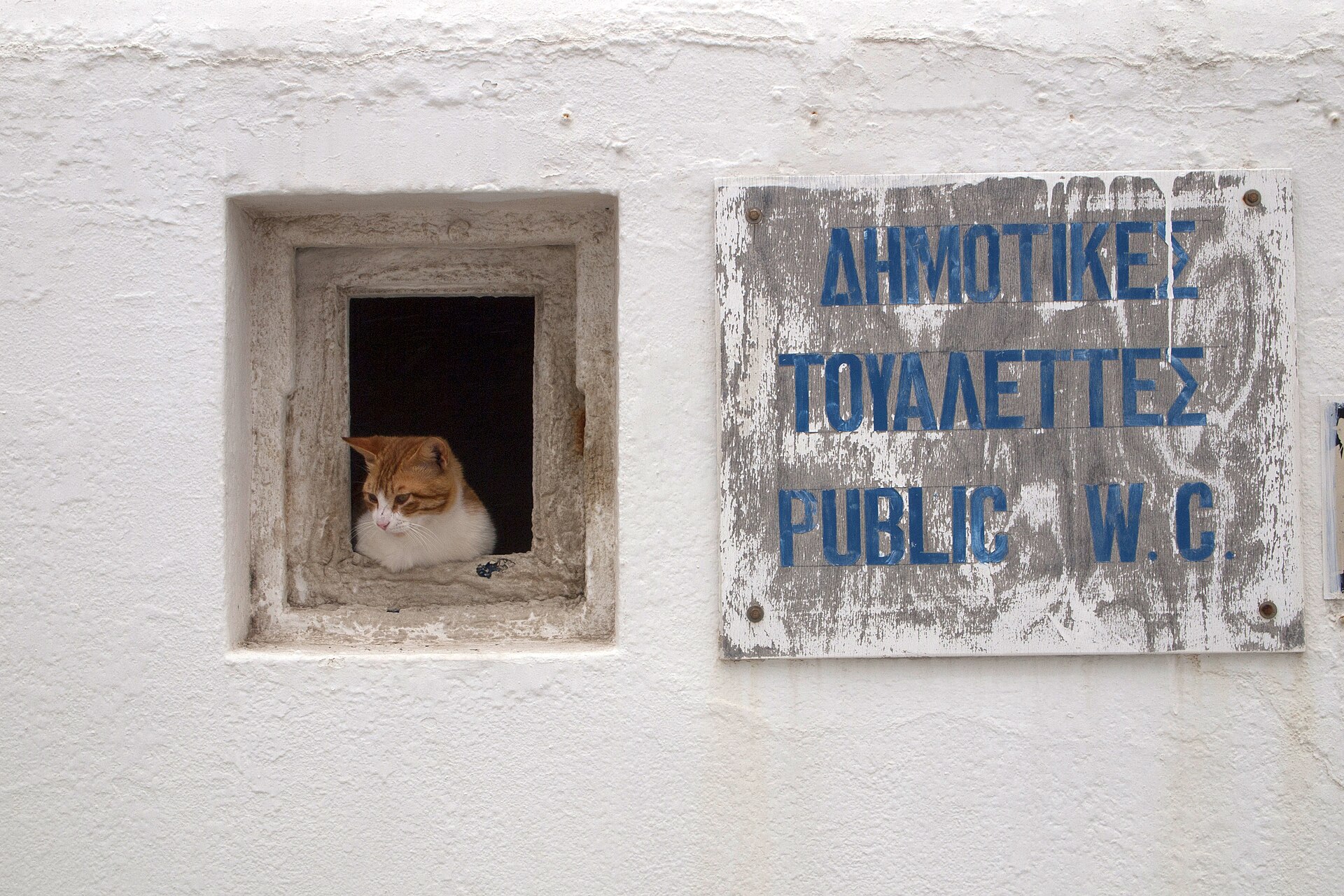
The port end of town. Fish, boats, and everybody who eats fish.Bryan Ledgard, CC BY 2.0 The lanes of Chora
Into the maze. The lanes were built to confuse pirates and they still work. White walls, blue doors, bougainvillea, and a cat on every second step. Get lost on purpose; it is a small town and the sea is always downhill.
In the lanes. Built to lose pirates; loses tourists just as well.Radosław Botev, CC BY 3.0 pl Paraportiani
The white church that is five churches melted together, on the point at the edge of the sea. Cats on its steps in the morning light and on the walls around it. The most painted building in the Cyclades.
By the church. Whitewash, cat, sea. In that order.Tomisti, CC BY-SA 4.0 Little Venice
The row of old captains’ houses with their balconies over the water, now bars. Cats on the terraces and the sea wall, and the waves under the tables. Coffee here in the morning; the sunset crowd comes later.
On the wall at Little Venice. The terraces are theirs before the bars open.Sanshiro KUBOTA from London, UK, CC BY 2.0 The windmills
Up the hill to Kato Mili, the row of windmills above Little Venice. Cats in the grass and on the walls, and the whole town below. Come back at sunset with everybody else, or do not, and remember it empty.
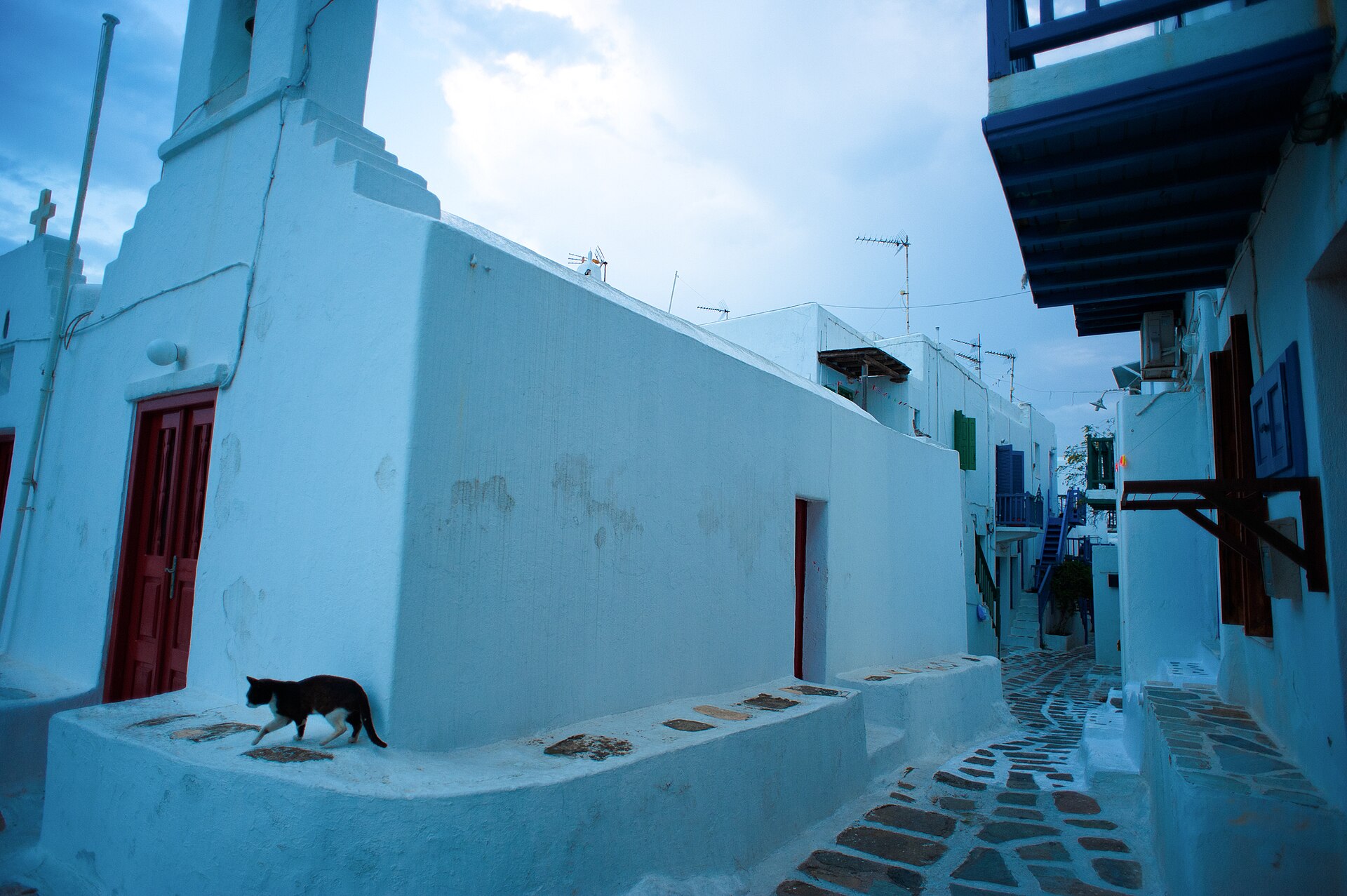
Dusk in Chora. The lanes go quiet and the cats come out.Mstyslav Chernov, CC BY-SA 3.0
Same numbers as the list. Worth keeping open on your phone.
The cats you will meet
Cycladic cats: short-haired, lean, tabby and ginger and white, sun-bleached, and in summer the best-fed animals in Greece. Sociable to the point of joining you at the table. Most of the town ones are neutered; the ear-tip is the sign.
Doorway cats
On a whitewashed step, beside a blue door.
The photograph. Every lane has one, and it is the same photograph.
Terrace cats
Well fed, on a chair at Little Venice.
They own the bars before the bars open.
Market cats
Leaner, quicker, by the fish.
The old port, in the morning. Competing with a pelican.
Everybody says Mykonos has fifty thousand cats.
Actually Nobody has counted, and that figure would be five cats for every resident. There are a great many, more than the island can feed in winter without help, and that is the true number that matters: the one on the charity’s feeding rota in January.
How not to be the annoying one
- Feed the stations, not the steps. Mykonos Animal Welfare keeps them; find one and top it up.
- The doorways are front doors. Photograph the cat; do not lean on the door.
- Give for the winter. The summer cats you photograph are fed in January by a charity and a few residents, and they need money more than biscuits.
- Do not take a kitten to the ferry. The charity rehomes, with papers, abroad.
- Go early. Everything about this town is better at seven than at noon, and the cats agree.