Neighbourhood Chefchaouen, Morocco
Cats in Chefchaouen
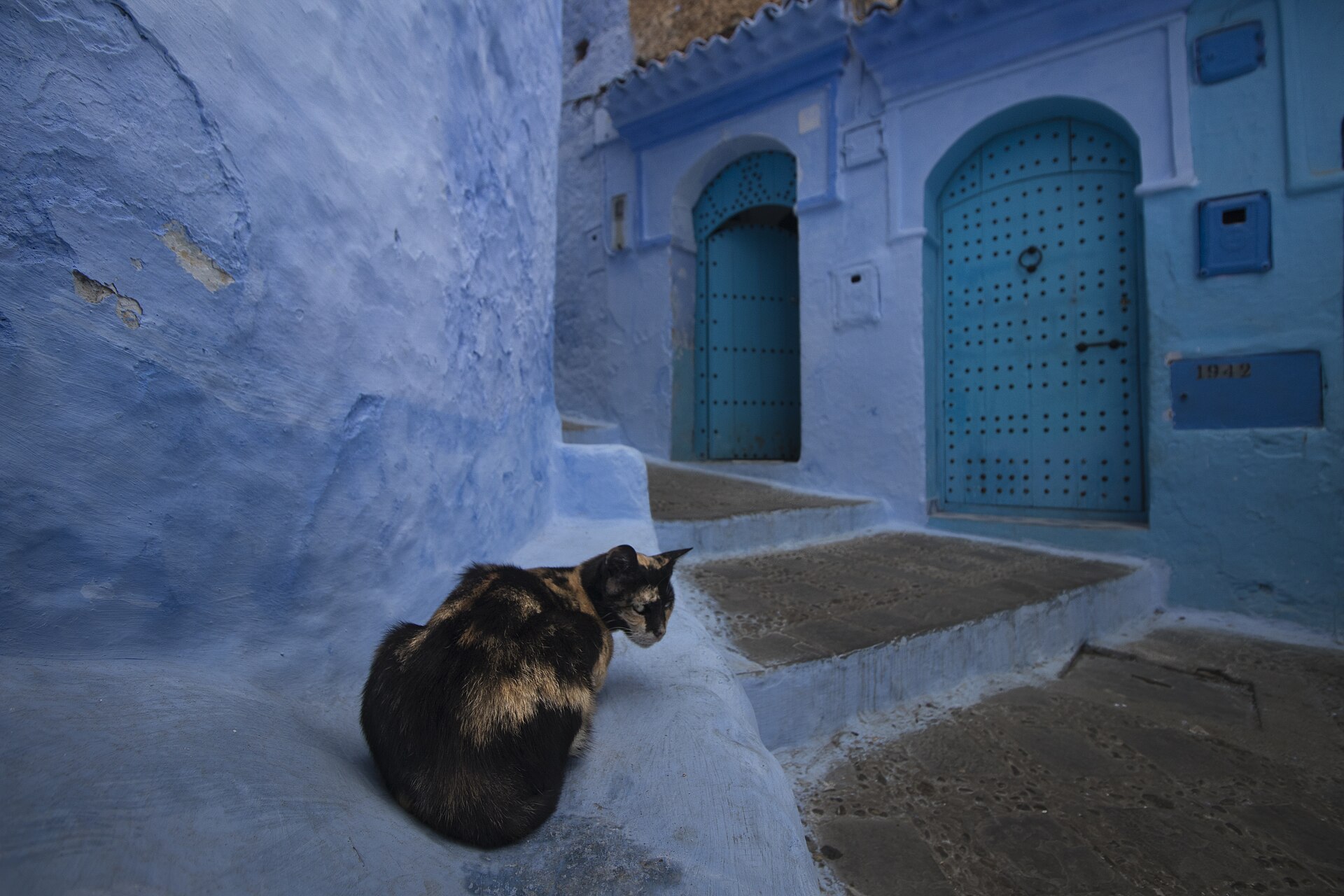
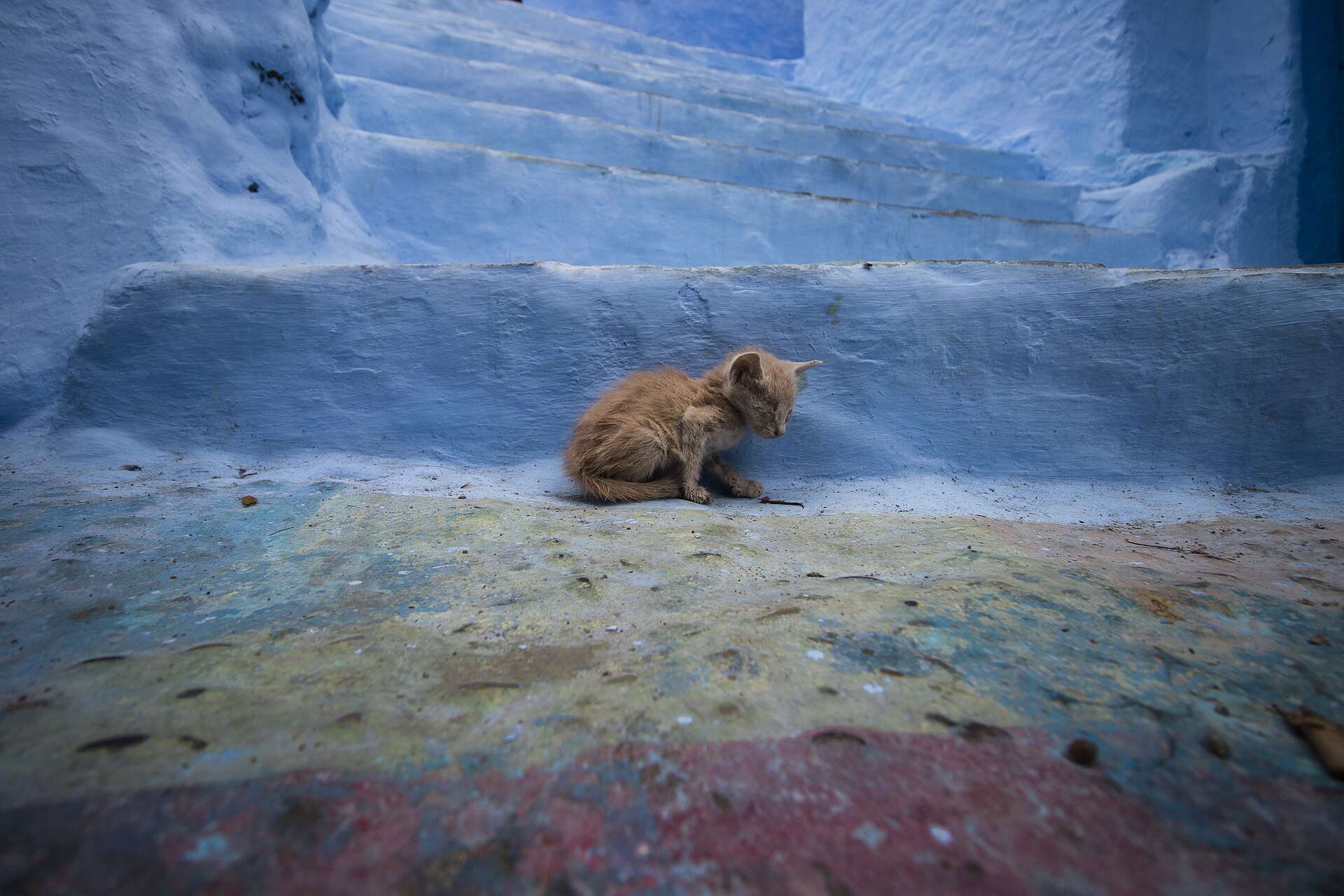
The blue town in the Rif mountains. Every photograph you have ever seen of it has a cat in it, and this is why, and where, and what time of day.
Where to find cats in Chefchaouen: The medina of Chefchaouen, in the Rif mountains of northern Morocco, two and a half hours from Tangier. When: Early morning, before the day trips arrive, and the hour before sunset. March to May and September to November for the weather. Why here: The highest density of cats per blue step of anywhere in the world, in a town small enough to walk in an hour.
The short version
- Where
- The medina of Chefchaouen, in the Rif mountains of northern Morocco, two and a half hours from Tangier
- When
- Early morning, before the day trips arrive, and the hour before sunset. March to May and September to November for the weather
- How long
- A day. A night, if you want the medina at dawn with nobody in it
- What it costs
- The medina is free. A few dirhams for a tea in the square and a few for the food you put down
- Why here
- The highest density of cats per blue step of anywhere in the world, in a town small enough to walk in an hour
What to bring
- Dry food from a shop on the edge of the medinaNot your tagine. The medina cats get enough scraps; what they lack is anything with nutrition in it.
- DawnThe day trips from Tangier and Fez land mid-morning. Before that the lanes are yours and the cats are out.
- Shoes for stepsThe medina is on a hillside and every lane is a staircase. The blue makes it look flat. It is not.
- Small dirham notesFor tea, for the man who lets you photograph his blue doorway, and for the tip that keeps the peace.
Why there are cats everywhere
Nobody agrees on why Chefchaouen is blue, and the cats do not care.
The most repeated story is that Jewish refugees, arriving from Spain after 1492, painted their quarter blue for the sky and for heaven, and the habit spread and outlasted them. Others say it keeps the houses cool, or the mosquitoes off, or that it was a tourism decision in the 1970s that everyone has since agreed to call ancient. What is true is that the medina, a small town of whitewashed houses on a hillside under the Rif, is now blue from the ground to head height and sometimes higher, and that the blue is repainted, by hand, every year.
The cats came the way cats came to every Moroccan medina: with the grain, for the rats, and stayed because the town fed them. Morocco has a long affection for cats, rooted in a well-known fondness of the Prophet for them, and a medina cat is nobody’s and everybody’s. Chefchaouen has more than most because it is small, walled, full of steps and doorways, and has been photographed so much that half its income now arrives looking for the cat on the blue step. The town knows this.
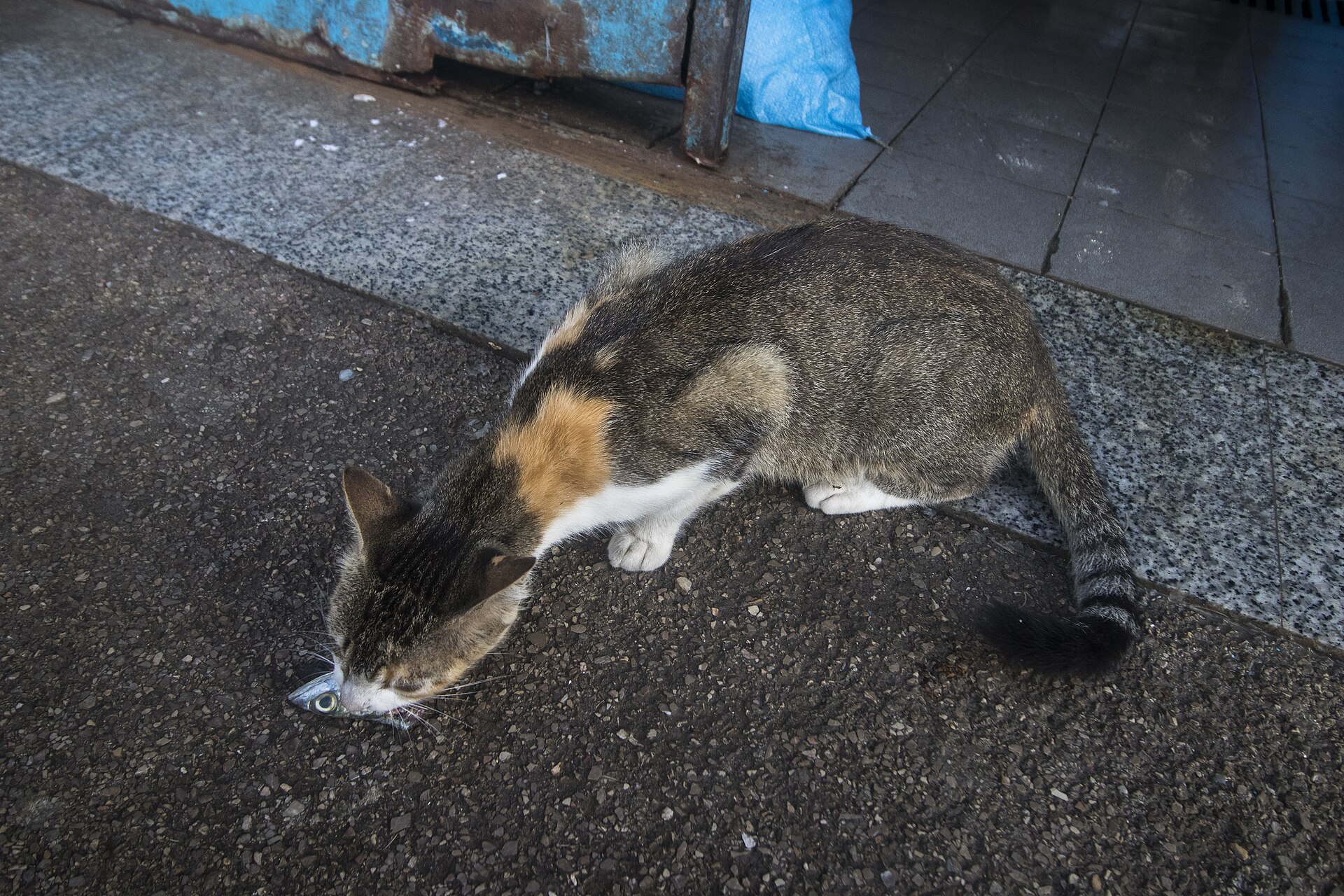
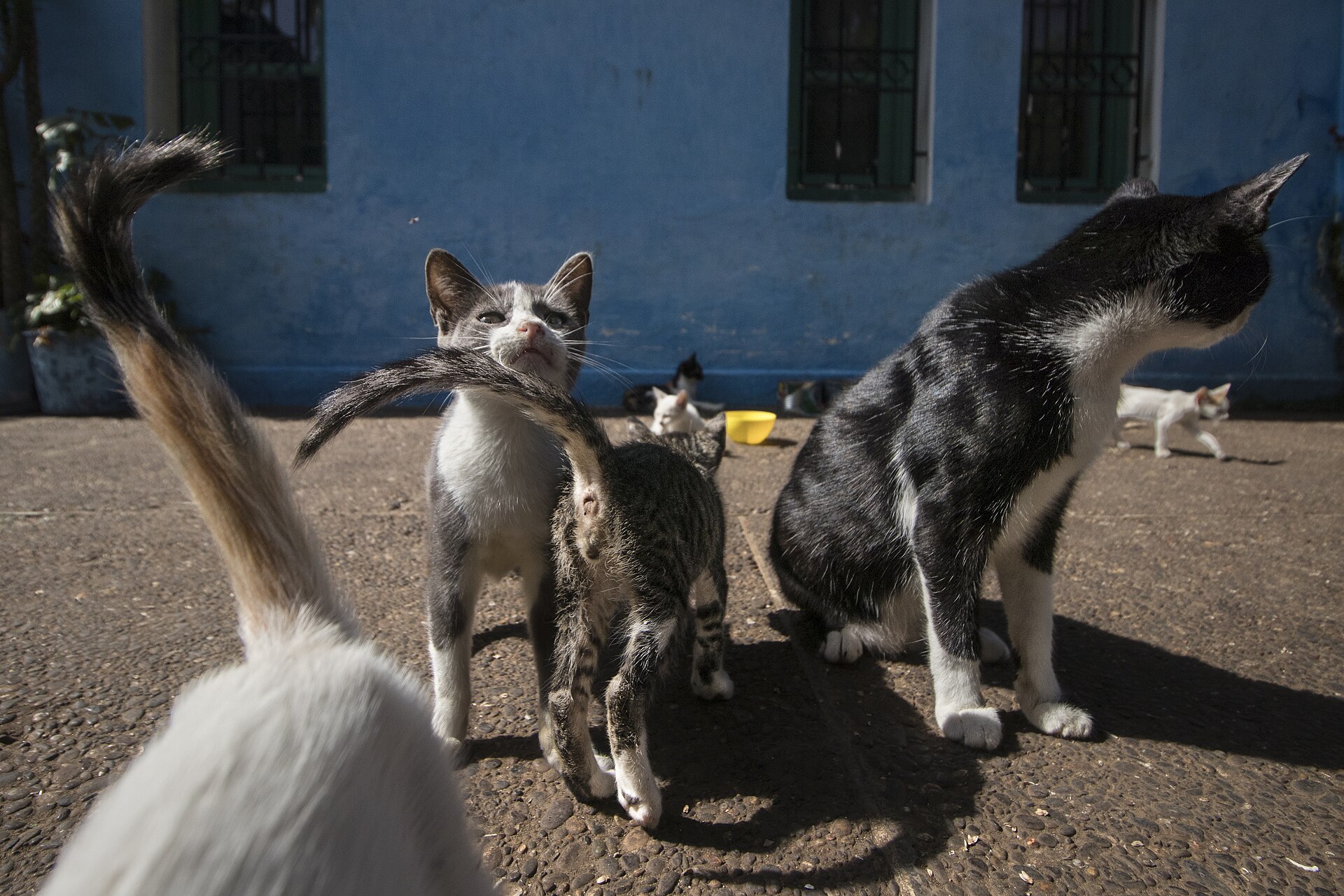
The result is a place where the cats are genuinely everywhere, on the steps, in the doorways, on the fountain, in the square under the tables of the cafes, and where a picture that seems staged is simply what the lane looked like when you turned into it. There are volunteer groups and visiting vets who neuter and treat them, and the cats are in better shape than in most of Morocco. Not all of them are in good shape. That is also true.
Go early. By eleven the day trips have arrived and the blue lanes are a queue. At seven in the morning they are blue, empty, and full of cats.
The walk
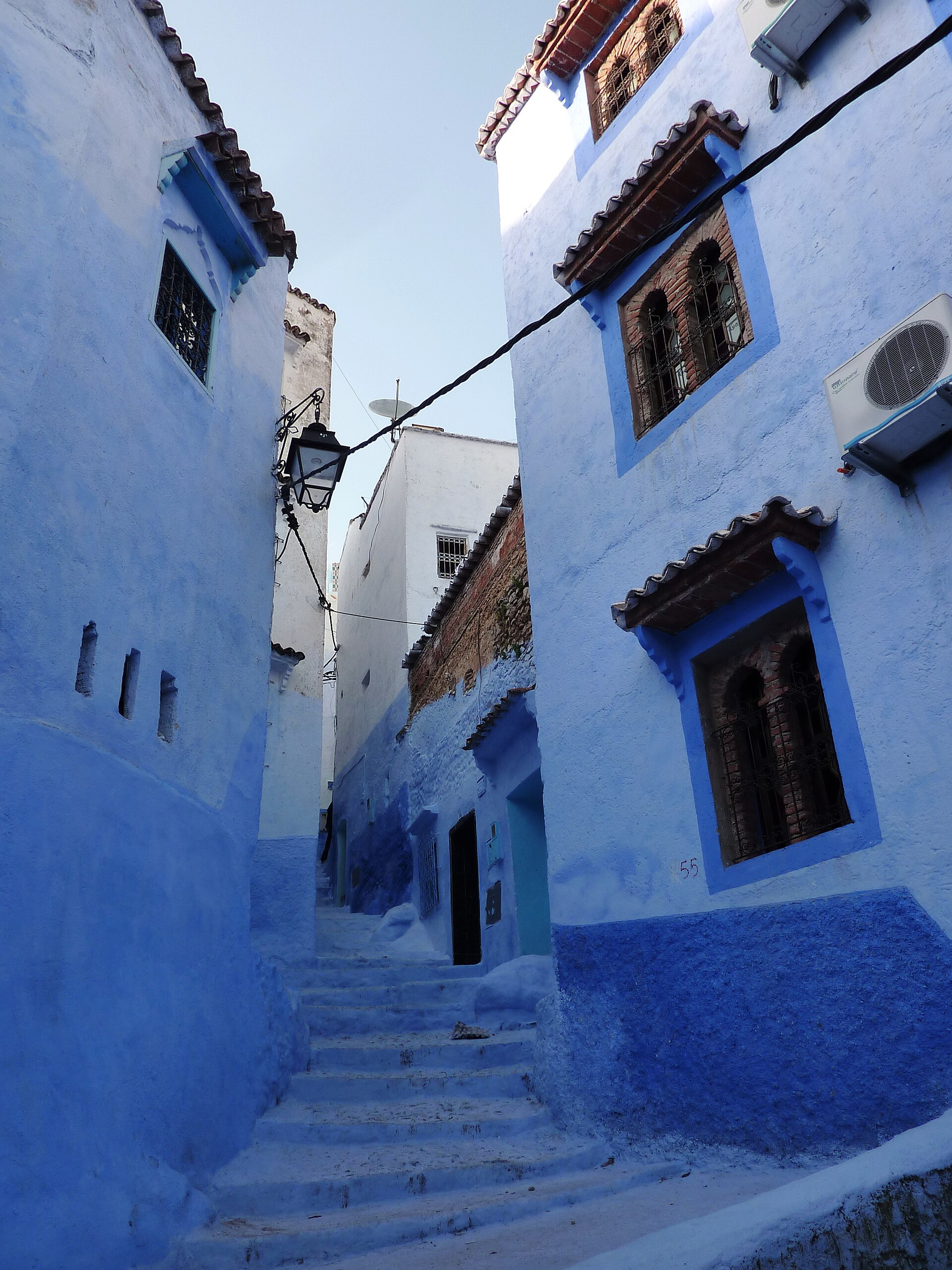
In through Bab el Ain, up to the main square and the kasbah, out through the blue lanes to the spring at Ras el-Maa, and back down as the light goes. An hour on the map, three in practice.
- From TangierCTM bus to Chefchaouen150 minTwo and a half hours. Several a day, and they fill up; book the day before.
- From FezCTM bus240 minFour hours through the Rif. The morning bus gets you in for lunch.
- From The bus stationWalk or taxi up to Bab el Ain15 minThe station is at the bottom of the town and the medina is at the top. A petit taxi is a few dirhams.
Bab el Ain
The main gate into the medina from the new town, at the bottom of the hill. Through it and the blue starts at once. The first cats are on the steps inside the gate.
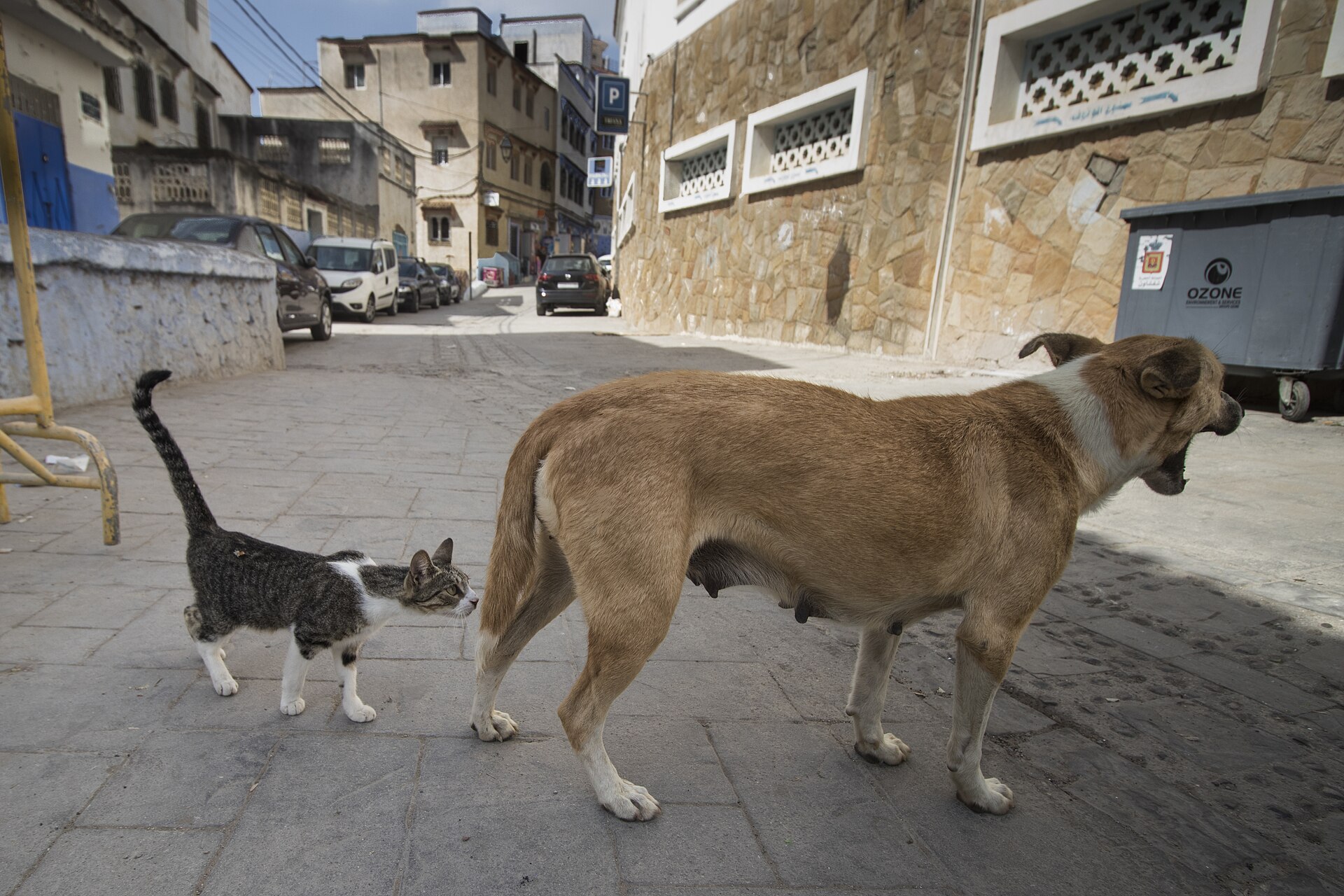
Just inside the gate. It gets bluer.Buiobuione, CC BY-SA 4.0 Place Outa el Hammam and the Kasbah
The main square, with the old kasbah and its garden on one side and the cafes on the other. Sit down for a mint tea. The cats work the cafe tables, and the kasbah walls catch the afternoon sun.
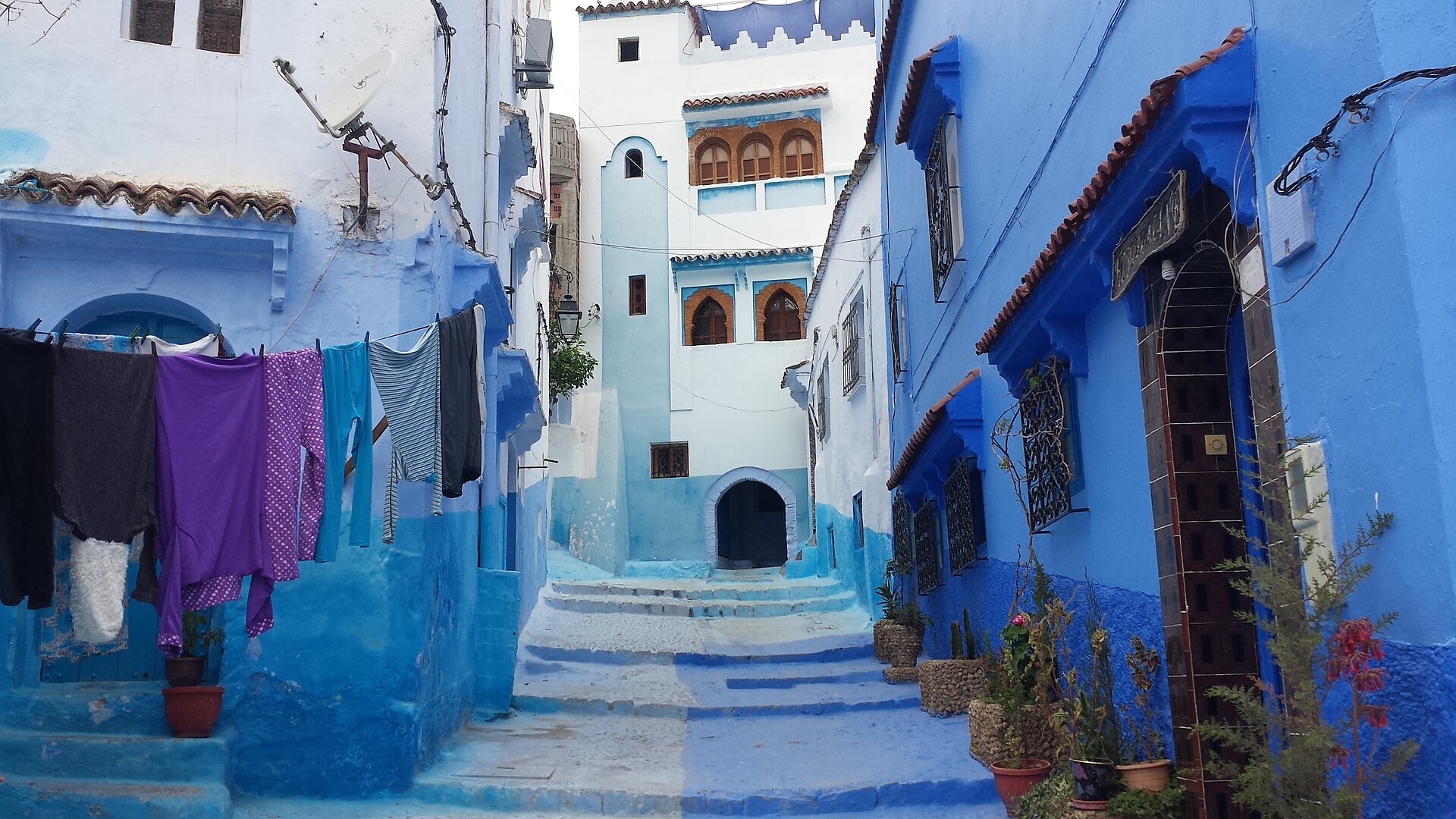
The medina from the square. Every one of those steps has a cat on it.Allenfleming, CC BY-SA 4.0 Place El Haouta
A smaller square uphill with a fountain in it, quieter than the main one, and one of the cats’ favourite spots. The lanes off it are the ones in the photographs.
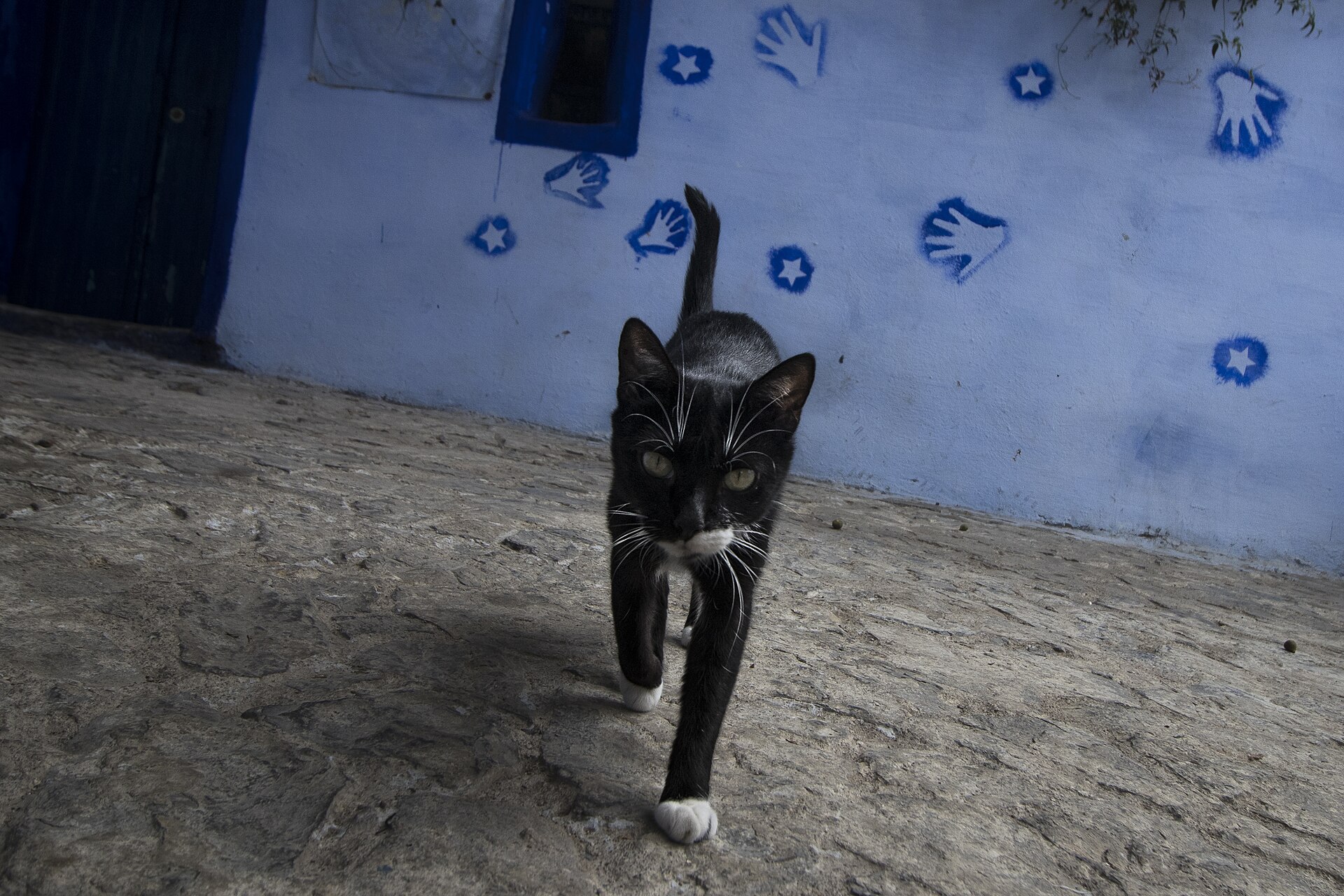
Off El Haouta. This is the picture. You will take it too.Buiobuione, CC BY-SA 4.0 The blue lanes
The stepped lanes north and east of the squares, the bluest part of the medina. Painted doors, potted plants, and cats on every landing. Go slowly and let the ones ahead of you leave before you arrive.
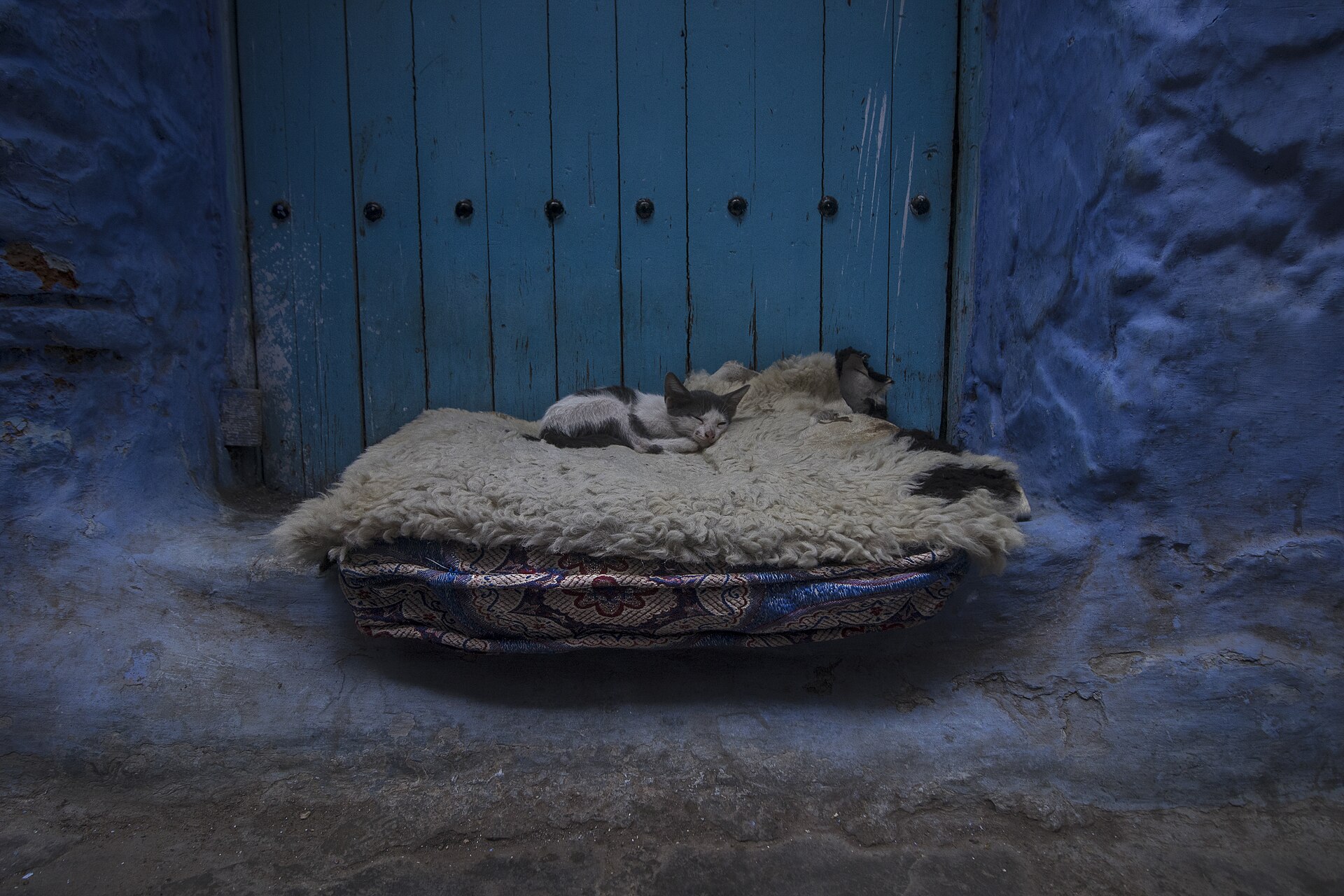
A landing, a cat, the blue. Repeat for an hour.Buiobuione, CC BY-SA 4.0 Ras el-Maa
Out of the top of the medina to the spring and the little waterfall where the town washes its wool and its carpets. Cats on the rocks by the water, and the mountain behind. Come back down at sunset.
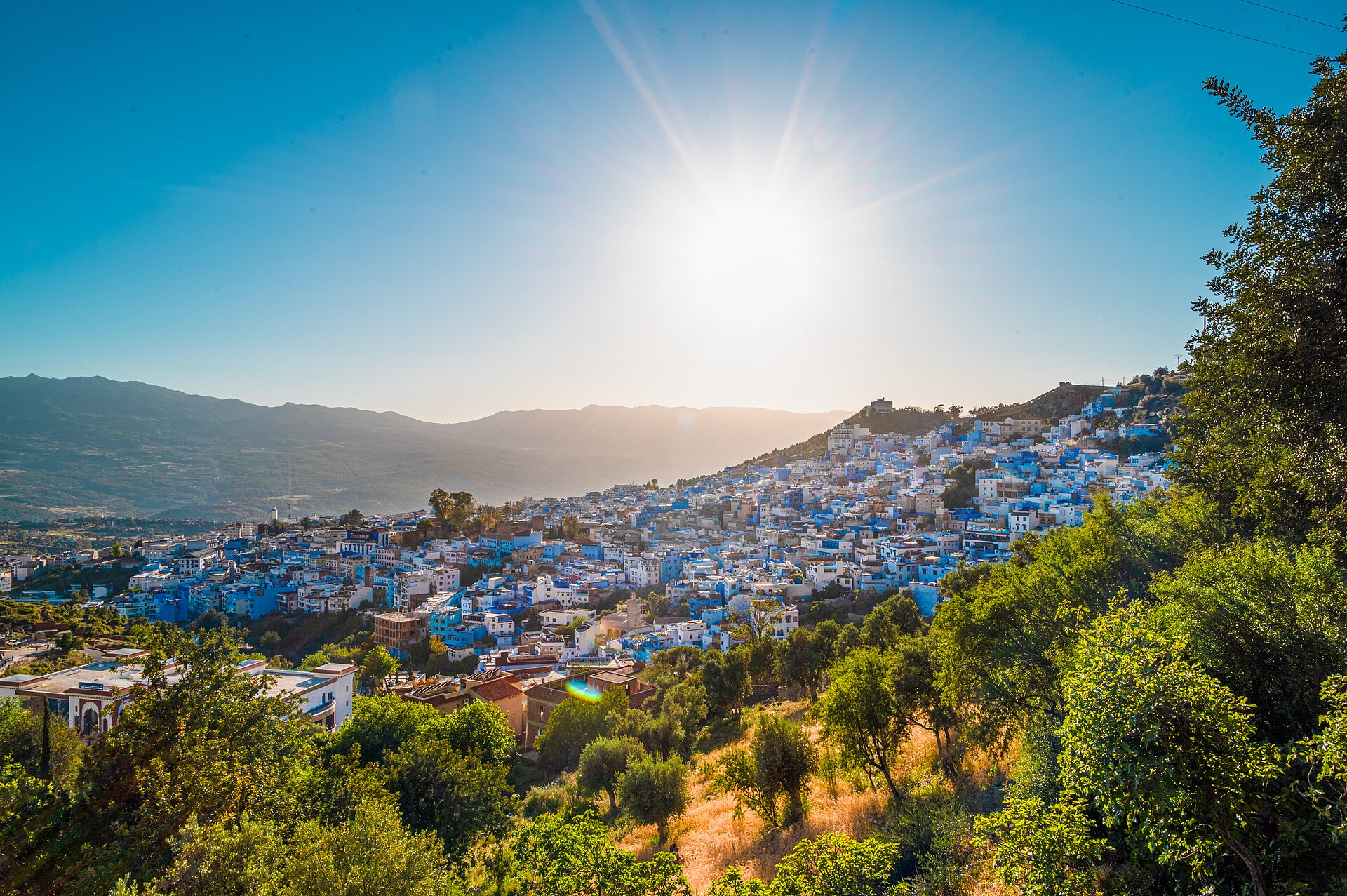
The end of the walk, and the end of the day.Badr Rachadi, CC BY-SA 4.0
Same numbers as the list. Worth keeping open on your phone.
The cats you will meet
Ordinary Moroccan medina cats, mostly tabby and tortoiseshell, lean, sun-warmed and sociable, in one of the densest concentrations of them in the world. Better looked after than in most of Morocco thanks to the volunteers, but this is still North Africa and some of them are thin, scarred or sick. The page would be lying if it said otherwise.
Tabbies
Grey-brown stripes, narrow-faced, long-legged.
The majority. On the steps in the morning sun, on the doorsteps in the afternoon.
Tortoiseshells and calicos
Black and orange, some with white.
The ones on the blue steps in every photograph. Almost all female.
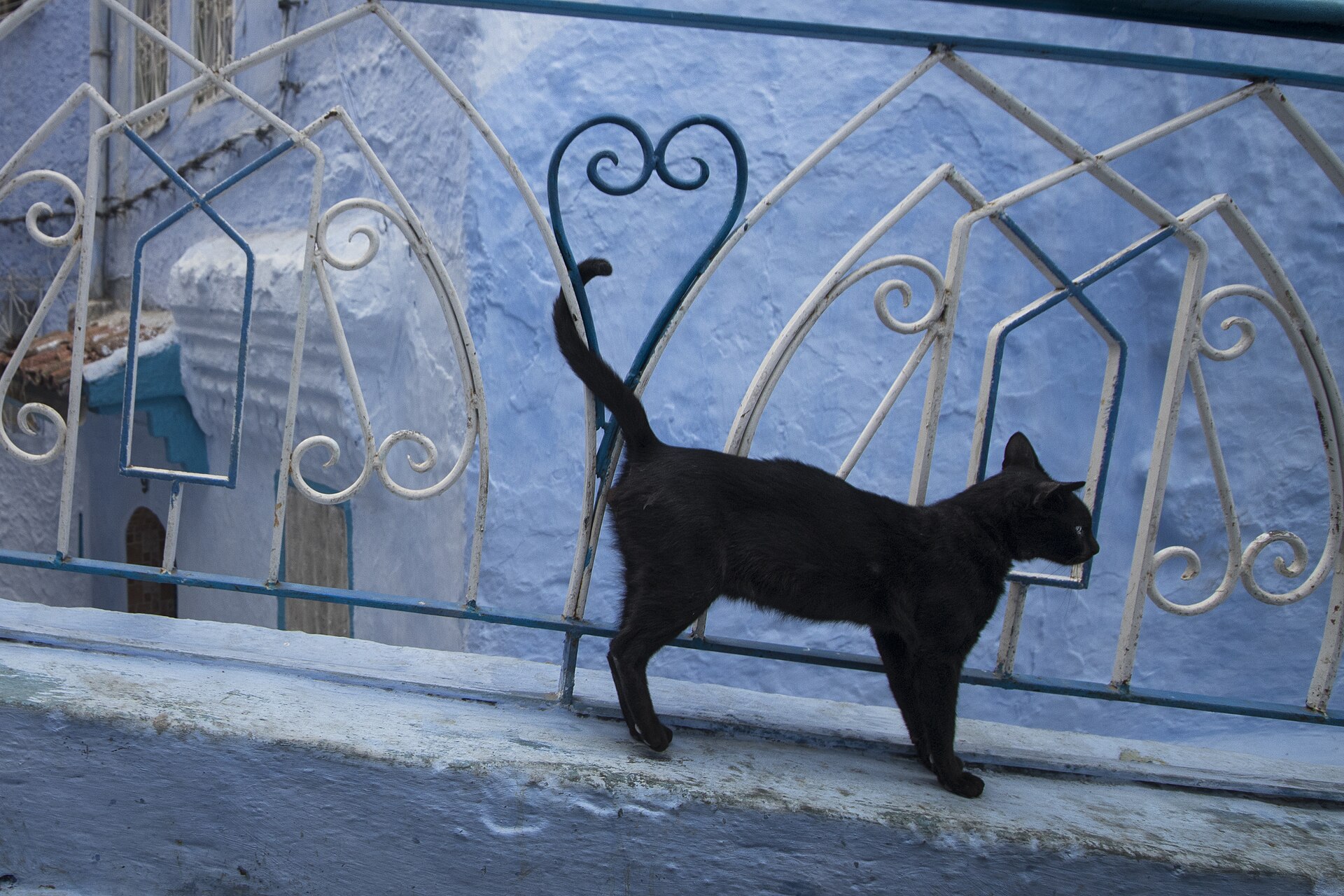
Black cats
All black, green-eyed.
Against a blue wall they are the best picture in the medina and they know it.
Kittens
Everywhere in spring.
The neutering programmes are catching up. Do not take one home in your bag. People try.
Everybody says The cats are posed for the tourists.
Actually Nobody poses them. The medina is steps, doorways and warm blue walls, which is a cat’s entire list of requirements, and there are a great many cats. What looks staged is simply what a lane in Chefchaouen looks like at eight in the morning.
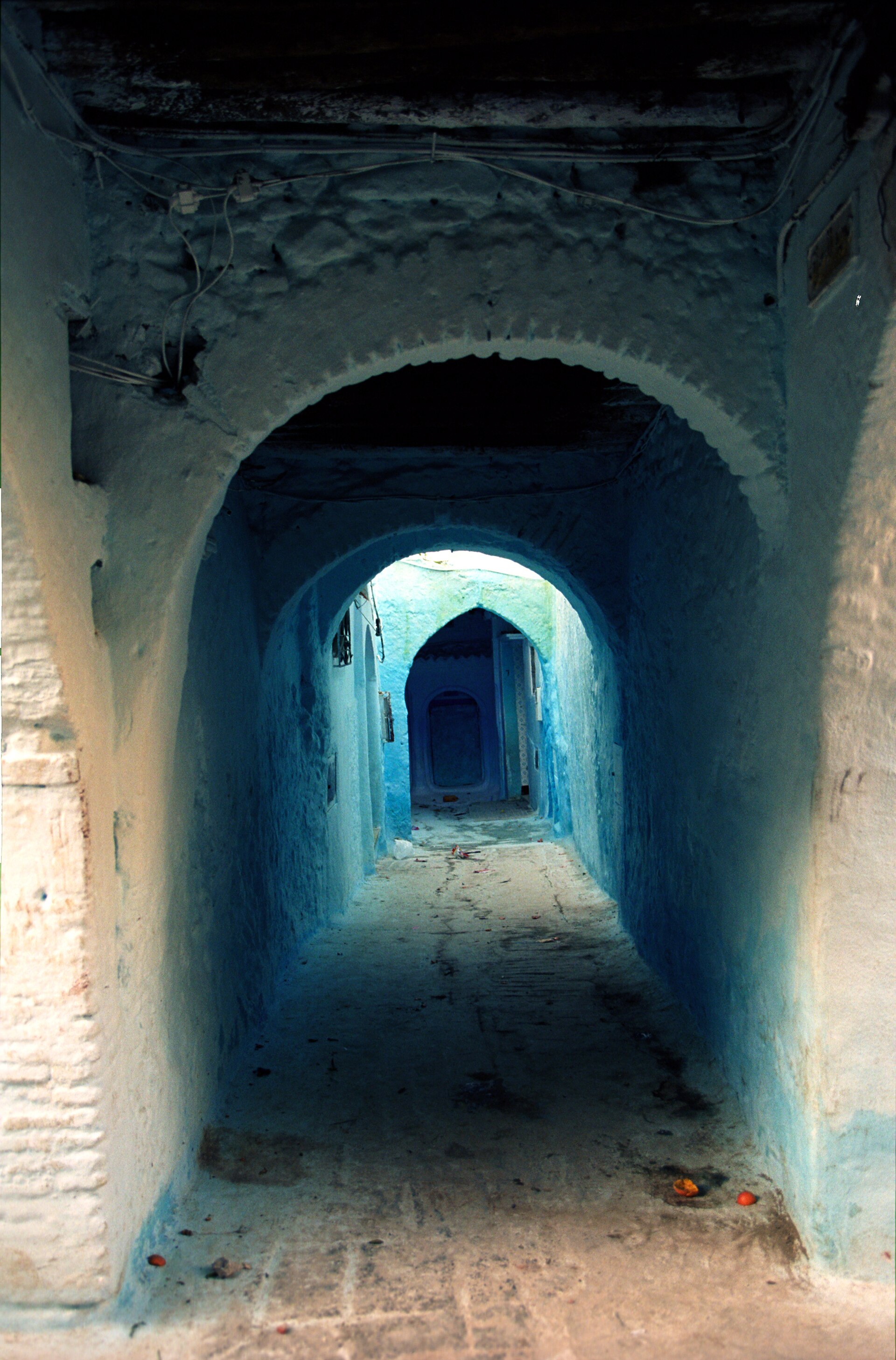
How not to be the annoying one
- Do not feed them from your plate. Tagine, bread and sugar are not cat food, and overfed medina cats get sick. Dry food, a little, in a quiet corner.
- Approach slowly and low. These cats are used to cameras, not to hands, and a fast movement in a narrow lane sends them all off at once.
- The blue doorways are people’s front doors. Ask before you photograph an open one, and tip if they say yes.
- Do not pick up a kitten to take home. It happens, and it is theft and a customs problem, and the volunteers are trying to neuter their way out of the kitten surplus honestly.
- If you want to help, ask at a cafe on the square for the local volunteer group. They take food and money and are glad of both.