Sanctuary Akrotiri, Cyprus
Cats in St Nicholas of the Cats
A monastery on a salt-lake peninsula near Limassol where, the story goes, a Byzantine empress shipped in a thousand cats to kill the snakes. Sixteen centuries later the nuns are still feeding their descendants, and the cape is named after them.
Where to find cats in St Nicholas of the Cats: The Monastery of St Nicholas of the Cats, on the Akrotiri peninsula by the salt lake, south of Limassol, Cyprus. When: Morning, when the nuns feed and the courtyard is cool. Any month; spring for the flamingos on the lake next door. Why here: The oldest cat story in Christendom, and it is still going.
The short version
- Where
- The Monastery of St Nicholas of the Cats, on the Akrotiri peninsula by the salt lake, south of Limassol, Cyprus
- When
- Morning, when the nuns feed and the courtyard is cool. Any month; spring for the flamingos on the lake next door
- How long
- An hour at the monastery. Half a day with the salt lake and the Kourion ruins
- What it costs
- Free. A donation in the box feeds the cats; the shop sells the nuns’ honey
- Why here
- The oldest cat story in Christendom, and it is still going
What to bring
- A donation, or buy the honeyThe convent is small, the nuns are few, and the cats number in the dozens. The box by the church is their food.
- Covered shoulders and kneesIt is a working convent. Wraps are lent at the gate if you forget.
- The morningFeeding is early. By the afternoon the cats are under the carob trees and the nuns are at prayer.
- A carThe peninsula is British sovereign base territory with a salt lake in the middle. There is no bus that helps.
Why there are cats everywhere
In the fourth century, the story says, Cyprus was in drought and overrun with snakes, and the empress Helena sent a shipload of cats to deal with them.
Helena, the mother of Constantine, is said to have stopped in Cyprus on her way back from Jerusalem, found the island parched and crawling with snakes, and ordered a thousand cats brought from Egypt and Palestine to hunt them. The monastery founded at the southern tip of the island, on the peninsula below Limassol, was given charge of them: the monks rang a bell to call the cats to meals and another to send them out to the snakes. The cape at the end of the peninsula is still called Cape Gata, the cape of cats, and the legend was written down by a Venetian visitor in the fifteen-hundreds, which is a long pedigree for a cat story.
The monastery was abandoned under the Ottomans and refounded in 1983 by a small group of nuns, who found it in ruins and, by all accounts, still with cats. They rebuilt the church and the cells, planted the garden, and took on the feeding. Today a handful of nuns look after several dozen cats, fed on donations and the sale of honey and icons, in a courtyard of carob trees between the salt lake and the sea. It is quiet, it is unfussy, and the cats are calm in the way of animals that have been fed at the same door for a very long time.
The peninsula around it is odd and beautiful: a salt lake with flamingos in winter, a British air base, and the ruins of Kourion, the Greek and Roman city on the cliffs to the west. Do the monastery in the morning, the ruins after, and the lake at dusk.
The walk
Not a walk so much as a morning: the monastery, the salt lake beside it, and, with a car, the ruins of Kourion on the cliffs. Back to Limassol for the evening.
- From LimassolDrive south onto the Akrotiri peninsula25 minSigned from the Lady’s Mile road. The monastery is at the end of the lake track.
- From Paphos airportDrive east along the motorway, then south at Limassol60 minKourion is on the way; do it first if you arrive in the afternoon.
- From Larnaca airportMotorway to Limassol, then the peninsula75 minHire a car. There is no useful bus to the peninsula.
The monastery
Through the gate into the courtyard of carob trees, the small church, and the cats on every warm stone. Say good morning to the nun at the shop, put something in the box, and sit.
The courtyard. Fed at the same door since the empress.Monika Kostera (urbanlegend), CC BY-SA 2.0 The salt lake
Next to the monastery, the great flat salt lake of Akrotiri, dry and white in summer, water and flamingos from November to March. The track along its edge is a walk; the cats do not come.
In the grounds, at the lake end. The flamingos are beyond the wall.Monika Kostera (urbanlegend), CC BY-SA 2.0 Akrotiri village
The village on the peninsula, inside the British base area but open, with a couple of tavernas and the environmental centre for the lake. Cats at the tavernas, as everywhere in Cyprus.
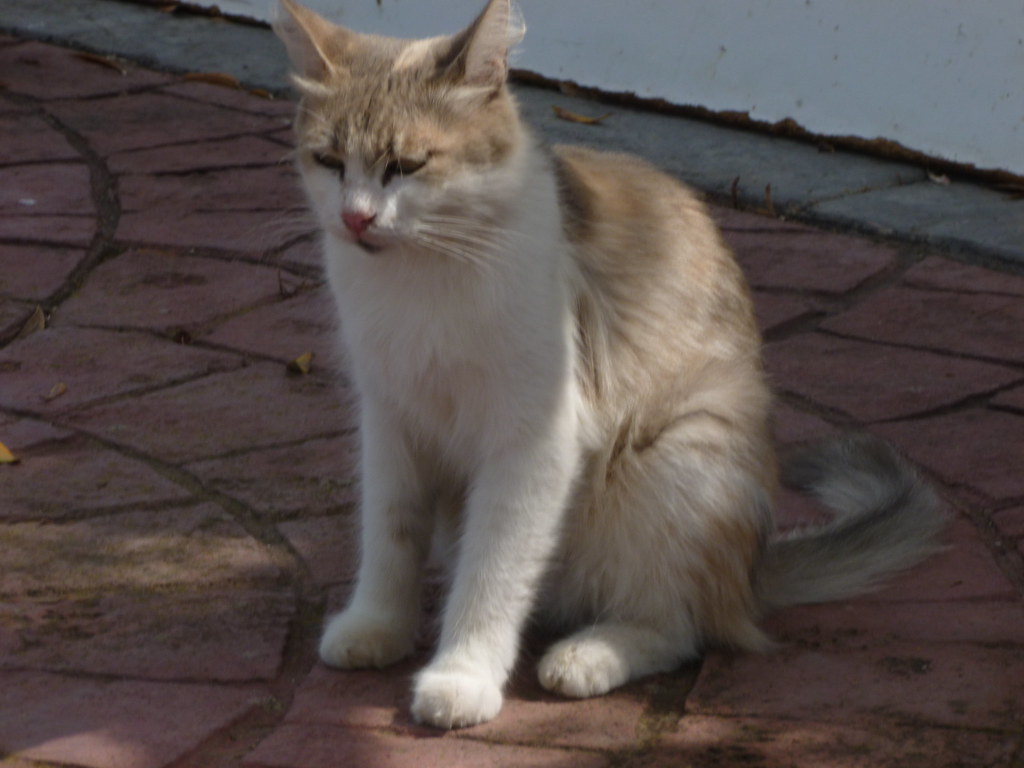
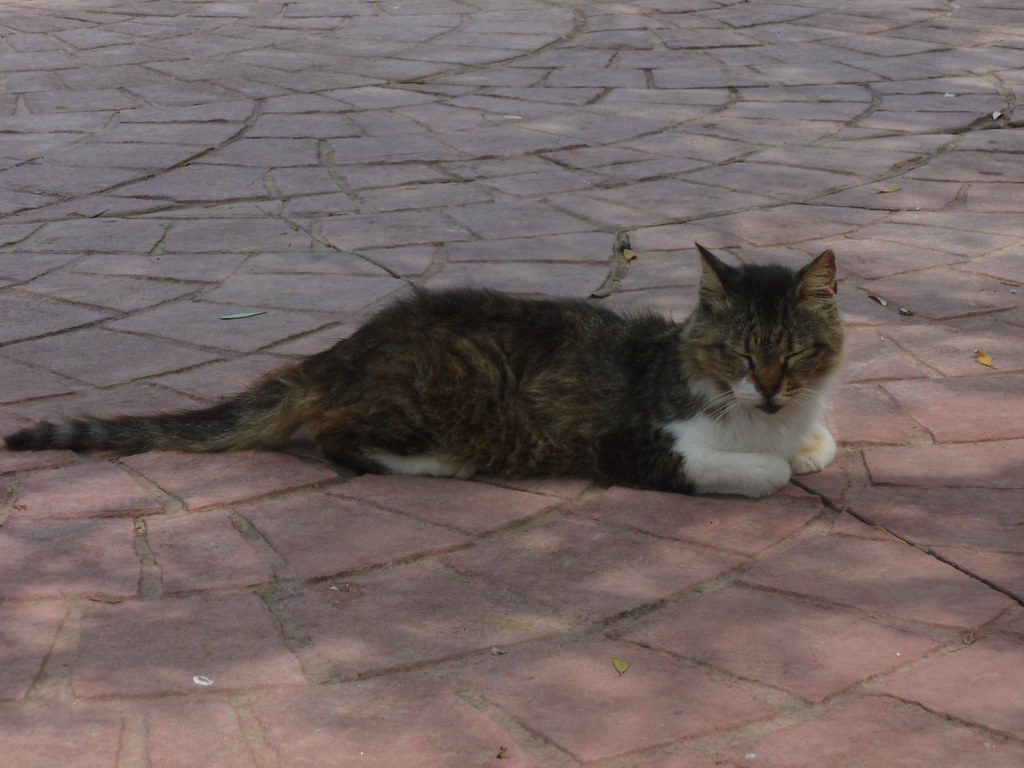
In the sun. The peninsula’s cats, one of the older lineages.Monika Kostera (urbanlegend), CC BY-SA 2.0 Kourion
West along the coast to the ancient city on the cliffs: a Greek and Roman theatre, mosaics, and the sea below. Ticket at the gate. Cats in the ruins, fed by the guards, which is a Mediterranean constant.
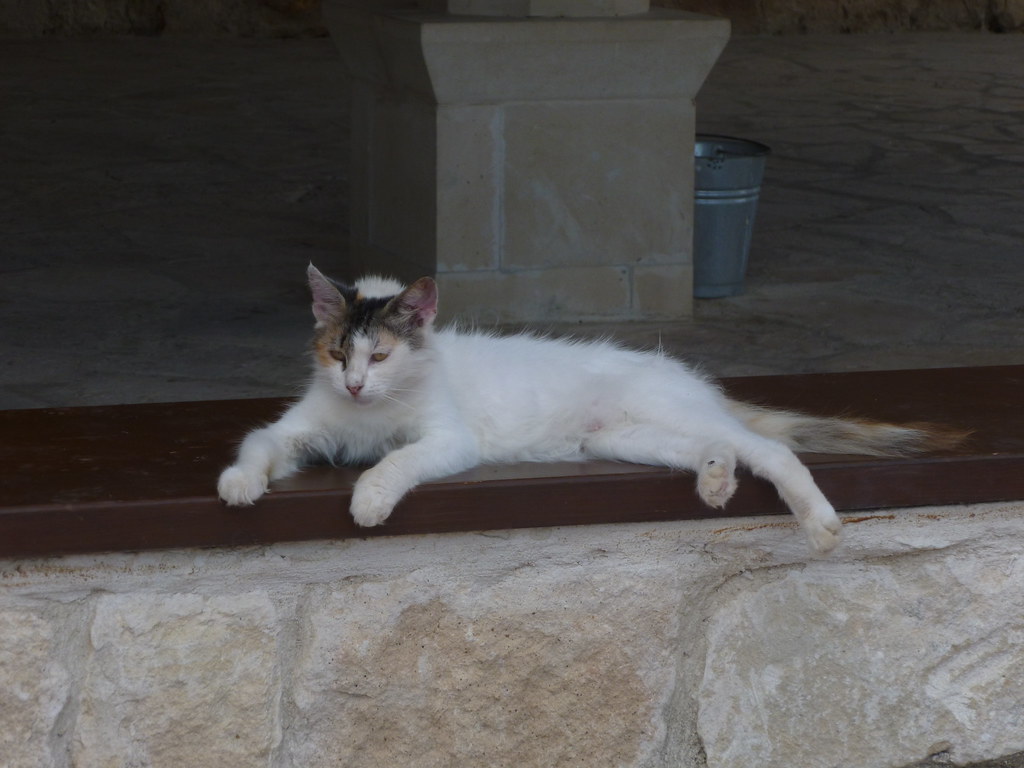
A monastery cat, for the road to the ruins.Monika Kostera (urbanlegend), CC BY-SA 2.0
Same numbers as the list. Worth keeping open on your phone.
The cats you will meet
Cypriot monastery cats: short-coated, tabby and ginger and black-and-white, in dozens, fed by nuns and donations, calm in a courtyard where nothing has ever chased them. Sociable at the shop door, asleep under the carobs, and, according to legend, descended from snake-hunters.
Courtyard cats
On the warm stone around the church.
The main colony. Sit; they come.
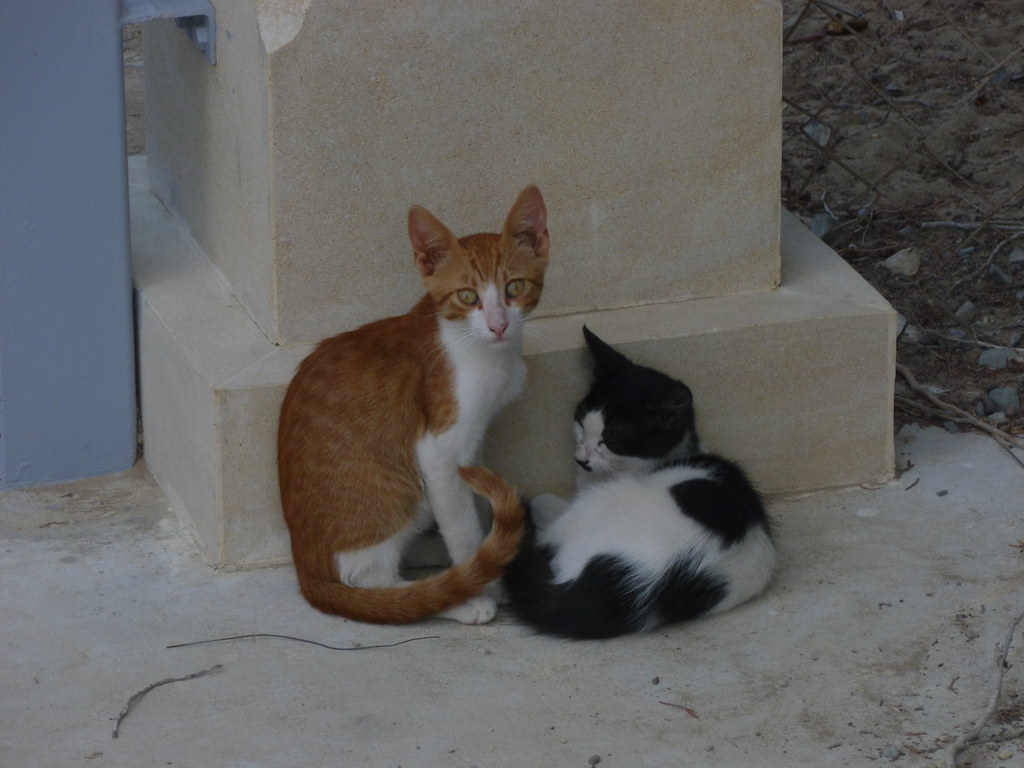
Kittens
At the pillars and under the benches in spring.
Not for taking. The nuns rehome through their own contacts.
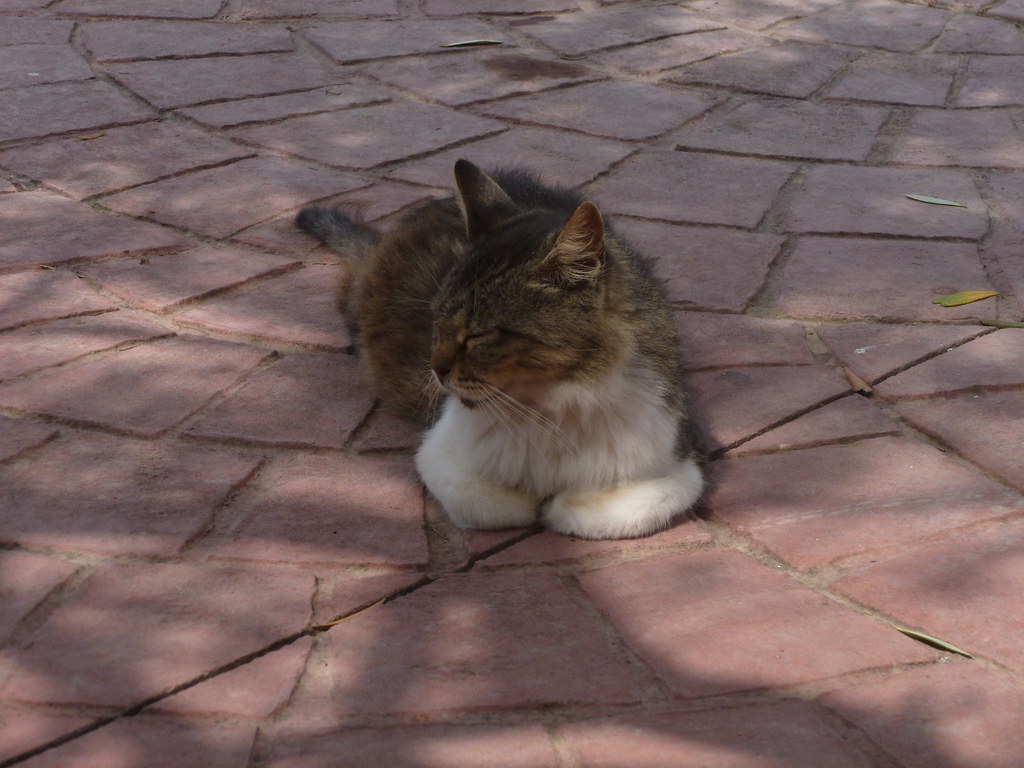
Carob cats
Under the trees in the afternoon heat.
Asleep. Leave them the shade.
Everybody says The cats still hunt snakes.
Actually They eat what the nuns put out. The snakes are fewer than in the fourth century, the bells are gone, and the cats are pets of a convent. The legend is the reason to come; the cats are the reason to stay an hour.
How not to be the annoying one
- It is a convent. Covered shoulders and knees, quiet, and no photographs of the nuns without asking.
- Give to the box or buy the honey. That is the cat food.
- Do not feed. The nuns have a schedule and a supply.
- Do not take a kitten. Ask the nuns if you are serious; they will tell you how.
- The peninsula is a military area. Stay on the public roads and off the fences.