Landmark Key West, Florida, United States
Cats in The Hemingway House
About sixty cats, roughly half of them with six toes, living in the house where Hemingway wrote most of his best work. Open every day of the year, cash at the window, and the cats were here first.
Where to find cats in The Hemingway House: 907 Whitehead Street, Key West, across the road from the lighthouse, at the quiet end of Old Town. When: First thing, at nine, before the heat and the tour buses. Open 365 days a year, nine to five. Why here: Sixty cats descended from one six-toed ship’s cat, in a writer’s house that has never once tried to get rid of them.
The short version
- Where
- 907 Whitehead Street, Key West, across the road from the lighthouse, at the quiet end of Old Town
- When
- First thing, at nine, before the heat and the tour buses. Open 365 days a year, nine to five
- How long
- An hour. The guided tour is half of it; the other half is sitting in the garden with the cats
- What it costs
- $18 for adults, $7 for children, cash only, at the window. No online tickets, no booking
- Why here
- Sixty cats descended from one six-toed ship’s cat, in a writer’s house that has never once tried to get rid of them
What to bring
- CashEighteen dollars a head, seven for children, and the window does not take cards. There is no online booking either.
- Nine in the morningTours run every fifteen minutes all day, but the cats are out in the garden early and asleep under the house by noon.
- PatienceYou may pet them if they let you. You may not pick them up, and they have extra claws to make the point.
- A guess at which ones have six toesAbout half do. Look at the front paws; the extra toe makes them look like mittens.
Why there are cats everywhere
A ship’s captain gave Hemingway a white kitten with six toes, and she is the reason for everything here.
Her name was Snow White. Sailors valued six-toed cats, polydactyls, as lucky and as better climbers on a rolling deck, and in the 1930s a passing captain gave one to the writer who had just moved into the big Spanish colonial house on Whitehead Street. She had kittens. The kittens had kittens. Ninety years on, around sixty cats live on the property, and the museum says about half of them still carry her extra toes.
Hemingway lived here from 1931 to 1939 with his second wife Pauline, and wrote a large part of his best work in the studio over the carriage house: To Have and Have Not, the Snows of Kilimanjaro, the stories. The house has the first swimming pool in Key West, a penny pressed into the concrete beside it, and a garden of tropical trees that the cats treat as furniture.
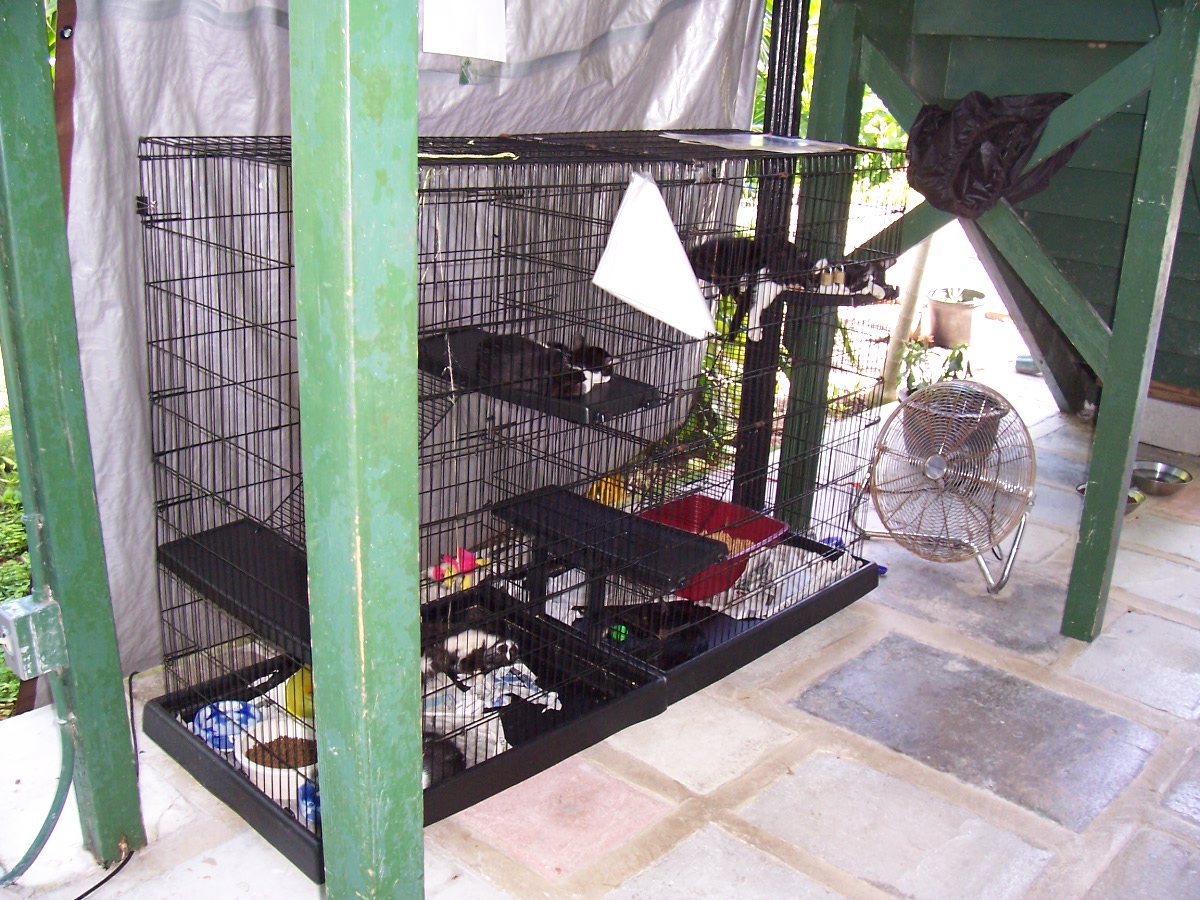
The cats are named after famous people, in a tradition the museum keeps up, and they are fed, vaccinated and looked after by staff. They have their own small cemetery in the garden, with headstones. When the state of Florida tried to regulate them as an animal exhibit, the museum went to court and, eventually, the cats won. They are legally part of the house.
It is the only place on this list where you pay to see the cats. It is also the only one where the cats have a lawyer.
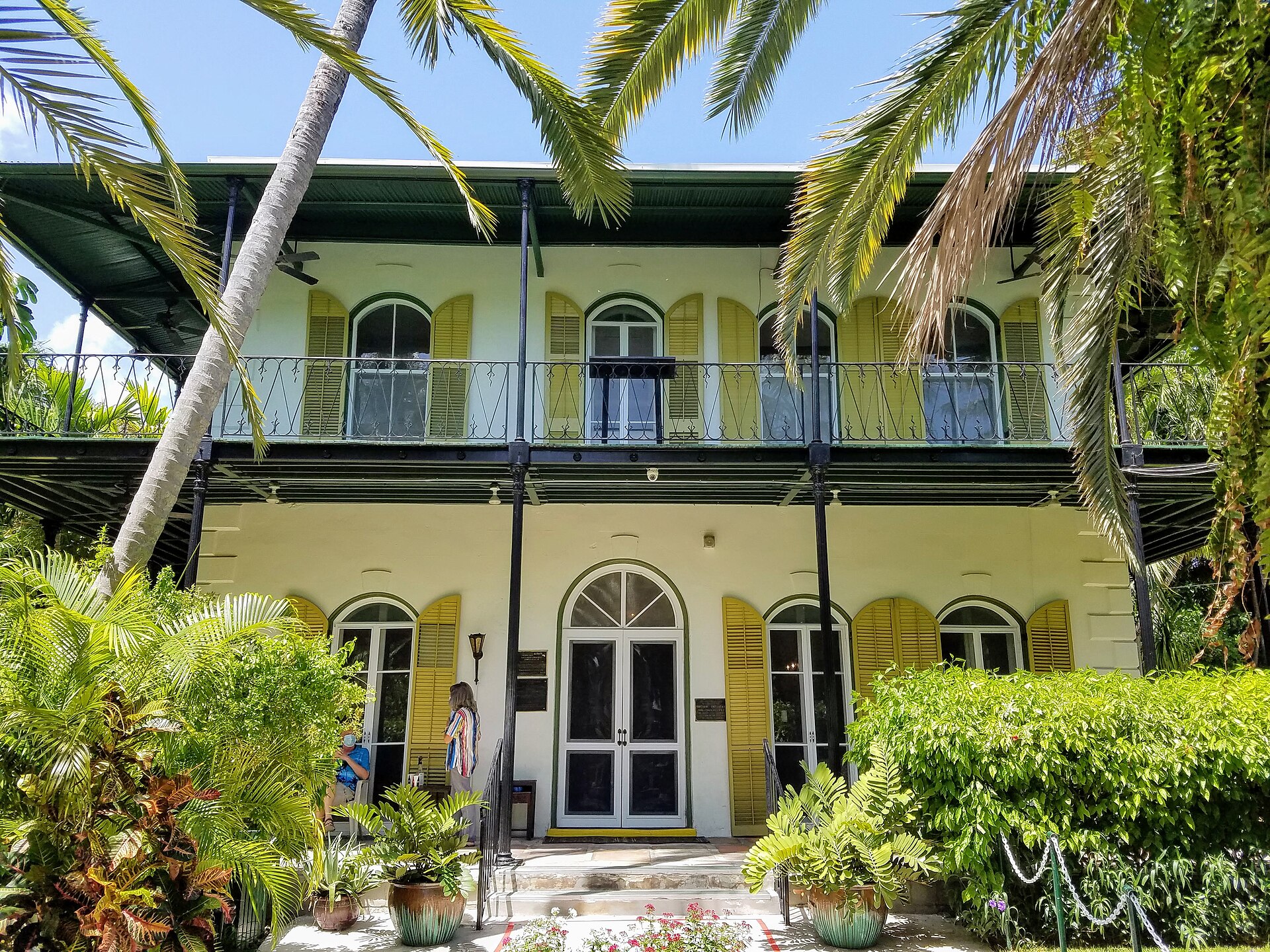
The walk
It is a house, not a route: the ticket window, the tour, and then the garden for as long as the cats will have you. Cross the road afterwards for the lighthouse.
- From Duval StreetWalk west on any cross street to Whitehead Street8 minWhitehead runs parallel to Duval, one block over. The house is at the lighthouse end.
- From Mallory SquareWalk down Whitehead Street15 minStraight down the whole street. The lighthouse tells you when to stop.
- From MiamiDrive the Overseas Highway210 minThree and a half hours on a good day. Key West has no rail, and flights are short and dear.
The gate and the ticket window
On Whitehead Street, opposite the lighthouse. Cash at the window, then straight through the gate. The first cats are usually on the brick path or the veranda steps, unbothered by the queue.
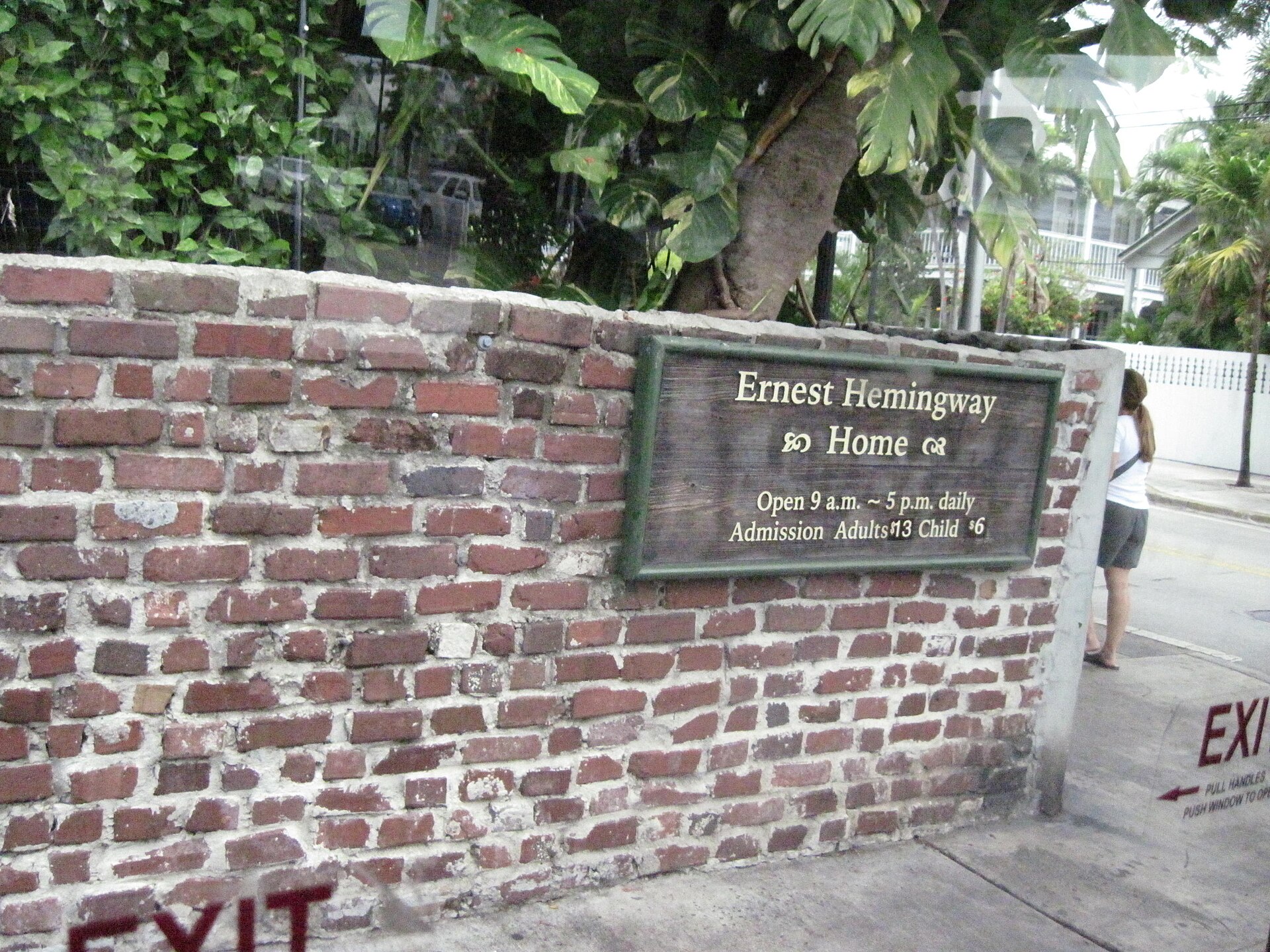
The sign. Cash only, every day of the year.Anita Walz, CC BY-SA 4.0 The house and the tour
A guide takes you through in twenty to thirty minutes: the rooms, the studio over the carriage house where the books were written, and the cats wherever they happen to be, which is usually on the beds. Tours leave every fifteen minutes.
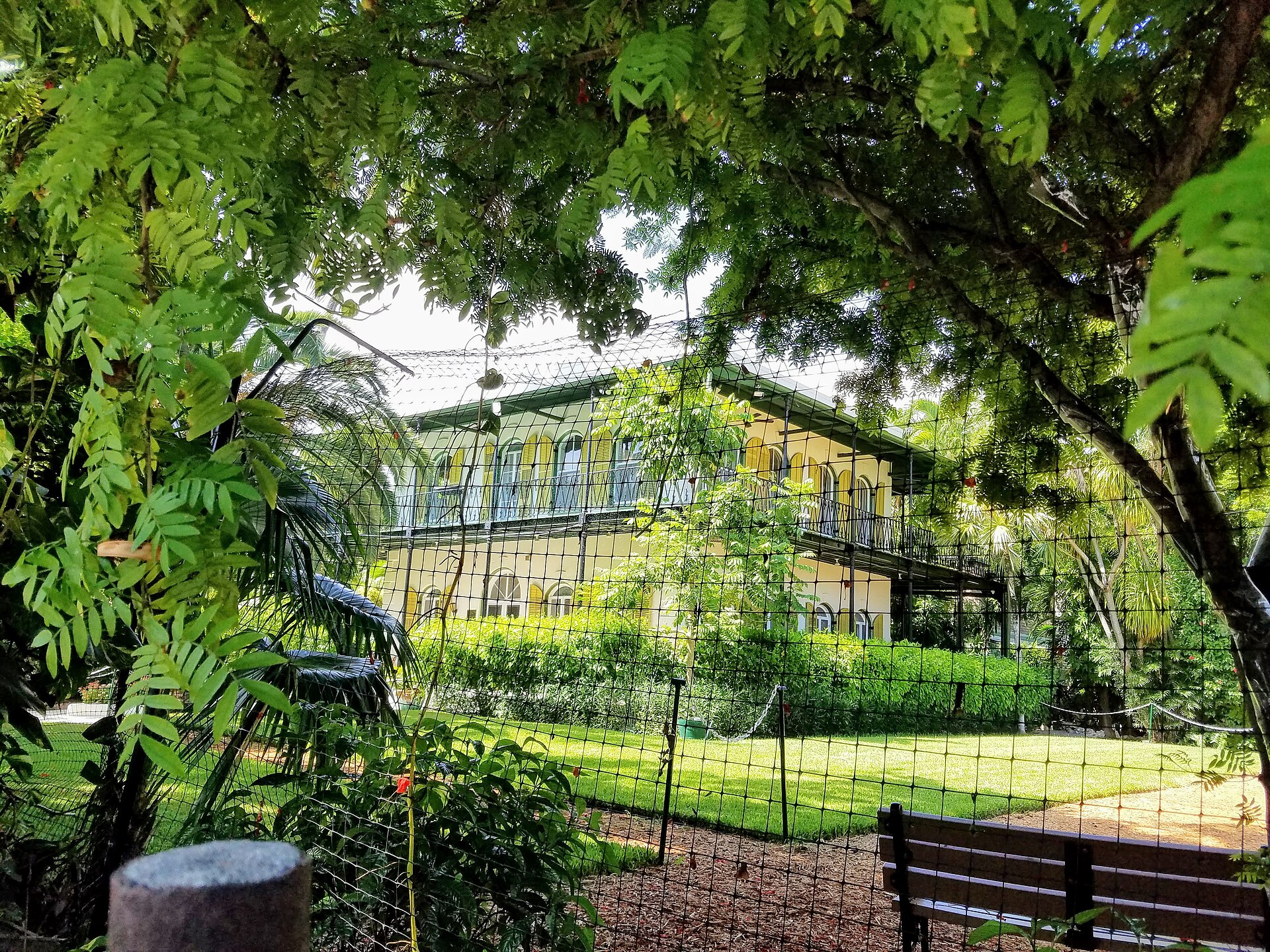
The veranda. The cats have the run of the rooms behind it.Upstateherd, CC BY-SA 4.0 The garden and the pool
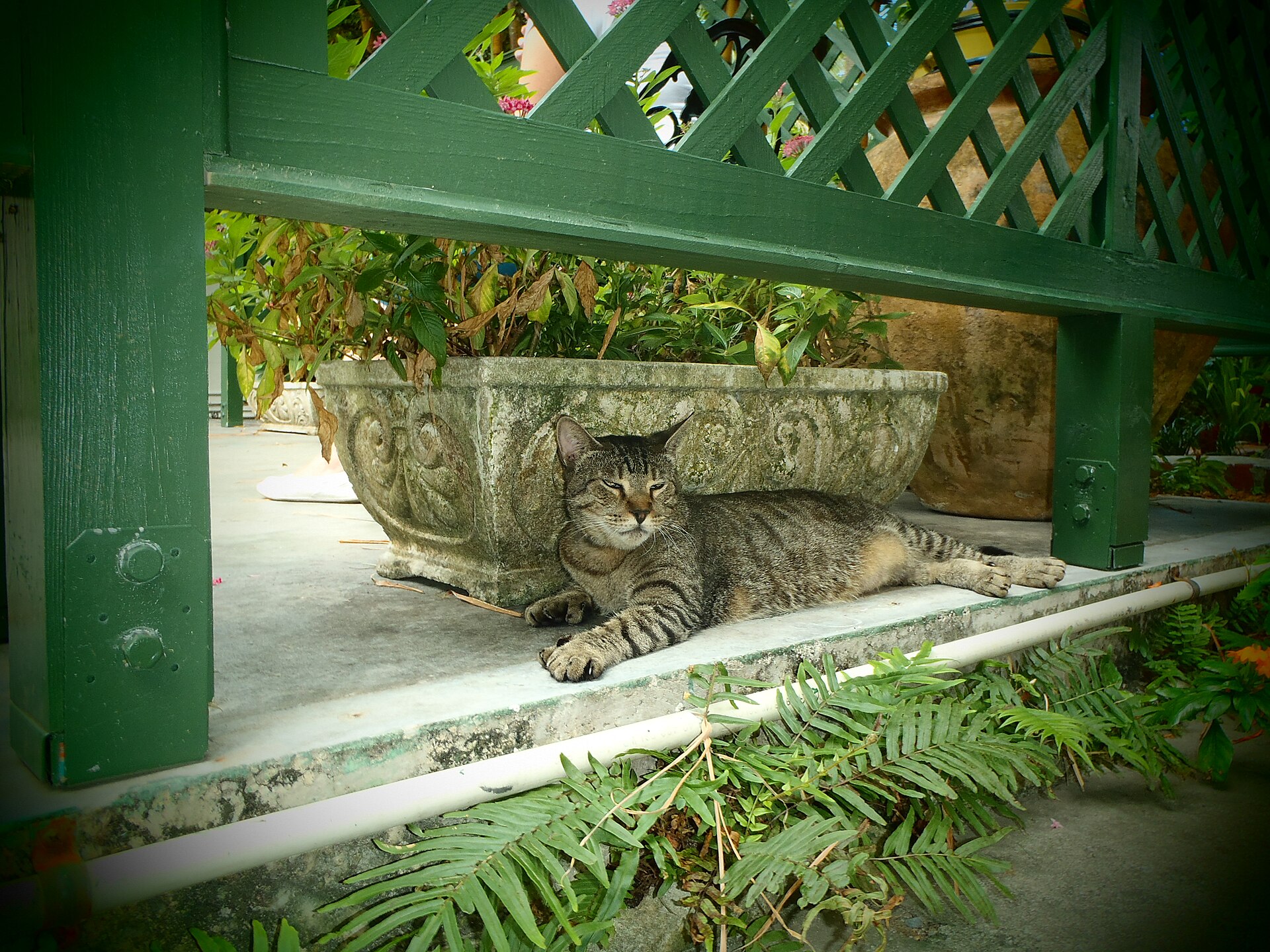
After the tour, stay. The garden is where the cats are, on the paving, under the palms, around the pool. Sit on a bench and stop trying. One will decide about you.
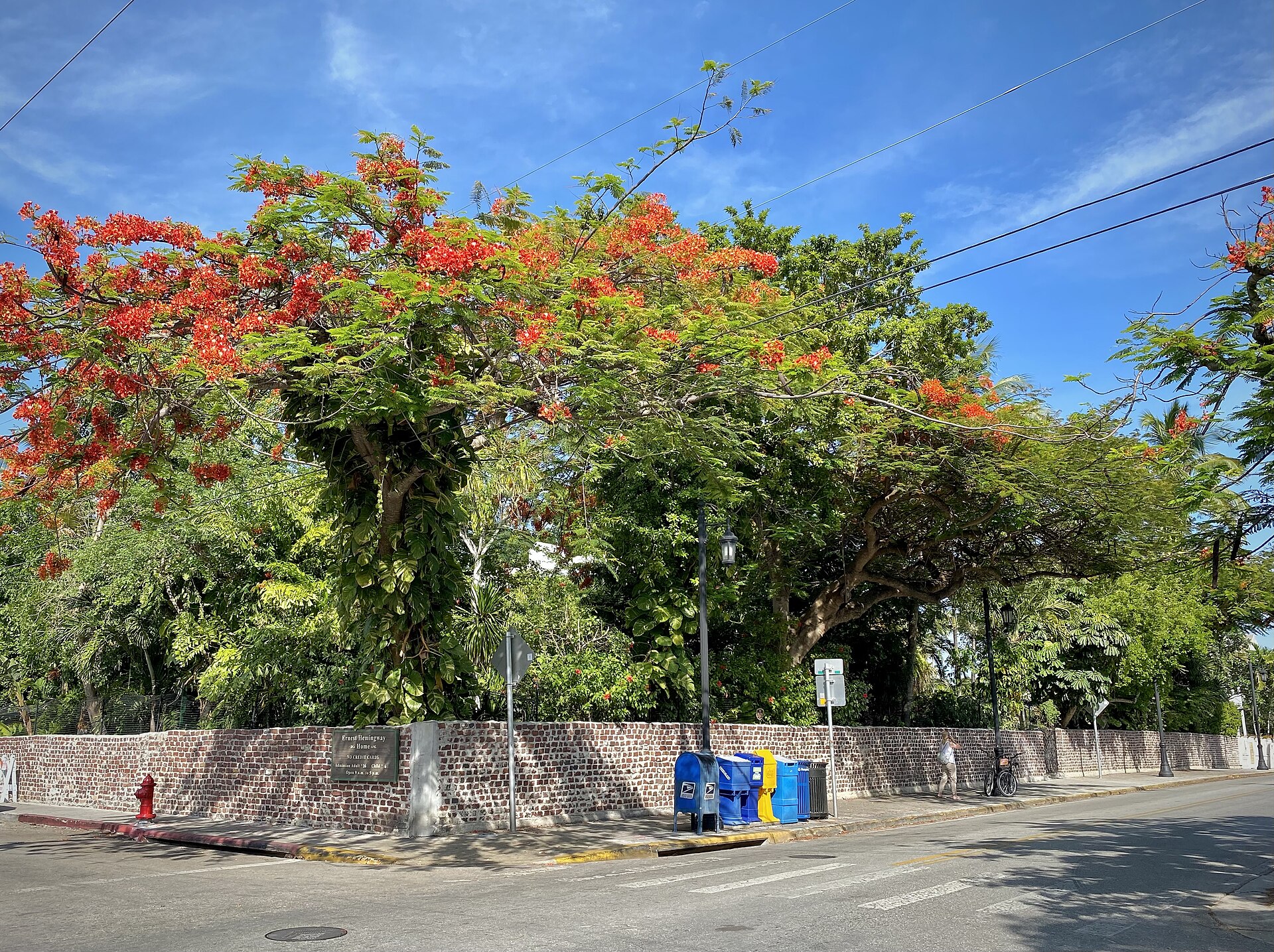
The garden. This is the part you came for.Sharon Hahn Darlin, CC BY 2.0 The cat cemetery
A corner of the garden with small headstones for the cats who have died here, most of them with a famous name on. It is not sad. It is a house that has kept its cats for ninety years and written it down.
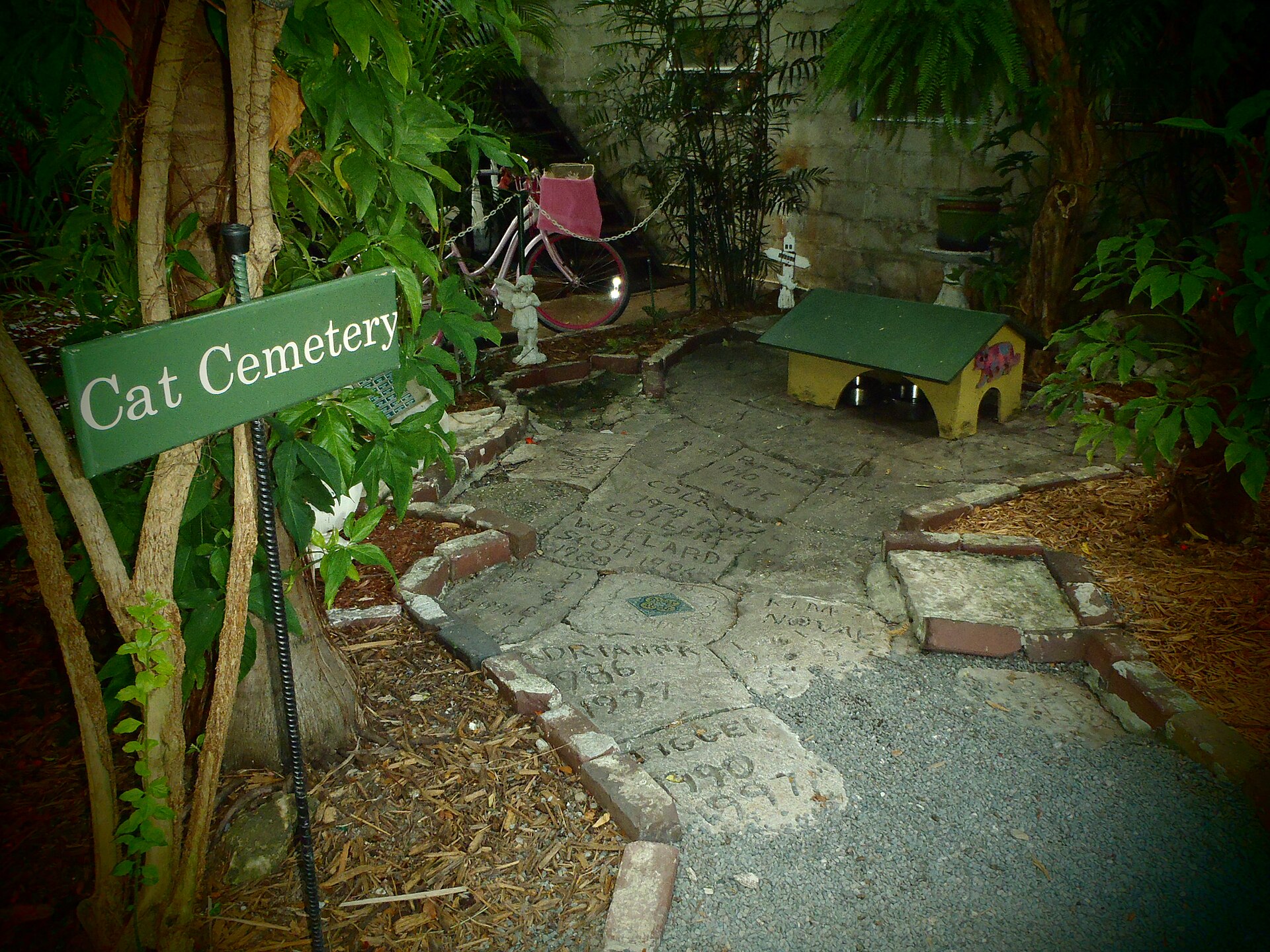
The cat cemetery. Every one had a name and most of them were famous.Reyvato, CC BY-SA 3.0
Same numbers as the list. Worth keeping open on your phone.
The cats you will meet
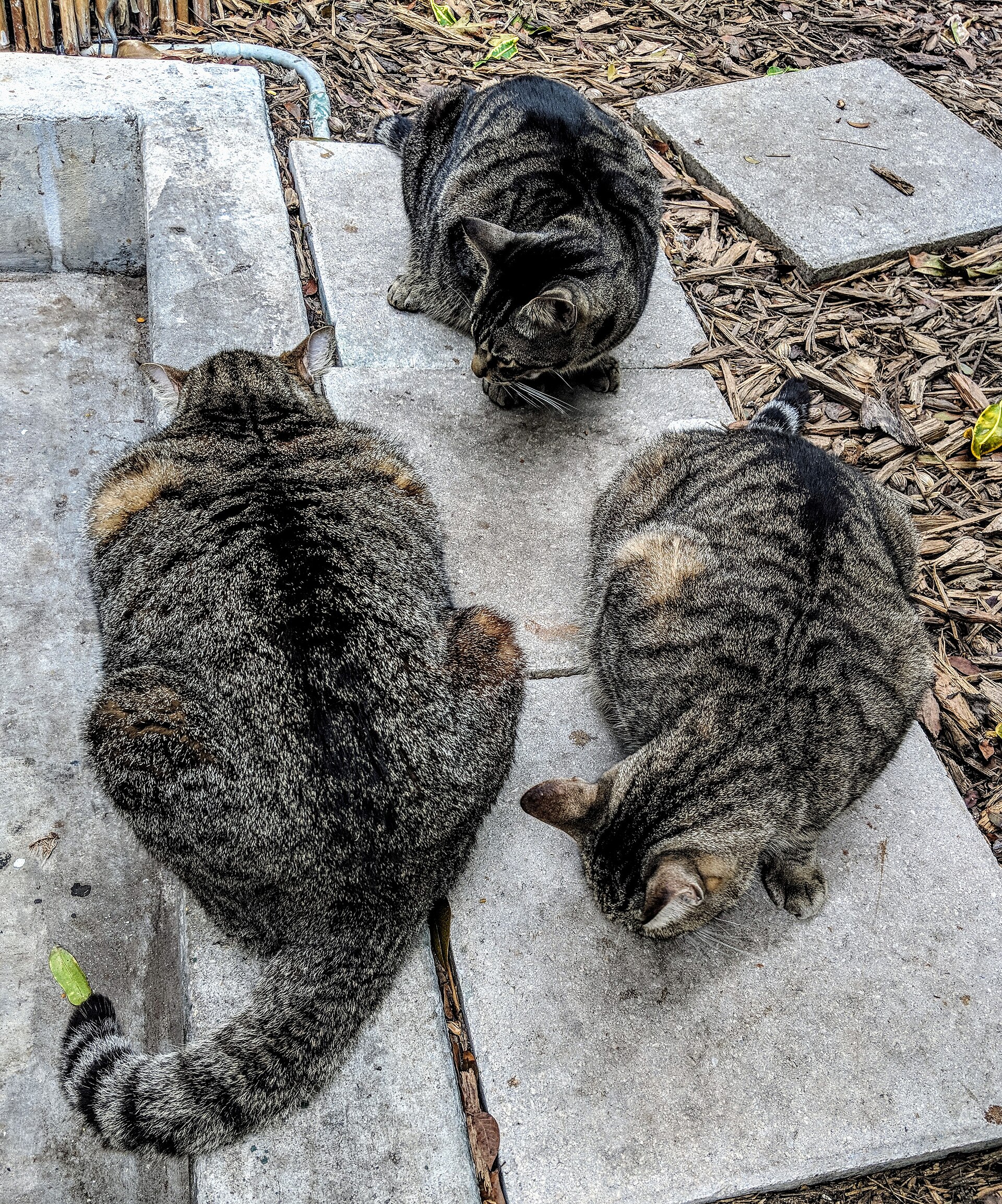
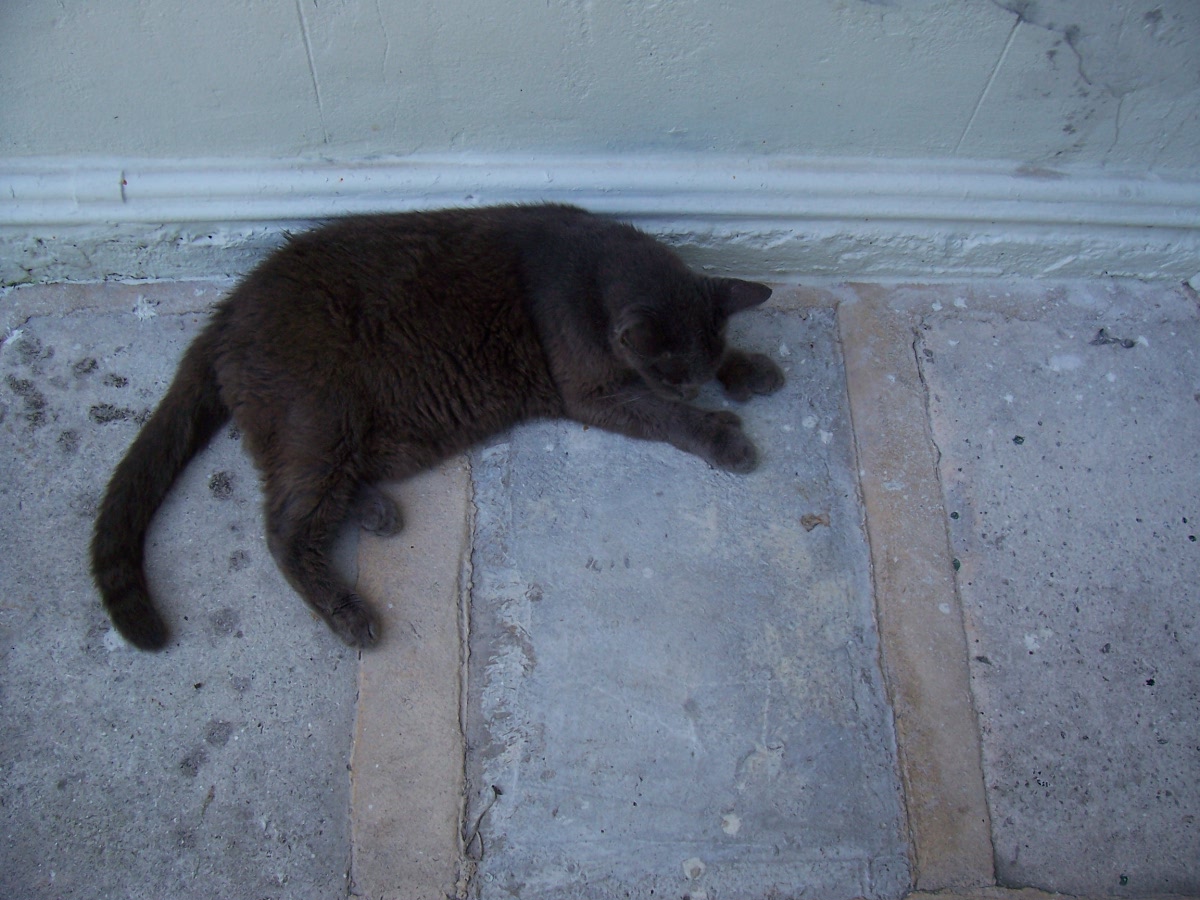
Around sixty, all descended from the same ship’s cat, fed and vetted by the museum, named after famous people, and completely uninterested in the tour. About half are polydactyl, with six or more toes on the front paws. They are fat, slow and sociable, and the garden is entirely theirs.
The six-toed ones
Any colour, with front paws like mittens.
Roughly half the colony. The extra toe is a dominant gene, which is why it has lasted ninety years.
The five-toed ones
Normal paws, same family.
Still Snow White’s descendants. The museum counts them all.
Tabbies
Grey and brown stripes, heavy set.
The most common coat in the garden and the ones most likely to be asleep on the path.
Everybody says All the Hemingway cats have six toes.
Actually About half do. The gene is dominant but not universal, so every litter has some with and some without. The museum keeps all of them regardless, and the five-toed ones are just as much Snow White’s.
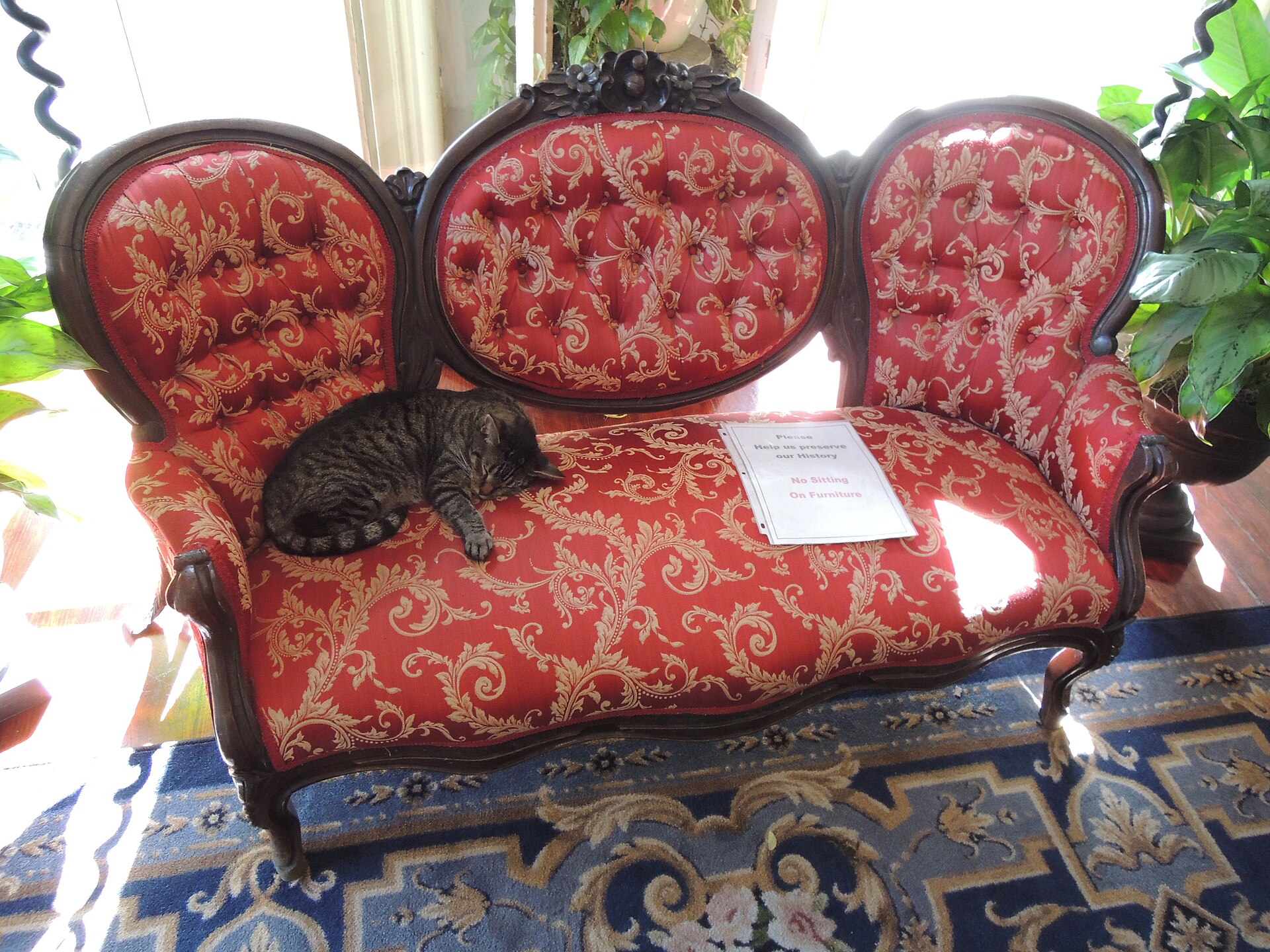
How not to be the annoying one
- Do not pick them up. You may stroke a cat that comes to you. They have extra claws and staff who will notice.
- No flash. It bothers them, and it says so on the way in.
- Do not feed them. They are on a diet the staff manage, and half of them are already the shape they are.
- Let a sleeping cat sleep, including on the beds, which is where the tour will find them.
- Cash for the window. There is a machine on Duval if you forget.