Neighbourhood Barcelona, Spain
Cats in El Raval
A giant bronze cat by Botero that wandered the city for sixteen years before settling on the Rambla del Raval, a volunteer cat garden behind the Boqueria, and the real colonies the city registers, ear-tips and feeds. Barcelona’s cats, on the wrong side of the Rambla.
Where to find cats in El Raval: El Raval, the old quarter west of La Rambla in Barcelona: the Rambla del Raval, the lanes behind the Boqueria market, and the Romanesque church of Sant Pau del Camp. When: Morning for the market and the lanes; Saturday midday for the cat garden if it is open. Any month; spring is best. Why here: The one city on this site that put a cat in bronze, registers its colonies, and has a garden where volunteers keep the strays in the middle of the old town.
The short version
- Where
- El Raval, the old quarter west of La Rambla in Barcelona: the Rambla del Raval, the lanes behind the Boqueria market, and the Romanesque church of Sant Pau del Camp
- When
- Morning for the market and the lanes; Saturday midday for the cat garden if it is open. Any month; spring is best
- How long
- Half a day. The Raval is small and dense
- What it costs
- Free. The cat garden takes donations and sells things for the shelter
- Why here
- The one city on this site that put a cat in bronze, registers its colonies, and has a garden where volunteers keep the strays in the middle of the old town
What to bring
- Saturday, if you canEl Jardinet dels Gats, the volunteer cat garden behind the Boqueria, opens to visitors for a couple of hours at midday on Saturdays. Check before you go; it is run by volunteers.
- A few euros for the gardenThe garden feeds, neuters and rehomes the Raval’s strays on donations and a small shop.
- Street senseThe Raval is fine by day and lively by night. Keep the phone in the pocket and the bag in front, as anywhere in Barcelona.
- A wide lens for the BoteroThe cat is seven metres long and people sit on its back. It does not fit in a phone from close up.
Why there are cats everywhere
Barcelona has one enormous cat everyone knows and a few thousand small ones the city keeps a register of.
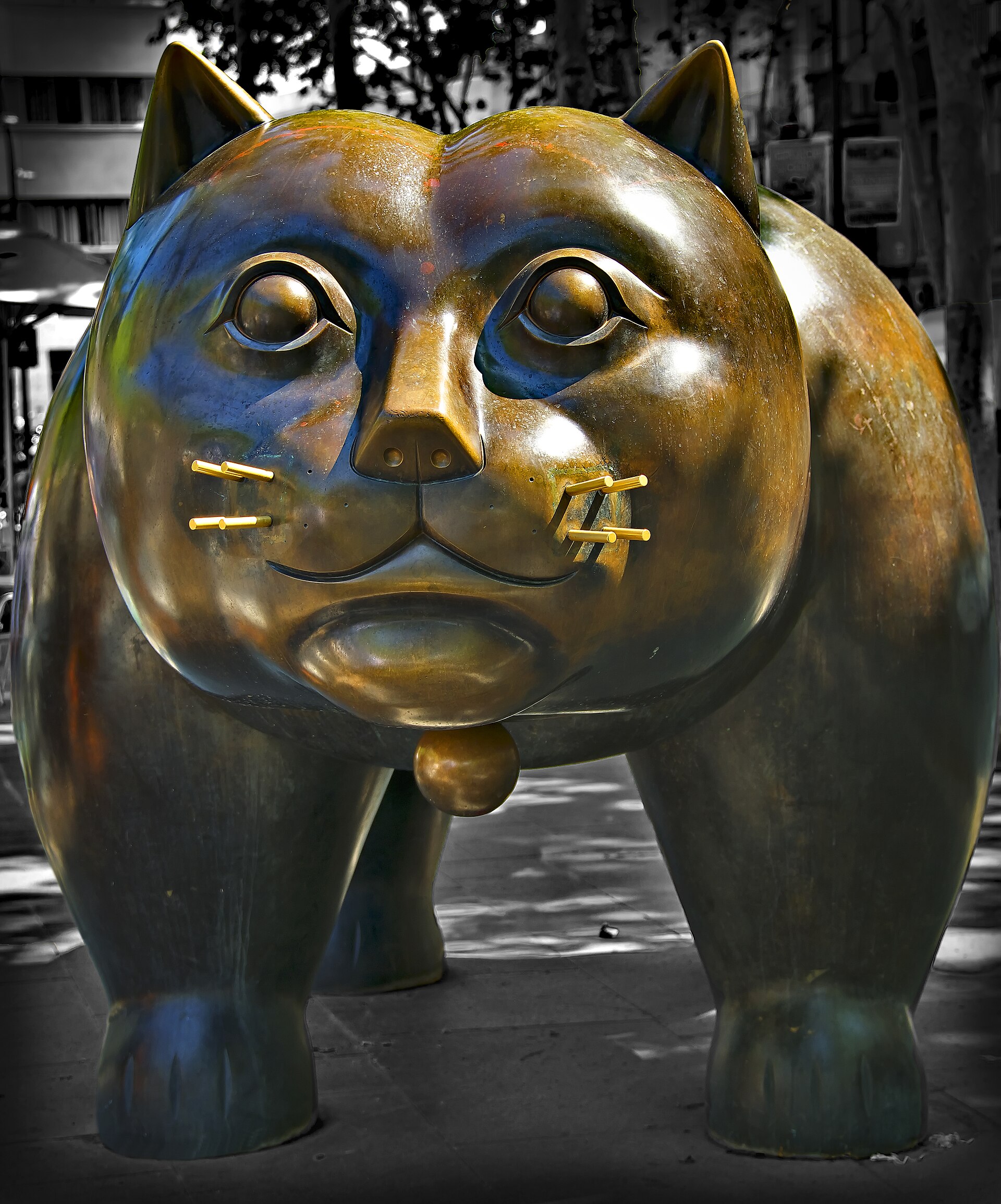
The big one is Botero’s. Fernando Botero gave the city a bronze cat in 1987, fat in the way his figures are, and the city spent sixteen years trying to find somewhere to put it: the Parc de la Ciutadella, the Olympic stadium, a couple of other spots, none of them right. In 2003 it landed on the Rambla del Raval, the wide new boulevard cut through the old quarter, and it has been there since, polished by children climbing on it and photographed by everyone who walks past. El Gat del Raval is the district’s mascot, which for a district that was once the city’s red-light quarter is a good rebrand.
The small ones are real. Barcelona runs an official programme for its street cat colonies: registered, neutered, ear-tipped, and fed by authorised volunteers, in parks, courtyards and building sites across the city. It is one of the better-organised systems in Europe. In the Raval, a group of volunteers went further and made a garden: El Jardinet dels Gats, a walled plot a few streets behind the Boqueria market where the strays of the quarter are kept, treated and rehomed, and which opens its gate to visitors on Saturday middays. It is small, cheerful and run entirely on goodwill.
The rest of the Raval’s cats are where the Raval’s cats have always been: in the cloister garden of Sant Pau del Camp, the little Romanesque church that is older than anything around it, on the terraces of the bars around the MACBA where the skateboarders are, and in the courtyards of the old tenements. Look for the ear tips. They mean the city has been.
The walk
From the Boqueria through the lanes to the cat garden, down to the Botero and the Rambla del Raval, on to Sant Pau del Camp, and back up to the MACBA for a drink. Two hours.
- From Barcelona airportAerobús to Plaça de Catalunya, then walk45 minThe Raval starts across La Rambla from the square.
- From Anywhere on the metroLine 3 to Liceu10 minThe station is on La Rambla by the Boqueria. Turn west.
- From Sants stationMetro line 3 to Liceu15 minTrains from Madrid and France arrive at Sants.
La Boqueria and the lanes behind
The great market on La Rambla, and the lanes behind it into the Raval. The cat garden, El Jardinet dels Gats, is a few streets in; look for the painted gate and the Saturday opening hours on it.
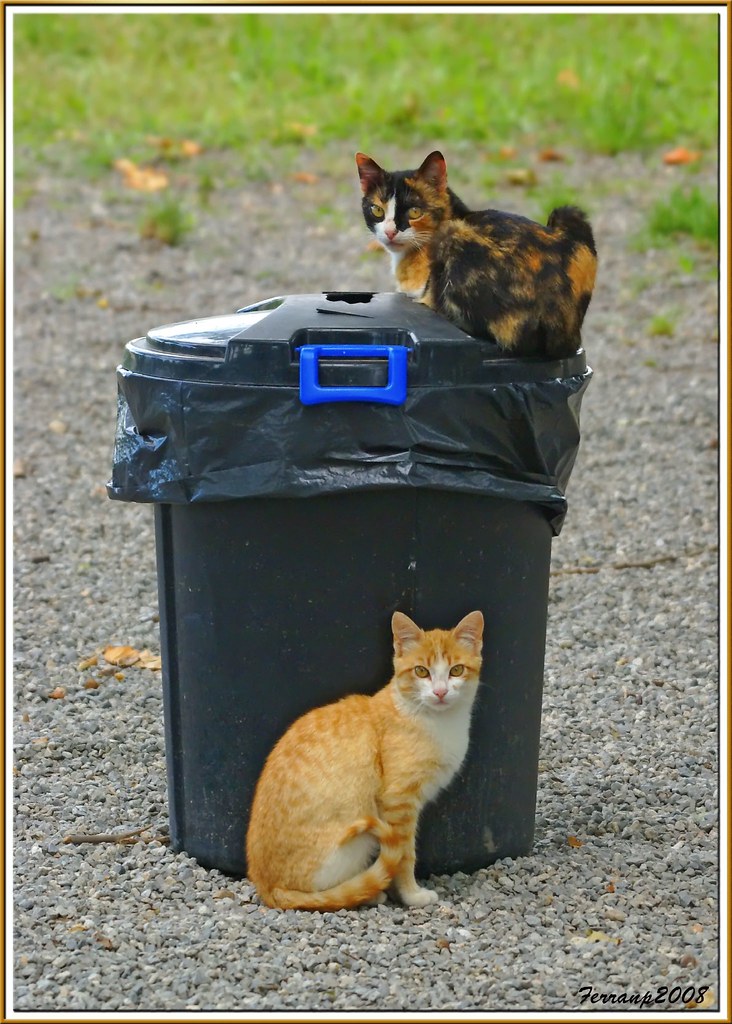
Mother and son, the photographer said. Street cats of the kind the garden takes in.ferran pestaña, CC BY-SA 2.0 The Rambla del Raval and the Botero
Down through the quarter to the wide boulevard and the bronze cat in the middle of it. Sit on its back; everyone does. The terraces along the Rambla are the Raval’s living room.
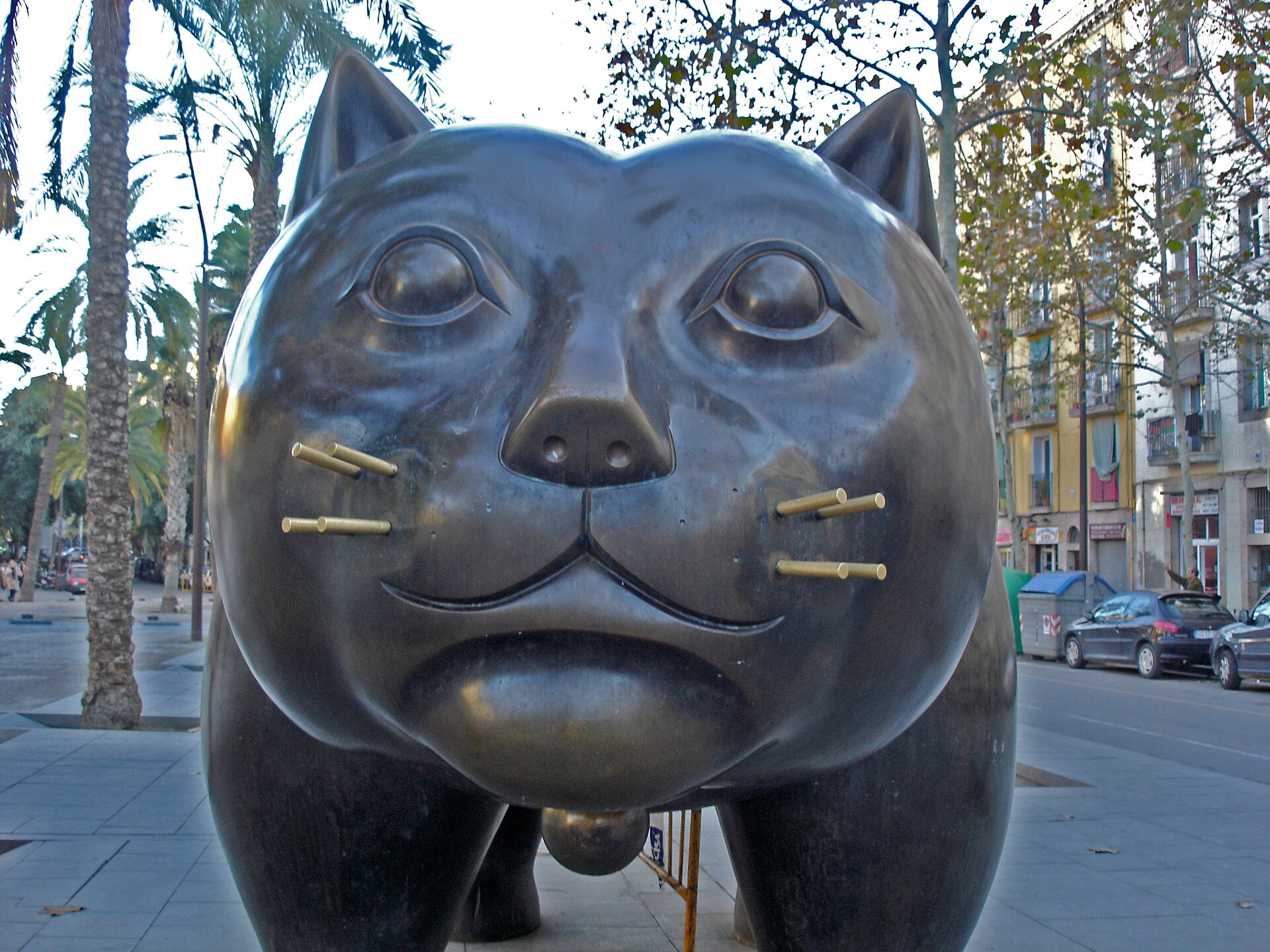
Close up. The whiskers are brass rods and the smile is Botero’s.Anna, CC BY 2.0 Sant Pau del Camp
A few minutes on, the small Romanesque monastery church with its cloister garden, the oldest building in the quarter. Cats in the garden and the churchyard, fed by the neighbours. Small fee for the cloister.
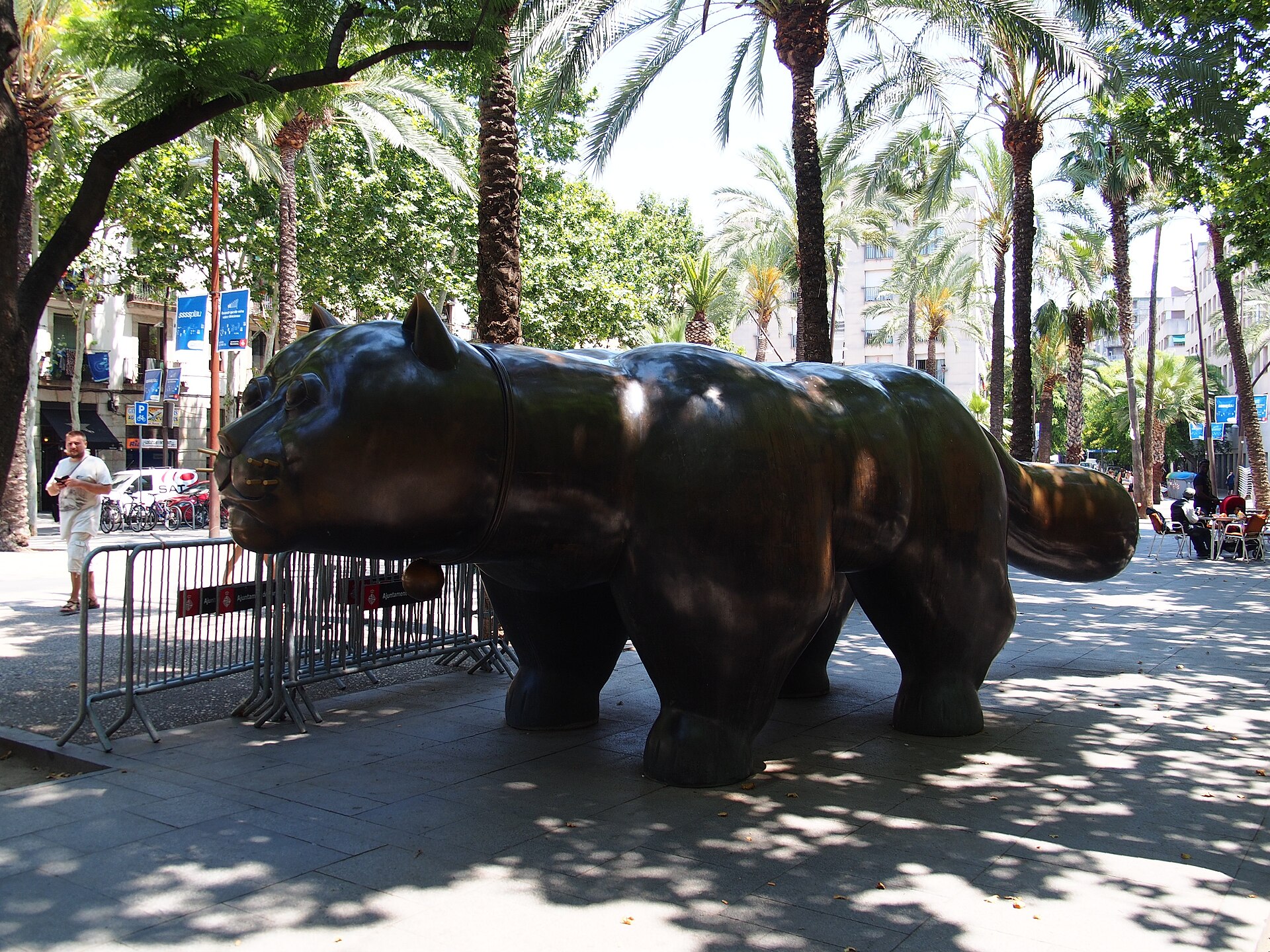
The Botero in the evening light, on the way to the church.rheins, CC BY 3.0 The MACBA
Back up through the quarter to the white museum and its skateboard plaza, with the bars of the Raval around it. Courtyard cats in the lanes off the plaza, and a drink on a terrace to finish.
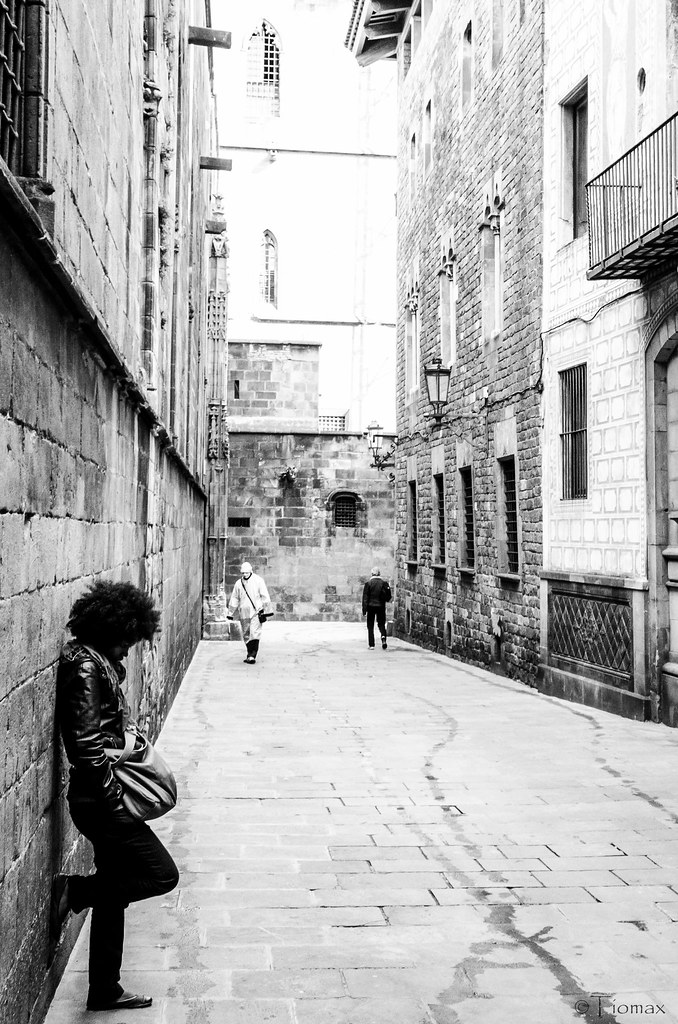
The lanes of the old town. The cats are in the courtyards off them.Tiomax80, CC BY 2.0
Same numbers as the list. Worth keeping open on your phone.
The cats you will meet
Barcelona’s street cats: tabby, tortoiseshell and black, short-coated, in registered colonies with ear tips and authorised feeders, and, in the Raval, a garden of them behind a painted gate. Plus one bronze one, seven metres long, who is the district’s idea of itself.
Colony cats
Ear-tipped, in courtyards and church gardens.
Registered with the city. Fed by volunteers with a permit.
Garden cats
Behind the gate of El Jardinet dels Gats.
Saturday middays. Some are adoptable.
The Botero
Bronze, seven metres, fat, smiling.
On the Rambla del Raval since 2003. Climbable.
Everybody says Barcelona is full of stray cats.
Actually It has colonies, and it manages them: registered, neutered, ear-tipped and fed under permit. You will see cats in the Raval, but fewer than in Rome or Athens, because the city has been at this for years. The garden is where the numbers went.
How not to be the annoying one
- Do not feed colony cats. Feeding is by permit in Barcelona and the volunteers have the rota.
- At the garden, follow the volunteers and give something. It is their shelter.
- The Botero is for sitting on. The real cats are not.
- Sant Pau del Camp is a church. Quiet in the cloister.
- The Raval at night is a bar district. Enjoy it with your bag in front of you.