Landmark Paris, France
Cats in Père Lachaise
The biggest cemetery in Paris, a hillside of tombs and cobbled avenues where Chopin, Wilde and Piaf are buried, and a colony of cats that has lived among them for as long as anyone has been visiting.
Where to find cats in Père Lachaise: Cimetière du Père Lachaise, on the hill in the 20th arrondissement of Paris, entered from Boulevard de Ménilmontant or Porte Gambetta. When: Opening time, half past eight, when the feeders do their rounds. Autumn for the leaves. Closes at six, earlier in winter. Why here: A colony of cats in the most visited cemetery in the world, living on the tombs of the most famous dead in France.
The short version
- Where
- Cimetière du Père Lachaise, on the hill in the 20th arrondissement of Paris, entered from Boulevard de Ménilmontant or Porte Gambetta
- When
- Opening time, half past eight, when the feeders do their rounds. Autumn for the leaves. Closes at six, earlier in winter
- How long
- Two hours for the cats and the famous graves. A day if you are that kind of person
- What it costs
- Free. A map from the lodge, or the app; the cemetery is forty-four hectares and you will get lost
- Why here
- A colony of cats in the most visited cemetery in the world, living on the tombs of the most famous dead in France
What to bring
- Opening timeThe volunteers feed early. The cats are out on the warm stone until the crowds arrive for Jim Morrison.
- A map of the gravesChopin in division 11, Wilde in 89, Piaf in 97, Proust in 85. The cats prefer the older, quieter divisions in between.
- Shoes for cobbles and hillsThe cemetery climbs a hill on cobbled avenues. Rain makes them treacherous.
- NothingThe colony is fed by volunteers on a schedule. Food on a tomb is disrespect and rats.
Why there are cats everywhere
The dead of Père Lachaise have had cats for company since the cemetery opened in 1804.
Napoleon opened it on a hill outside the city when the churchyards were full, and nobody wanted to be buried so far out until the authorities moved Molière and La Fontaine there as an advertisement. It worked. Two centuries later it holds Chopin, Balzac, Proust, Wilde, Piaf, Morrison, Modigliani and a million others, on forty-four hectares of cobbled avenue, chestnut trees and stone.
And cats. They have been here as long as the tombs, living in the hollows of the older monuments, on the sun-warmed granite of the newer ones, and in the ivy along the walls. For decades they were fed by the gardiens and by the same kind of Parisian women who saved the cats of Montmartre Cemetery in 1977; today the colony is sterilised, identified and fed by volunteers, and smaller than it was, which is what happens when the feeding is done properly.
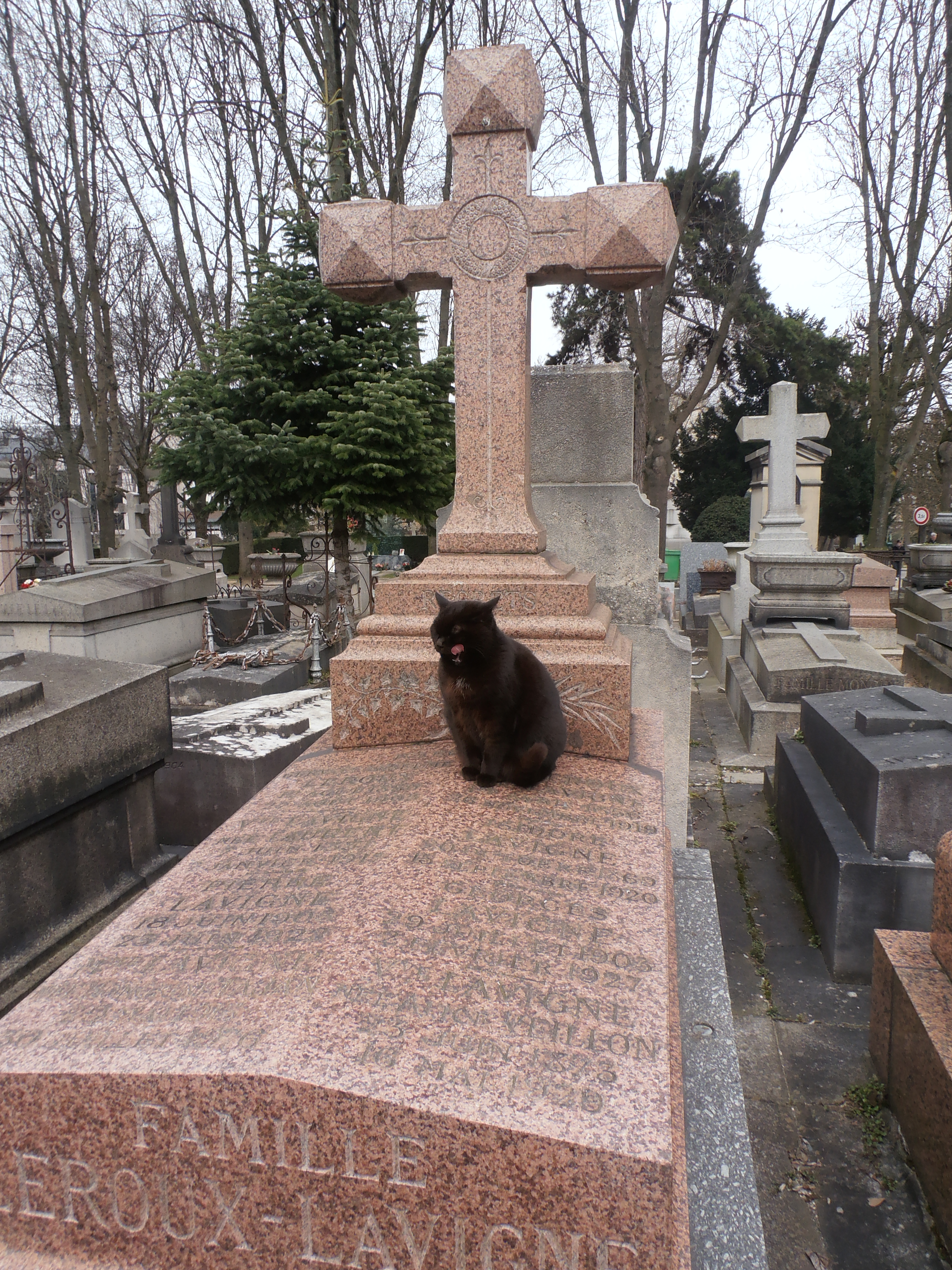
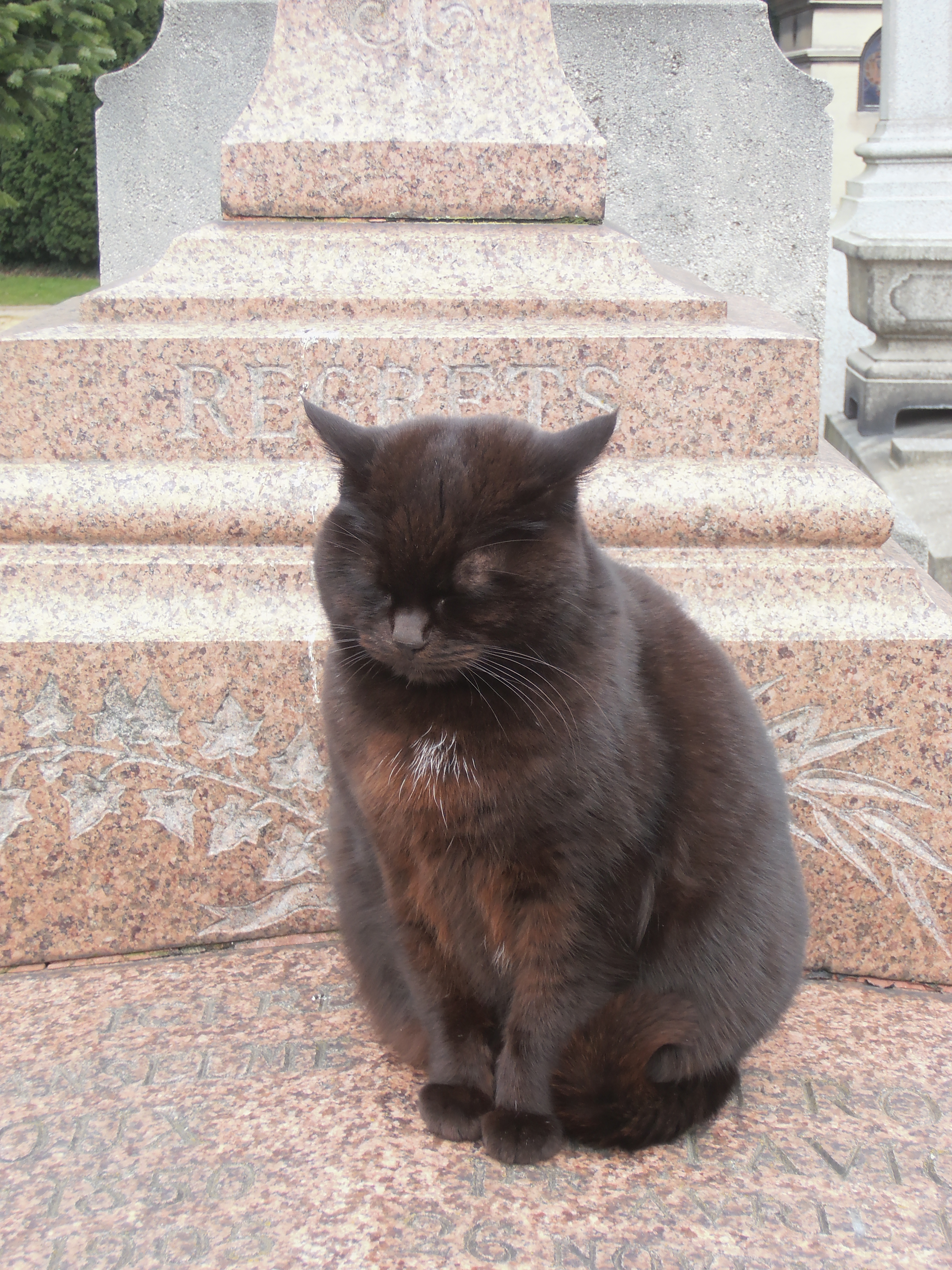
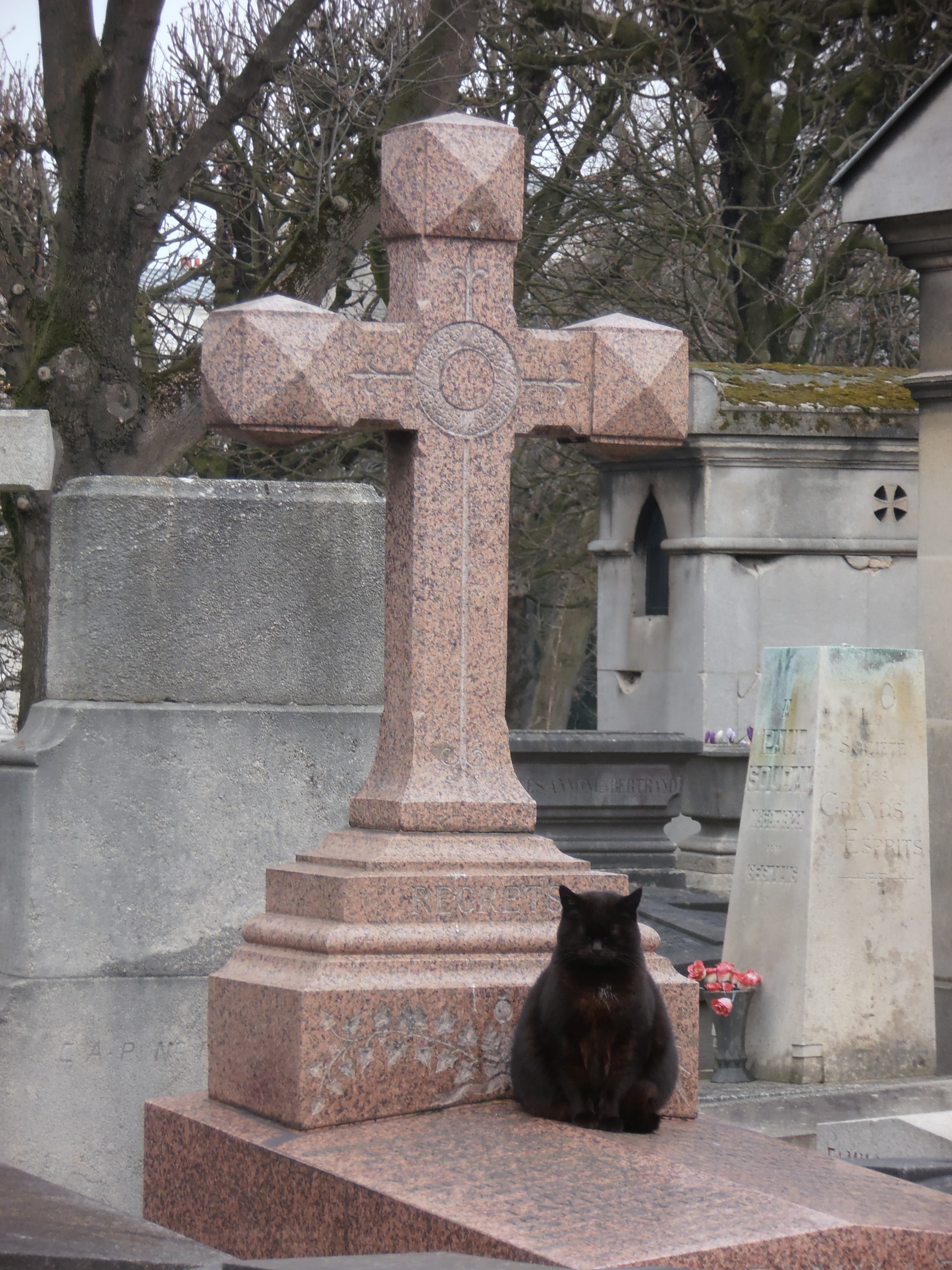
They sit on the famous graves, which delights the visitors, and in the quiet older divisions on the hill, which delights the cats. The one in the photograph at the top of this page is on the tomb of a family called Leroux-Lavigne, who are not famous and will not mind. Walk the cobbles from the main gate up the hill towards Gambetta; the cats are in the divisions the tour groups skip.
The walk
In at the main gate on Boulevard de Ménilmontant, up the hill through the old divisions, along the famous graves, and out at Porte Gambetta at the top. Two hours on cobbles.
- From Anywhere on the metroLine 2 to Philippe Auguste, or 3 to Gambetta10 minPhilippe Auguste for the main gate at the bottom; Gambetta for the top. Walk down, not up.
- From Gare du NordLine 2 direct to Philippe Auguste15 minEight stops east along the line.
- From Montmartre CemeteryLine 2 across the north of the city25 minThe other cemetery on this site. Both in a day is the cat-and-graves grand tour.
The main gate
The entrance on the boulevard, by the Philippe Auguste metro. Map from the lodge. The avenue climbs straight ahead; the cats are in the older divisions on either side of it as soon as you leave the crowd.
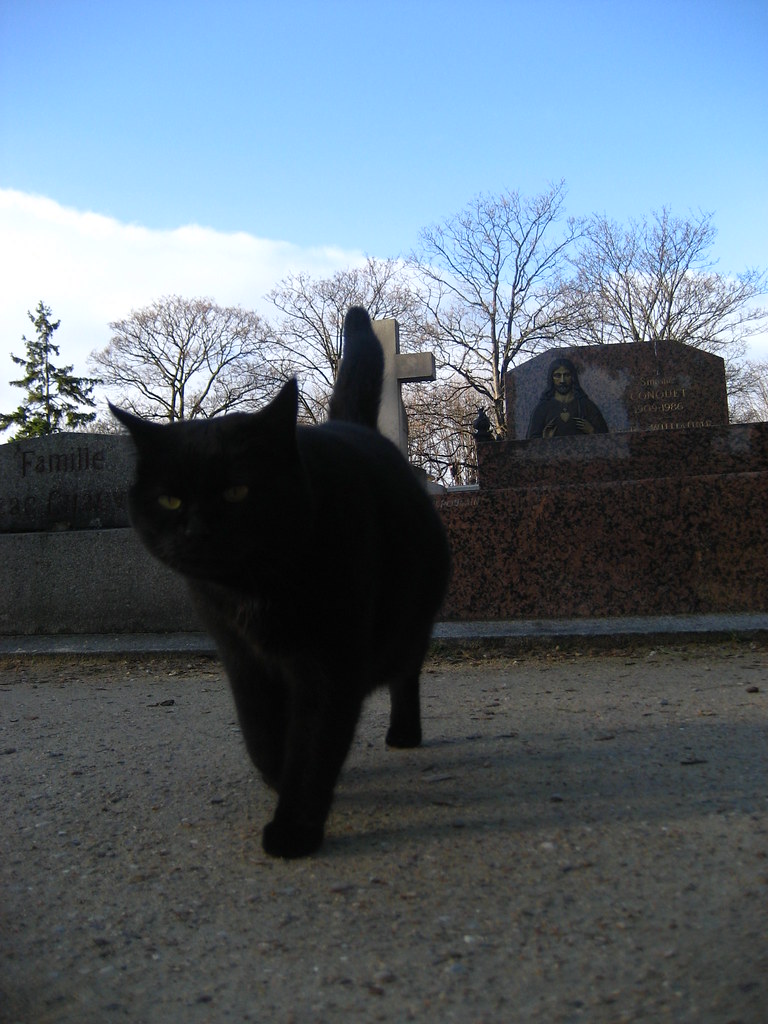
On the cobbles inside the gate. The avenue climbs; so does the cat.Jeanne Menj, CC BY 2.0 The old divisions on the hill
Left off the main avenue into the oldest part, with the tombs of the Restoration under the chestnuts. This is where the colony lives, in the hollows of the monuments and on the warm stone. Walk slowly and look low.
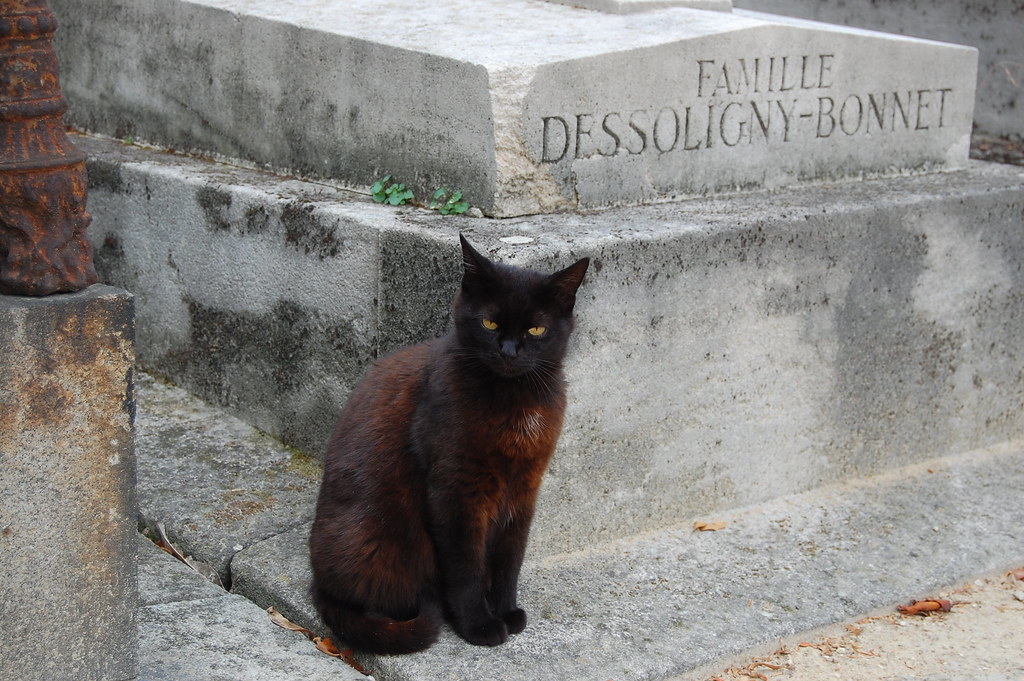
The old divisions. The cats prefer the dead nobody visits.Sunfox, CC BY-SA 2.0 Chopin and the famous
Chopin in division 11 with the flowers, Morrison in 6 with the crowd, then up to Wilde in 89 behind his glass screen, and Piaf in 97. Cats on the sunny slabs nearby, not on the famous ones; those are too busy.
Near the famous ones, on an unfamous slab. Better light, fewer people.Jeanne Menj, CC BY 2.0 Porte Gambetta
The upper gate at the top of the hill, by the Gambetta metro, with the columbarium and the crematorium nearby. Cats along the top wall in the ivy. Out here for the metro home.
Near the top gate. The last of the colony before the metro.Brett Hammond, CC BY 2.0
Same numbers as the list. Worth keeping open on your phone.
The cats you will meet
A managed cemetery colony: sterilised, identified, fed by volunteers, and old, because nothing here has ever chased them. Black and tabby mostly, thick-coated by November, and used to being photographed on the stone by people who came for someone else.
Tomb cats
On the warm granite of the sunny slabs.
The photographs. Sit two graves away and wait.
Hollow cats
In the broken monuments of the old divisions.
Where the colony actually lives. Look low.
Wall cats
In the ivy along the top wall by Gambetta.
The shy ones. Seen, not approached.
Everybody says The cemetery is full of stray cats.
Actually It has a managed colony, sterilised and fed on a schedule, that has shrunk over the years as good management does. You will see cats; you will not see many. The ones you see are old, well, and named.
How not to be the annoying one
- It is a cemetery with funerals most days. Quiet, and no climbing on tombs for a photograph, with or without a cat.
- Do not feed. The volunteers do, and food on graves brings rats and complaints.
- Do not chase a cat into a monument. They live in there.
- The famous graves have crowds. The cats have the rest. Go to the rest.
- The gates close at six. The cats stay; you do not, and the guards will find you.