Village New Taipei, Taiwan
Cats in Houtong Cat Village
A dead coal-mining village an hour from Taipei that a cat lover and a camera brought back to life. Cats on the station roof, a bridge built for them, and a set of rules on a yellow sign.
Where to find cats in Houtong Cat Village: Houtong, a former mining village in the Keelung River valley in Ruifang, New Taipei, an hour from Taipei by local train. When: A weekday morning. Weekends fill the bridge and the lanes, and the cats retreat to the roofs. Why here: The clearest case anywhere of cats saving a town: the mine closed, the people left, and the cats brought the visitors back.
The short version
- Where
- Houtong, a former mining village in the Keelung River valley in Ruifang, New Taipei, an hour from Taipei by local train
- When
- A weekday morning. Weekends fill the bridge and the lanes, and the cats retreat to the roofs
- How long
- Two hours for the village and the mine remains. Half a day if you pair it with Jiufen next door
- What it costs
- The train, which is a couple of dollars. The village is free
- Why here
- The clearest case anywhere of cats saving a town: the mine closed, the people left, and the cats brought the visitors back
What to bring
- A local train, not an expressFrom Taipei Main Station straight to Houtong in about 55 minutes. Expresses do not stop here.
- An EasyCardTap in, tap out, for the train and the bus to Jiufen after.
- Nothing to feed themThe shops sell cat snacks. The sign at the station says not to use them. Believe the sign.
- Shoes for steps and a bridgeThe village is on the hill across the river from the station, up a covered footbridge and a lot of stairs.
Why there are cats everywhere
Houtong dug more coal than anywhere in Taiwan, and then it stopped.
The mines opened under Japanese rule in the 1920s and at the peak six thousand people worked here, shifting around 220,000 tonnes a year out of the hill above the river. The village was built for them: the rows of houses on the slope, the bridge that carried the coal across the water to the railway, the bathhouse and the clinic. In 1990 the last mine shut. Within a few years most of the people had gone and the houses were emptying.
The cats did not leave. In 2008 a local cat lover began looking after the ones left behind, organised volunteers, and put their photographs online. The photographs travelled. People came to see the cats, then to see the village, and a place that had been quietly closing found itself on a CNN list of the best cat-watching spots in the world. The county built a footbridge from the station over the tracks and named it the Cat Bridge. There is a cat information station at the top of it, and a mining museum at the bottom.
It is worth being honest about what it is now. It is a village of cats and cat shops, cat murals, cat cafes and cat-shaped pineapple cakes, run largely for the visitors that the cats bring. The real cats, a couple of hundred at the height of it, live on the roofs and in the lanes and mostly ignore the merchandise. In early 2026 the Taipei Times reported that their numbers had dropped sharply, and the village is arguing about why.
The mine is still here too, and quieter, and worth the walk: the coal-washing plant, the bridge the coal crossed on, the tunnel mouths in the hillside. The cats sleep on all of it.
The walk
Off the train, up over the Cat Bridge into the village on the hill, through the lanes to the top, then back down to the river and the mine. Two hours, including a lot of standing still.
- From Taipei Main StationLocal train on the Yilan line to Houtong55 minLocal trains only; the expresses go straight through. Every half hour or so.
- From JiufenBus down to Ruifang, then one stop on the Pingxi line20 minTen minutes on the bus, six on the train. Do Jiufen in the afternoon and Houtong in the morning, not the other way round.
- From KeelungTrain to Ruifang, change for Houtong35 minThe nearest city, and where the coal used to go.
Houtong Station
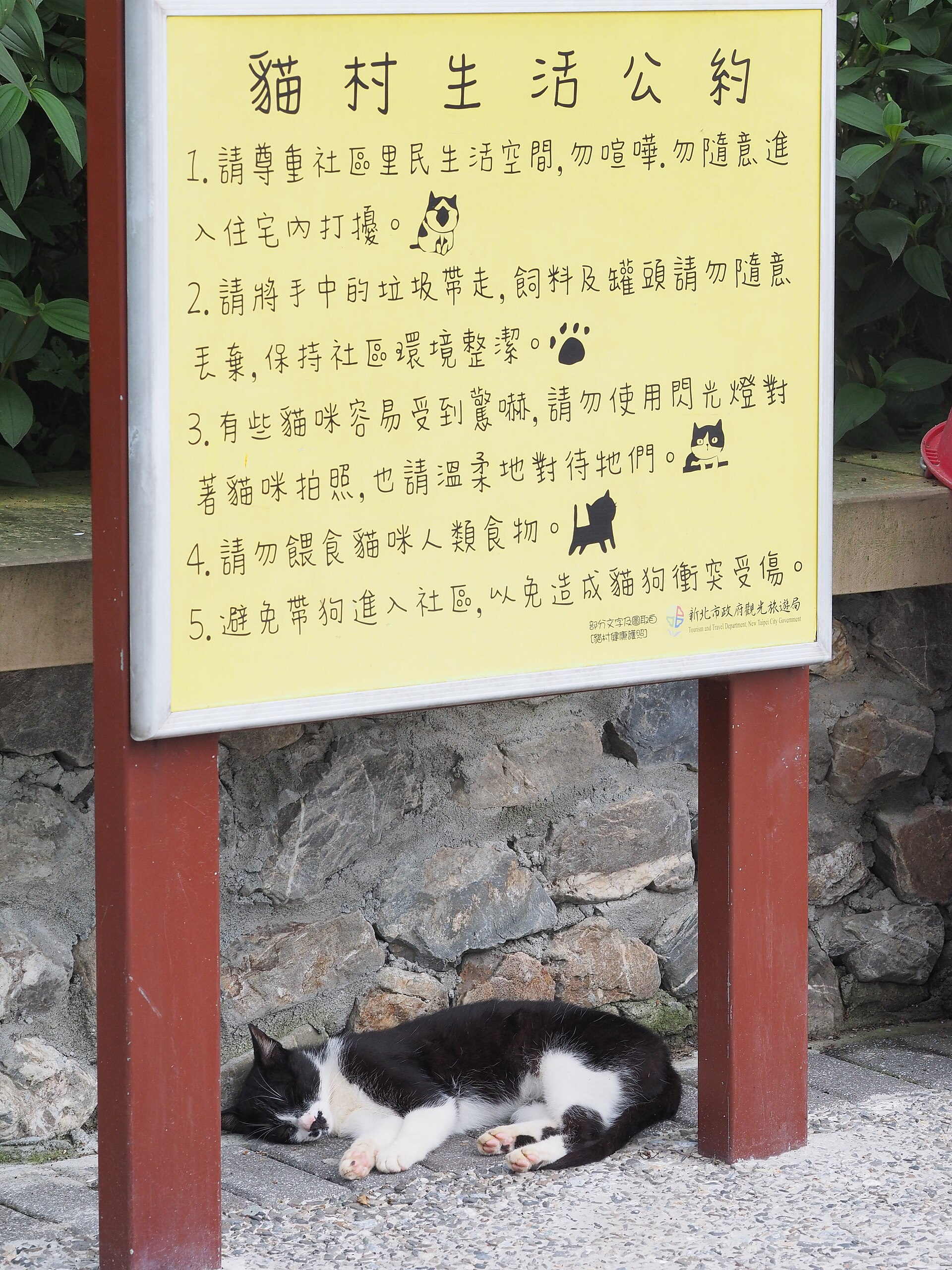
The cats start on the platform. There is usually one on the station roof and one on the sign. Read the yellow rules board on the way out and keep walking towards the covered bridge.
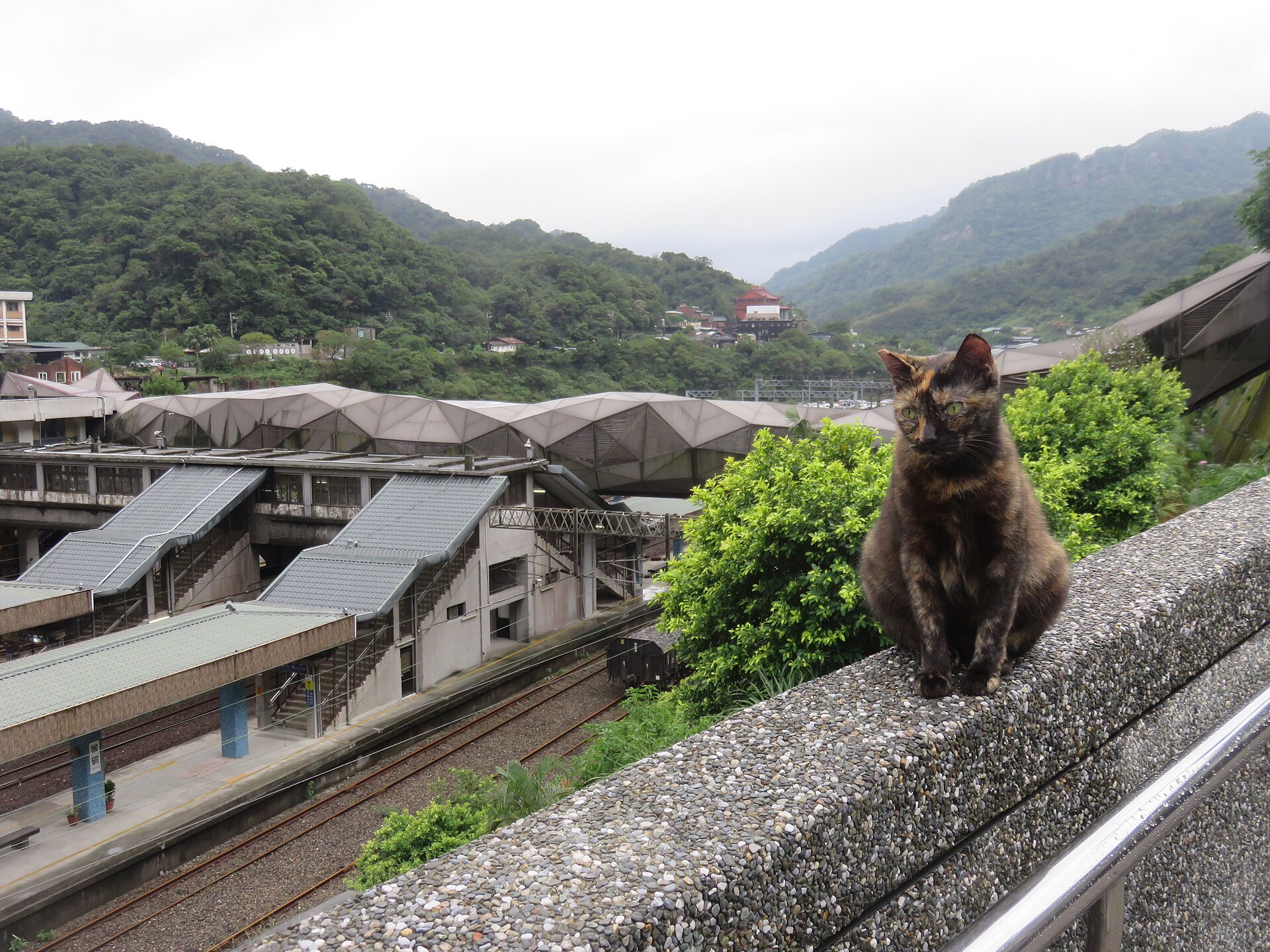
The station cat. First in, last out.Noroi, CC BY-SA 4.0 The Cat Bridge
A covered footbridge from the station over the railway to the village, built for the visitors and named for the cats, with cat cut-outs along the walls. Cats sleep in it in the rain.
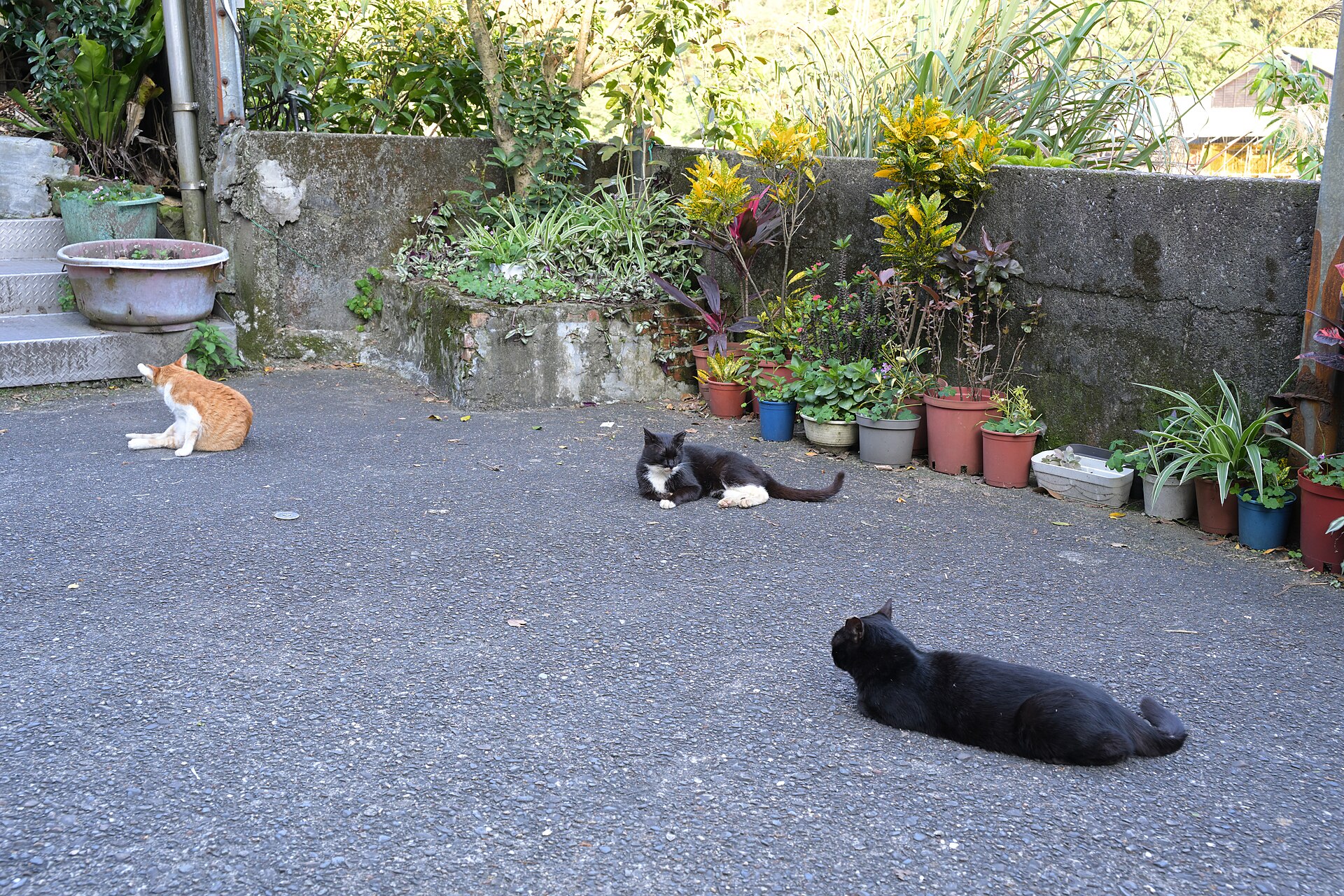
Off the bridge, on the village side. They are waiting for you to sit down.4300streetcar, CC BY 4.0 The Cat Corridor and the lanes
The village proper: a slope of old miners’ houses, narrow stepped lanes between them, cat murals on the walls and cats on the steps. The information station at the top has water, a map, and a volunteer who knows every cat by name.
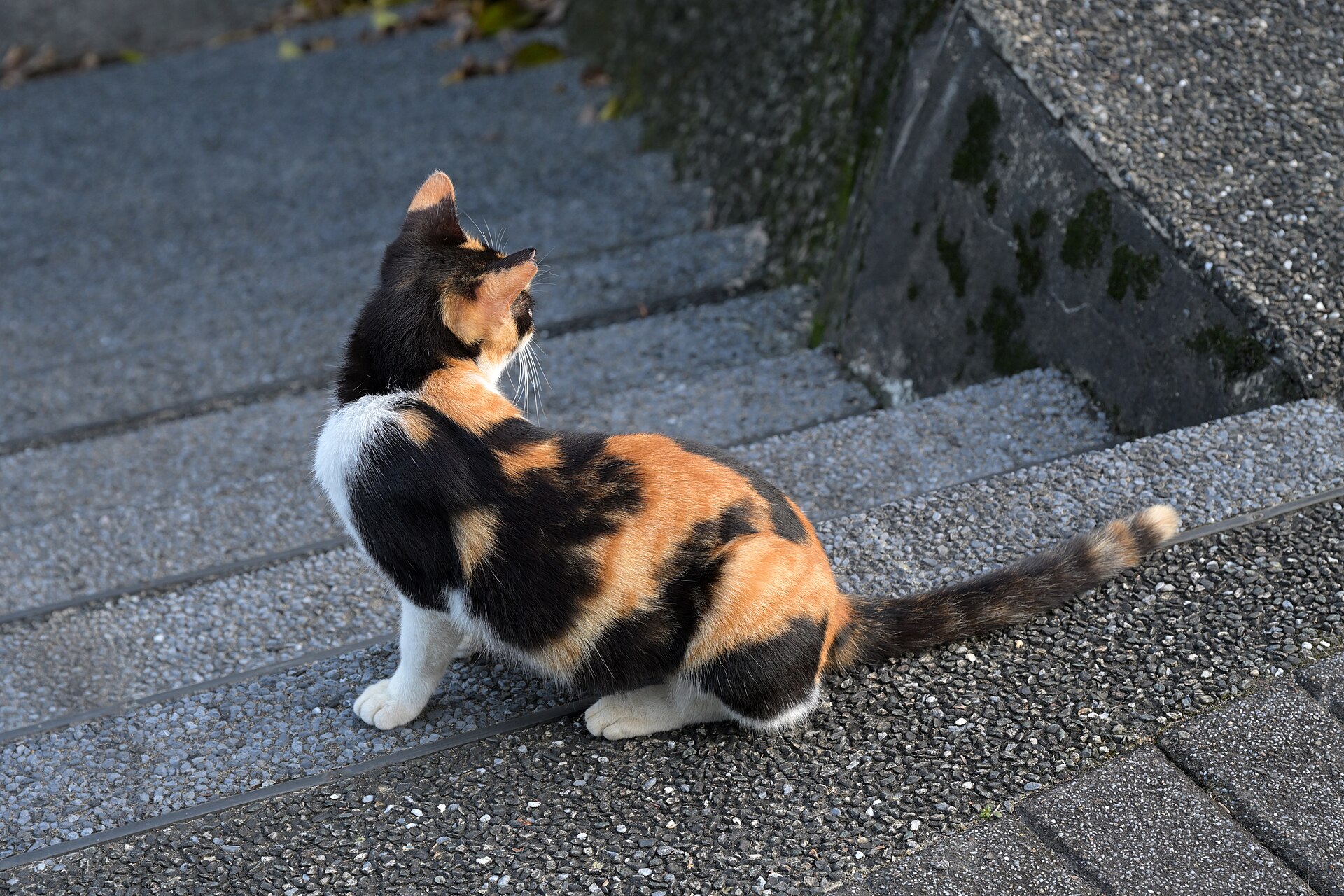
On the lane. This one has a name; ask at the information station.4300streetcar, CC BY 4.0 The Miner Cat and the roofs
A sculpture of a cat in a miner’s helmet marks the old village centre. The roofs around it are where the real cats are on a busy day. Look up, and do not climb.
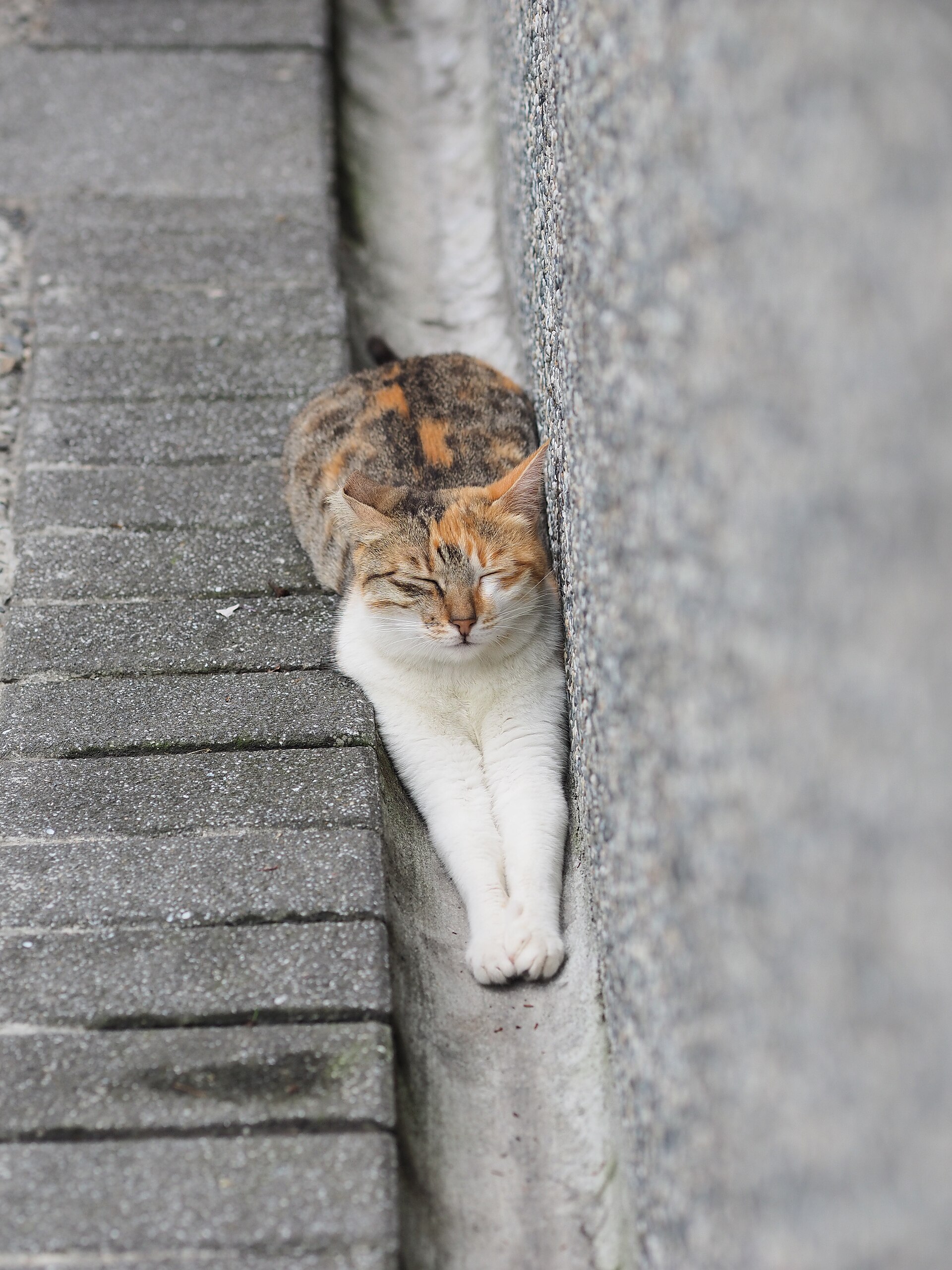
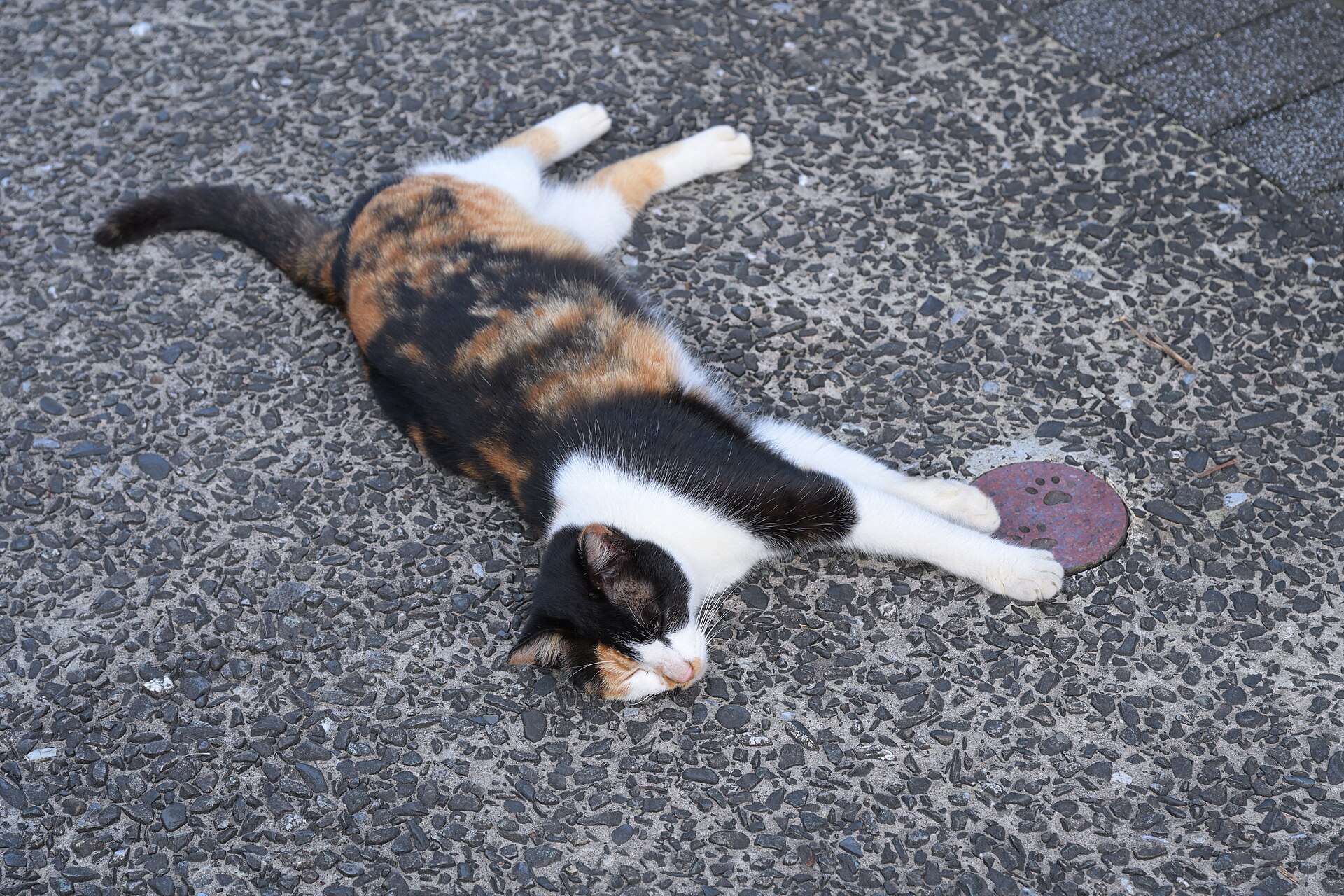
Asleep in the gutter, which in Houtong is a bed.Sun Taro, CC BY-SA 2.0 The coal bridge and the mine
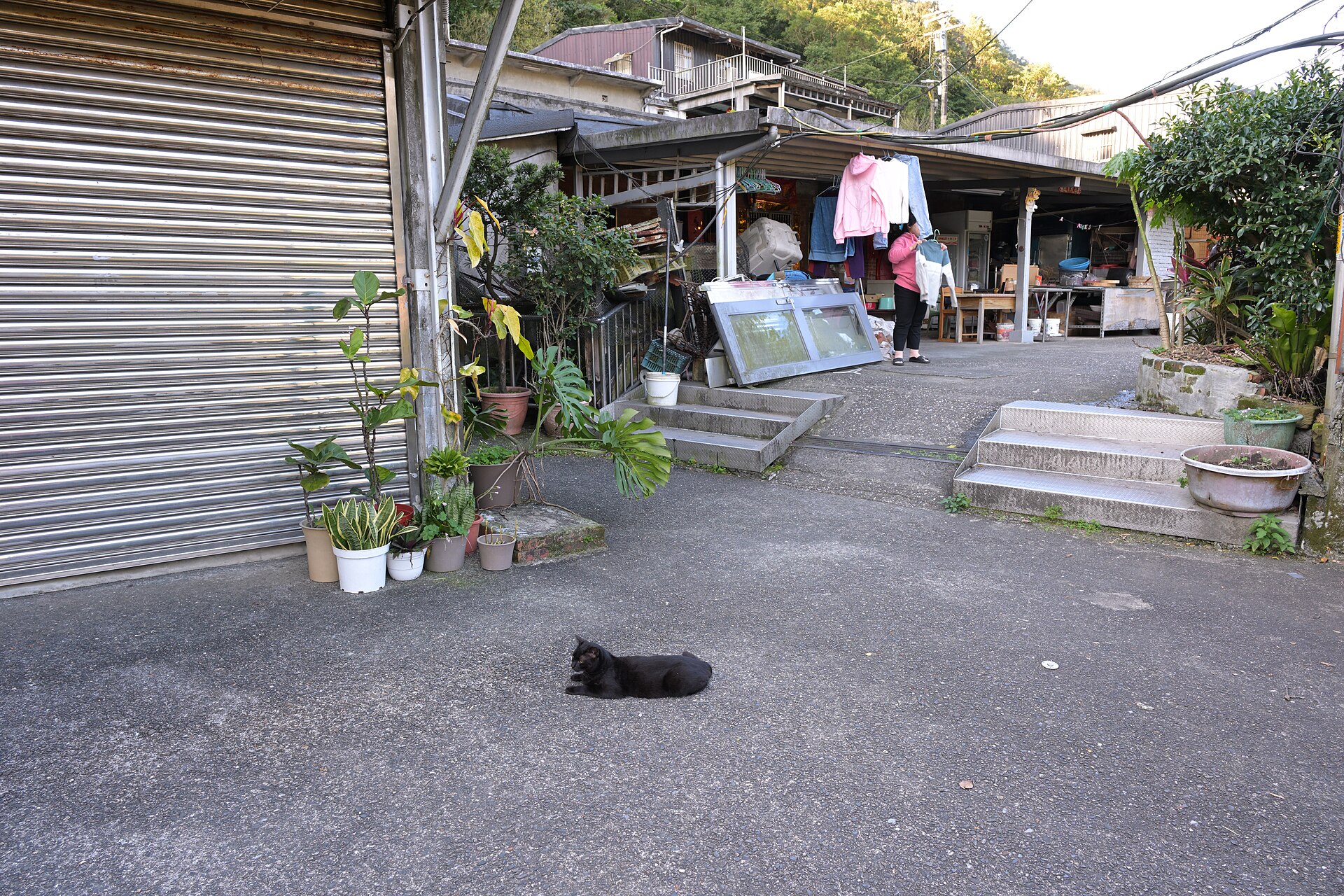
Back down and along the river to the bridge the coal was carried across, the washing plant, and the small mining museum. The cats come down here in the evening when the shops shut.
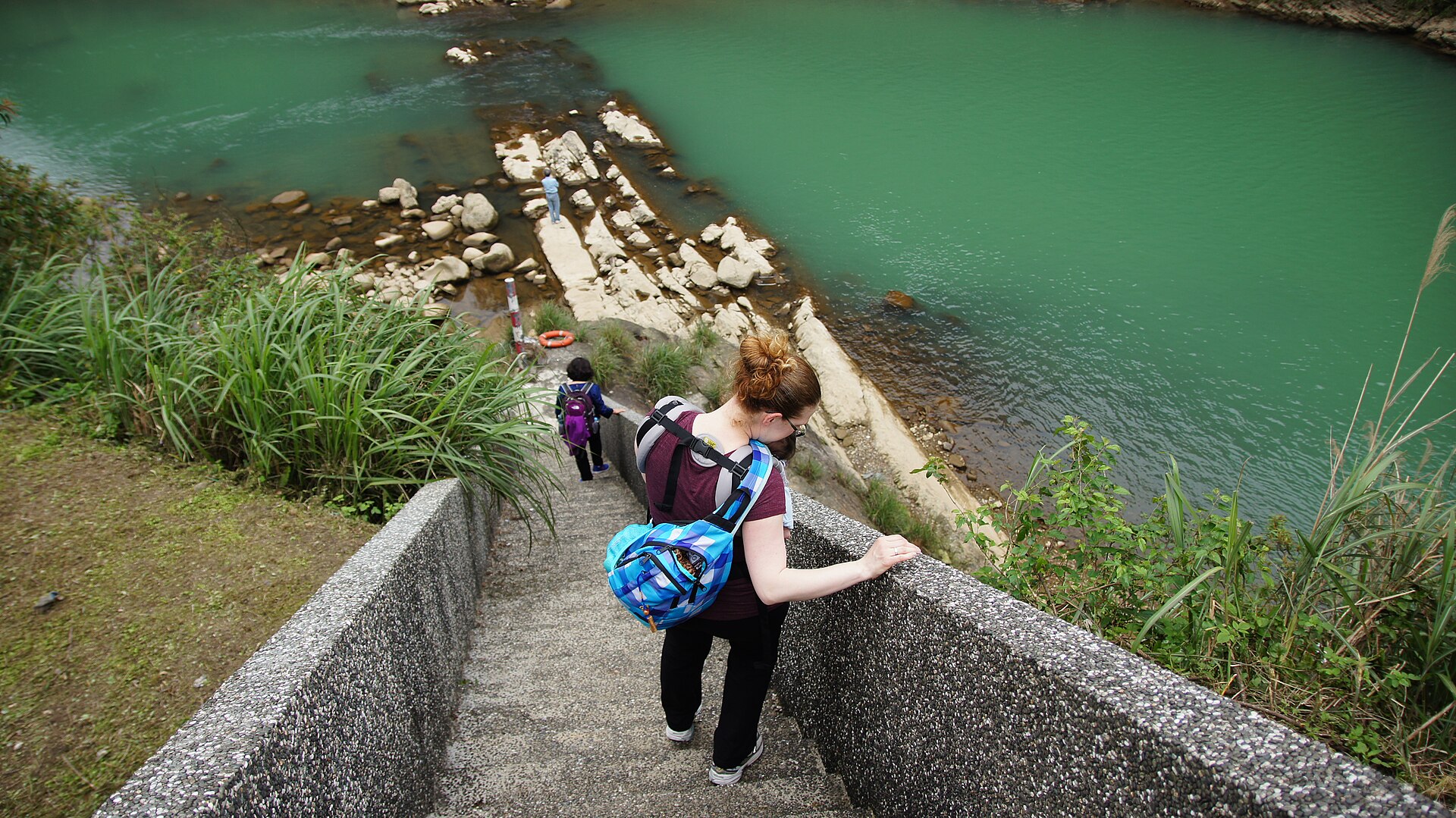
Down to the river and the old mine. Quieter, and the cats know it.CharlieDigital, CC BY-SA 4.0
Same numbers as the list. Worth keeping open on your phone.
The cats you will meet
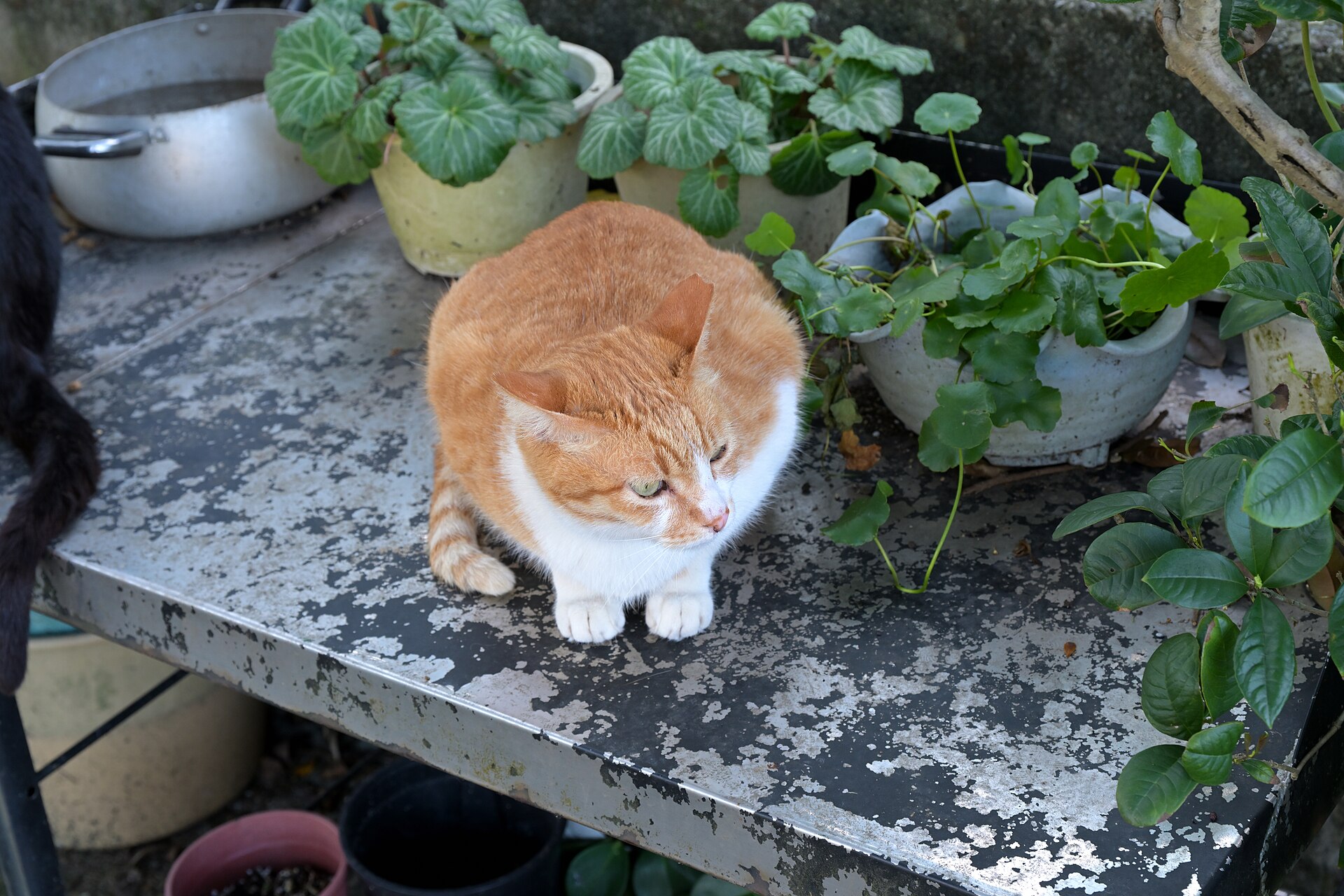
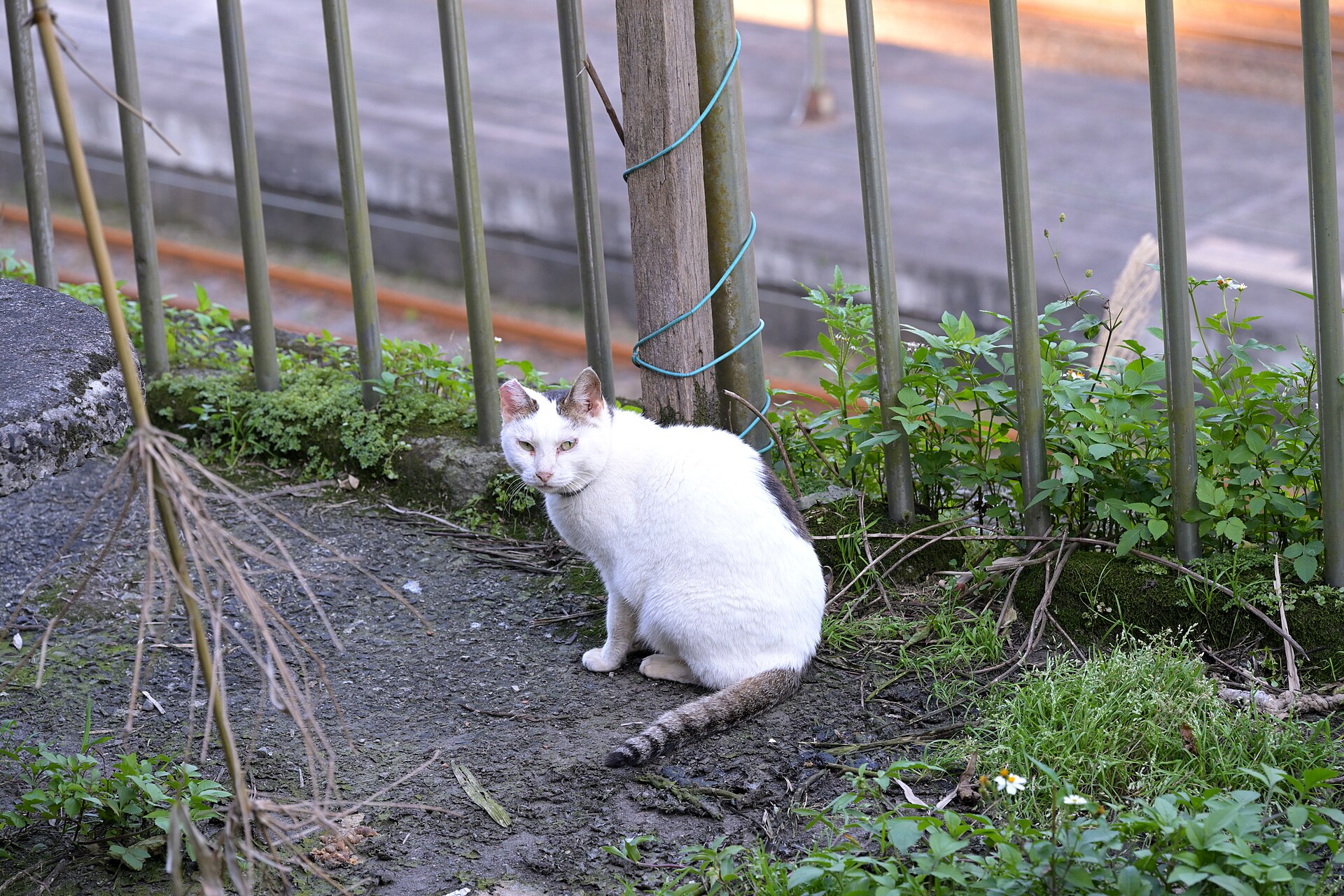
Ordinary Taiwanese street cats, neutered and ear-tipped by the village volunteers, used to cameras and mostly indifferent to them. Calicos, tabbies, black cats and a surprising number of white cats with coloured patches. Fewer than there were.
Calicos
White, orange and black, often heavy.
The village favourites, and the ones on the murals.
Tabbies
Grey or brown striped.
The roof cats. Good luck getting near one on a Saturday.
Black cats
All black, sometimes with a white chin.
Well represented and hard to photograph in the shade of the lanes.
White with patches
White body, coloured head and tail.
The look people call a Van pattern. It is a common gene, not a breed.
Everybody says Houtong is full of hundreds of cats.
Actually It was. At the height there were around two hundred; in early 2026 the local press reported a sharp fall and the village is arguing about the cause. You will still meet cats, and the good ones will still sit on you. Come for a village that cats saved, not for a headcount.
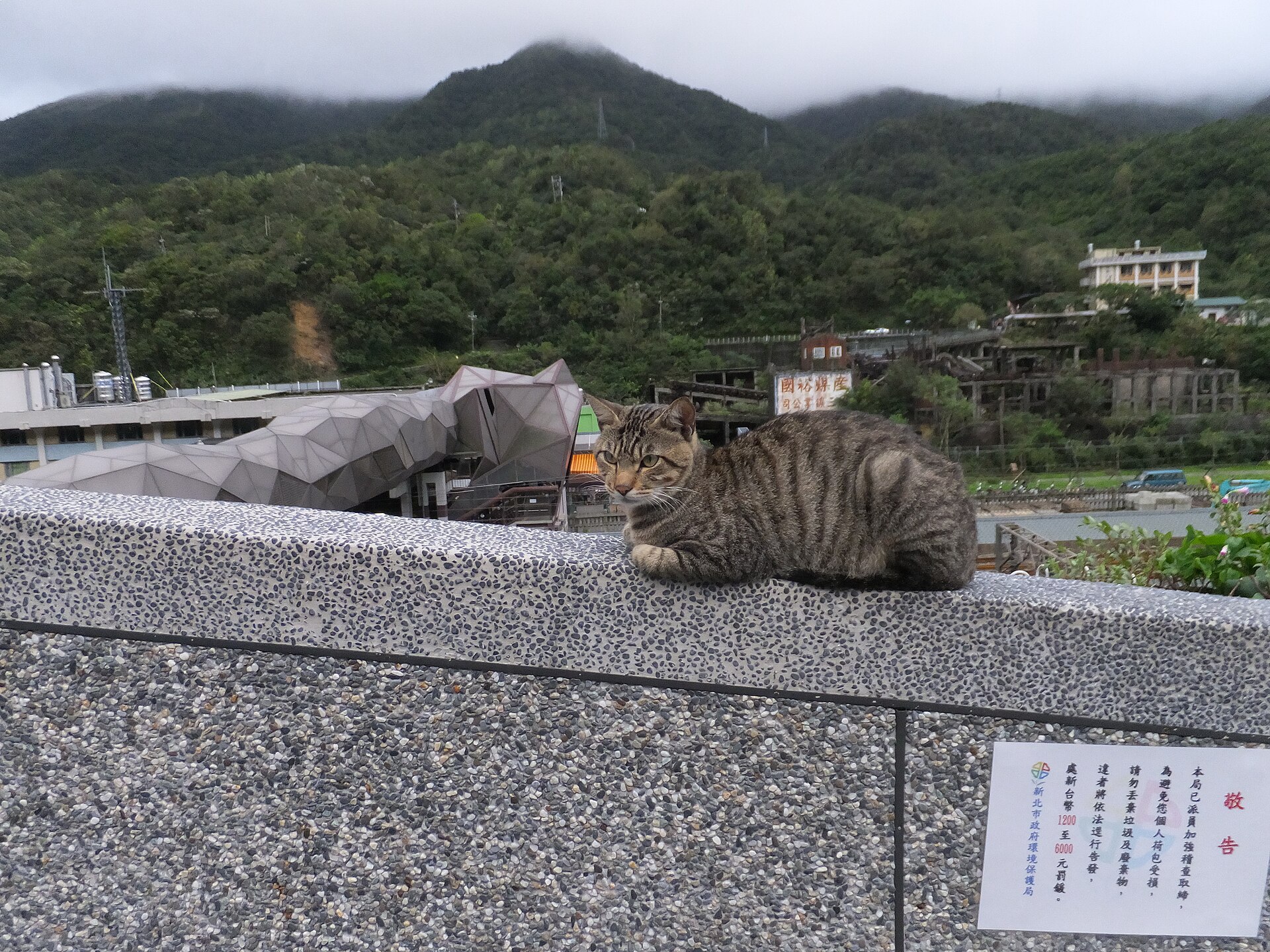
How not to be the annoying one
- The five rules on the yellow sign, in order: respect the residents and do not go into their houses; take your rubbish and do not dump food or tins; no flash and be gentle, some of the cats scare easily; no human food; and leave the dog at home.
- The shops sell cat snacks. The village would rather you did not use them. If you must, a little, and only where a cat is already eating.
- Do not climb onto roofs or walls to reach a cat. That is where they go to get away from you.
- Wash your hands after. There are taps at the information station.
- Buy something in the village that is not for a cat. The shopkeepers are why the cats get fed.