City Kuching, Sarawak, Malaysia
Cats in Kuching
A river city on Borneo whose name sounds exactly like the Malay for cat, and which decided, some time in the 1990s, to take that as instructions. Statues, a museum, and the real ones down by the water.
Where to find cats in Kuching: Kuching, the capital of Sarawak, on the Sarawak River in Malaysian Borneo. When: Early morning on the waterfront before the heat, and evening when it fills up. The museum any day but a public holiday. Why here: The only city in the world whose name is the word for cat, and it has spent thirty years living up to it.
The short version
- Where
- Kuching, the capital of Sarawak, on the Sarawak River in Malaysian Borneo
- When
- Early morning on the waterfront before the heat, and evening when it fills up. The museum any day but a public holiday
- How long
- A morning for the statues and the old streets on foot, an afternoon for the museum by taxi
- What it costs
- The statues and the waterfront are free. So is the museum. The Grab to it is a few ringgit
- Why here
- The only city in the world whose name is the word for cat, and it has spent thirty years living up to it
What to bring
- A Grab app and a little cashThe Cat Museum is ten kilometres out at the North City Hall. A Grab is the only sensible way.
- A day that is not a public holidayThe museum is open nine to half past four every day except those. Check the Sarawak calendar, which has more than you think.
- Low expectations of the real catsThey exist, along the river and in the old market streets, but the city is famous for the statues. Come for both.
- Something for rainBorneo. It will, at some point, and the waterfront has no cover.
Why there are cats everywhere
Kuching sounds exactly like kucing, the Malay word for cat, and the city took the hint.
Nobody is entirely sure that is where the name comes from. There is a fruit called the mata kuching, the cat’s eye, and a stream that may once have been called after it, and a few other stories, and the truth is lost somewhere in the nineteenth century. What is certain is that at some point the city stopped arguing about it and started building cats.
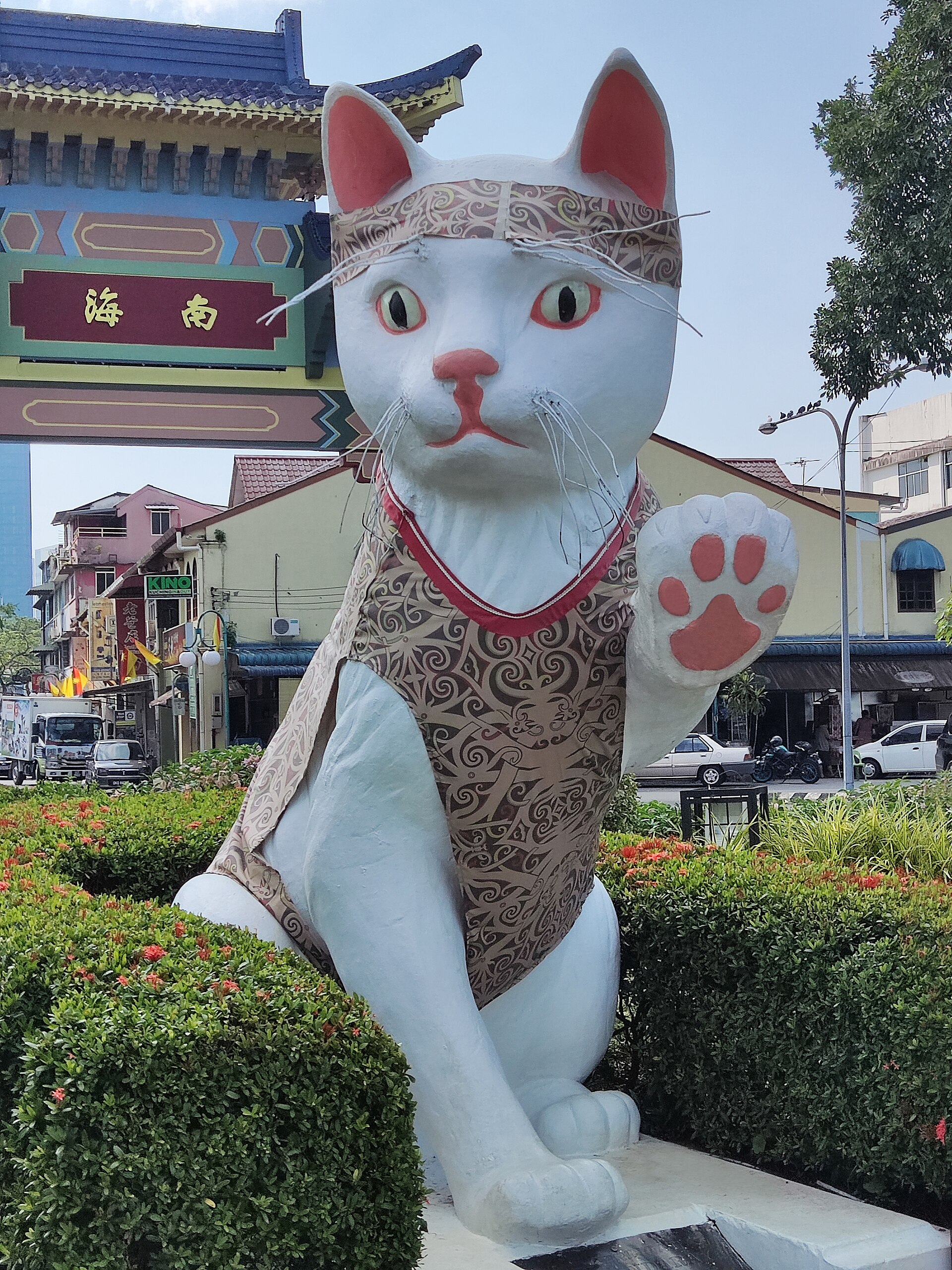
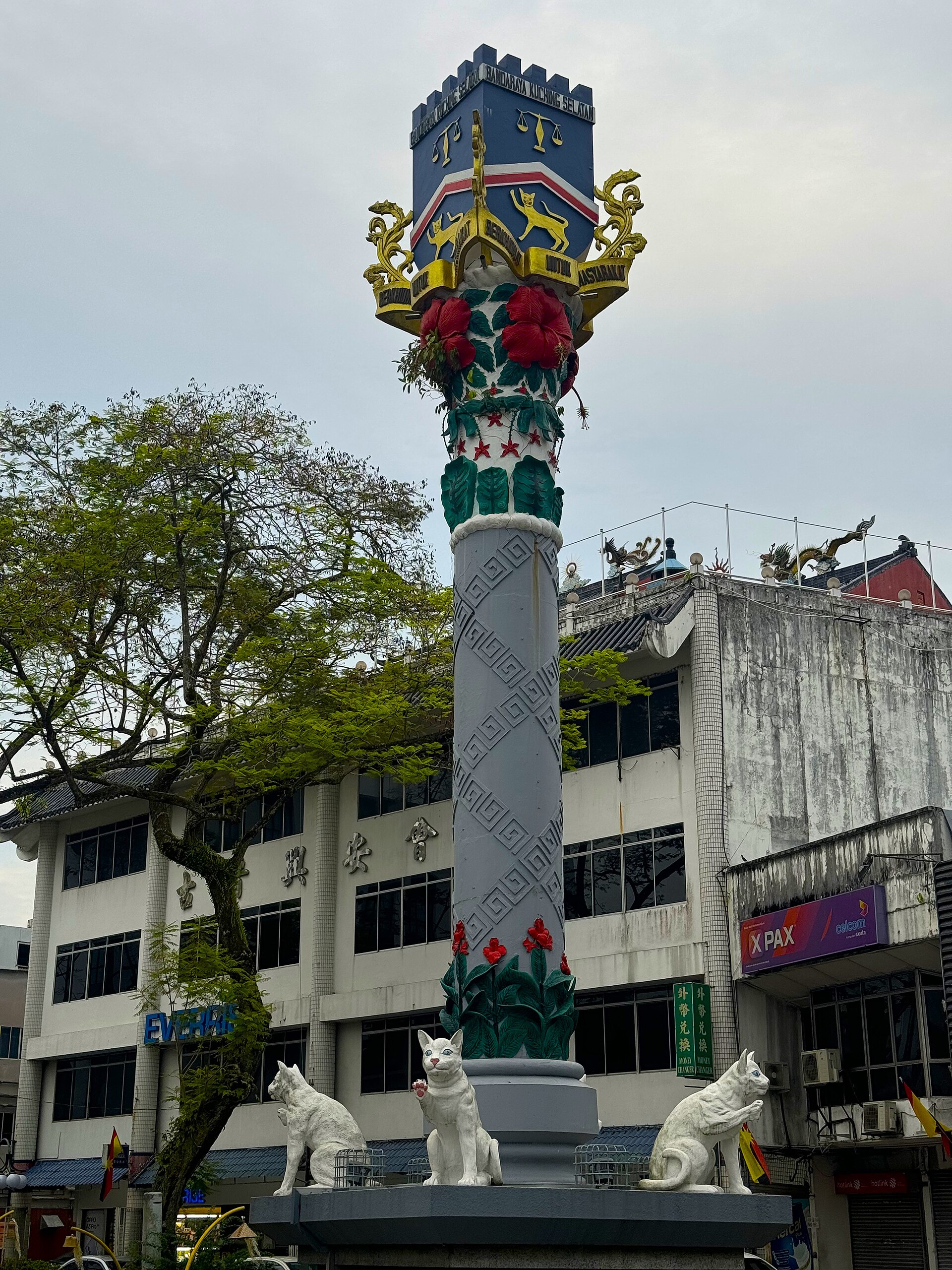
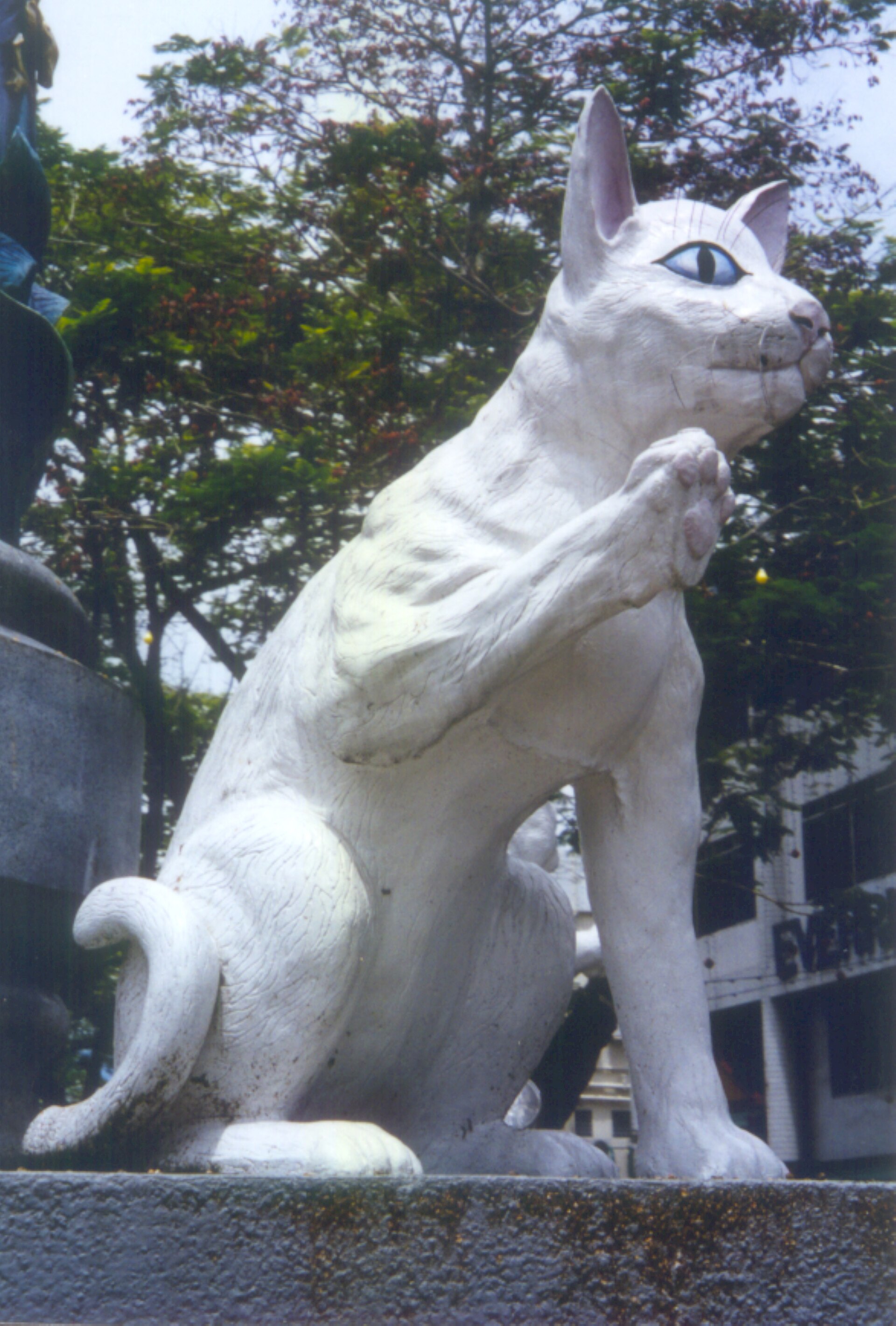
The first and biggest is the Great Cat of Kuching, a white giant with a raised paw at the Padungan roundabout, put up in the 1990s and dressed by the council for festivals: a songkok for Hari Raya, a Santa hat for Christmas, Chinese red for the new year. There is a family of cats near the waterfront end of Jalan Tunku Abdul Rahman, another group at the Padungan end, and a scattering of smaller ones on roundabouts and corners across the centre. Finding them all is a reasonable afternoon.
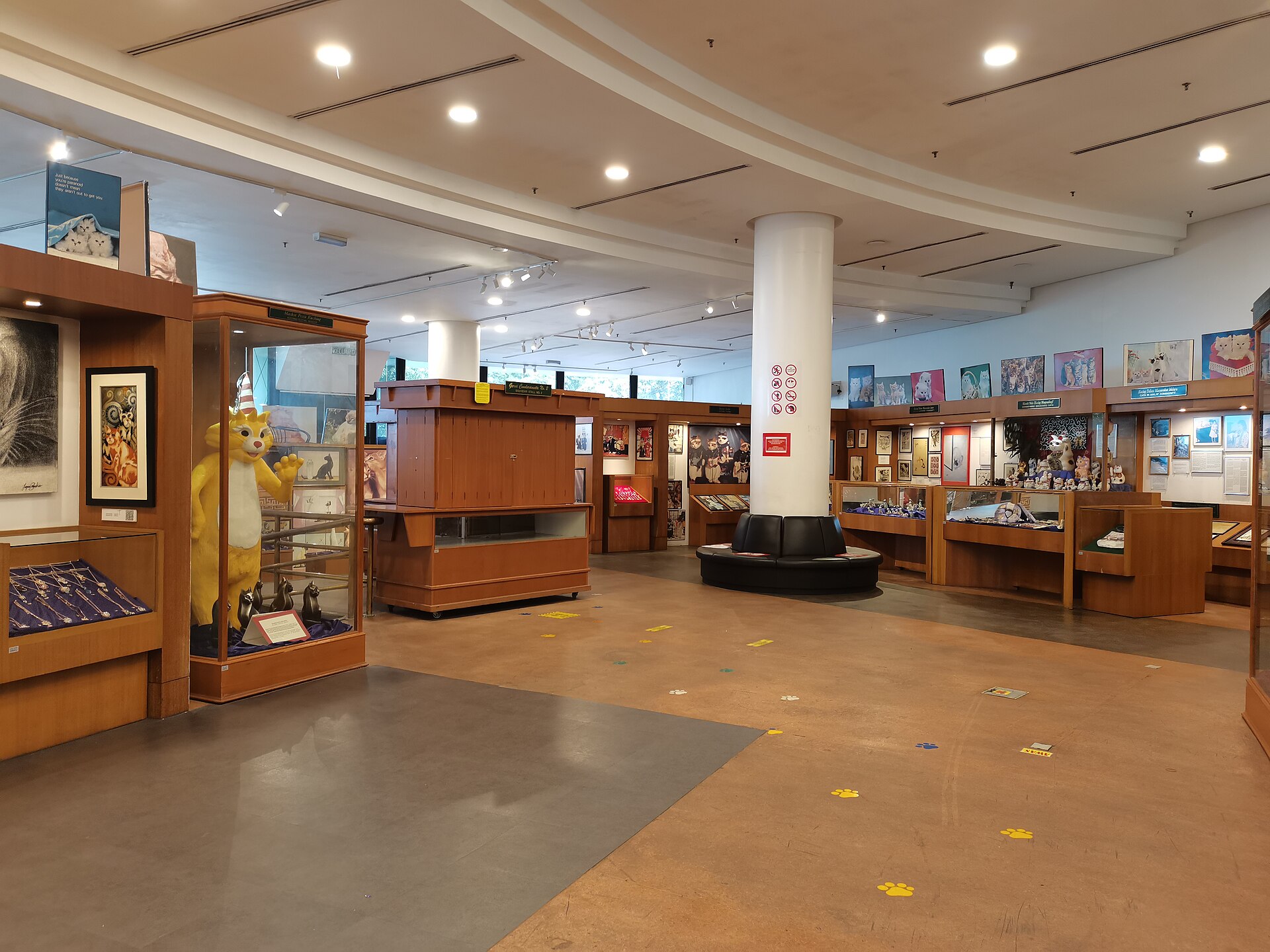
Then there is the museum. The Cat Museum, in the lobby of the North City Hall out at Petra Jaya, is the only one of its kind: four galleries and something over four thousand objects, from Egyptian mummified cats to Malaysian film posters, every cat stamp ever issued and a gallery on the wild cats of Borneo. It is free, it is faintly absurd, and it is worth the taxi.
The real cats are the quiet part. They are down on the waterfront in the evening, around the open kitchens on Carpenter Street, and in the alleys of the old Chinese shophouse district, doing what cats in a fishing port have always done. They are not the point of the city’s cat identity, and they have never been asked.
The walk
Along the river, up through the old shophouse streets past the statues, and out to the Great Cat at Padungan. Then a taxi to the museum. Three hours if you go inside everything.
- From Kuching International AirportGrab or taxi to the waterfront25 minEleven kilometres. There is no rail and the buses are for locals with time.
- From Anywhere in the centreWalk. The old town is small and flat15 minWaterfront to the Great Cat is about twenty minutes on foot, along the river then up Padungan.
- From The waterfrontGrab across the river to the Cat Museum20 minTen kilometres to Petra Jaya. Ask for DBKU, the North City Hall; every driver knows the cat.
Kuching Waterfront
A kilometre of promenade along the Sarawak River, open all hours, with food stalls, the old courthouse behind it, and the river cats along the railings in the evening. Start here early, before the heat.
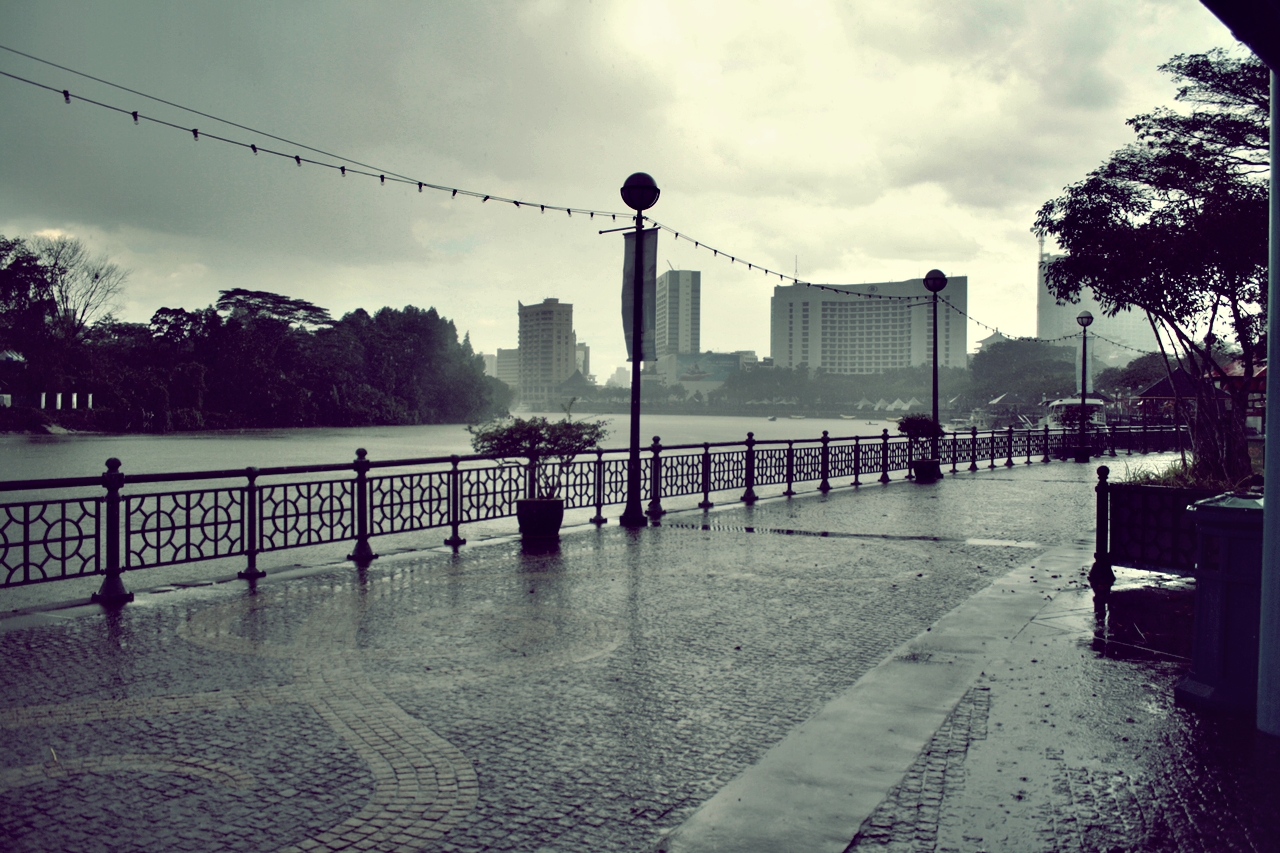
The waterfront. The real cats work this stretch after dark.Jin, CC BY 2.0 The family of cats, Jalan Tunku Abdul Rahman
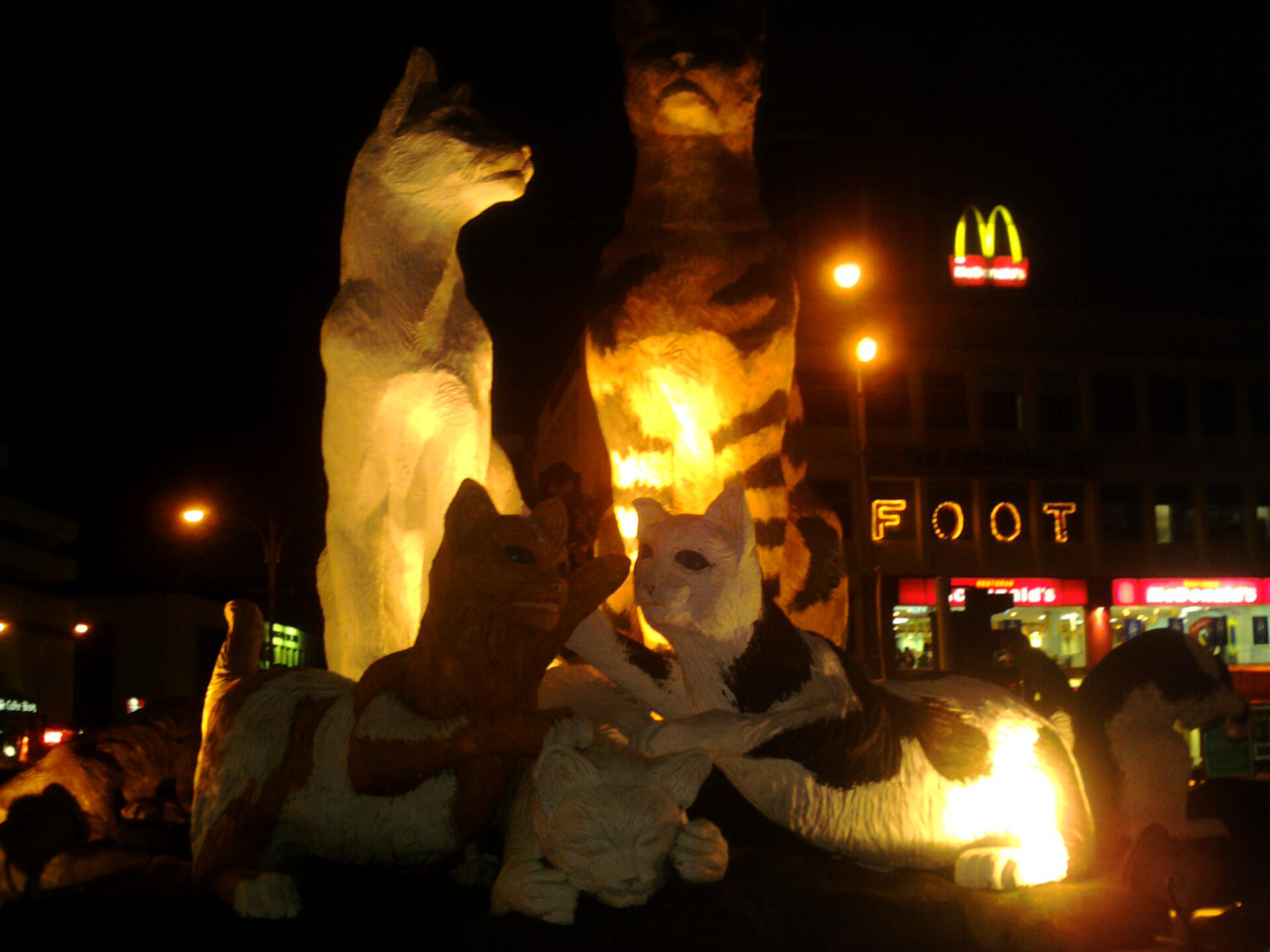
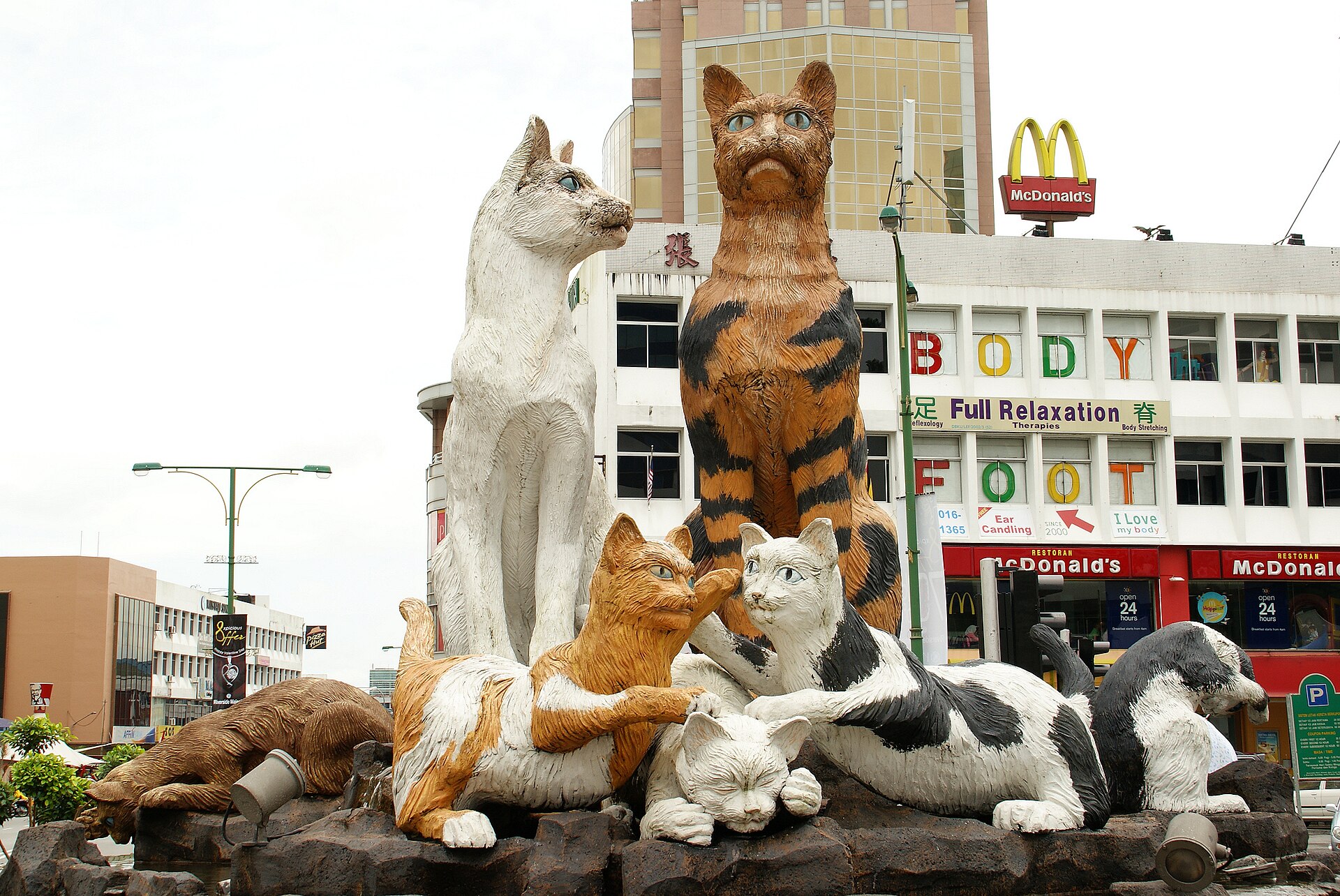
A few steps up from the river, a statue of a whole family of cats lounging together on a plinth. The city’s second-best-known cat monument and the easiest to find.
The family. Nobody in it has ever caught a mouse.Mike86 at English Wikipedia, Public domain India Street and Carpenter Street
The old shophouse streets. India Street for the textile market, Carpenter Street for the temples and the open-fronted kitchens, and a real cat asleep under most of them. The city’s living cats are here, not on the roundabouts.
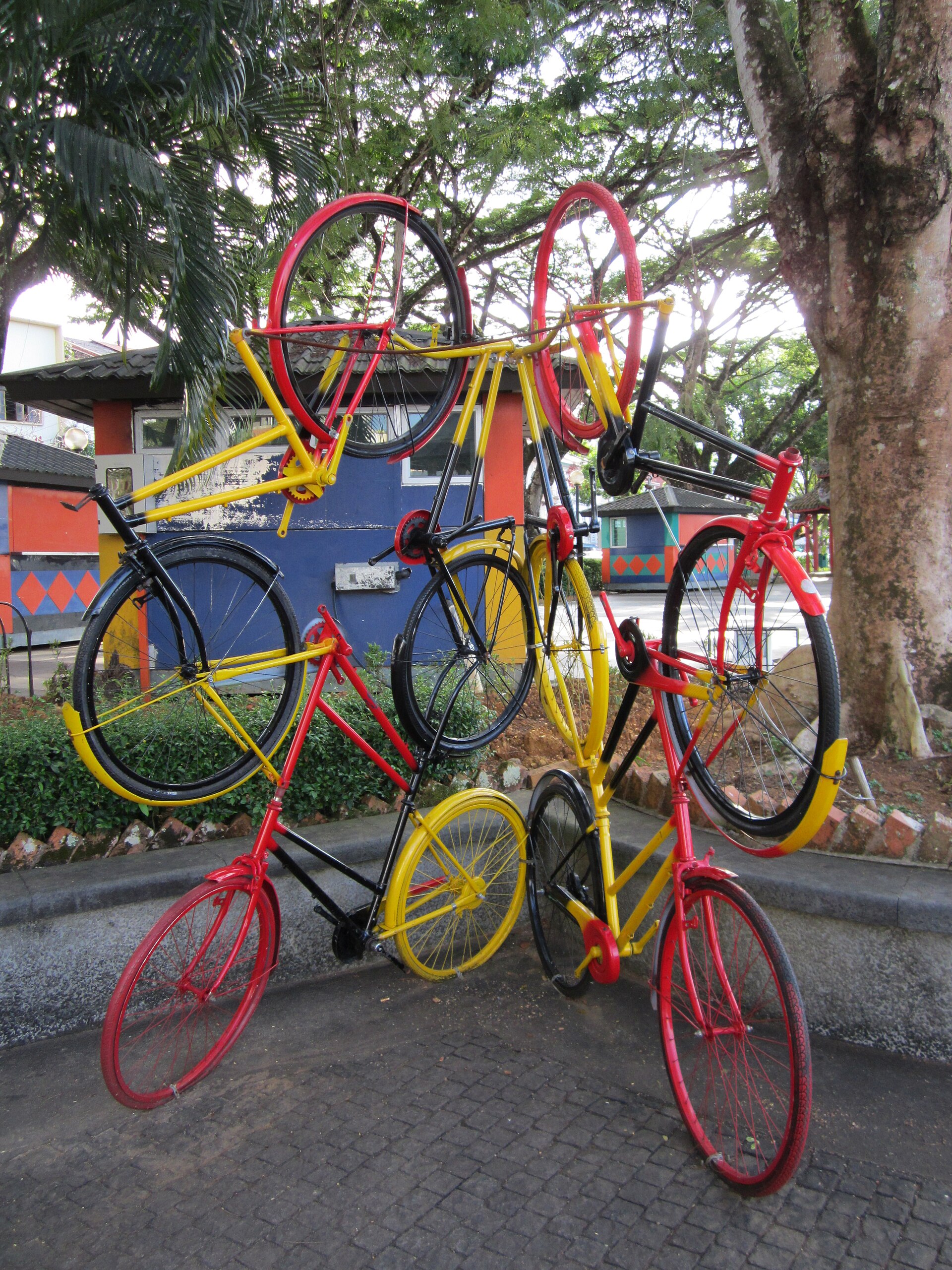
The old streets behind the river. Look under the tables.Marufish from Alor Setar, Malaysia, CC BY-SA 2.0 The Great Cat of Kuching, Padungan
The big one, on the roundabout at the Padungan end of town, under a Chinese arch. White, enormous, one paw up, and dressed for whatever festival is nearest. Everyone photographs it. You will too.
Padungan. The costume changes with the calendar.Medelam, CC BY-SA 4.0 The Cat Museum, Petra Jaya
A Grab across the river to the North City Hall. Four galleries, four thousand objects, free. Give it an hour, and look for the mummified cat from Egypt and the Borneo wild cat gallery.
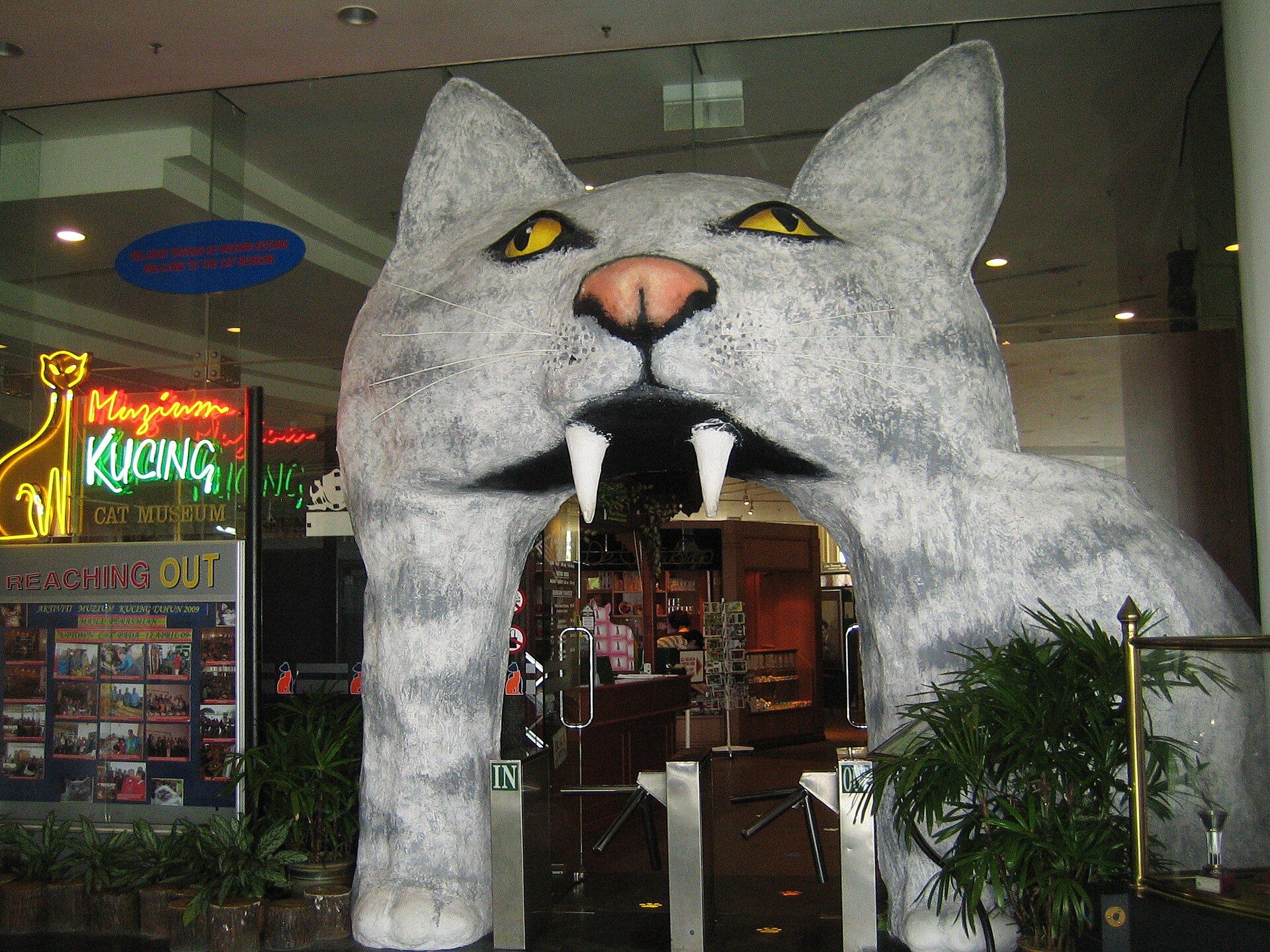
You enter through the cat. Of course you do.Patrick Liu from Stockholm, Sweden., CC BY-SA 2.0
Same numbers as the list. Worth keeping open on your phone.
The cats you will meet
Two populations. The statues, which is what the city is famous for and what you will photograph. And the actual cats, ordinary Bornean strays, tabbies and gingers with the kinked tails common across Southeast Asia, along the river and in the old market streets, fed by the stallholders and not by the council.
The statues
White, enormous, one paw raised, frequently in costume.
Padungan is the big one. There are at least four groups in the centre. Finding them is the walk.
River cats
Lean tabbies, often with a bent or bobbed tail.
On the waterfront railings and under the food stalls in the evening. Well fed by the stalls.
Shophouse cats
Any colour, asleep in a doorway.
Carpenter Street and the lanes off it. The temples keep some too.
Everybody says Kuching is full of cats.
Actually Kuching is full of cat statues, cat murals and a cat museum. The living cats are a normal Southeast Asian port population, mostly along the river and in the old streets, and you will meet them, but the city’s identity is the branding, not a colony. Come for the joke, which the city is in on.
How not to be the annoying one
- The stall cats on the waterfront and Carpenter Street are fed by the stalls. Buy something and let the stallholder feed the cat.
- Do not climb the statues for a photo. The council dresses them; it does not want them dented.
- The museum is in a working city hall. It is free; be quiet in the corridors.
- Borneo heat is real. Do the walk early and the museum in the afternoon, when it is air-conditioned and you are not.