Neighbourhood Fez, Morocco
Cats in Fez el-Bali
The largest car-free urban area in the world, nine thousand lanes of medieval city, with the oldest university, the smelliest tanneries, and a cat at every butcher’s door waiting for the scraps that have been falling since the ninth century.
Where to find cats in Fez el-Bali: Fez el-Bali, the old medina of Fez, Morocco, inside the walls from Bab Bou Jeloud to the river and the tanneries. When: Morning, when the butchers open and the lanes are cool. October to April; Fez in summer is an oven. Why here: The most complete medieval city on earth, and the cats have had it to themselves for eleven centuries.
The short version
- Where
- Fez el-Bali, the old medina of Fez, Morocco, inside the walls from Bab Bou Jeloud to the river and the tanneries
- When
- Morning, when the butchers open and the lanes are cool. October to April; Fez in summer is an oven
- How long
- A day to get lost. Two to get lost twice
- What it costs
- Free to walk. The madrasas and the tannery terraces ask small fees. A guide is worth it for the first morning
- Why here
- The most complete medieval city on earth, and the cats have had it to themselves for eleven centuries
What to bring
- A guide, for the first dayFez el-Bali is nine thousand lanes with no cars and no straight lines. A licensed guide for a morning saves the afternoon.
- Eight in the morningThe butchers and the bakers open, the donkeys come through, and the cats are at every door. By noon the lanes are full.
- Small dirhamsFor the tannery terrace, the tea, and the man whose shop cat you have photographed.
- Nothing for the catsThe butchers, the fishmongers and the households feed them. It has worked since 789.
Why there are cats everywhere
Fez has been feeding its cats at the butcher’s door since the ninth century, and the butchers are still in the same lanes.
Fez el-Bali was founded in 789 and has never had a car in it. It is the largest car-free urban area in the world, a walled maze of lanes, souks, madrasas, fountains and courtyard houses, with the University of al-Qarawiyyin, the oldest continuously operating in the world, in the middle, and the tanneries, where leather has been dyed in stone vats the same way for a thousand years, by the river at the bottom. Goods move by donkey and by hand. Everything else moves on foot.
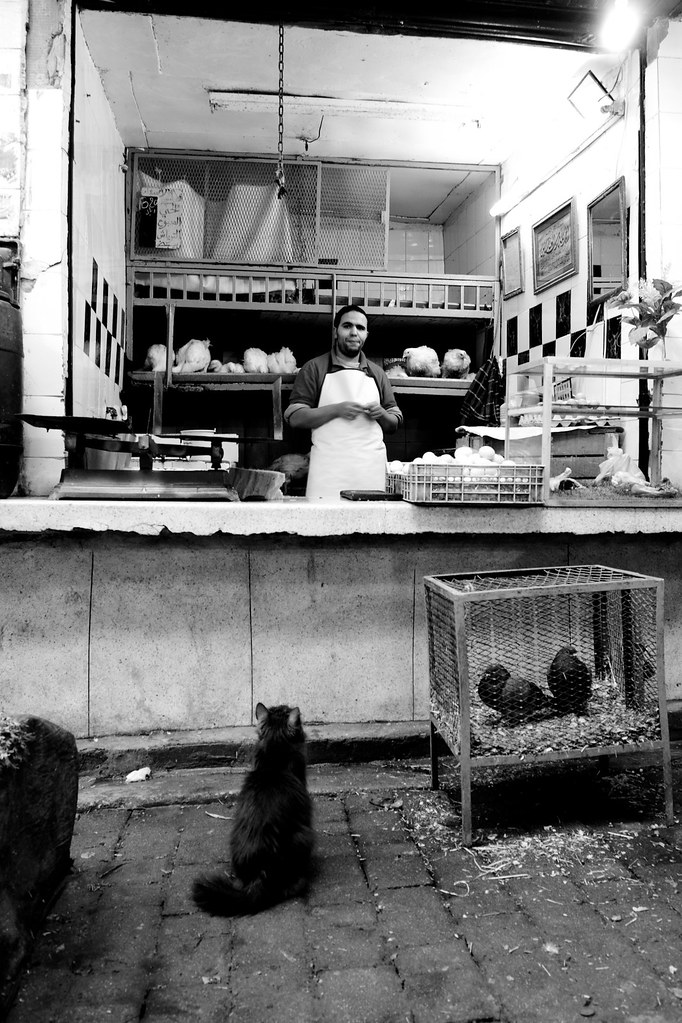
The cats have it as they have every Islamic medina, with the added advantage of no traffic at all. They are at the butchers’ doors, which is where the photograph at the top of this page was taken, waiting for the trimmings. They are on the steps of the lanes, on the bolts of cloth in the souks, in the courtyards of the madrasas and around the fountains. The households feed them; the shops feed them; the culture, which regards a cat as clean and a kindness to it as a small act of faith, feeds them.
Get lost. That is the instruction for Fez and it is not a figure of speech; the lanes were built to confuse and they do. Start at the blue gate, Bab Bou Jeloud, and go downhill, which leads eventually to the river and the tanneries. Every lane between has cats, and the smaller the lane the more of them.
The walk
In at the blue gate, downhill through the souks to the great mosque and university, then down to the river and the tanneries. A morning, or a day if you get properly lost.
- From Fez-Saïss airportTaxi to Bab Bou Jeloud30 minTaxis stop at the gate. Nothing with wheels goes further.
- From Fez railway stationPetit taxi to the blue gate15 minTrains from Casablanca, Rabat, Marrakech and Tangier. Cheap, and the cheapest way to the medina.
- From The Ville NouvelleBus or taxi to the medina15 minThe new town is a few kilometres west. Stay in a riad in the medina instead.
Bab Bou Jeloud
The blue gate, the main entrance to the old medina, with the cafés outside and the minarets framed through it. Go through and take either of the two main lanes downhill. Cats at the first butchers.
Inside the gate. The lanes start narrowing immediately.ArtBrom, CC BY-SA 2.0 The souks and the butchers
Down Talaa Kebira, the main lane, through the souks: leather, brass, spices, and the butchers with the cats at their doors. This is where the photograph is from. Every side lane is worth a look.
The butcher, the cat, the arrangement.nromagna, CC BY 2.0 Al-Qarawiyyin
The mosque and university at the heart of the medina, founded in 859, the oldest in the world still teaching. Not open to non-Muslims, but the doors and the courtyard glimpses are the point, and the lanes around it are the densest for cats.
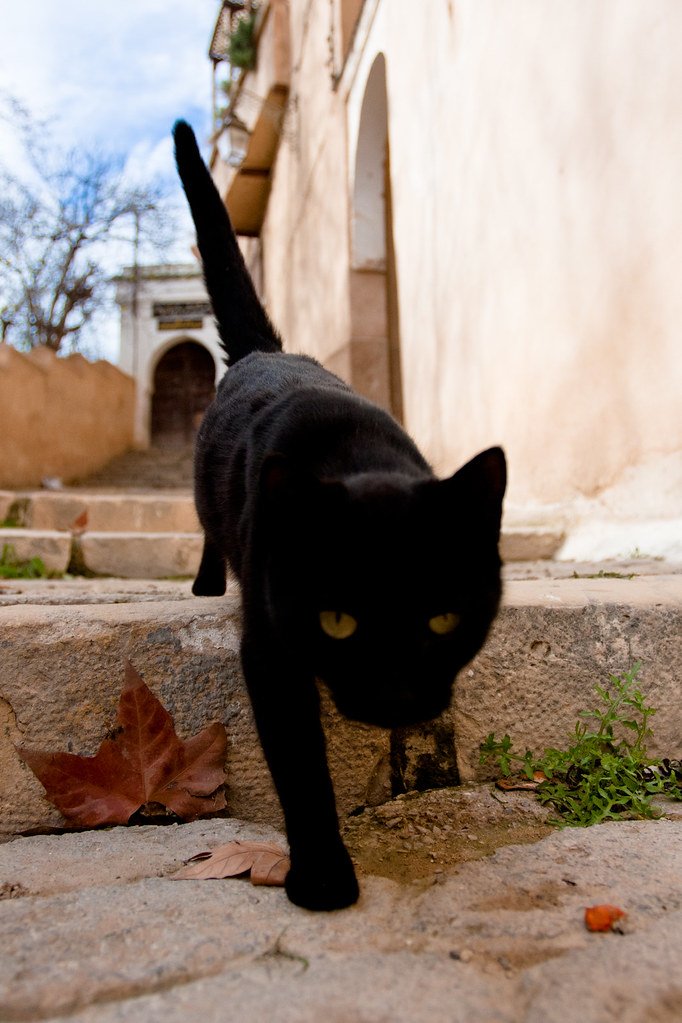
Near the university. Eleven centuries of scholarship and one black cat.nromagna, CC BY 2.0 The Chouara tannery
Down to the river and the leather shops whose terraces overlook the stone vats of the tannery. A sprig of mint against the smell. Cats on the terraces and in the lanes; they do not mind the smell.
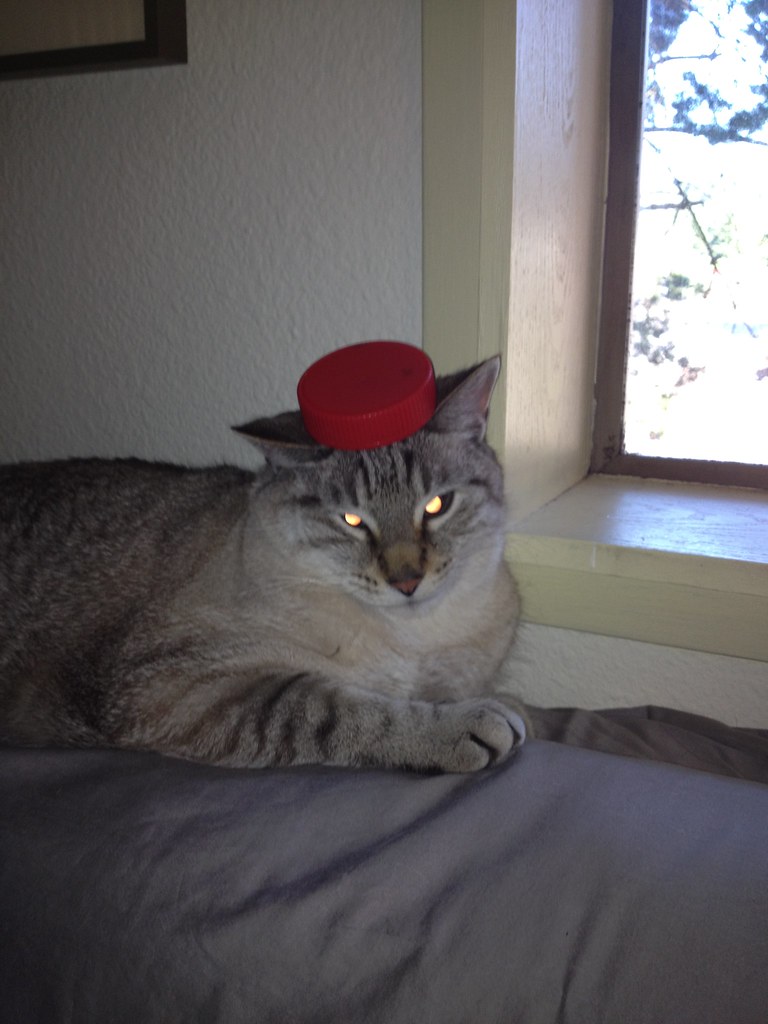
Potbelly, as the photographer called him. Fed by the leather shops.blakespot, CC BY 2.0
Same numbers as the list. Worth keeping open on your phone.
The cats you will meet
Moroccan medina cats in large numbers: small, short-coated, tabby and black and white, fed by butchers, shops and households, calm in the lanes because nothing has ever driven through them, and thinner in the alleys than at the butchers’.
Butcher cats
At the shop doors in the souks.
The best-fed. Ask before the photograph; the butcher is in it.
Lane cats
On the steps of the smallest alleys.
The majority. Thin, many, and stepped round.
Courtyard cats
In the madrasas and around the fountains.
Quiet, and in places that ask for quiet.
Everybody says The medina is dangerous and you will be hassled.
Actually You will be offered guidance, repeatedly, and a firm no works. Fez is safer than most cities and its lanes are full of people going about their day. Get lost with confidence; the cats are the guide.
How not to be the annoying one
- Ask before photographing a shop. The shopkeeper is in the frame with the cat.
- Do not feed in the lanes. The shops do, and a crowd of cats in a lane a metre wide blocks the donkeys.
- Balak means a donkey is coming. Flatten against the wall.
- The mosques and the university are closed to non-Muslims. Admire the doors.
- Kittens in the alleys are the charities’ work. Give to one; do not carry one off.