Neighbourhood Athens, Greece
Cats in Plaka and Anafiotika
The old quarter under the Acropolis: cats on 2,500-year-old marble, cats in the whitewashed lanes of a village that should not be in the middle of a capital, and the sixty volunteers who keep them fed.
Where to find cats in Plaka and Anafiotika: Plaka, the old quarter on the north and east slopes of the Acropolis, and Anafiotika, the village of white houses above it. When: Early morning for Anafiotika and the marble, evening for the tavernas. April, May, October for the weather. Why here: Cats asleep on stone that Socrates walked on, looked after by a charity of volunteers in a city that has finally started to care.
The short version
- Where
- Plaka, the old quarter on the north and east slopes of the Acropolis, and Anafiotika, the village of white houses above it
- When
- Early morning for Anafiotika and the marble, evening for the tavernas. April, May, October for the weather
- How long
- A half day for the lanes and the cats. Add the Acropolis or the Agora and it is a full one
- What it costs
- Plaka and Anafiotika are free. The Acropolis and the Ancient Agora have tickets, and the cats are inside the fence
- Why here
- Cats asleep on stone that Socrates walked on, looked after by a charity of volunteers in a city that has finally started to care
What to bring
- Seven in the morningAnafiotika is a dozen lanes wide. By ten it is a queue. At seven it is a village with cats in it.
- An Agora ticketThe Ancient Agora is cheaper and emptier than the Acropolis, and its cats sleep on the Stoa steps in full view.
- Dry food, if anythingNine Lives feeds the Plaka cats daily. A little extra at a feeding station is fine. Souvlaki is not.
- Shoes for polished marbleThe lanes are worn stone and the Acropolis path is marble smoothed by three thousand years of feet. It is glass when wet.
Why there are cats everywhere
The cats of Plaka have been fed every day since 2006 by people who are not paid to do it.
Athens has always had cats, in the way every Mediterranean city has, and for most of its history nobody was responsible for them. That changed in 2006 when Nine Lives Greece was founded: a registered charity of around sixty volunteers who trap, neuter and return the city’s street cats, feed the colonies in the centre daily, treat the sick and rehome the ones who can be rehomed. It gets no government money. It is the reason the cats of Plaka are, on the whole, fat.
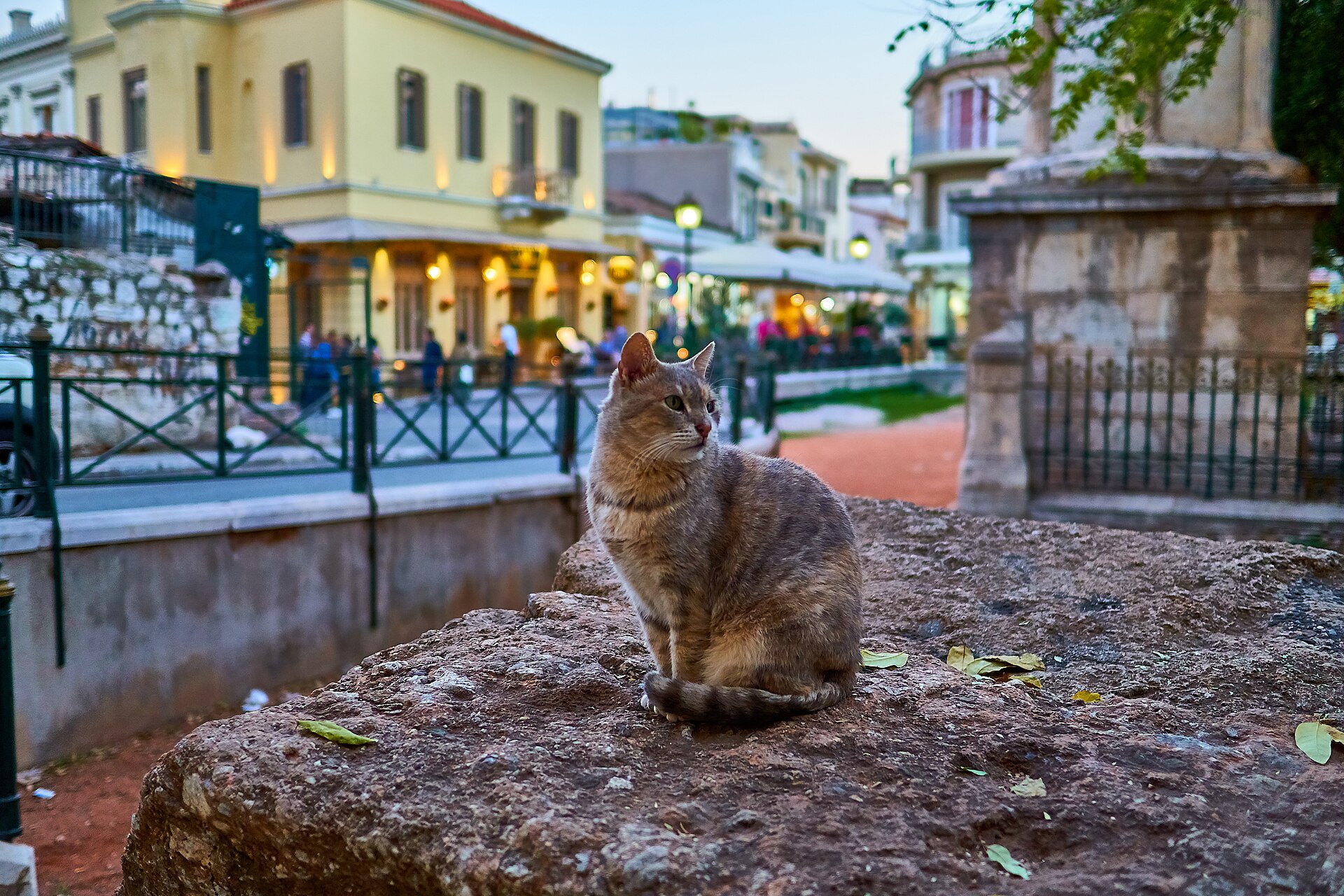
Plaka is the old quarter, the lanes under the north side of the Acropolis, all tavernas, neoclassical houses and Byzantine churches, and the cats are on its steps and under its tables. Above it, tucked against the rock itself, is Anafiotika: a village of tiny whitewashed houses built in the nineteenth century by builders from the island of Anafi who were brought to Athens to put up the new king’s palace and made themselves a piece of home on the hillside. It is a Cycladic island in the middle of a capital, and it has island cats to match.
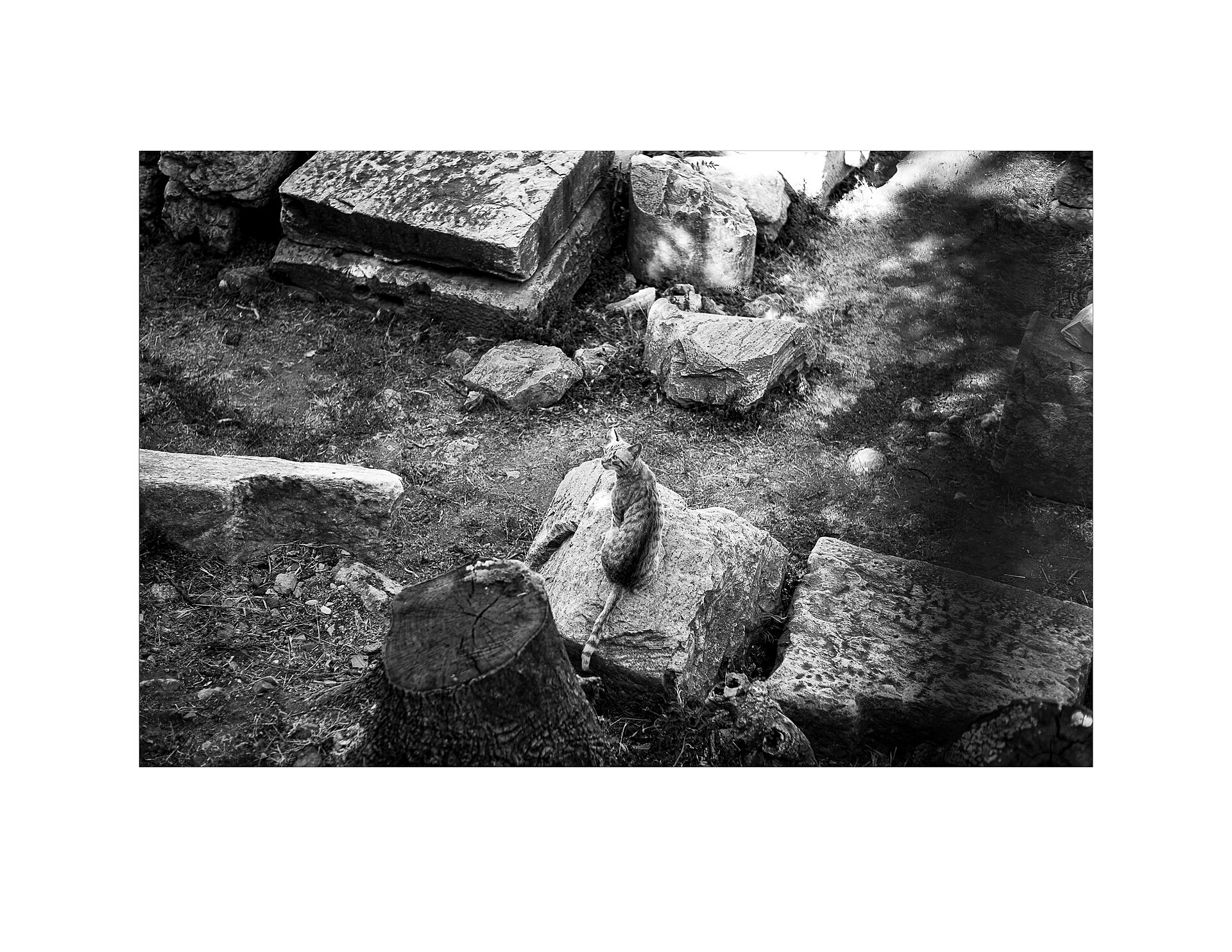
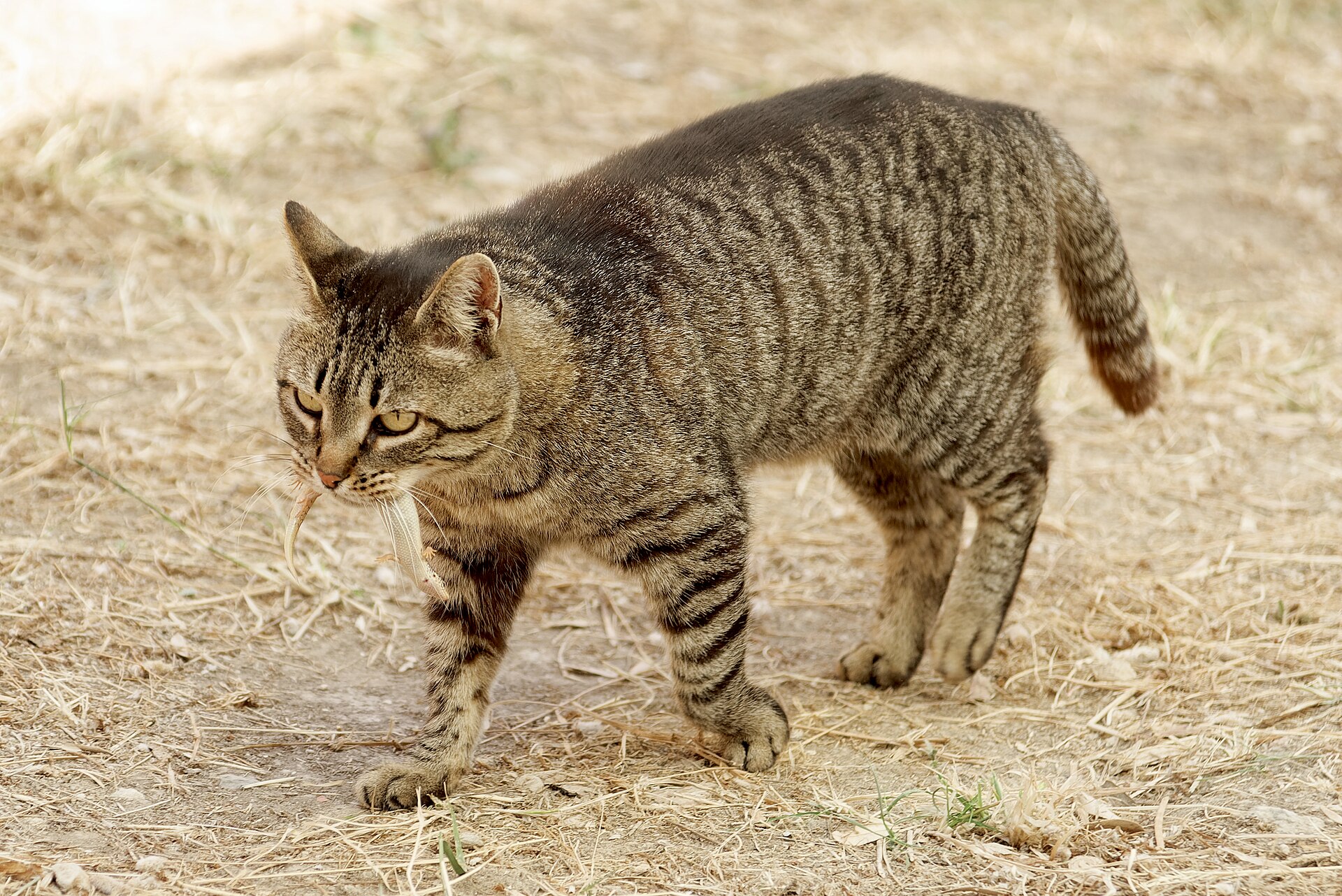
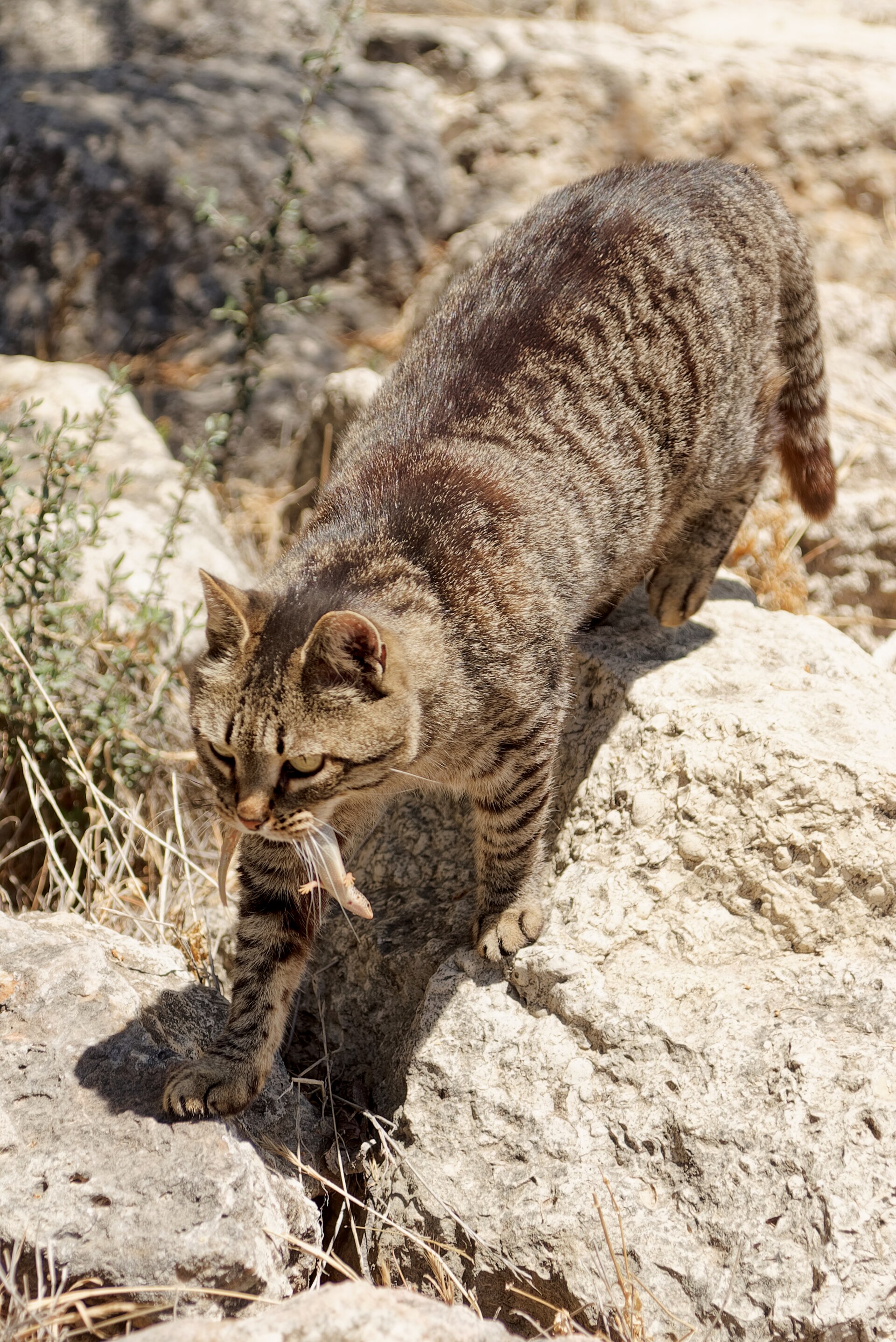
And then there are the ruins. The Ancient Agora, the marketplace of classical Athens, is inside a fence and behind a ticket, and its cats sleep on the steps of the Stoa of Attalos and in the grass between the column bases. On the Acropolis itself, among the crowds, there are cats who have never known anything but marble. One of them, photographed with a lizard in its mouth on the top of the rock, has become a small celebrity.
The honest note: in 2024 a number of cats were poisoned in a Plaka square, and the volunteers who found them are the same ones who feed them. The city is better than it was. It is not finished.
The walk
From Monastiraki into the Agora, up through the lanes of Plaka to Anafiotika under the rock, and down through the tavernas as the evening starts. Three hours, more with tickets.
- From SyntagmaWalk down Ermou and into Plaka10 minThe centre is small. Everything on this walk is within fifteen minutes of Syntagma on foot.
- From The airportMetro line 3 to Monastiraki45 minDirect, every half hour. Comes out at the start of the walk.
- From PiraeusMetro line 1 to Monastiraki25 minFrom the ferries. The old green line, straight into the old quarter.
Monastiraki
The square at the bottom, with the flea market and the metro. Loud, and not where the cats are. Cross it and head for the Agora gate on Adrianou.
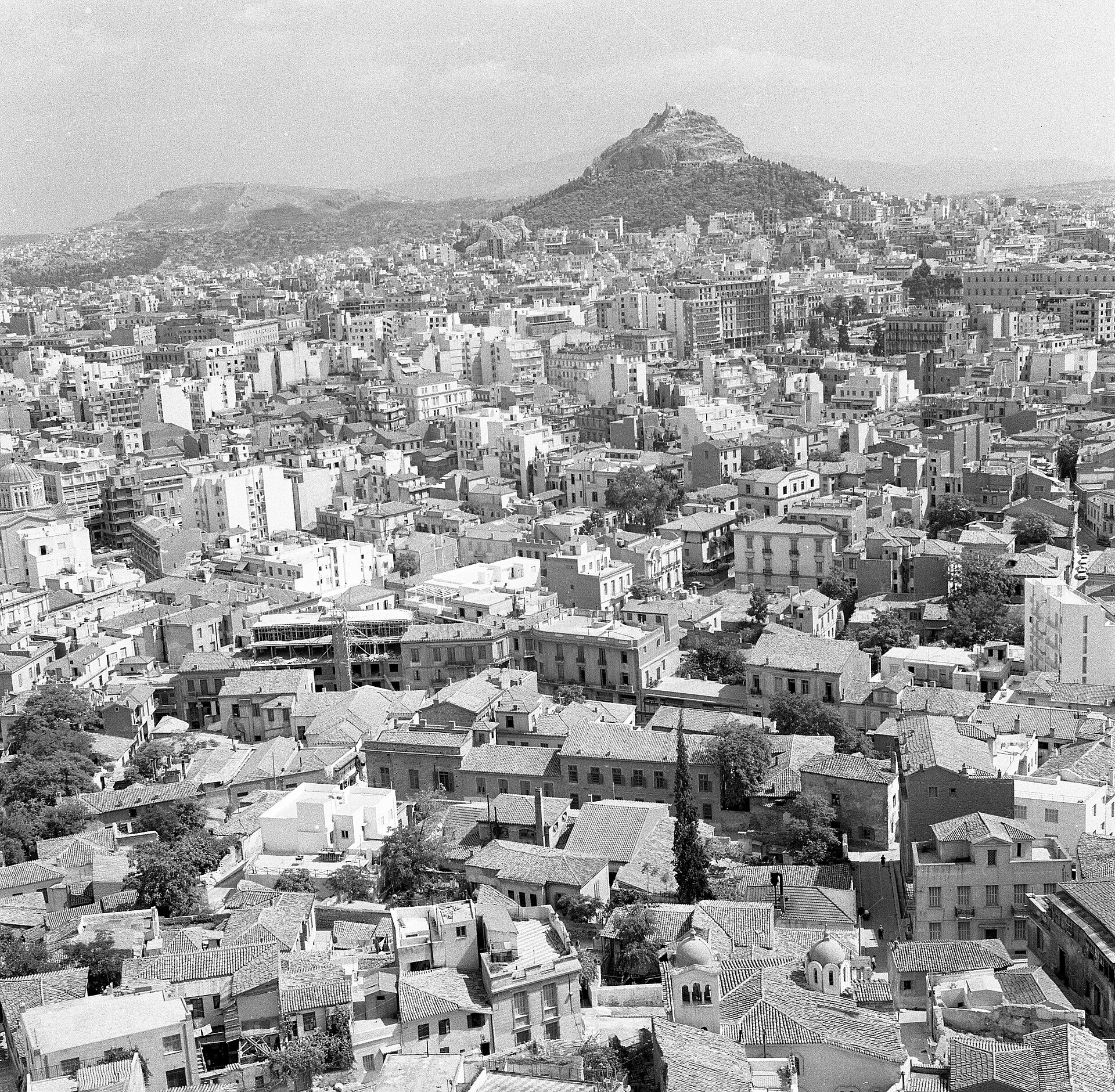
The rock. Everything on this walk is on its slopes.Benno Rothenberg, CC BY 4.0 The Ancient Agora
Ticket at the gate. The marketplace of classical Athens: the Temple of Hephaestus, the rebuilt Stoa of Attalos, and cats on the Stoa steps and in the long grass between the column stumps. Emptier than the Acropolis and better for cats.
The Tiger of the Acropolis, by name. On the job.Paolo Gamba from Paris, France, CC BY 2.0 Anafiotika
Up the steps from Plaka until the houses turn white and tiny and the lanes turn into a village. Built by islanders in the 1800s. Cats on every wall, mulberry trees, and the whole city below. Early, or not at all.
Above Anafiotika, on the rock. Lunch.Jakub Hałun, CC BY 4.0 Plaka
Down through the old quarter: the Lysicrates monument in its little square, the Byzantine churches, and the taverna lanes where the cats work the tables from six. Sit outside and one will find you.
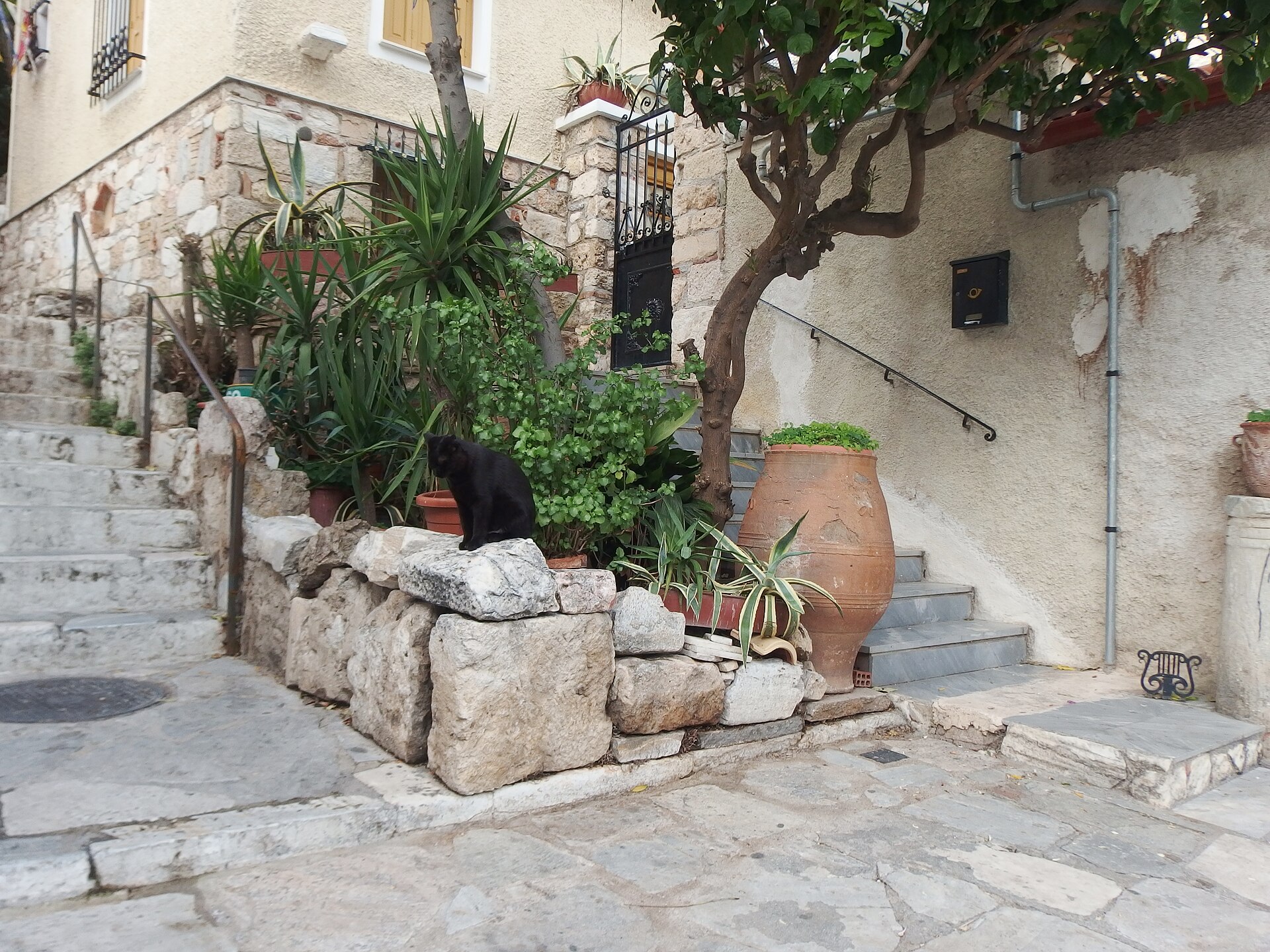
A Plaka lane. Steps, bougainvillea, and a cat on the second landing.Palickap, CC BY-SA 4.0 Filomousou Etaireias Square
The square of cafes at the heart of Plaka, and a Nine Lives feeding spot. Also, in 2024, the scene of a poisoning that killed several of the colony. The cats are back. Be gentle with them here.
Fed, by volunteers, every day. Hunting anyway.Jakub Hałun, CC BY 4.0
Same numbers as the list. Worth keeping open on your phone.
The cats you will meet
Central Athens cats, which since 2006 has meant neutered, ear-tipped and fed daily: tabbies, gingers, tortoiseshells and a lot of black and white, lean in the Greek way but not thin. Calm around people, faster than they look, and in possession of some of the oldest real estate in Europe.
Agora cats
Tabby, mostly, on marble.
Inside the fence, on the Stoa steps. They have the run of a site that closes to people at sunset.
Anafiotika cats
Island cats, white and ginger, on white walls.
The village cats. The residents feed them and are protective; be polite.
Taverna cats
The best fed in Athens.
Under the tables in Plaka from six in the evening. They know the menu.
Everybody says Athens is full of miserable strays.
Actually It was, and in parts still is. In the centre, Nine Lives has spent nearly twenty years neutering, feeding and treating the colonies, and the cats of Plaka and the Agora are in good health. The difference between a fed colony and an unfed one is visible in the first minute, and this is a fed one.
How not to be the annoying one
- Nine Lives feeds the colonies daily. Add a little dry food at a station if you like; do not start a new one, and never leave human food.
- Anafiotika is people’s homes. The lanes are public, the doorsteps are not, and the residents look after the cats themselves.
- Inside the ruins, stay on the paths. The cats can go where you cannot, and that is the arrangement.
- After what happened in 2024, the Plaka volunteers are watchful. If you see anyone putting anything down that is not food, tell a cafe.
- Give to Nine Lives if you want to help. It is the whole reason the cats here are well.