Landmark Paris, France
Cats in Montmartre Cemetery
The cats of the cemetery under the bridge in Montmartre, saved from the city in 1977 by the locals who fed them, and still fed by the same association fifty years on. Degas, Truffaut and Dalida are the neighbours.
Where to find cats in Montmartre Cemetery: Cimetière de Montmartre, entered from Avenue Rachel under the Rue Caulaincourt bridge, in the 18th arrondissement of Paris. When: Opening time, eight on weekdays, when the feeders come. Autumn for the leaves. Closed at six; earlier in winter. Why here: A cat colony that Paris tried to remove and its neighbours refused to let go, in the cemetery of its artists.
The short version
- Where
- Cimetière de Montmartre, entered from Avenue Rachel under the Rue Caulaincourt bridge, in the 18th arrondissement of Paris
- When
- Opening time, eight on weekdays, when the feeders come. Autumn for the leaves. Closed at six; earlier in winter
- How long
- An hour and a half for the cats and the famous graves. Add Montmartre above for a day
- What it costs
- Free. The association that feeds the cats takes donations and could use them
- Why here
- A cat colony that Paris tried to remove and its neighbours refused to let go, in the cemetery of its artists
What to bring
- Opening timeThe volunteers feed in the morning and the cats come out for them. By noon they are under the tombs.
- A list of gravesDegas, Stendhal, Berlioz, Truffaut, Nijinsky, Dalida. The cats sit on some of them; the map at the gate has the rest.
- A donation for L’École du ChatThe association has fed, sterilised and identified the cemetery cats since 1977. Look for the feeders in the morning.
- NothingThe colony is fed on a schedule. A tourist’s tin on a tomb is a rat’s dinner.
Why there are cats everywhere
In 1977 the city decided to clear the cats out of Montmartre Cemetery. The neighbours who fed them said no, and won.
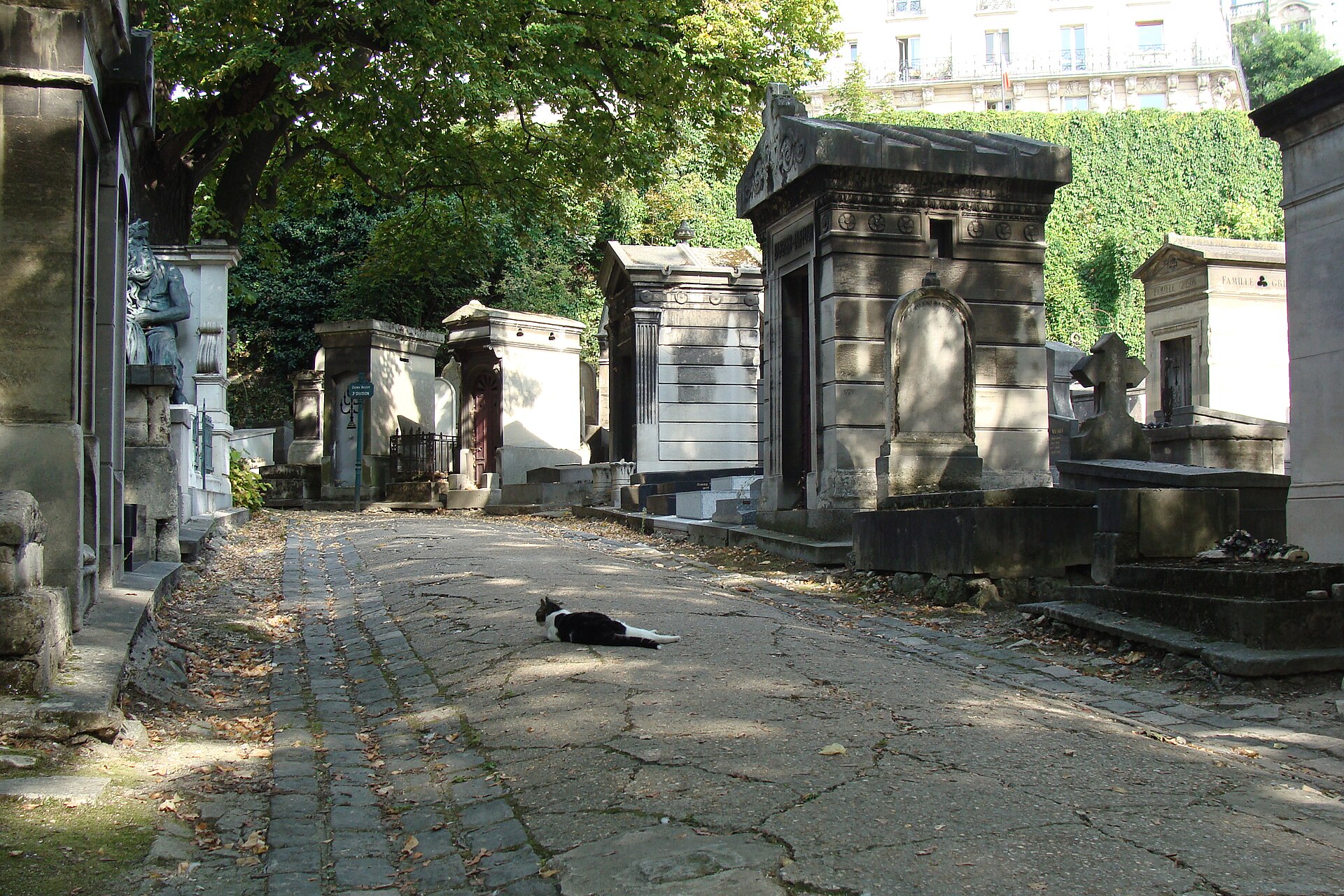
The cemetery was dug into an old gypsum quarry in 1825, below the level of the streets, and a bridge carrying Rue Caulaincourt runs right over the graves. It is where Montmartre buried its artists: Degas, Berlioz, Stendhal, Offenbach, Nijinsky, later Truffaut and Dalida. And for as long as anyone remembers it has had cats, in the hollows under the tombs, on the sun-warmed slabs, in the ivy.
In 1977 the city announced that they would be removed. The people who had been feeding them, a group of women from the neighbourhood, organised, protested, and instead of removal got an arrangement: they would feed the cats, get them sterilised and identified, and the cemetery would leave them be. L’École du Chat was born out of that fight, and it has been feeding the cemetery every morning since. It is one of the oldest formal street-cat arrangements in Europe, and it happened because a few people would not be moved.
The colony is smaller now than it was, which is what sterilisation does, and the cats are old, calm and known by name to the feeders. They sit on the graves of the famous, which delights the visitors, and in the alleys along the walls, which delights the cats. Above, on the hill, Steinlen, who drew the poster for Le Chat Noir and fed the cats of Montmartre himself, is buried in the smaller Saint-Vincent cemetery, ten minutes away. Go there too.
The walk
In at the gate under the bridge, through the cemetery with the famous graves and the cats, out and up the hill to Saint-Vincent, where the man who drew the black cat is buried. Two hours.
- From Anywhere on the metroLine 2 or 13 to Place de Clichy, then walk5 minAvenue Rachel is off Boulevard de Clichy, a minute from the station.
- From Sacré-CœurWalk down the north side of the hill20 minVia Rue Caulaincourt, over the bridge that crosses the cemetery. Look down.
- From Gare du NordLine 2 to Place de Clichy15 minFour stops. The cemetery is the first thing to do off a train.
The gate, Avenue Rachel
The only entrance, at the end of a short avenue off Boulevard de Clichy, directly under the iron bridge. Pick up the map of graves at the lodge. The feeders are in and out of here in the morning.
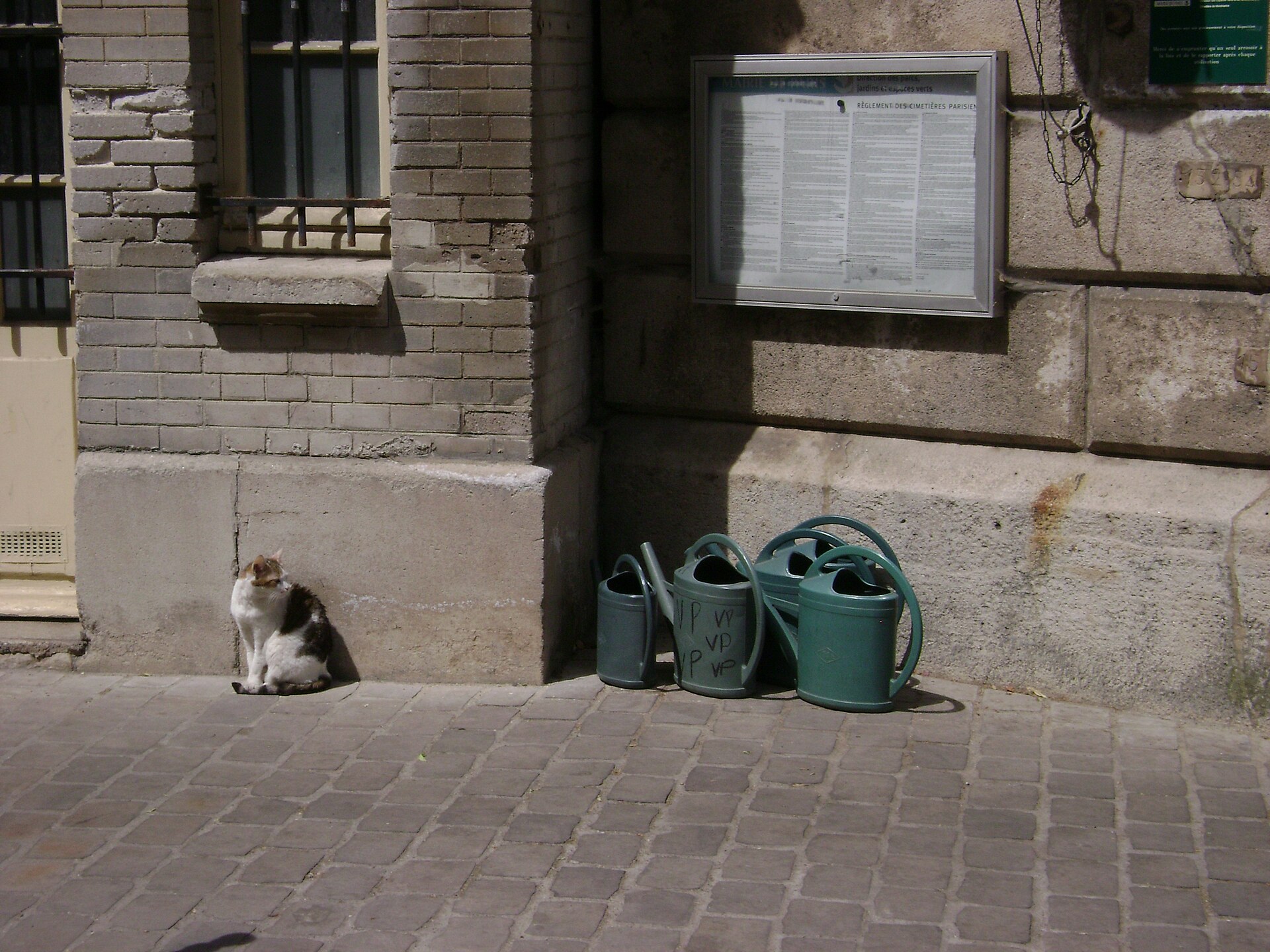
Below the street, under the bridge. The cemetery is in a quarry.UncleVinny, CC BY 3.0 Under the bridge
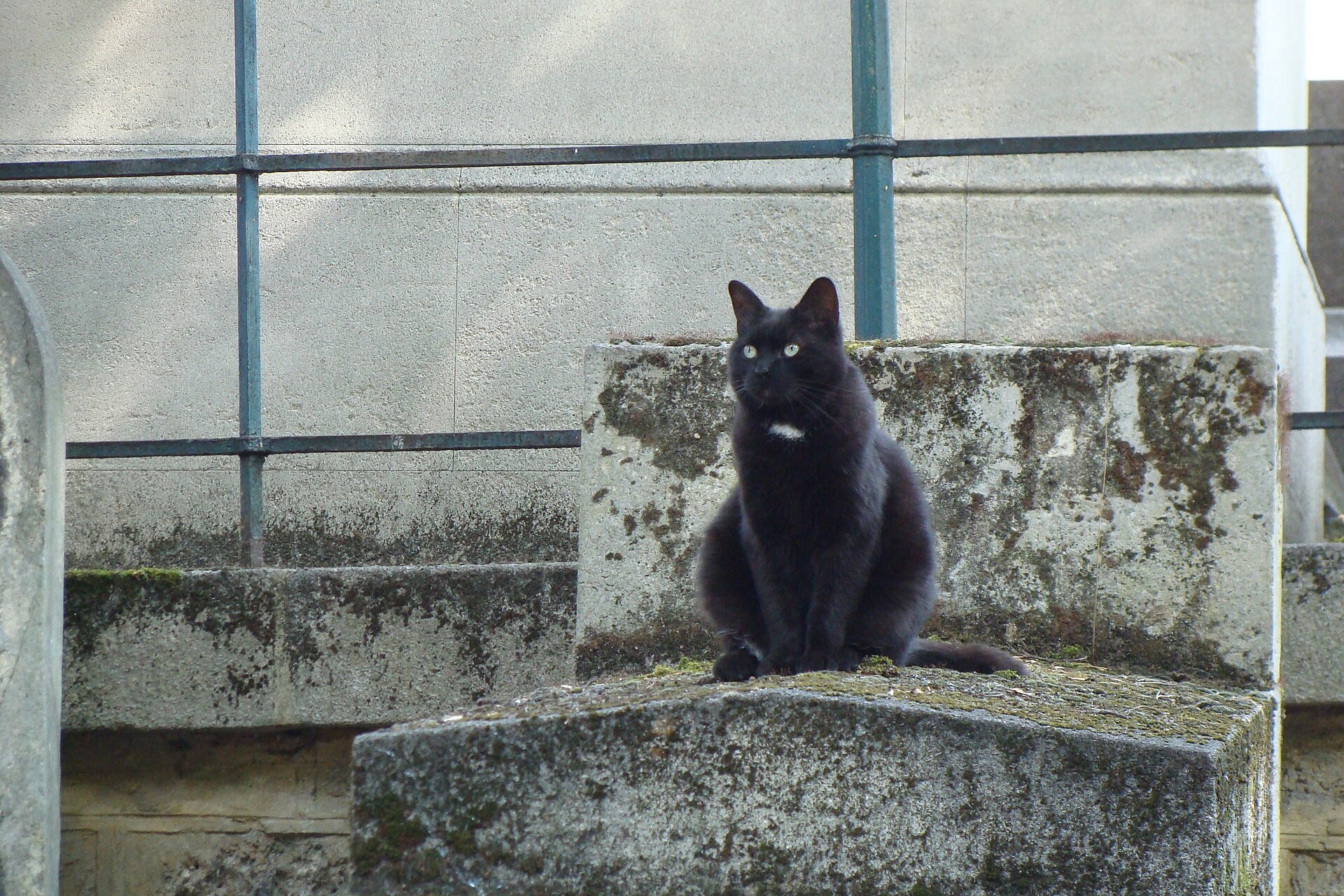
The Caulaincourt bridge crosses the graves on iron piers, and the dry, sheltered ground under it is where the cats are fed and where they sit out the rain. Look under the tombs on either side.
Under the bridge. Dry, and theirs.Alexey Komarov, CC BY-SA 4.0 The famous graves
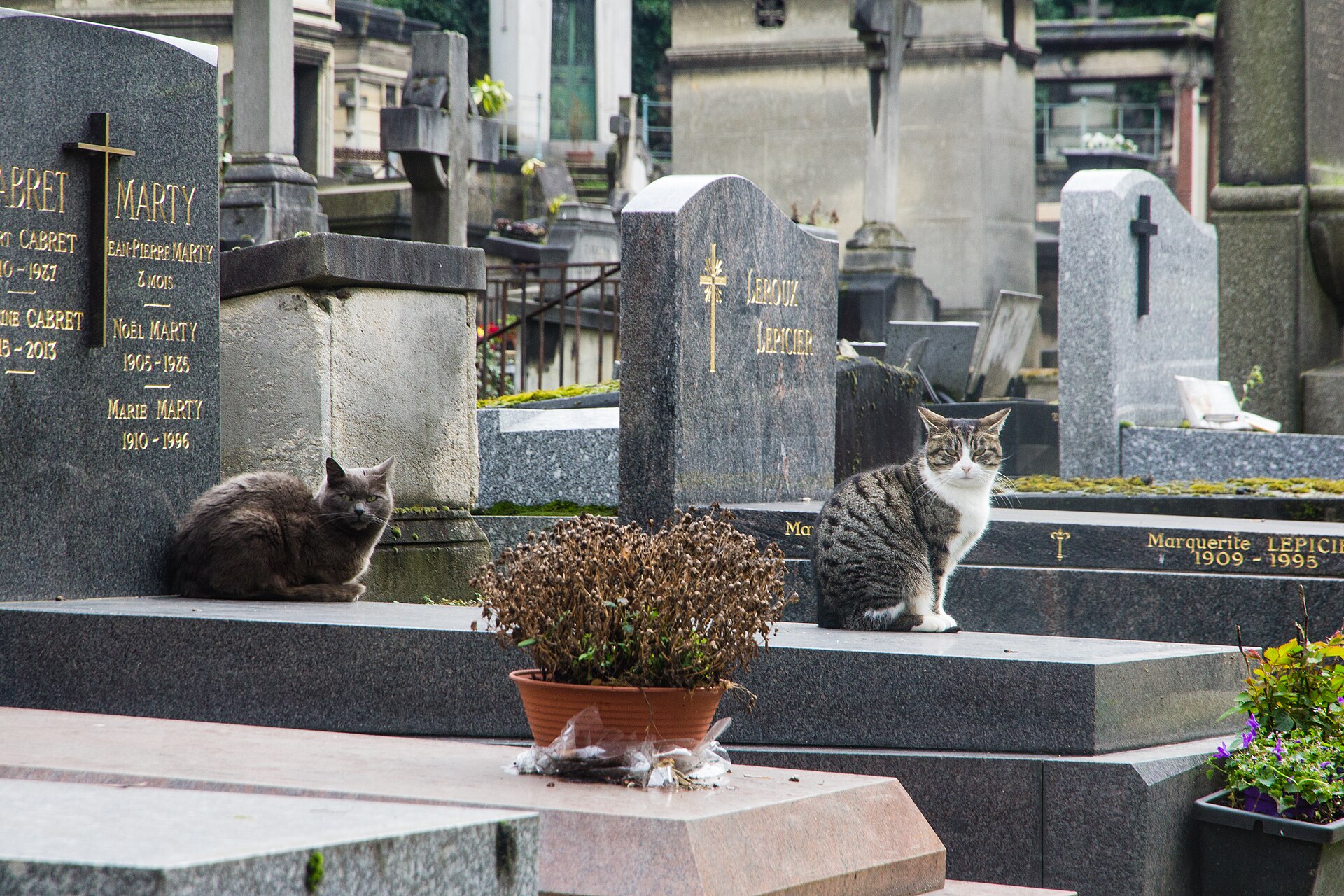
Follow the map: Degas near the entrance, Truffaut and Dalida in the newer sections, Stendhal, Berlioz, Nijinsky. The cats prefer the sunny slabs, so a warm afternoon will find one on somebody famous.
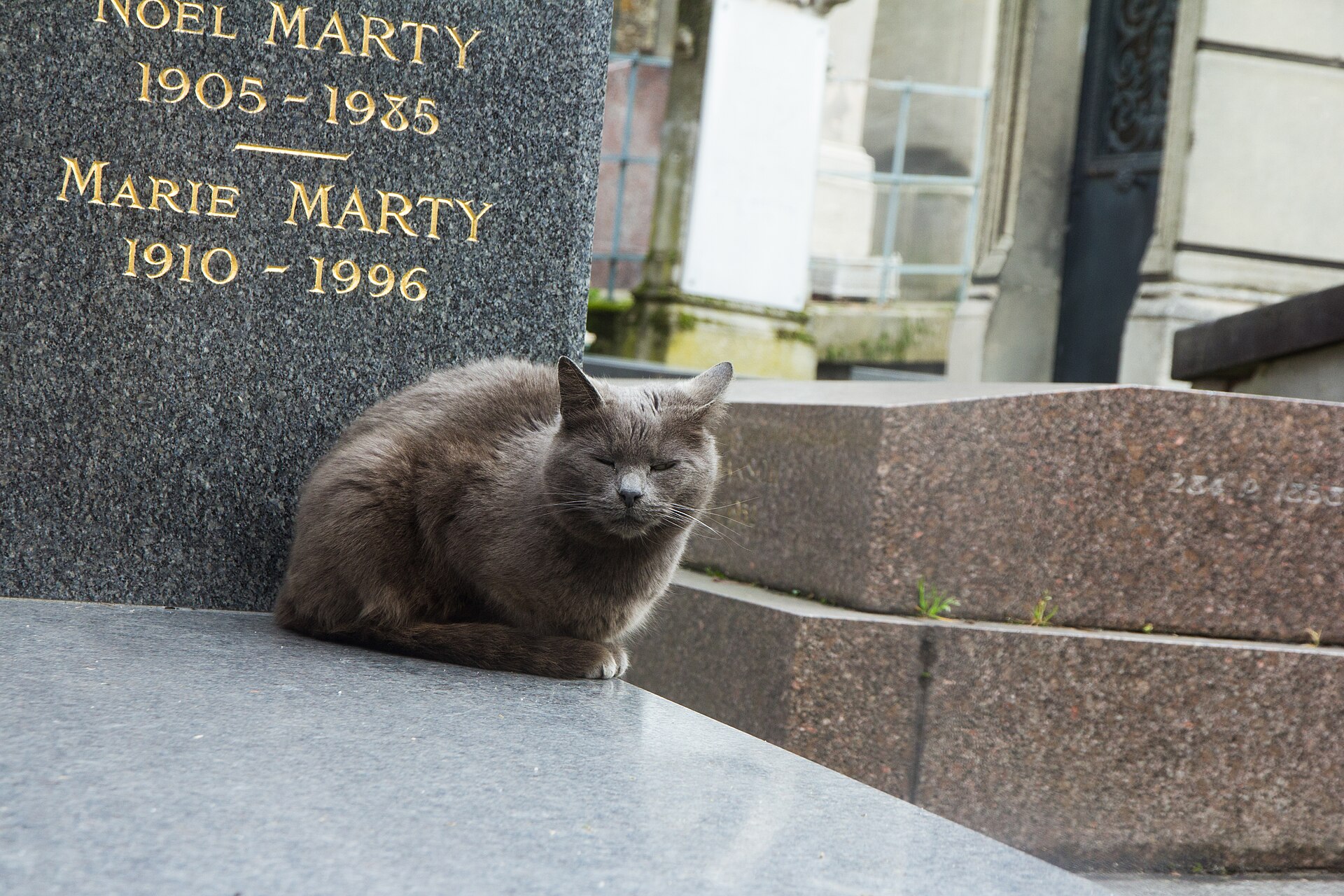
On a grave, in the sun. Whose is not the point.Ivonna Nowicka, CC BY-SA 4.0 The alleys along the walls
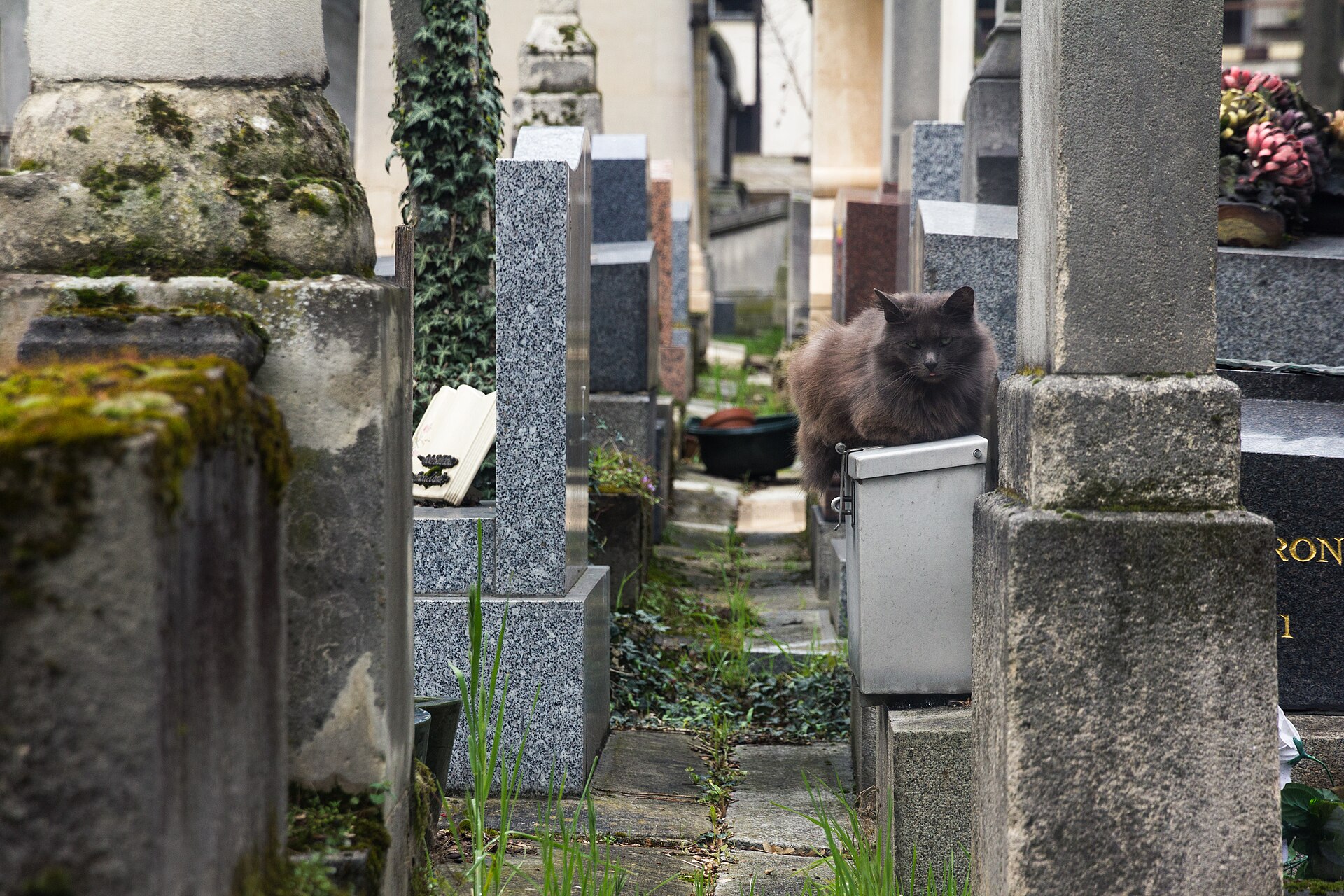
The quiet lanes at the edges of the cemetery, ivy and old iron, where the cats that do not want to be photographed go. Walk slowly; this is where the colony actually lives.
An alley by the wall. The private side of the cemetery.Ivonna Nowicka, CC BY-SA 4.0 Saint-Vincent and Steinlen
Out, up Rue Caulaincourt and over the hill to the small Saint-Vincent cemetery behind the vineyard, where Théophile Steinlen is buried. He drew the Chat Noir poster and fed the cats of Montmartre. A panel nearby marks his old house, the Cats’ Cottage.
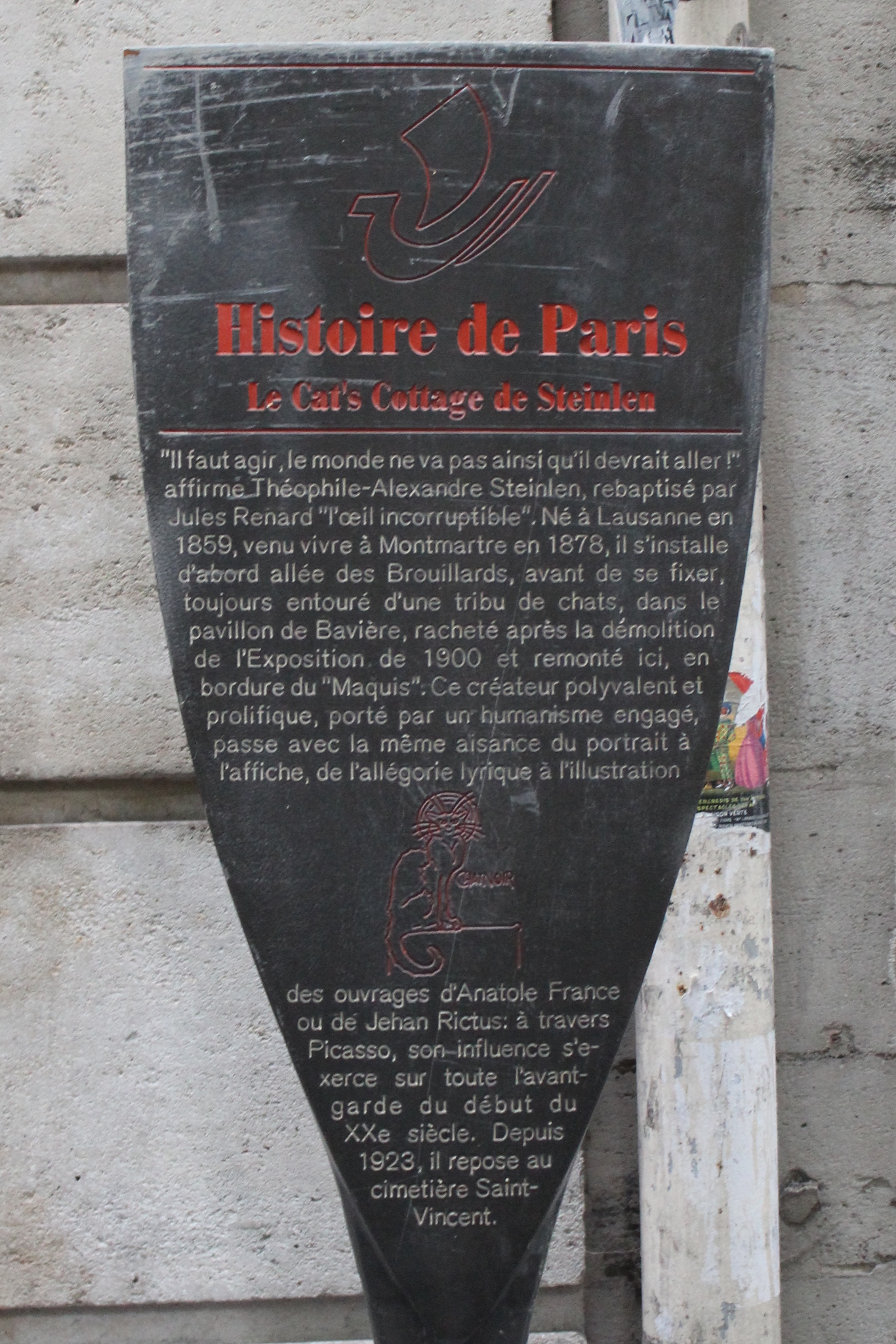
Steinlen’s Cats’ Cottage. The man who drew the black cat lived here, and fed the real ones.Scarabocchio, CC BY-SA 4.0
Same numbers as the list. Worth keeping open on your phone.
The cats you will meet
A managed colony: sterilised, identified, fed every morning by L’École du Chat, and older than most street cats because nothing here hunts them. Tabby and black, mostly, thick-coated by winter, and used to being looked at from a respectful distance.
Slab cats
On the warm stone of the famous graves.
The ones in the photographs. Sit down a few graves away and wait.
Bridge cats
Under the Caulaincourt bridge, in the dry.
The feeding station. In the morning, this is where everyone is.
Wall cats
In the ivy along the edges.
The shy ones. Seen, not approached.
Everybody says The cemetery is overrun with strays.
Actually It was, once. Since 1977 the colony has been fed, sterilised and identified by one association, and it has shrunk to a manageable, elderly group with names. It is a model, not a problem, and the reason it exists is that the neighbours refused a cull.
How not to be the annoying one
- It is a cemetery. People are here to grieve. Quiet, no climbing on tombs, and the cats come second to that.
- Do not feed. The association does, on a schedule, and food on graves brings rats.
- Do not chase a cat into the ivy for a photograph. Wait on a bench; the slab cats come to the sun.
- If you see a feeder, say thank you. Give if you can.
- The gate closes at six, earlier in winter. The cats stay; you do not.