Village Kaş, Türkiye
Cats in Kaş and Kalkan
Two harbour towns half an hour apart on the Lycian coast, with bougainvillea, Greek houses, a Lycian tomb in the middle of the shopping street, and cats in every shop, on every restaurant chair and painted up the side of at least one house.
Where to find cats in Kaş and Kalkan: Kaş and Kalkan, harbour towns on the Lycian coast of Türkiye, west of Antalya and east of Fethiye. When: May, June, September and October. July and August are hot and full; the cats are under the tables either way. Why here: The gentlest towns on the Turkish coast, with the Turkish attitude to cats and a lot of shade to keep them in.
The short version
- Where
- Kaş and Kalkan, harbour towns on the Lycian coast of Türkiye, west of Antalya and east of Fethiye
- When
- May, June, September and October. July and August are hot and full; the cats are under the tables either way
- How long
- A day in each. A week on the coast between them, with the ruins and the sea
- What it costs
- Free. The restaurants are the budget and the cats eat what is left
- Why here
- The gentlest towns on the Turkish coast, with the Turkish attitude to cats and a lot of shade to keep them in
What to bring
- Early eveningThe shops reopen, the restaurants set the tables, and the cats take the chairs before the customers do.
- Shoes for stepsBoth towns climb from the harbour, Kalkan steeply. The cats are on the steps.
- Dry food, a littleThis is Türkiye; feeding is normal and the bowls are by every door. Top one up.
- A dolmuş fareThe minibus between the towns is cheap and frequent and stops for anyone who waves.
Why there are cats everywhere
Kaş has a Lycian sarcophagus at the top of its shopping street, and the cats use it as a viewing platform.
The Lycian coast is the stretch of southern Türkiye between Fethiye and Antalya where the mountains fall into the sea, and Kaş is its prettiest town: a small harbour, a grid of whitewashed and bougainvillea-covered streets climbing from it, old Greek houses from before the population exchange, a Roman theatre on the edge, and, at the top of Uzun Çarşı, the long bazaar street, a Lycian tomb from the fourth century BC standing in the middle of the shops. Kalkan, twenty-five kilometres west, is the same idea with steeper streets, a marina, and villas up the hill.
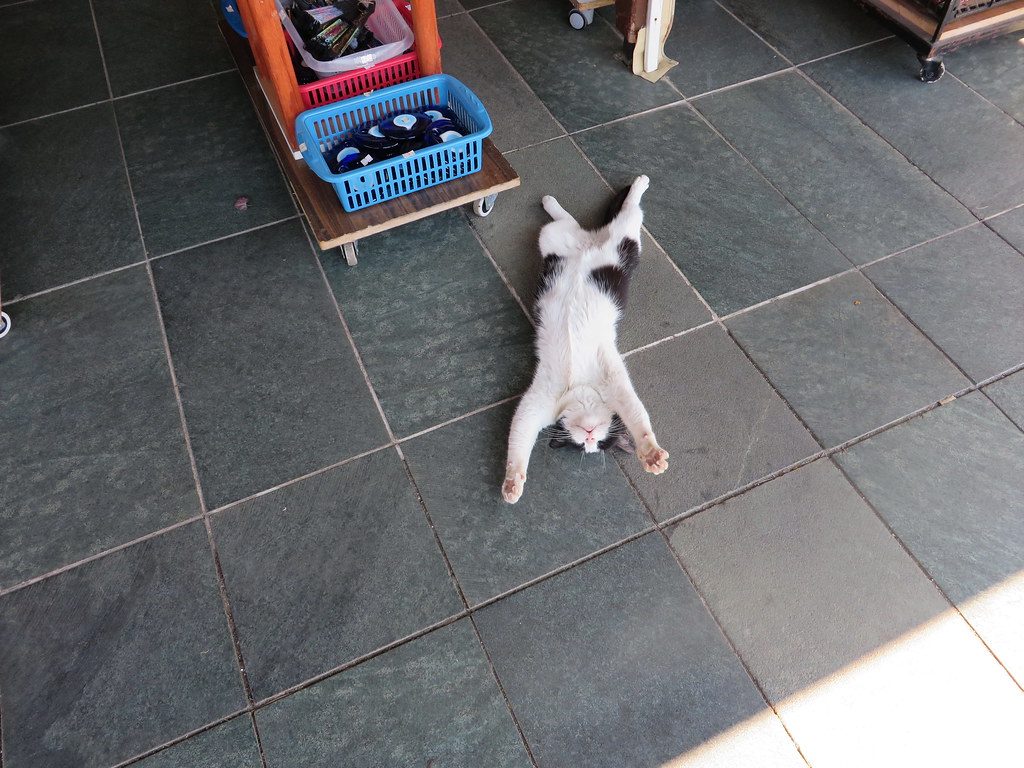
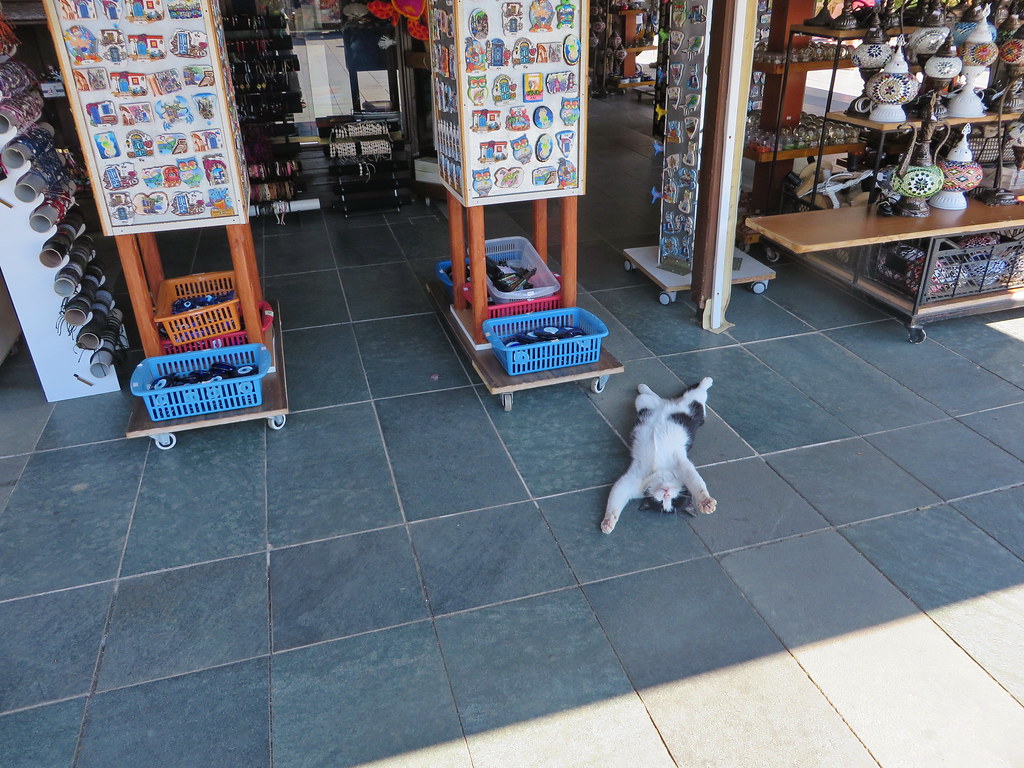
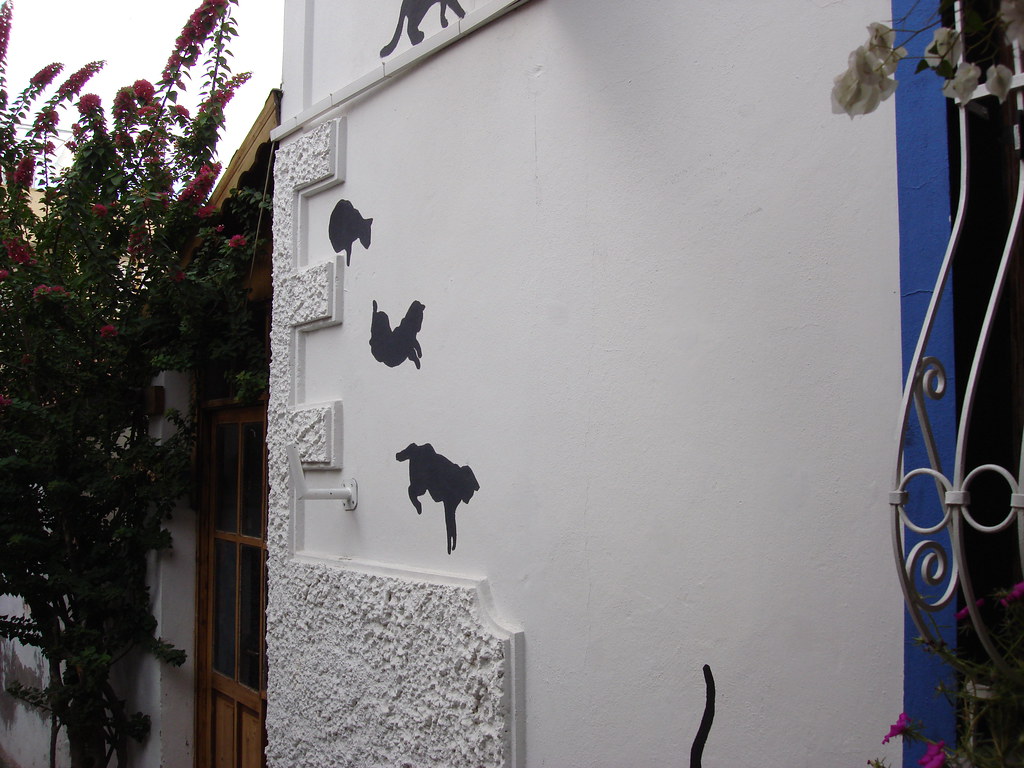
The cats are Turkish cats, which is to say fed by everyone: the shopkeepers, whose floors they sleep on through the afternoon, the restaurants, whose chairs they hold until the customers arrive, and the households, whose bowls are by every door. The photographs on this page are from the shops of Kaş, where a black-and-white cat has decided that the tiles between the magnet racks are the coolest place in Lycia and is not wrong. One house in the old streets has black cats painted climbing its wall, which is the town explaining itself.
Between the two towns the coast has Kaputaş beach in its gorge, the sunken city of Kekova offshore, and the ruins of Patara with its long beach. The cats do not come to any of these. They are in the towns, in the shade, on the chairs, waiting for the evening.
The walk
Kaş first: the harbour, Uzun Çarşı and the tomb, the old streets and the theatre. Then the minibus to Kalkan for the evening in the steep lanes above the marina.
- From Dalaman airportBus or transfer to Kalkan, then Kaş150 minTwo and a half hours along the coast. Kalkan comes first.
- From Antalya airportBus to Kaş210 minLonger, and the road is the Lycian coast, which is the point.
- From KaşDolmuş minibus to Kalkan30 minFrequent, cheap, and it stops for a wave.
Kaş harbour
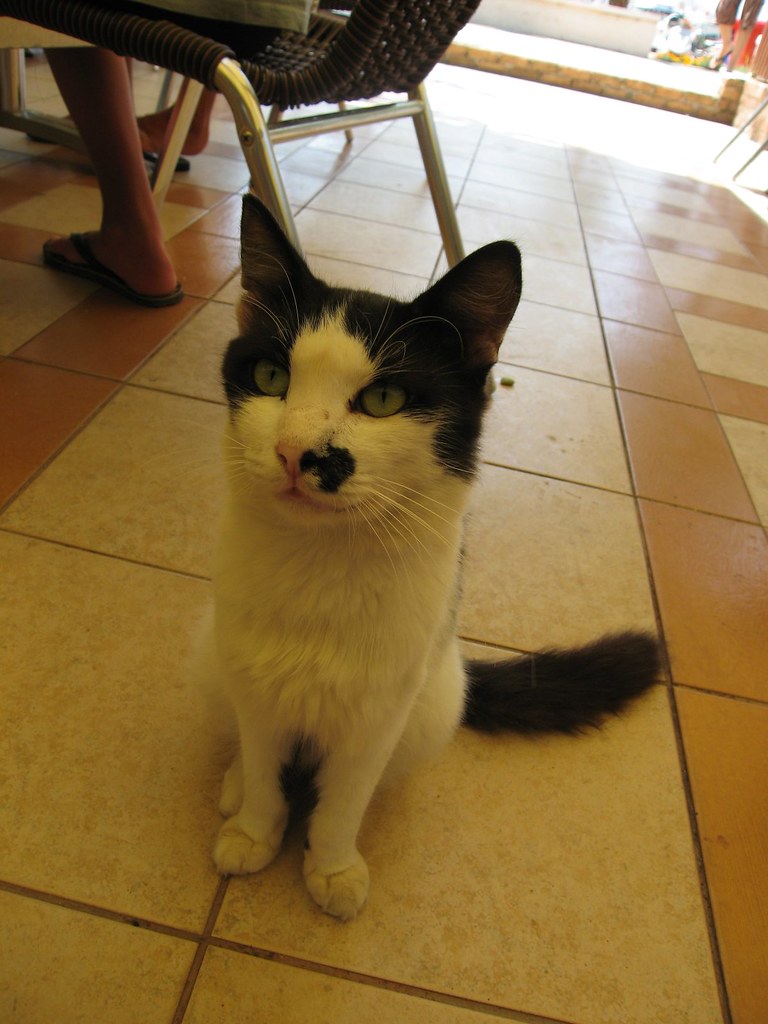
The small harbour with the boats for Kekova and the restaurants around it. Cats on the chairs from early evening. Start here with tea and walk up into the town.
Hopeful, at a harbour table. It usually works.Peanut99, CC BY-SA 2.0 Uzun Çarşı and the Lycian tomb
The long bazaar street climbing from the square, with the sarcophagus at the top standing in the middle of the road. Shops on both sides, cats on the shop floors. The photographs on this page are from here.
Uzun Çarşı. The shop is open; the cat is closed.Luc Coekaerts from Tessenderlo, CC0 1.0 The old streets and the painted cats
Off the bazaar into the lanes of old Greek houses, whitewash and bougainvillea. One house has black cat silhouettes painted climbing its wall; the real ones are on the steps below it.
The house that explains the town.JULIAN MASON, CC BY 2.0 Kalkan
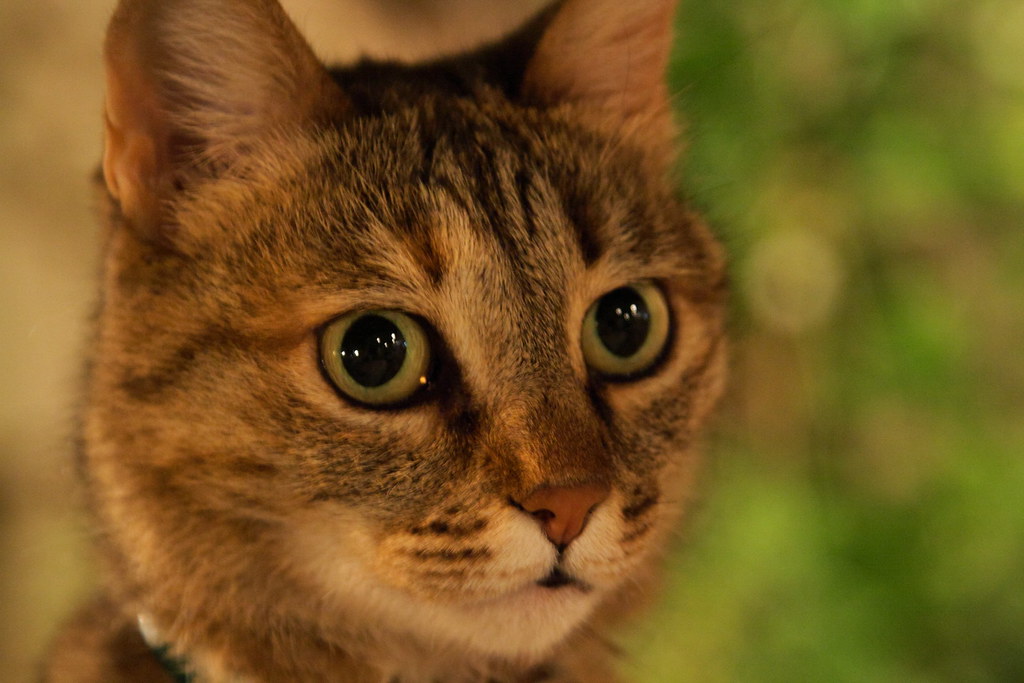
The minibus west along the coast to the second town, steeper, with a marina and lanes of restaurants climbing from it. Cats on the steps and the restaurant terraces in the evening.
A portrait, taken at the cat’s request.Vassil Tzvetanov, CC BY 2.0
Same numbers as the list. Worth keeping open on your phone.
The cats you will meet
Turkish coast cats: short-coated, black-and-white and tabby and ginger, fed by shops, restaurants and households, calm in the heat and proprietorial about chairs. Sociable in the evening, asleep on shop floors all afternoon, and used to a great many cameras.
Shop cats
Flat on the tiles between the racks.
The afternoon shift. Step round.
Chair cats
On the restaurant chairs at dusk.
Holding your seat. Negotiate.
Step cats
On the lanes climbing both towns.
Fed by the door behind them.
Everybody says The cats are the restaurants’ marketing.
Actually The restaurants feed the cats because Turkish people feed cats, and the cats sit on the chairs because the chairs are there. That tourists find it charming is noted and not the reason.
How not to be the annoying one
- Top up a bowl by a door. Do not start one on the tomb.
- The shop cat is not for sale and not for moving. Buy the magnet and step round.
- A cat on your chair has precedence. Ask the waiter for another chair, not another cat.
- The old houses are homes. Photograph the painted cats, not through the windows.
- The sea is the other reason to be here. The cats will keep your chair.