Landmark Tokyo, Japan
Cats in Gotokuji Temple
The temple where the beckoning cat comes from, in a quiet corner of Setagaya, with more than a thousand of them lined up on shelves. Free, open from six in the morning, and almost no actual cats.
Where to find cats in Gotokuji Temple: Gotokuji, a Buddhist temple in Setagaya, west Tokyo, five minutes from Miyanosaka on the Setagaya tram line. When: Early. The grounds open at six and the shelves are best in low light. The shop and office open at eight. Why here: The origin of the most famous cat in the world, and the only place its thousand copies make sense.
The short version
- Where
- Gotokuji, a Buddhist temple in Setagaya, west Tokyo, five minutes from Miyanosaka on the Setagaya tram line
- When
- Early. The grounds open at six and the shelves are best in low light. The shop and office open at eight
- How long
- An hour. Longer if you buy a cat and decide where to leave it
- What it costs
- Free to enter. A maneki-neko from the temple office is a few hundred yen and up
- Why here
- The origin of the most famous cat in the world, and the only place its thousand copies make sense
What to bring
- Cash for a catThe office sells the temple’s own maneki-neko in sizes from thumb to bucket. You can leave it on the shelves or take it home; both are the tradition.
- A morning, not a lunchtimeThe office and shop shut from noon to one. The grounds do not, but the cats are behind glass in the office.
- The Setagaya lineA two-carriage tram from Sangenjaya. One of the trains is painted as a maneki-neko. Nobody minds if you wait for that one.
- No expectation of live catsThere are, at most, one or two, and they are not on the payroll. The thousand on the shelves are the point.
Why there are cats everywhere
A cat raised its paw at a passing lord, and the lord followed it in out of the rain.
That is the story, more or less. In the early seventeenth century Ii Naotaka, lord of Hikone, was passing the gate of a poor temple when the priest’s cat beckoned to him. He went in. A storm broke behind him, lightning struck the spot where he had been standing, and Naotaka, who had a lot of money and a sense of debt, made the temple his family’s and rebuilt it as Gotokuji. The cat, when it died, got a shrine of its own. The beckoning cat with its raised paw, the maneki-neko in every shop window from here to São Paulo, is that cat.
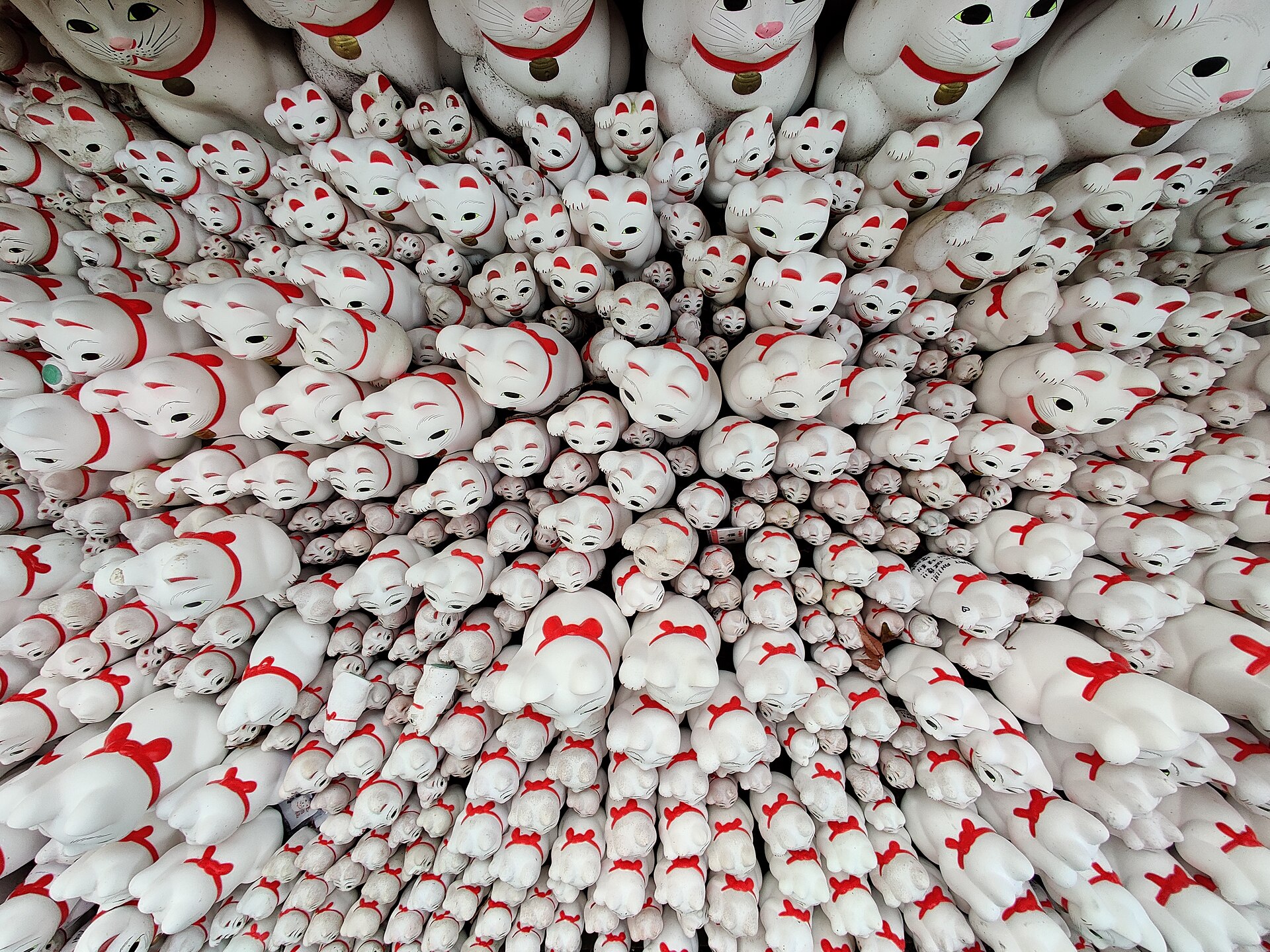
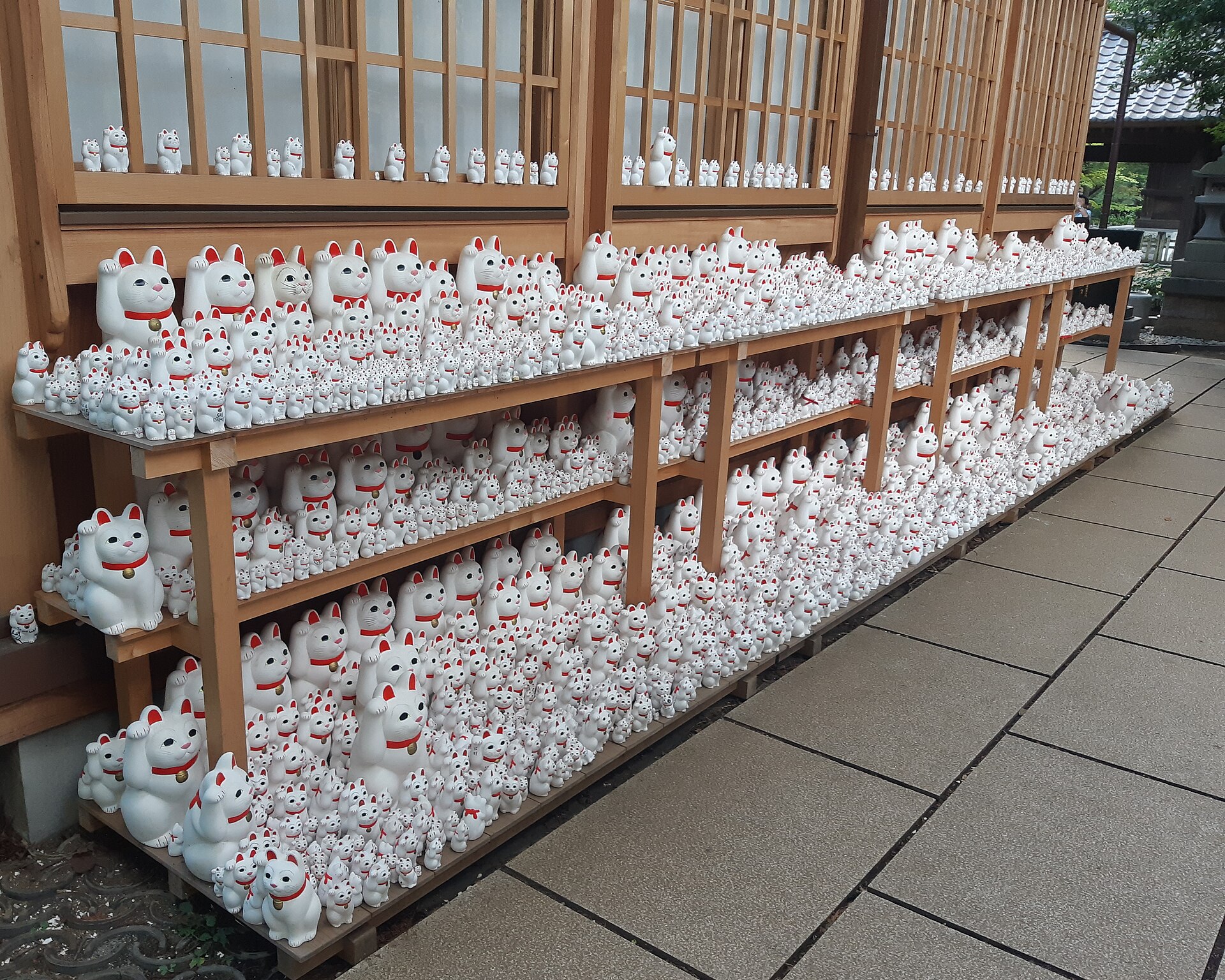
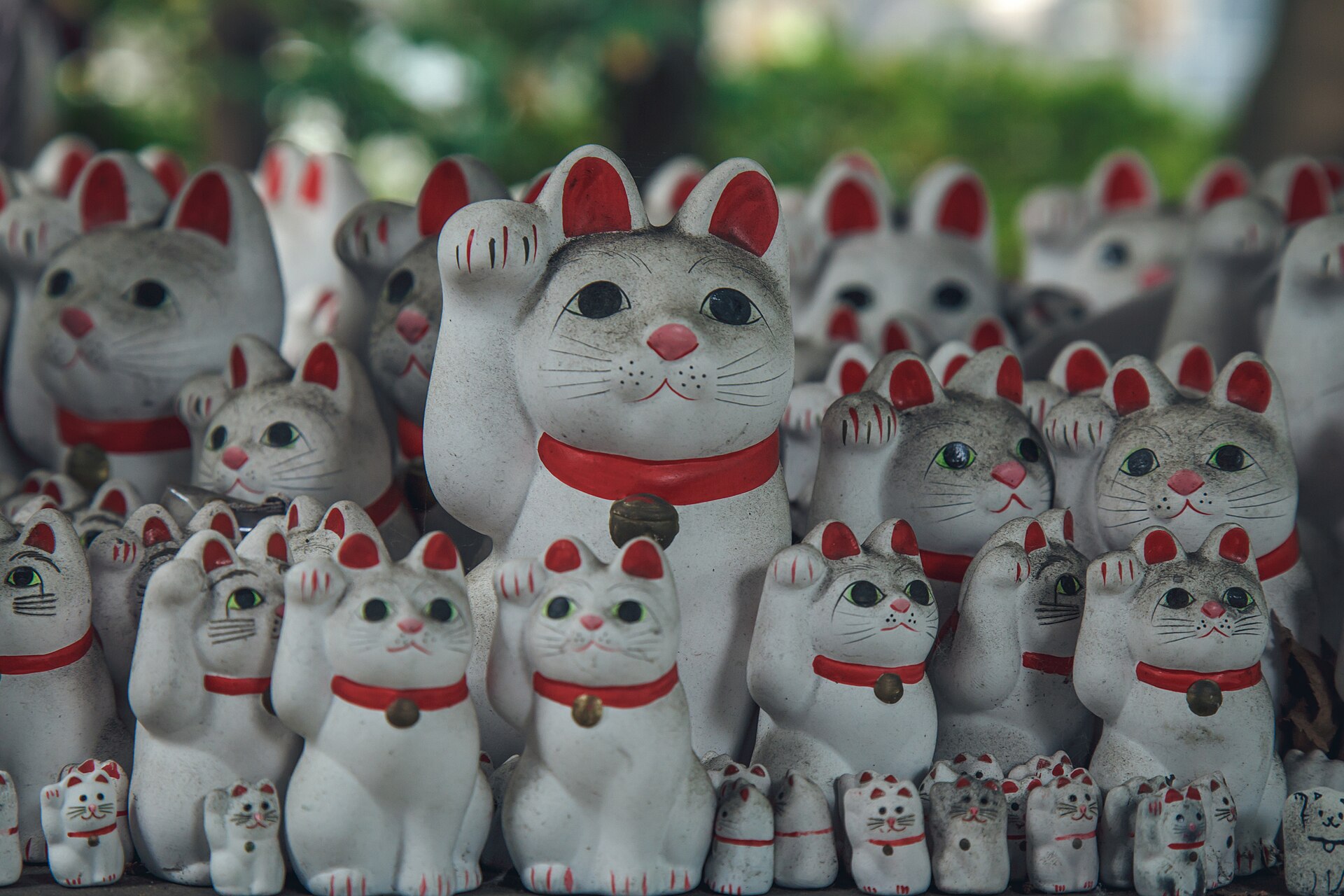
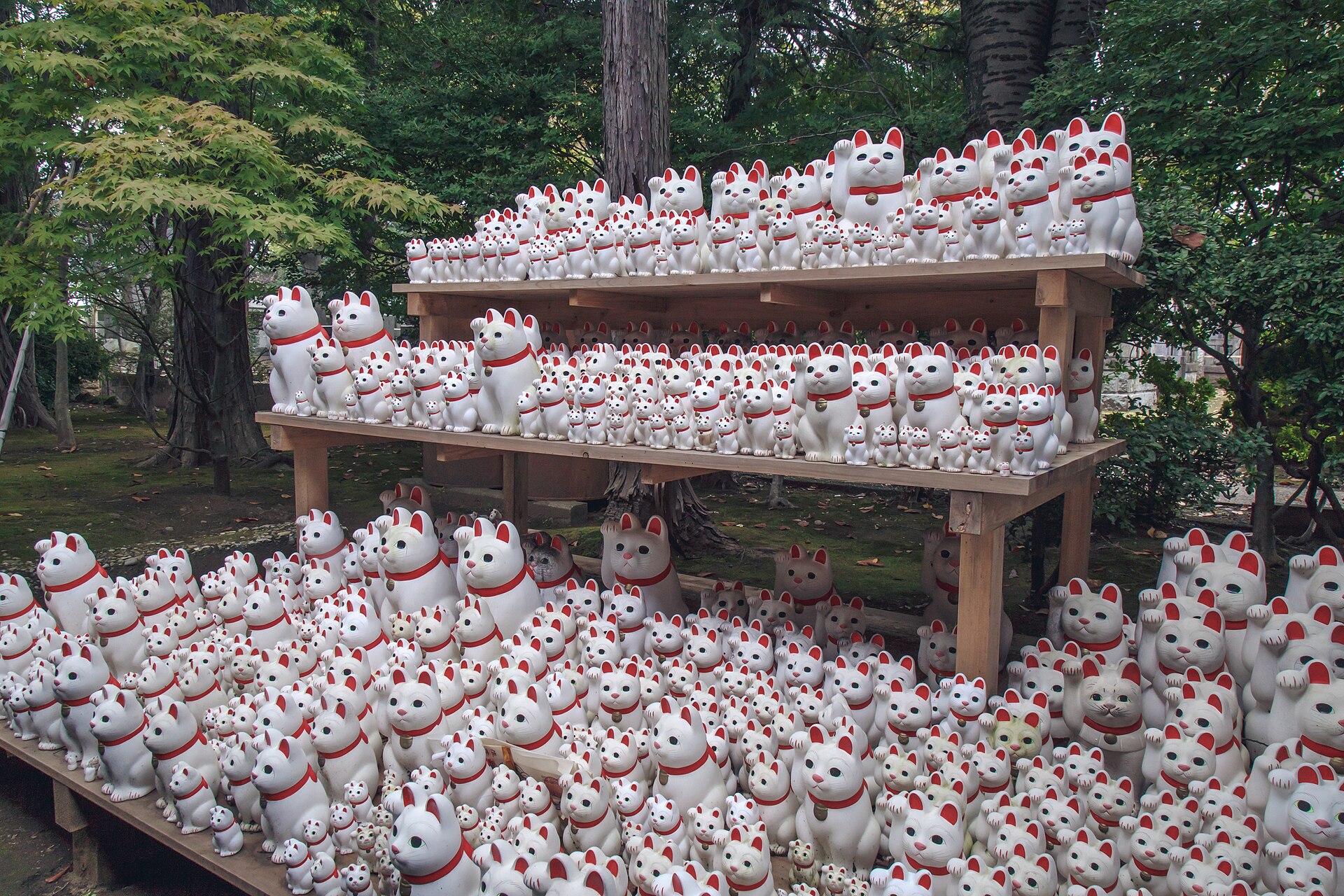
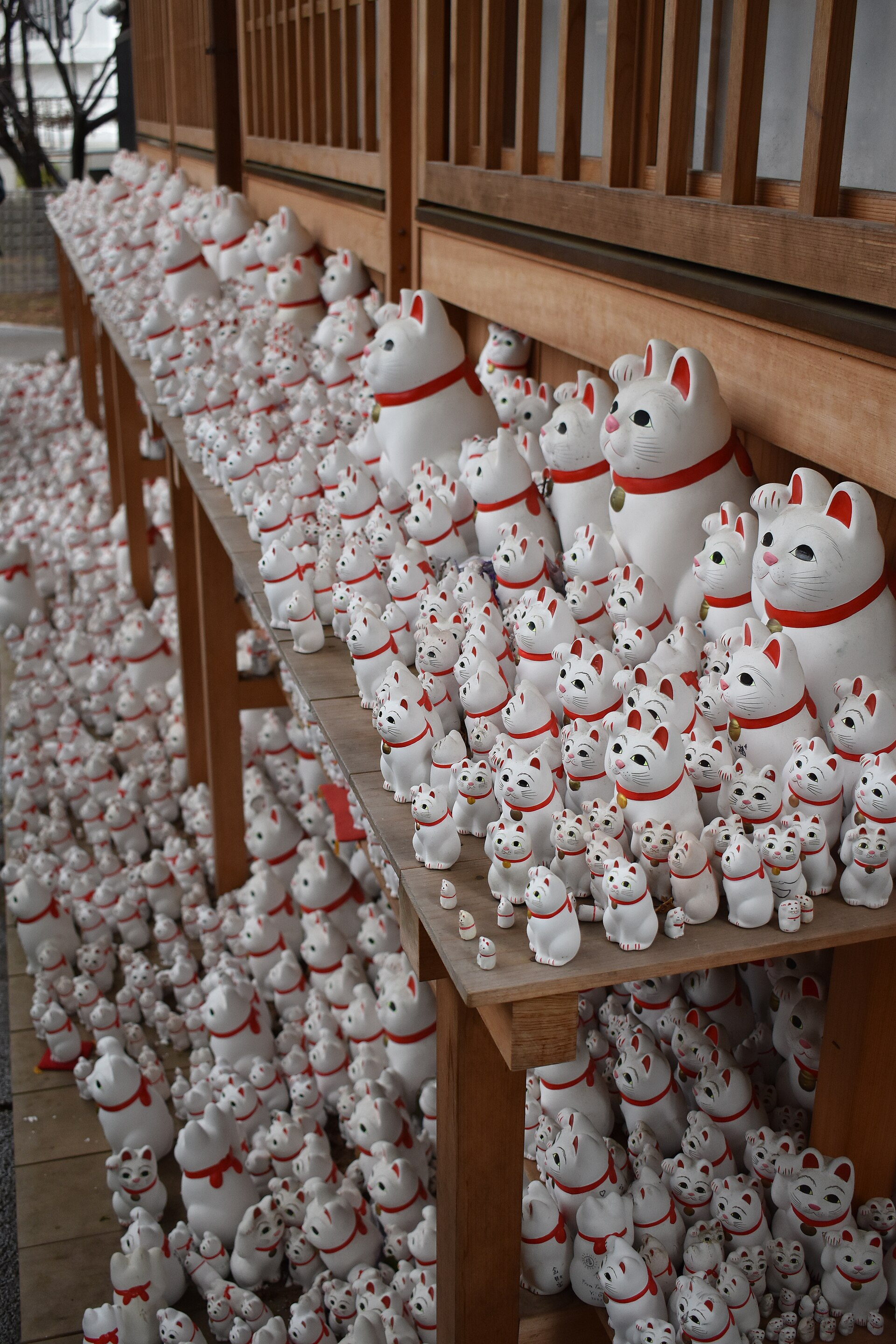
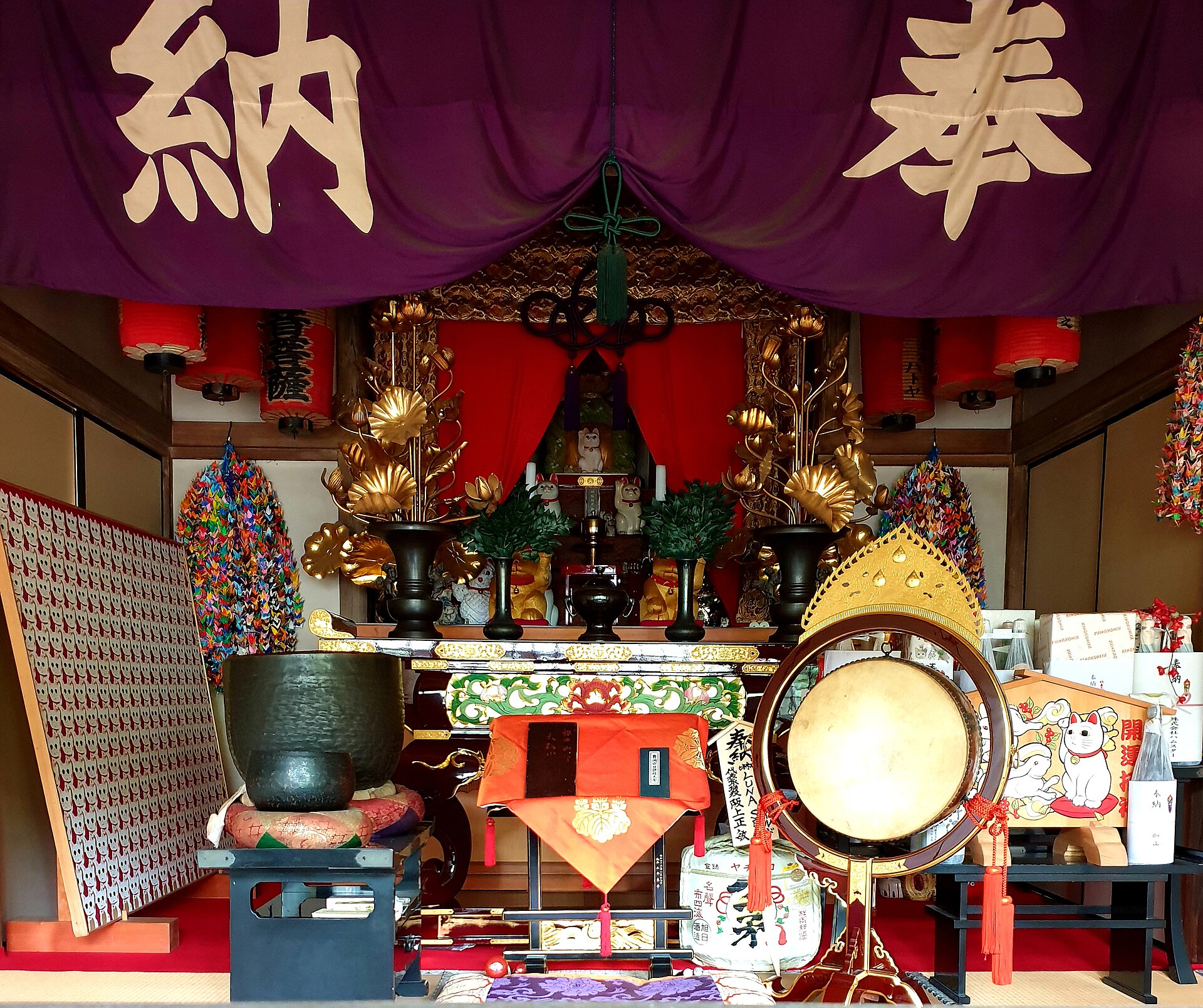
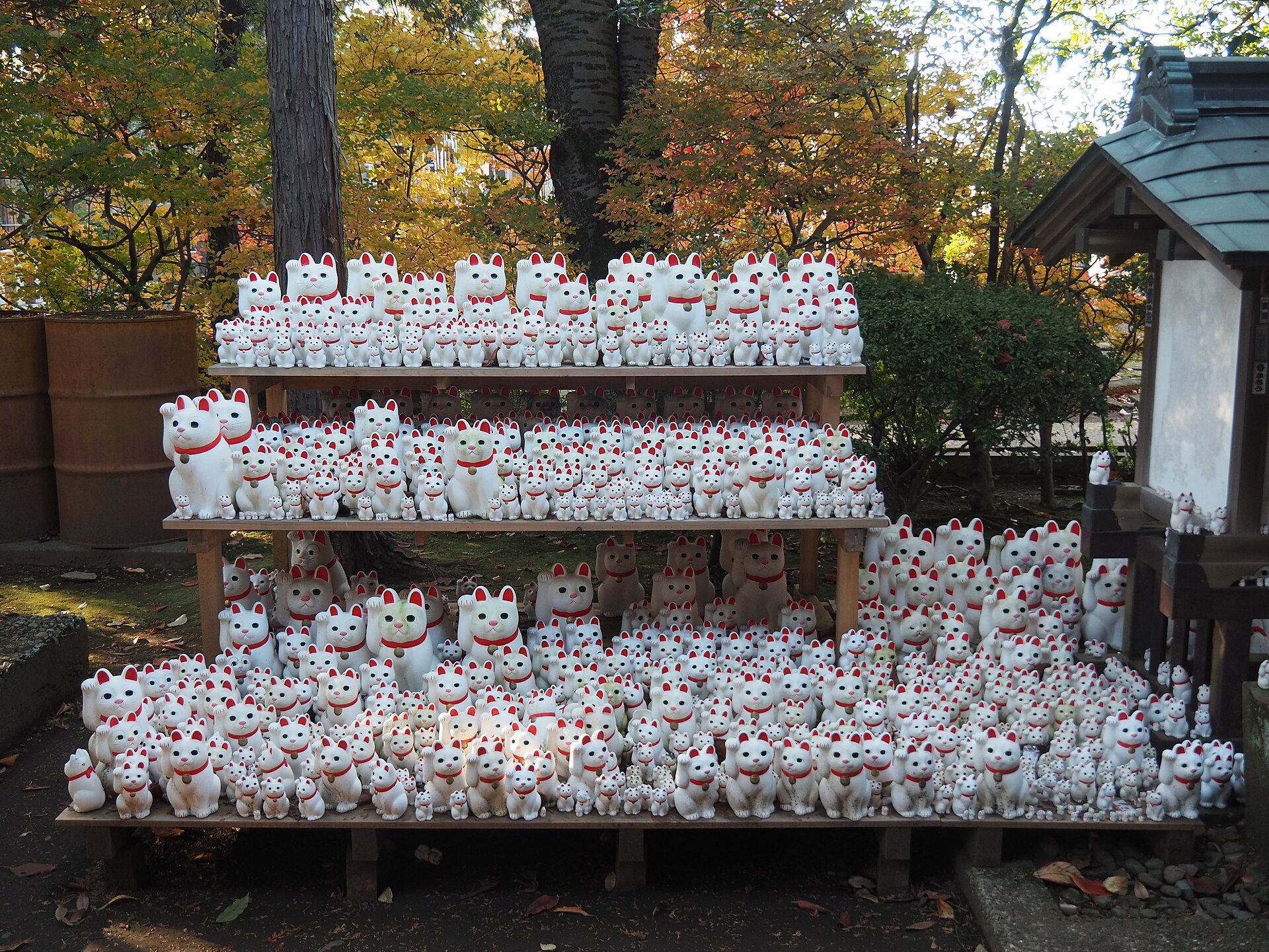
Other temples claim the maneki-neko too, and the historians hedge. Gotokuji has the strongest case and by far the most cats. Behind the main hall, beside a small shrine, are tiers of shelves holding more than a thousand of them, all the temple’s own design: white, red collar, right paw up, no coin. People buy one at the office, pray with it, and either leave it here or take it home and bring it back when the prayer is answered. The shelves are the accumulated answered prayers of a great many people, which is a different thing from a display.
The rest of the temple is worth the walk too: a three-storey pagoda with cats carved into it if you look, a quiet graveyard where the Ii lords are buried, and grounds that are somehow empty at eight in the morning in a city of fourteen million.
The honest part: there are almost no living cats. One, sometimes, on a wall near the graveyard. This is a page about a thousand cats and one lord, and the walk from the tram, and it is on the list because it is where the idea of the lucky cat was born.
The walk
Tram to Miyanosaka, five minutes to the gate, the pagoda, the shelves, and the office to buy a cat of your own. An hour, and a slow one.
- From ShinjukuOdakyu line to Gotokuji station, then twelve minutes on foot25 minLocal trains only. Fifteen minutes on the train, a quiet walk after.
- From SangenjayaSetagaya line tram to Miyanosaka12 minThe better way in. Two carriages, one of them sometimes painted as a cat.
- From ShibuyaDen-en-toshi line to Sangenjaya, then the tram25 minChange at Sangenjaya. The whole trip is about half an hour.
Miyanosaka Station
The tiny tram stop nearest the temple, on the Setagaya line from Sangenjaya. Five minutes on foot to the gate, through a residential neighbourhood with cat shops along the way. If the maneki-neko tram comes, you have started well.
The approach. Quiet, for Tokyo.Laika ac from UK, CC BY-SA 2.0 The Sanmon gate
The main gate into the grounds. Through it, the temple opens out: pines, gravel, the pagoda ahead and the main hall to the left. Free, and open from six.
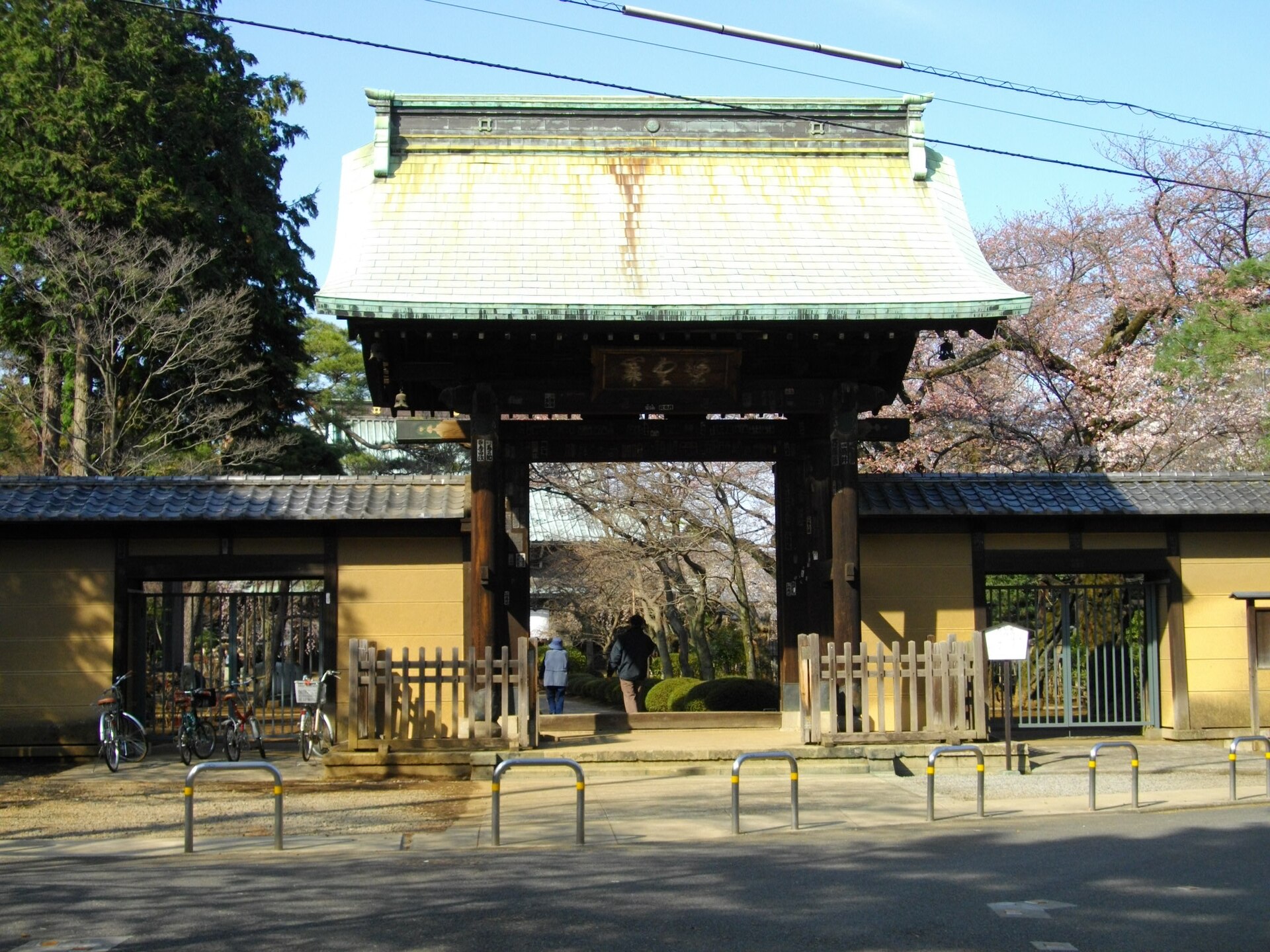
The gate. A cat once beckoned from about here.Abasaa, Public domain The three-storey pagoda
On the right inside the gate. Look up at the carvings under the eaves: among the usual animals of the zodiac, there are cats, which is not usual at all.
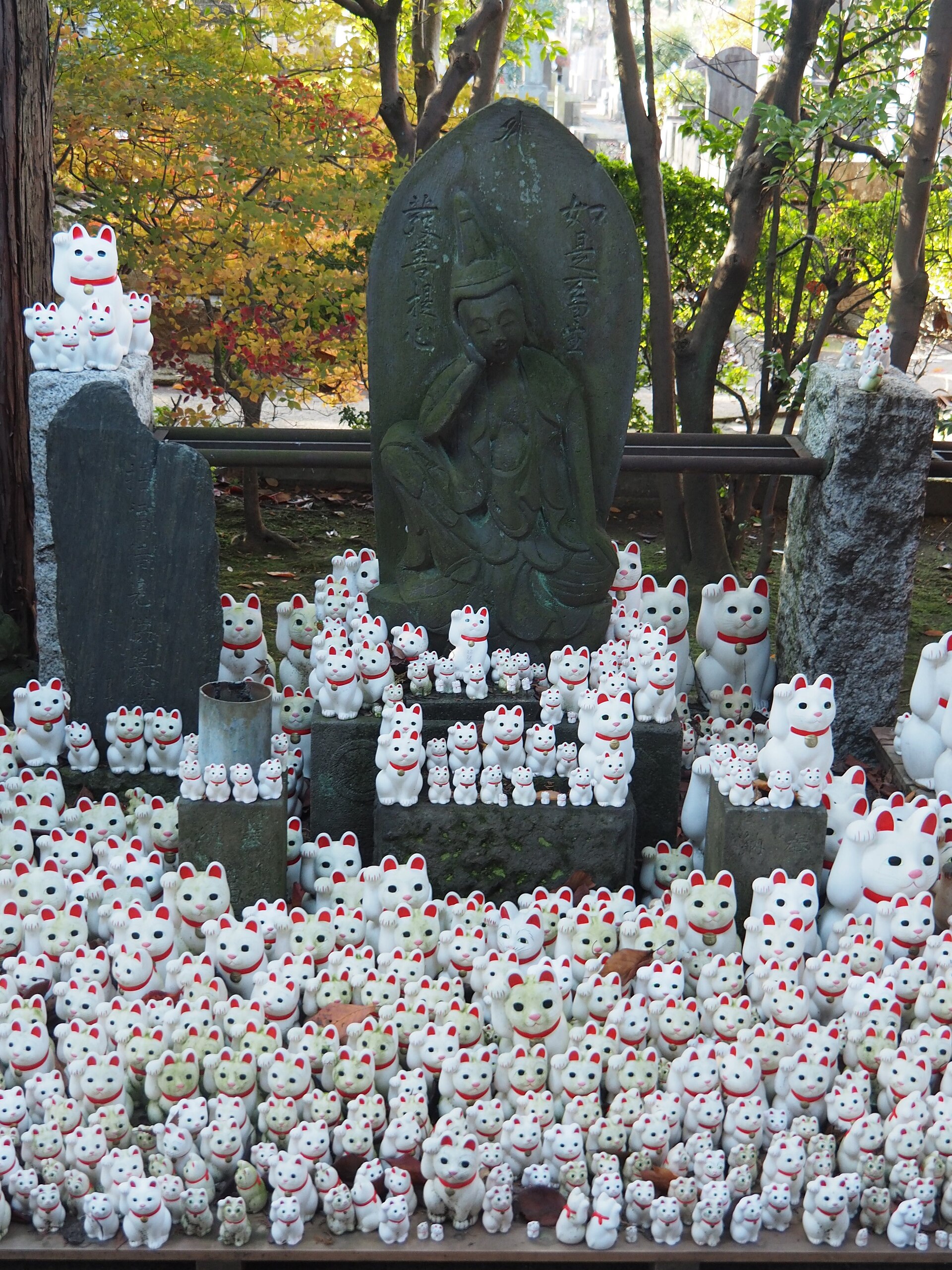
The pagoda. Cats in the carving, if you look.Laika ac from UK, CC BY-SA 2.0 The maneki-neko shelves
Behind the main hall, beside the small Shofuku-den shrine. Tiers of white cats, all the same design, from tiny to enormous. Take your time; the ones at the back have been there for years.
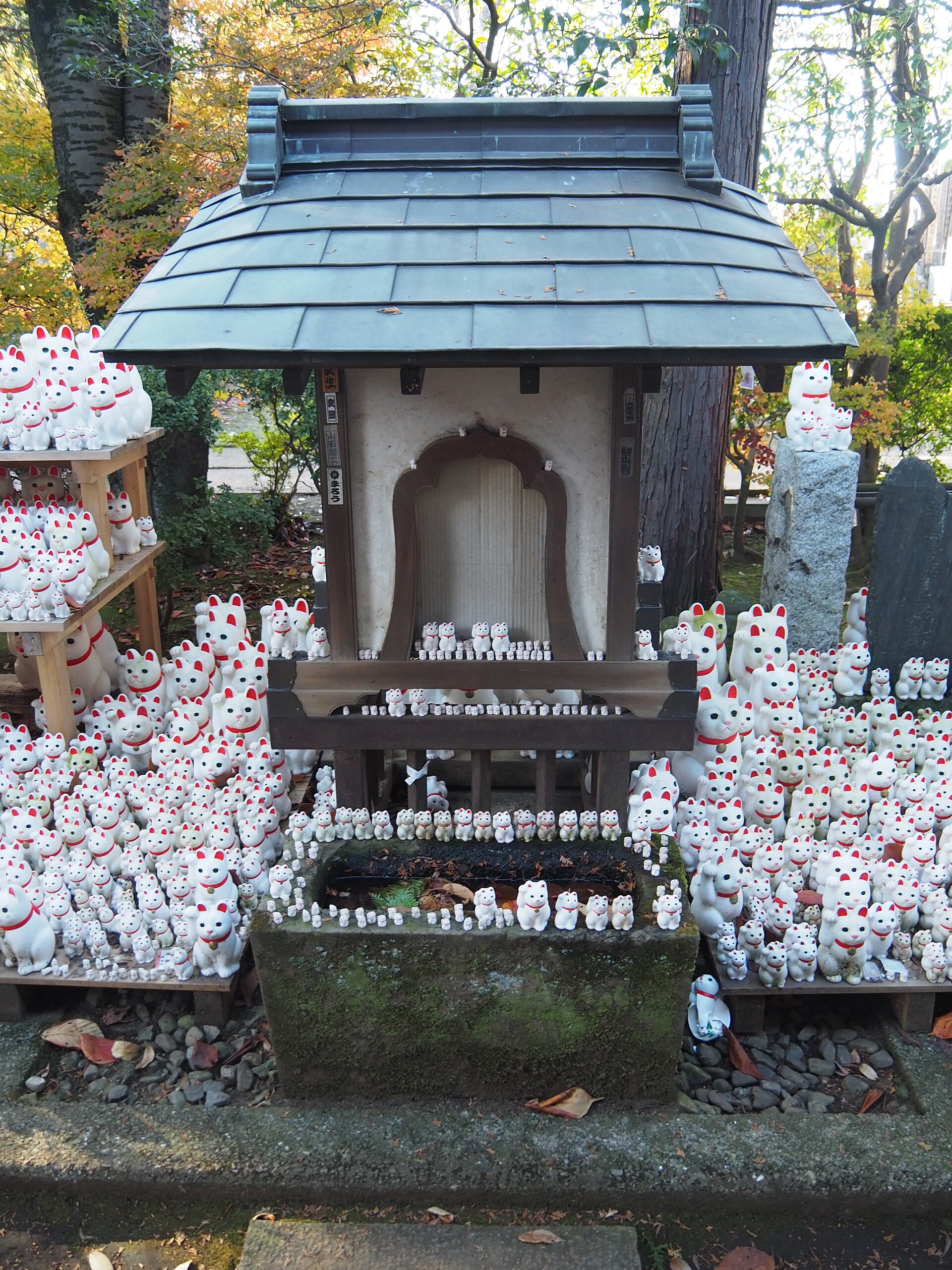
The shelves, from the side. Nobody arranges them; they arrive.Laika ac from UK, CC BY-SA 2.0
Same numbers as the list. Worth keeping open on your phone.
The cats you will meet
Ceramic, mostly. The temple’s own maneki-neko is white with a red collar and the right paw raised, and there are more than a thousand of them. Living cats are rare here: one, sometimes, near the graves, not employed by anybody.
The temple cat
White, red collar, right paw raised, no gold coin.
The Gotokuji design, sold at the office in eight sizes. The coin is a later, commercial addition; the original had none.
The left-pawed ones
Any maneki-neko with the left paw up.
Not from here. Left invites customers, right invites luck. The temple’s cats are all right-pawed.
The one real cat
A neighbourhood cat; the colour changes with the year.
A neighbourhood cat that wanders the graveyard some mornings. Not guaranteed, not the temple’s, and the only living thing on this page.
Everybody says The cat temple is full of cats.
Actually It is full of maneki-neko, and empty of cats. If you want living animals, Yanaka is on the other side of the city and this list has a guide to it. Come here for the story, the shelves and the quiet, and buy a cat to take home.
How not to be the annoying one
- It is a working temple with a graveyard. Quiet, no flash near the hall, and stay off the graves.
- Buy the cat at the office, not from a shop outside, if you mean to leave it on the shelves. Only the temple’s own design goes there.
- Do not take a cat off the shelves. Every one of them is somebody’s.
- The office shuts for lunch, noon to one. Plan the purchase around it.
- If you meet the one living cat, leave it be. It is not part of the exhibit.