City Hong Kong, Hong Kong
Cats in Shop cats
The dried-seafood shops, hardware stores, fruit stalls and estate agents of Hong Kong keep cats on the counter, on the rice sacks and in the window, and a book of photographs made them famous. Where the shop cats are, on both sides of the harbour.
Where to find cats in Shop cats: The old shopping streets of Hong Kong: Sham Shui Po, Yau Ma Tei and Mong Kok in Kowloon, and the dried-seafood streets of Sheung Wan on the island. When: Shop hours, which are long. Mid-morning, when the shutters are up and the cats are on the counters. October to March for the weather. Why here: The best-documented shop cat culture in the world, in the streets that still have shops.
The short version
- Where
- The old shopping streets of Hong Kong: Sham Shui Po, Yau Ma Tei and Mong Kok in Kowloon, and the dried-seafood streets of Sheung Wan on the island
- When
- Shop hours, which are long. Mid-morning, when the shutters are up and the cats are on the counters. October to March for the weather
- How long
- A morning per district. The shops are the walk
- What it costs
- Free to look. Buy something small; the cat belongs to a business
- Why here
- The best-documented shop cat culture in the world, in the streets that still have shops
What to bring
- Small notes and an Octopus cardThe MTR gets you between the districts; the small note buys the dried mushroom or the screwdriver that makes you a customer, not a photographer.
- Manners with the cameraAsk, or gesture at the cat and smile. Most owners are proud; some are busy. A photograph of the shop is a photograph of the shop.
- Mid-morningThe shutters go up around ten. Before that the cats are asleep on the sacks; after lunch they are asleep on the counter, which is better.
- Streets, not mallsThe shop cats are in the old street-level shops. Malls do not have them, and the malls are winning.
Why there are cats everywhere
Hong Kong’s shops keep cats for the mice, for luck, and because a cat on the counter is company through a fourteen-hour day.
The old trades of Hong Kong still run from street-level shops: the dried-seafood and Chinese medicine merchants of Sheung Wan, the hardware and electronics stalls of Sham Shui Po, the fruit wholesalers of Yau Ma Tei, the goldfish and flower markets of Mong Kok. They are family businesses with long hours, sacks of stock, and mice, and a great many of them have a cat, which sleeps on the stock, sits on the counter and greets the regulars. It is practical, it is lucky, and it is the reason a Dutch photographer spent years in these streets making a book called Hong Kong Shop Cats that turned the tradition into a small international fame.
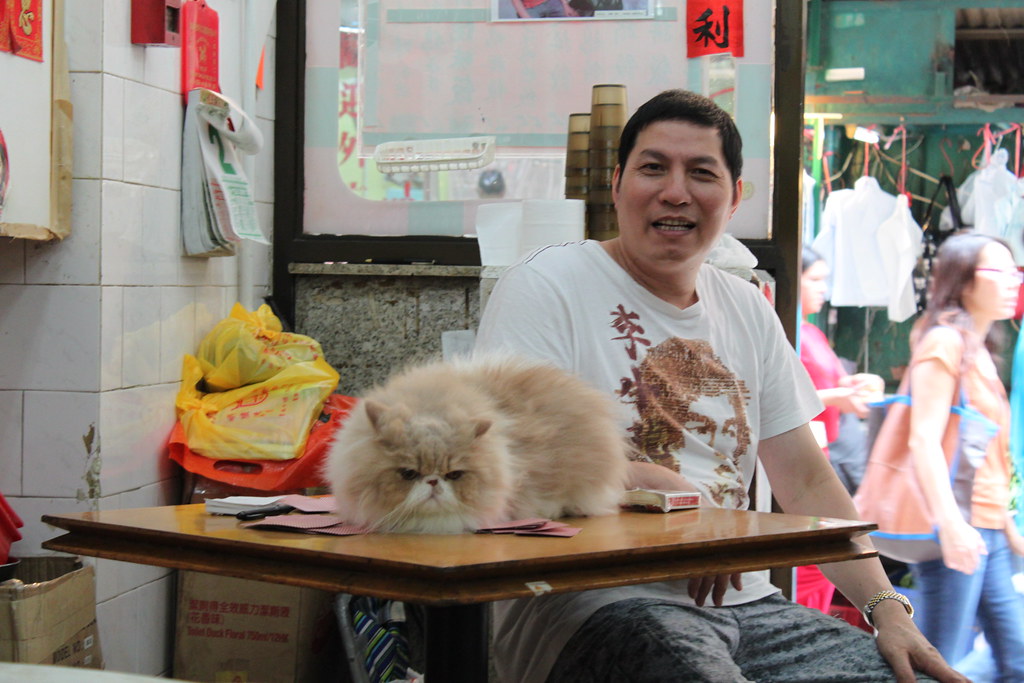
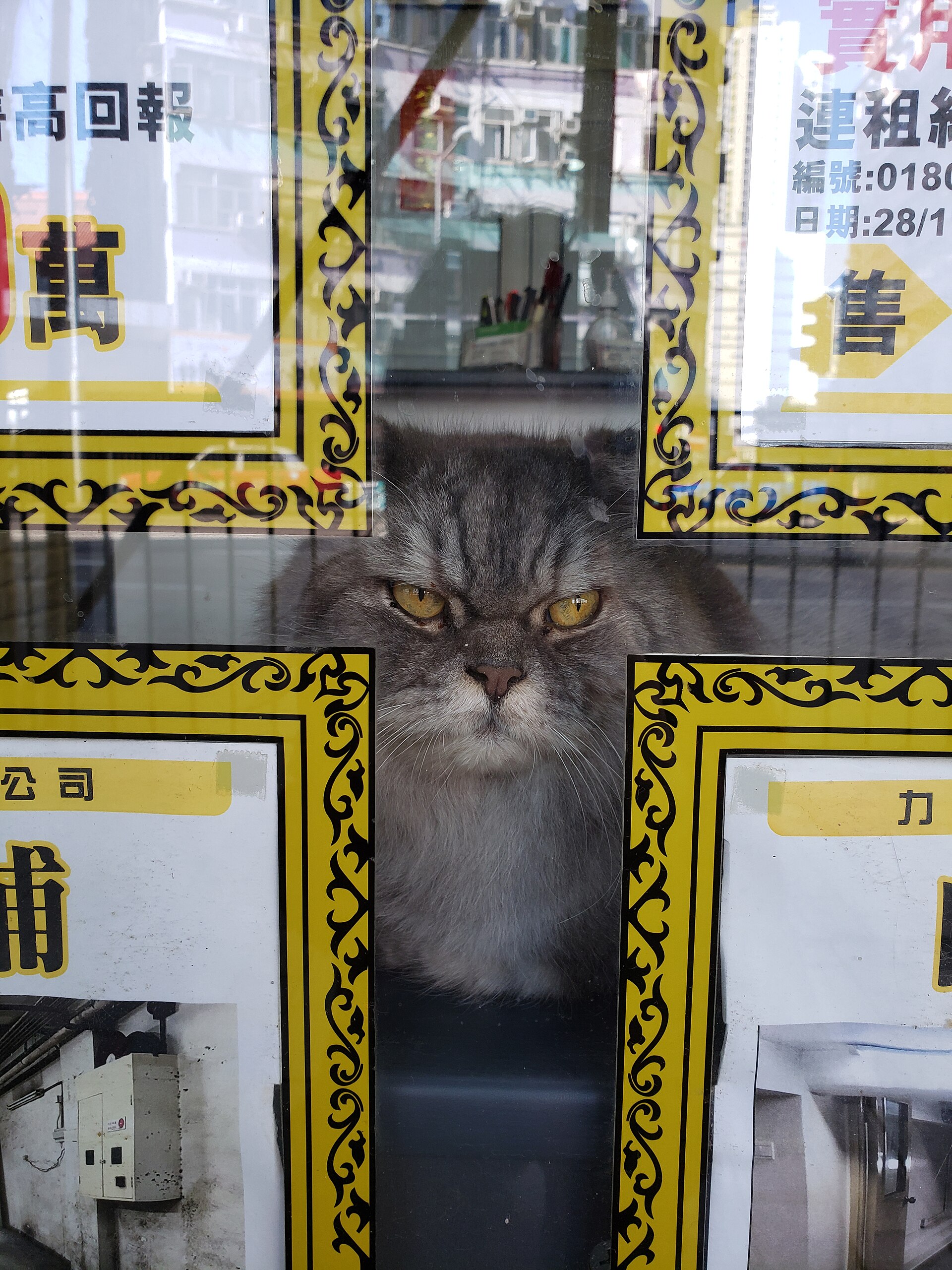
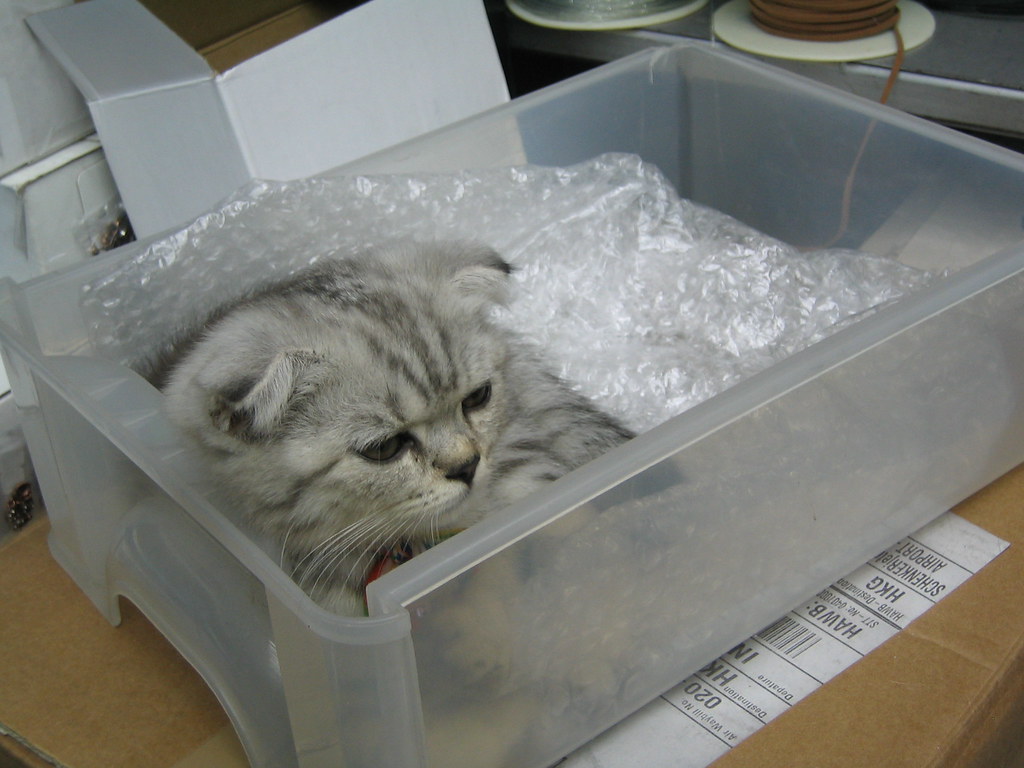
The cats are, on the whole, extremely comfortable. They are fed, they are indoors, they are fussed over by customers, and they have chosen the softest sack in the shop. The cream Persian on the table in the photograph at the top of this page is not a stray; he is the proprietor. The one in the estate agent’s window is the reason people stop and read the listings. The one in the pet shop on On Wo Lane watches the lane all day and is not for sale.
Go district by district. Sheung Wan, on the island, for the dried-seafood streets, where the cats are on the sacks of scallops. Sham Shui Po for the hardware and the fabric and the oldest shops in Kowloon. Yau Ma Tei for the fruit market at the back of the Temple Street stalls. Mong Kok for the markets. And everywhere, the malls are replacing the shops, and the cats are going with them; this is a page about something that is still here and will not be forever.
The walk
Not one walk but four districts, an MTR ride apart. Sheung Wan on the island in the morning, then across to Kowloon for Sham Shui Po, Yau Ma Tei and Mong Kok. A long day, or two short ones.
- From Hong Kong airportAirport Express to Hong Kong station, then walk to Sheung Wan35 minOr Kowloon station for the Kowloon districts. The MTR connects everything on this page.
- From CentralWalk west along Des Voeux Road15 minThe dried-seafood shops begin where the banks end.
- From Tsim Sha TsuiMTR to Yau Ma Tei, Mong Kok or Sham Shui Po10 minThree, four and six stops north on the same line.
Sheung Wan, the dried-seafood streets
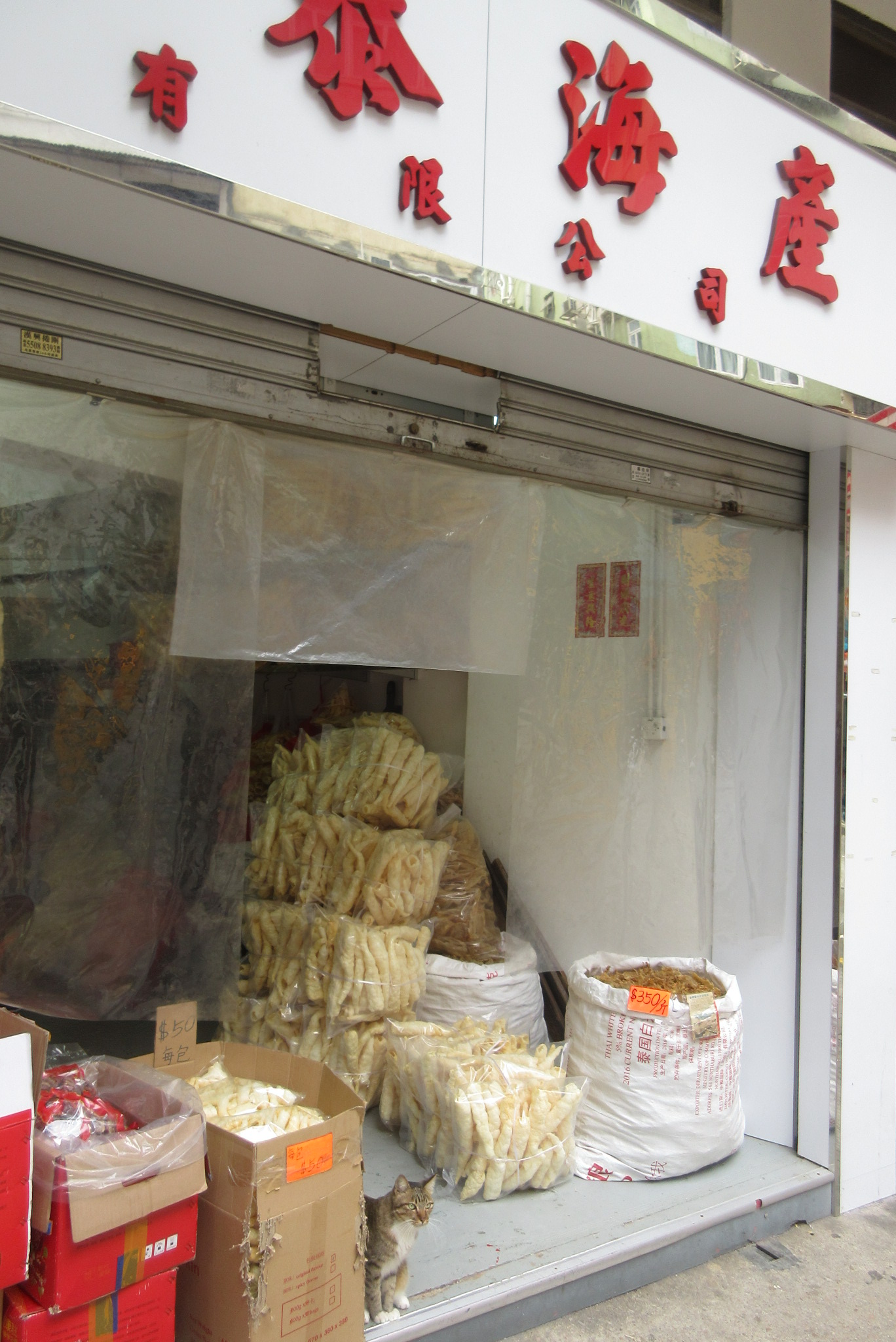
Des Voeux Road West and the lanes off it, where the dried scallops, abalone and fish maw are sold from open shopfronts with cats on the sacks. Queen’s Road West and On Wo Lane have the ones in the photographs.
Queen’s Road West. On the stock, which is the job.Aulwingslamws, CC BY-SA 4.0 Sham Shui Po
Across the harbour, the oldest working district in Kowloon: hardware on Apliu Street, fabric on the lanes behind, electronics in the arcades. Cats on the counters of the shops that have been there fifty years.
An estate agent’s window. The listings are behind the cat.Andy Li, CC0 Yau Ma Tei
The fruit wholesale market behind Temple Street, a hundred years old and busiest at dawn, with cats on the crates. The Tin Hau temple and the jade market are beside it.
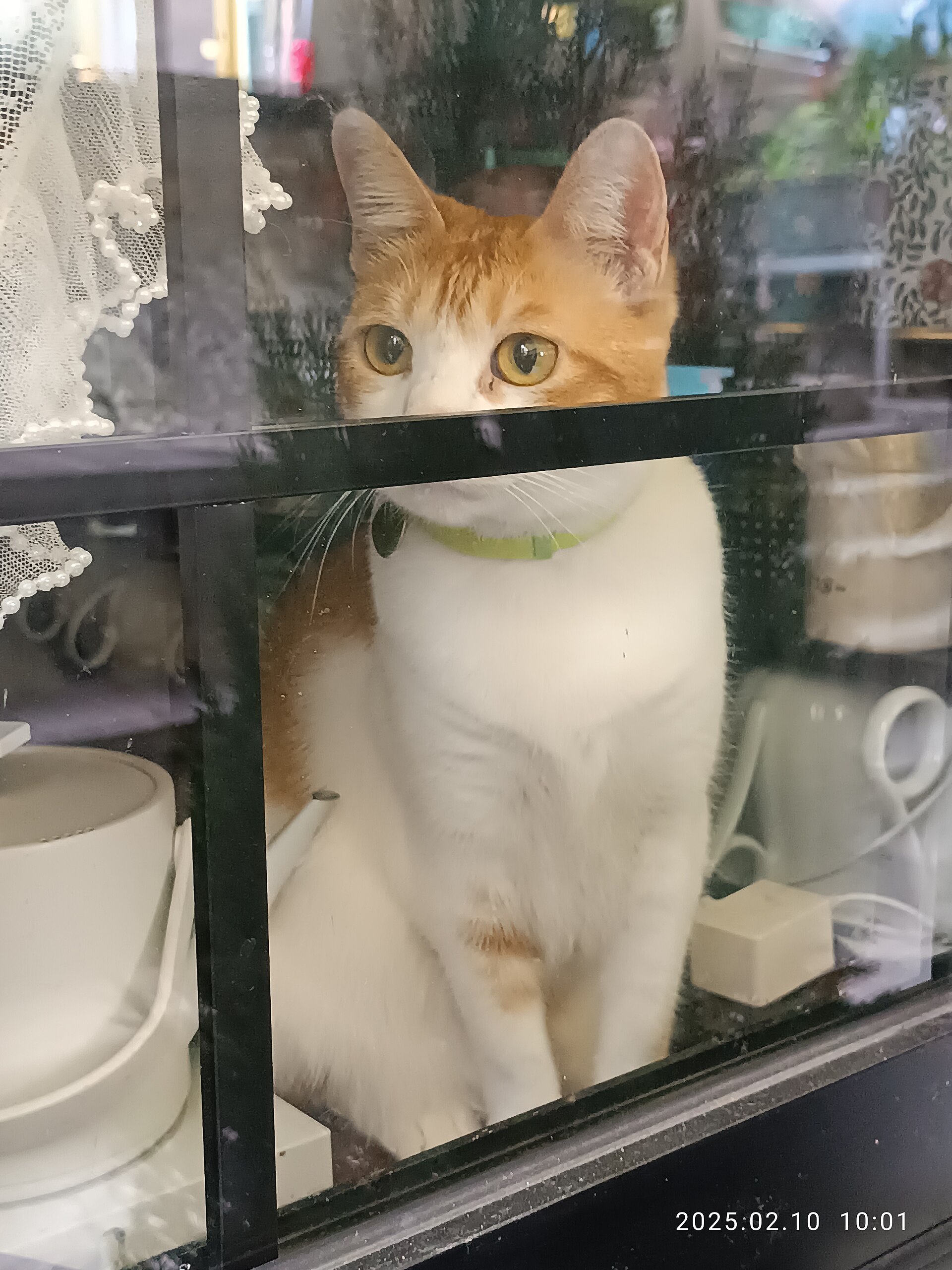
Watching the lane. Not for sale.Safoule 2558 LausldM, CC0 Mong Kok
The markets: flowers on Flower Market Road, goldfish on Tung Choi Street, and the sports shops and the ladies’ market. Cats in the flower shops and the bead shops on the side streets.
A bead shop kitten, learning the trade.Adrian F, CC BY 2.0
Same numbers as the list. Worth keeping open on your phone.
The cats you will meet
Shop cats: owned, fed, indoors, and often pedigree or half so, Persians and British shorthairs among the tabbies, asleep on the stock or presiding at the till. Sociable with customers, indifferent to tourists, and photographed daily without consent.
Sack cats
Asleep on the dried seafood and the rice.
The classic. Do not lift the sack.
Counter cats
At the till, between the calculator and the abacus.
The greeters. A chin scratch is usually accepted.
Window cats
In the shop window, watching the street.
The estate agents’ and the pet shops’. Look; do not tap.
Everybody says The shop cats are strays that wandered in.
Actually Some were, once. Now they are the shop’s: fed, named, and often bought for the purpose. The Persian on the table did not wander in from anywhere. He was appointed.
How not to be the annoying one
- Buy something. The cat belongs to a business and you are in it.
- Ask before you photograph, with a gesture if not a word. Most owners are proud.
- Do not lift the cat off the stock or the counter. The stock is its bed.
- Do not feed. It is fed, and dried scallop is not for cats or for you at that price.
- The shops are disappearing. If you love one, go back.