Island Shingū, Fukuoka, Japan
Cats in Ainoshima
Fukuoka’s cat island: twenty minutes on a ferry from a small port outside the city, a couple of hundred cats, fifth-century stone tombs, and an afternoon that costs less than a coffee.
Where to find cats in Ainoshima: A small island off Shingū, just north of Fukuoka city, twenty minutes by ferry from Shingū port. When: A weekday, any season but midsummer. Weekends and holidays fill the boat and the cats get scarcer. Why here: The easiest cat island in Japan to reach from a big city, and still quiet enough that the cats meet the boat.
The short version
- Where
- A small island off Shingū, just north of Fukuoka city, twenty minutes by ferry from Shingū port
- When
- A weekday, any season but midsummer. Weekends and holidays fill the boat and the cats get scarcer
- How long
- Half a day from Fukuoka, door to door. Two hours on the island is plenty
- What it costs
- ¥460 each way on the ferry, or ¥920 return. Nothing on the island costs anything
- Why here
- The easiest cat island in Japan to reach from a big city, and still quiet enough that the cats meet the boat
What to bring
- Coins for the ferryTickets are sold at the port. ¥460 each way, cash. The boat is small and cash is how it works.
- Your lunchThere is a small shop and not much else. Carry water; the walk round the island is longer than it looks.
- The ferry times, checked that morningA handful of sailings a day, fewer at weekends, and the boat does not run in bad weather.
- Shoes for a coast pathThe loop round the island is about five kilometres and the tombs are up a hill at the far end.
Why there are cats everywhere
Ainoshima has been a stop for ships since before Japan wrote things down.
It sits in the Genkai Sea a few kilometres off Shingū, and in the fifth century somebody buried their dead here in more than two hundred stone tumuli piled along the eastern shore, which is the largest such cluster in Japan and the reason the island is a protected historic site. Korean envoys to the Japanese court stopped here on the way. Fishing has been the living ever since, and where there is fishing there are cats.
Today around 280 people live on the island and, by the count of the local cat association, somewhere between 150 and 230 cats. They are fed by the fishermen and by the visitors, they meet the ferry, and they know the timetable better than the tourist office does. In the last decade word got out, a television crew or two came, and Ainoshima became the cat island for people in Fukuoka who cannot spare a day for Tashirojima.
It is honest to say it is a working island, not a theme park. There is a village around the port, a school, a shrine, and a path that loops the coast past the tombs and back. The cats are concentrated at the port and along the first stretch of the path, and they thin out as you go round. There is no cat museum and nobody is selling cat biscuits. That is the appeal.
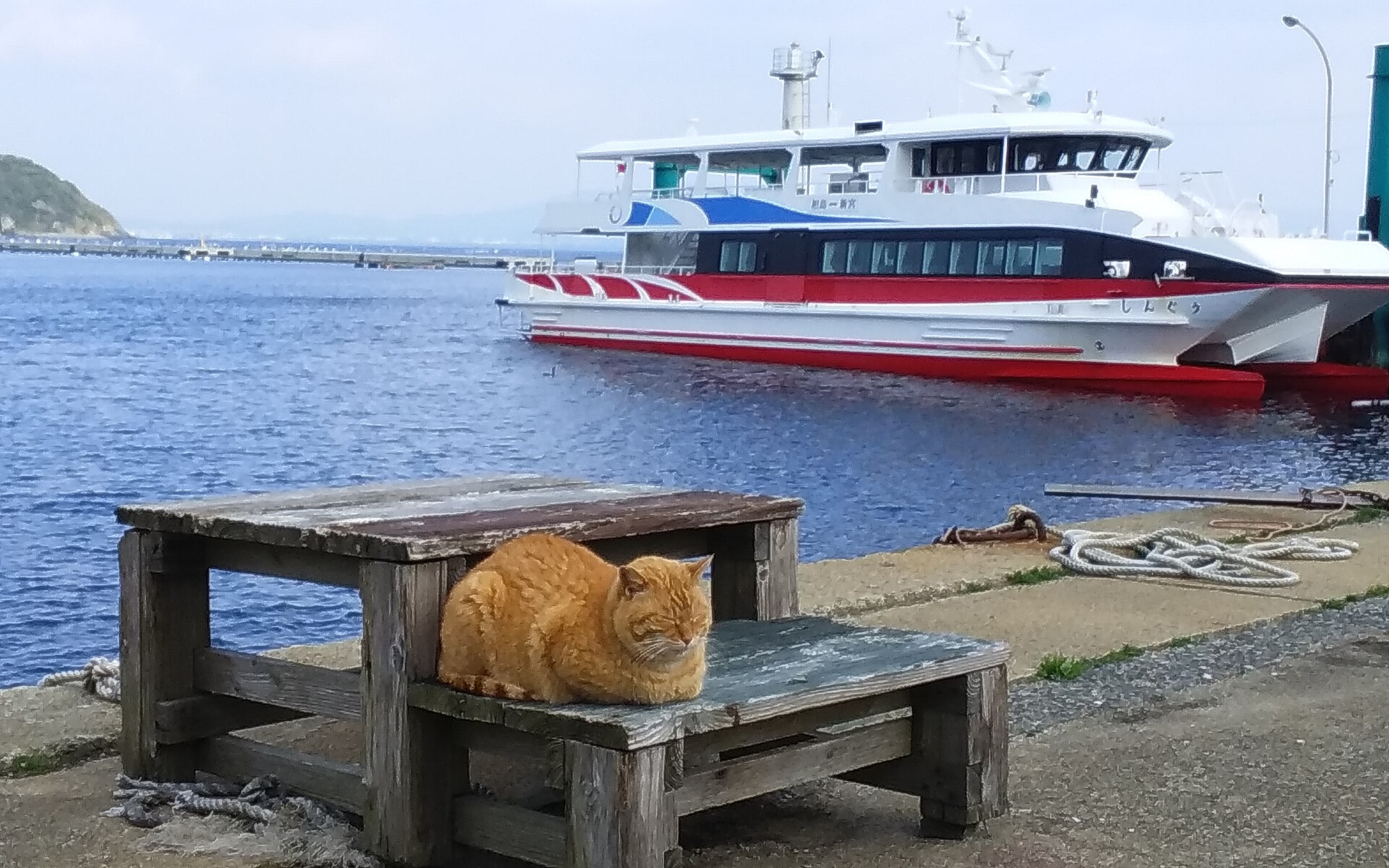
The walk
Off the boat into the cats, through the village, out along the coast path to the tombs, and back for the ferry. Two hours, or three if you sit down, and you will.
- From Hakata or TenjinSubway to Kaizuka, then the Nishitetsu Kaizuka line to Nishitetsu-Shingū45 minAbout ¥530. From Nishitetsu-Shingū it is a bus or a twenty-minute walk to the port.
- From Nishitetsu-Shingū stationCommunity bus or walk to Shingū port20 minThe bus is timed roughly to the ferry. Check, because roughly is the word.
- From Shingū portFerry to Ainoshima20 min¥460 each way. A few sailings a day, weather permitting.
The pier and the waiting room
The cats are on the quay when the boat docks and around the waiting room after it. This is where most of them are and where most people stop. Sit on the benches by the turf and let them arrive.
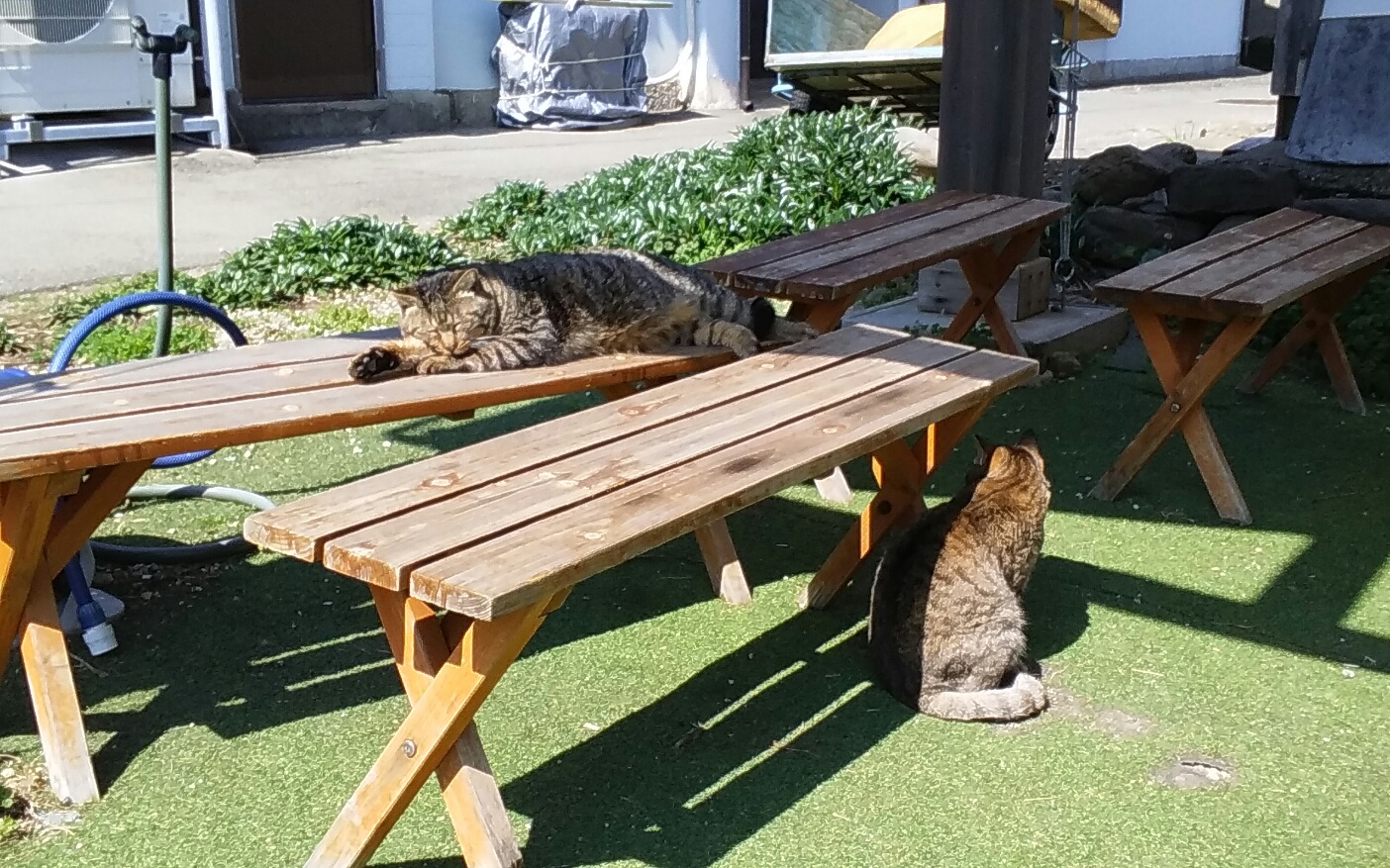
The benches by the port. The welcoming committee.水だらけのプール, CC0 The village
A few lanes of fishermen’s houses behind the port, with cats on the walls and the nets. Keep to the lanes; the yards are private and the nets are somebody’s living.
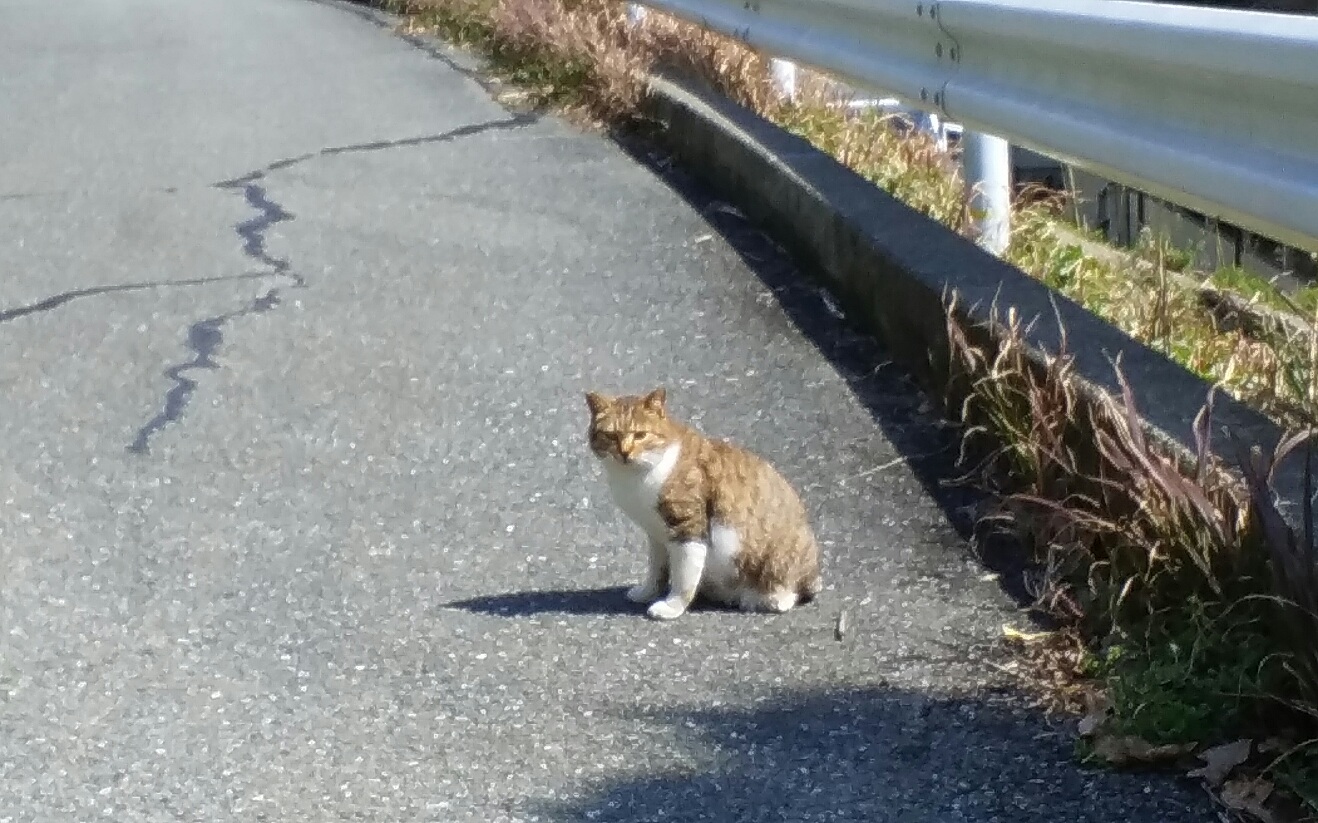
In the village. Cats on the walls, nets on the ground.水だらけのプール, CC0 The stone tombs
East along the coast path to the tumuli, piles of stones from the fifth century along the shore. The largest is Ōtsuka, at the far end. Fewer cats out here, more sea, and the tombs are worth the walk on their own.
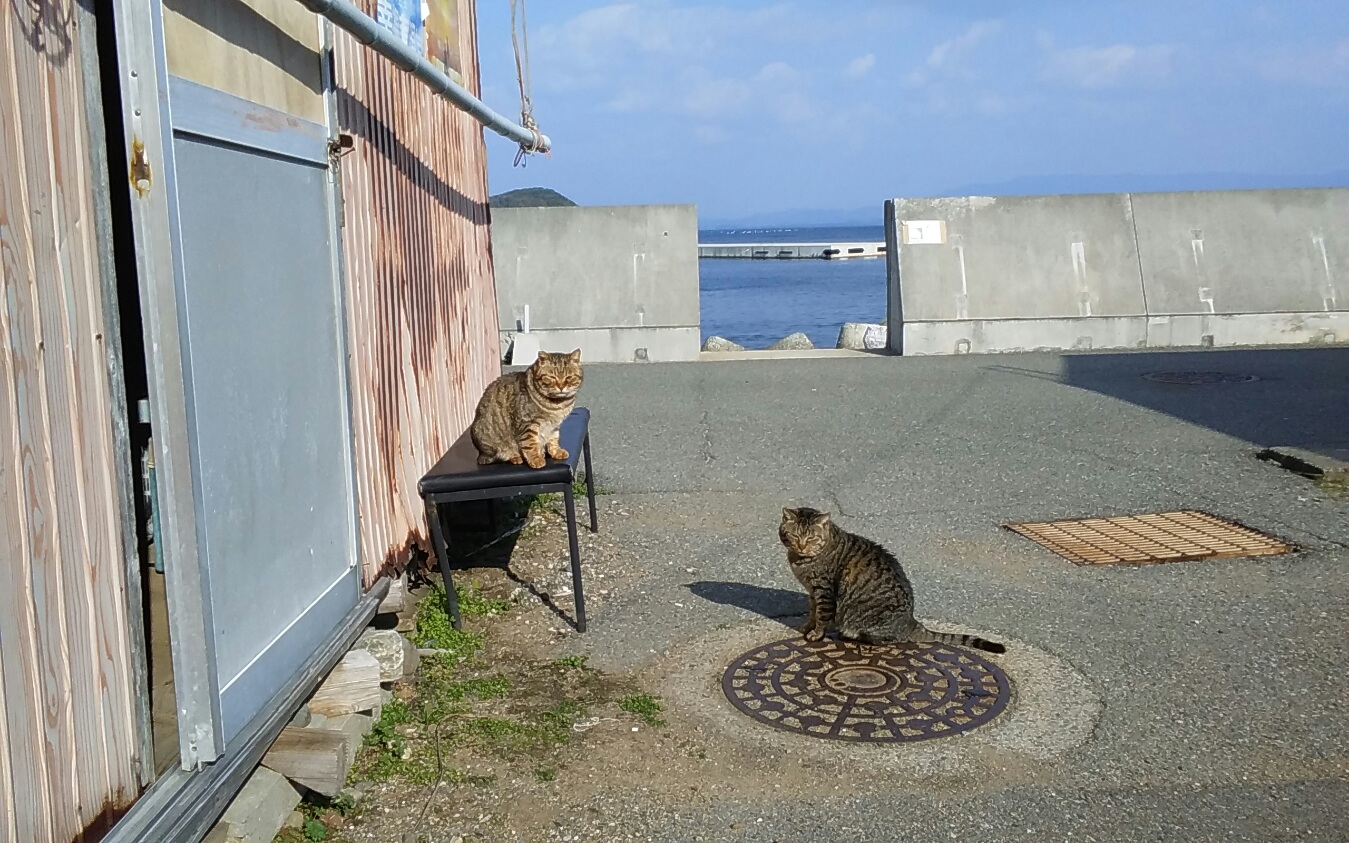
Out along the path. The cats thin out; the tombs start.水だらけのプール, CC0 Taikō’s rock and the north shore
The loop continues round the top of the island past a rock with a name from the sixteenth century and a view back to the mainland. Then down through the village to the boat.
Back towards the port, and the ferry home.水だらけのプール, CC0
Same numbers as the list. Worth keeping open on your phone.
The cats you will meet
Around two hundred, on a working fishing island of under three hundred people. Well fed, sociable at the port, shyer out on the path. Ordinary Kyushu cats: tabbies, black cats, calicos and a lot of bobtails.
Port cats
Any colour, sitting exactly where the boat lands.
The tame ones. They meet every ferry and they know which passengers have food.
Tabbies
Grey and brown stripes, often on the benches.
The island majority and the ones in most of the photographs.
Bobtails
Short, kinked tails on any colour of cat.
Common all over Kyushu. Not a breed, an old local gene.
Everybody says Ainoshima is covered in cats.
Actually The port is. Walk ten minutes along the coast path and you will be alone with the sea and the tombs. Around two hundred cats on a five-kilometre island means they are concentrated where the food is, which is where the boat lands.
How not to be the annoying one
- Feeding is not banned here, but the cat association asks you not to overdo it. A little, at the port, and nothing from your bento.
- The nets, boats and yards are the fishermen’s. Do not walk on nets to reach a cat.
- No flash and no chasing. The path cats are shy and this is their island, not a park.
- Take your rubbish back on the boat. There is nowhere on the island for it.
- Buy something at the port shop. It is small and it is what there is.