Landmark Istanbul, Türkiye
Cats in Sultanahmet
The old city: Hagia Sophia, the Blue Mosque, and the cats who live in both. One of them was famous enough to be petted by a president and mourned by a country.
Where to find cats in Sultanahmet: Sultanahmet, the old city of Istanbul, between Hagia Sophia and the Blue Mosque, with Gülhane Park behind. When: First thing, before the queues. Outside prayer times for the mosques. Spring and autumn for the weather. Why here: The most famous cat in Türkiye lived here, and her successors still walk the marble of a building fifteen centuries old.
The short version
- Where
- Sultanahmet, the old city of Istanbul, between Hagia Sophia and the Blue Mosque, with Gülhane Park behind
- When
- First thing, before the queues. Outside prayer times for the mosques. Spring and autumn for the weather
- How long
- A morning for the square, the two great buildings and their cats. A day if you add Topkapı and the park
- What it costs
- The mosques are free. Hagia Sophia now charges foreign visitors for the upper gallery. The cats are on the free floor
- Why here
- The most famous cat in Türkiye lived here, and her successors still walk the marble of a building fifteen centuries old
What to bring
- The prayer timetableBoth buildings are working mosques. They close to visitors at prayer times, five a day, and the cats do not.
- Shoes you can take off quicklyOff at the door of every mosque. Socks help; the marble is cold.
- A scarf, for anyone who needs oneHead covering for women inside the mosques. They lend them at the door if you forget.
- Coins for the parkGülhane has a tea garden with a view of the Bosphorus and cats under every table. Tea is cheap; the view is not for sale.
Why there are cats everywhere
Her name was Gli, and when she died the building she lived in announced it.
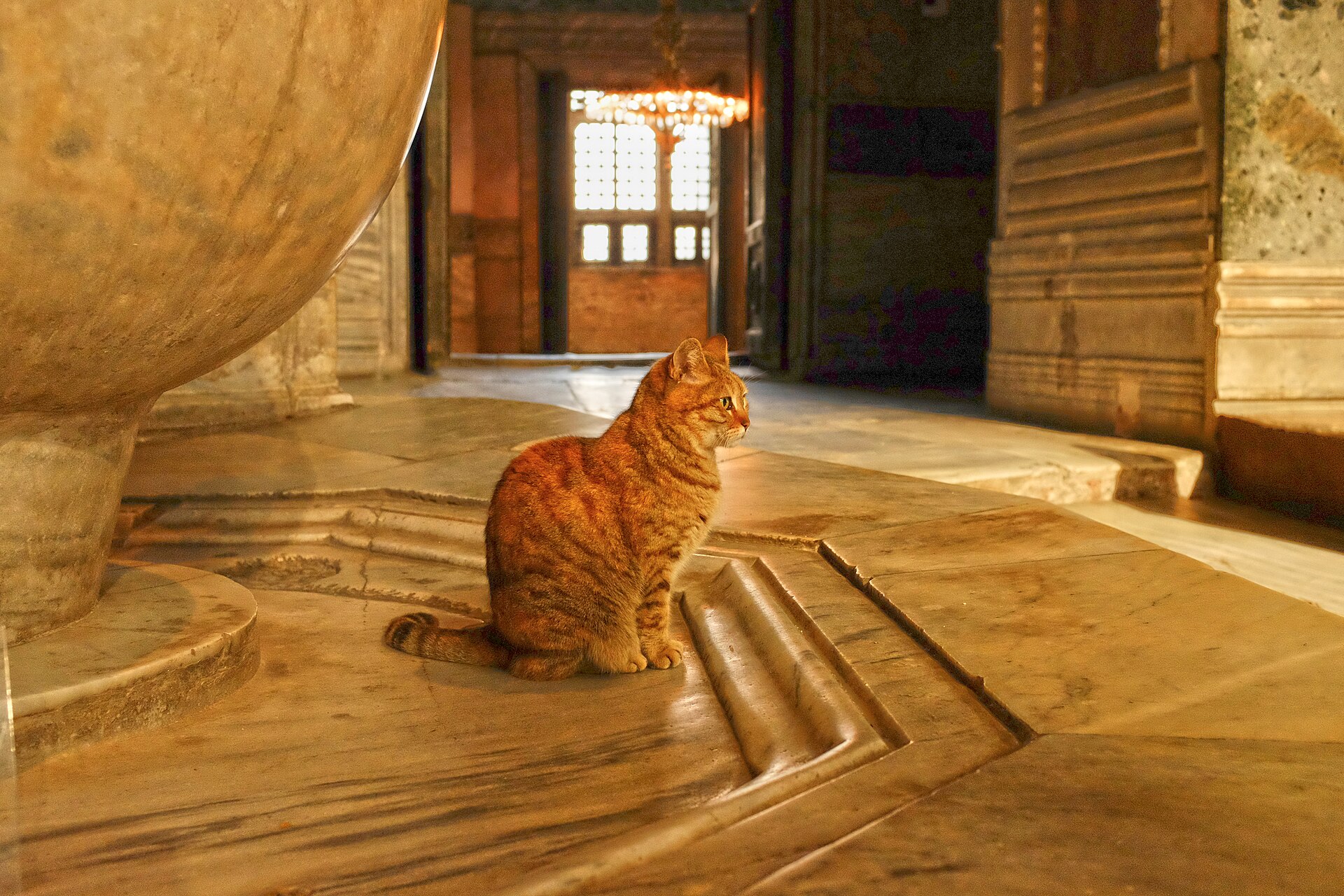
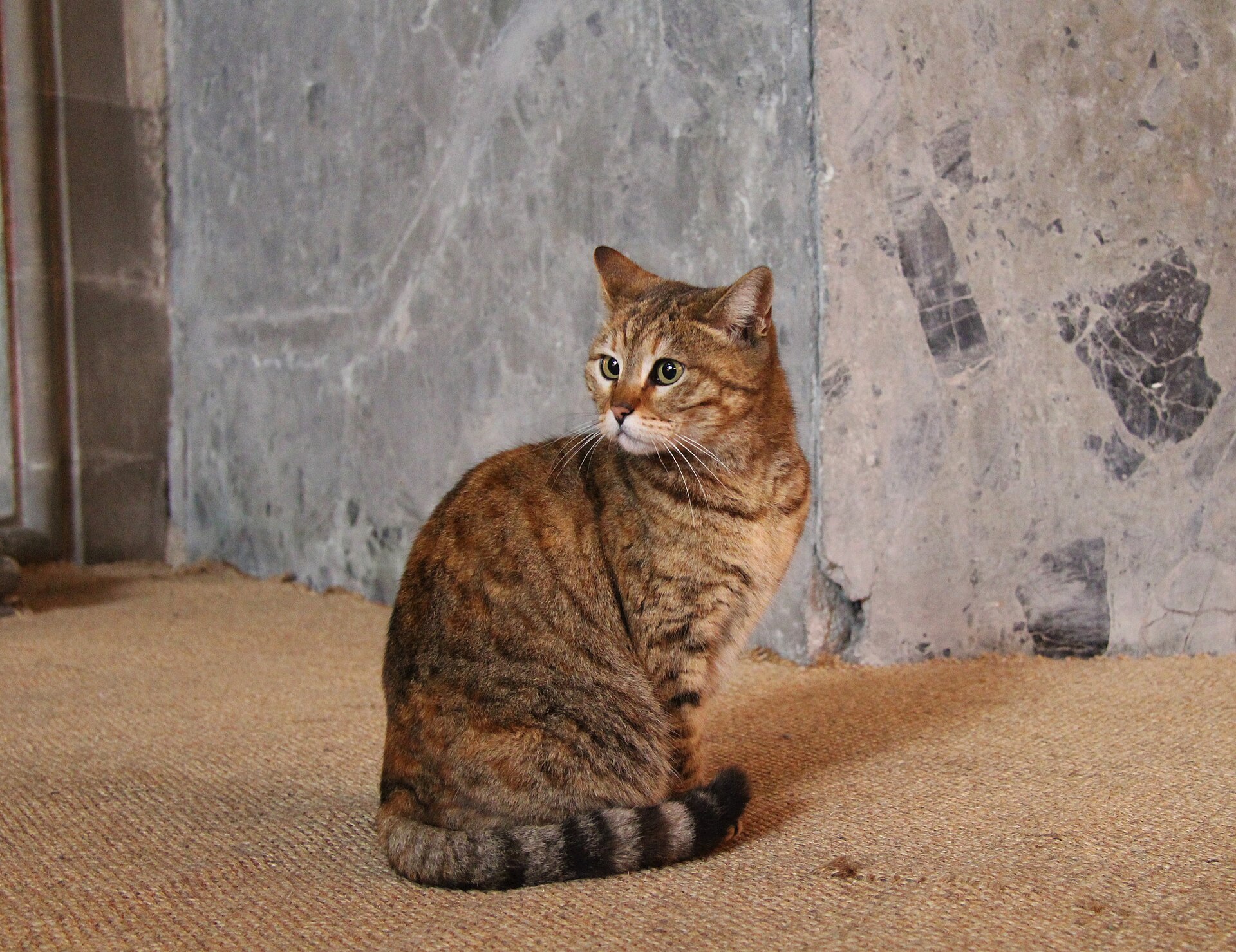
Gli was born around 2004 and raised inside Hagia Sophia, which was a museum then. She was a grey tabby with crossed eyes, and she lived on the marble floor of one of the great buildings of the world, largely ignoring the tourists, until 2009, when Barack Obama crouched to stroke her on a state visit and the photograph went round the world. From then on she was the Hagia Sophia cat. She had an Instagram account with more followers than most Turkish newspapers.
In July 2020 the building was converted back into a mosque, and the question of what would happen to the cat made international news. The answer was nothing: she stayed, the imams fed her, and the governor said so publicly. She died that November, aged sixteen, after a spell at a vet in Levent, and the building announced her death and buried her in its grounds.
That is the story people come for. The wider truth is that the old city has always been full of cats, and the mosques have always kept them. Islam holds cats in particular affection and a mosque courtyard is one of the safest places a cat can live. The Blue Mosque has its own, the Hagia Sophia has several, and one of them, since the reopening, has taken to the visitors’ floor and been declared the new Gli by everyone except the cat.
Behind the buildings, Gülhane Park, once the outer garden of Topkapı Palace, is where the old city’s cats go to lie in the sun. It is the best free hour in Sultanahmet.
The walk
Across the square between the two great buildings, into both, and out the back to the park. A morning, with the prayer times worked around.
- From TaksimFunicular to Kabataş, then the T1 tram to Sultanahmet30 minThe tram stops right on the square. Every few minutes.
- From Istanbul AirportHavaist bus to Sultanahmet75 minDirect, cheap, and slow in traffic. A taxi is faster and dearer.
- From KadıköyFerry to Eminönü, then the T1 tram two stops35 minThe best way in from the Asian side, and the ferry is the view.
Sultanahmet Square
The long square between Hagia Sophia and the Blue Mosque, with the fountain and the trees. Cats on the benches and under the plane trees, fed by everybody. Start early, before the tour groups.
The square. Benches, trees, and the cats that come with them.Robot8A, CC BY-SA 4.0 Hagia Sophia
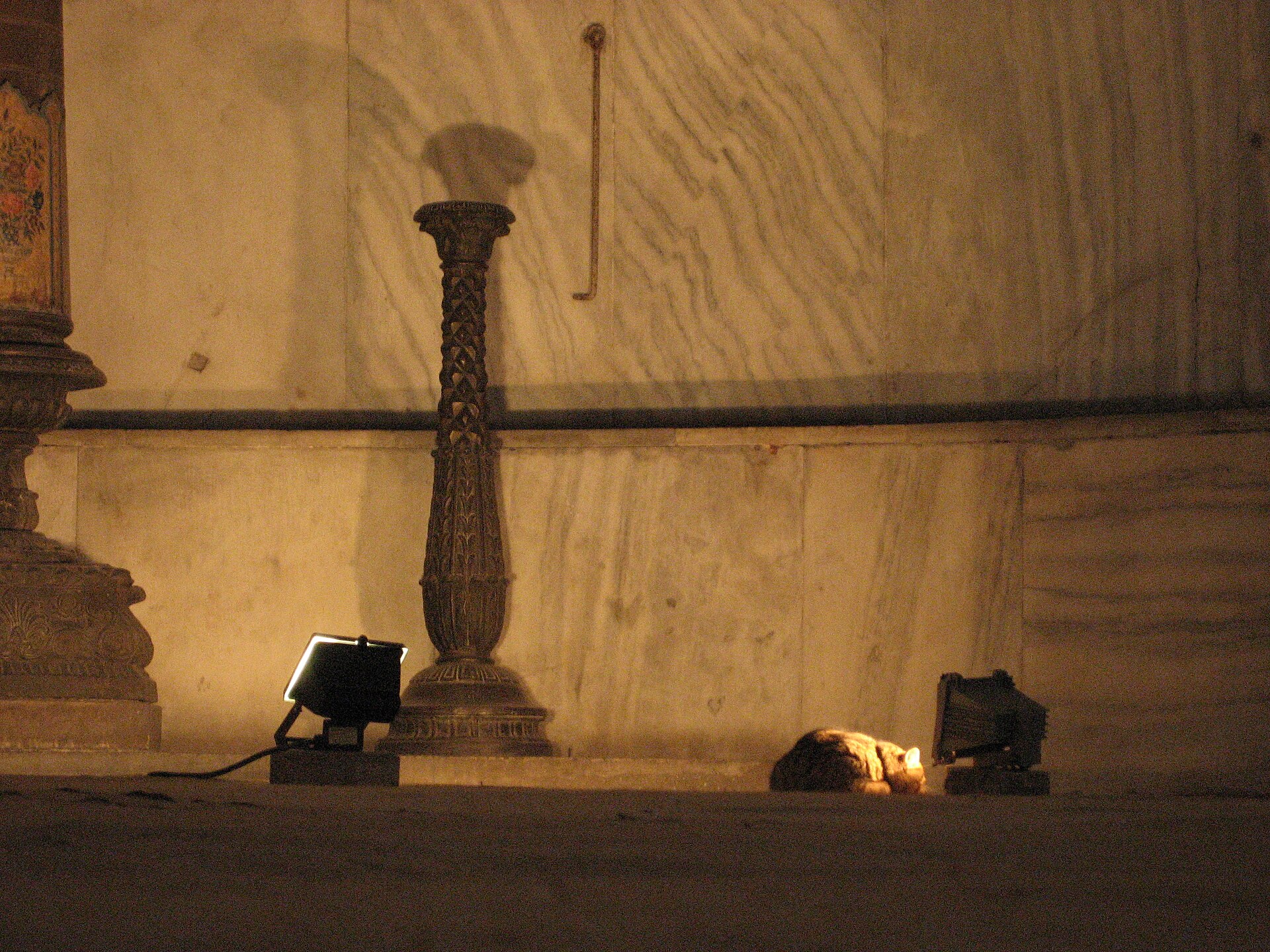
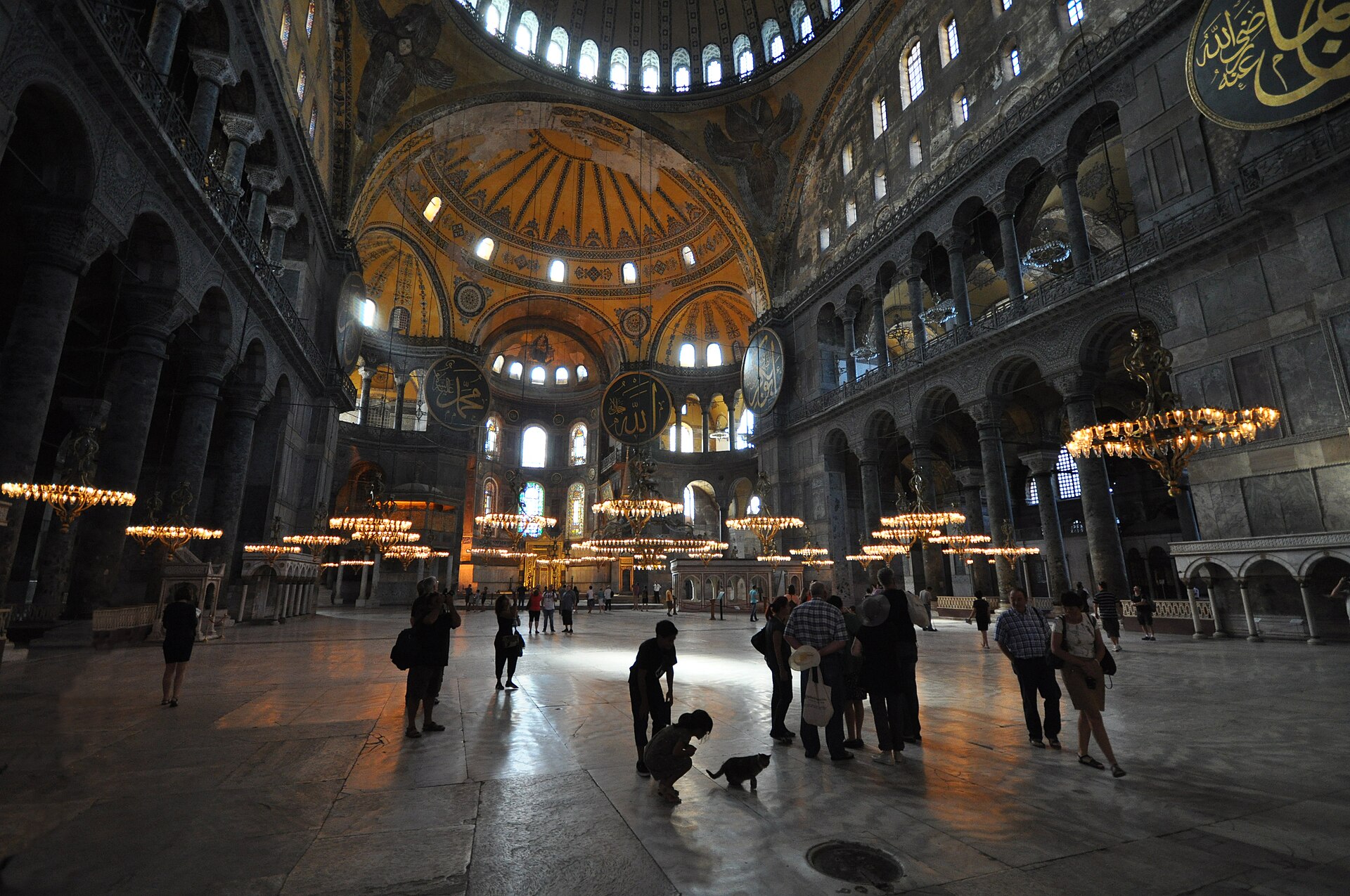
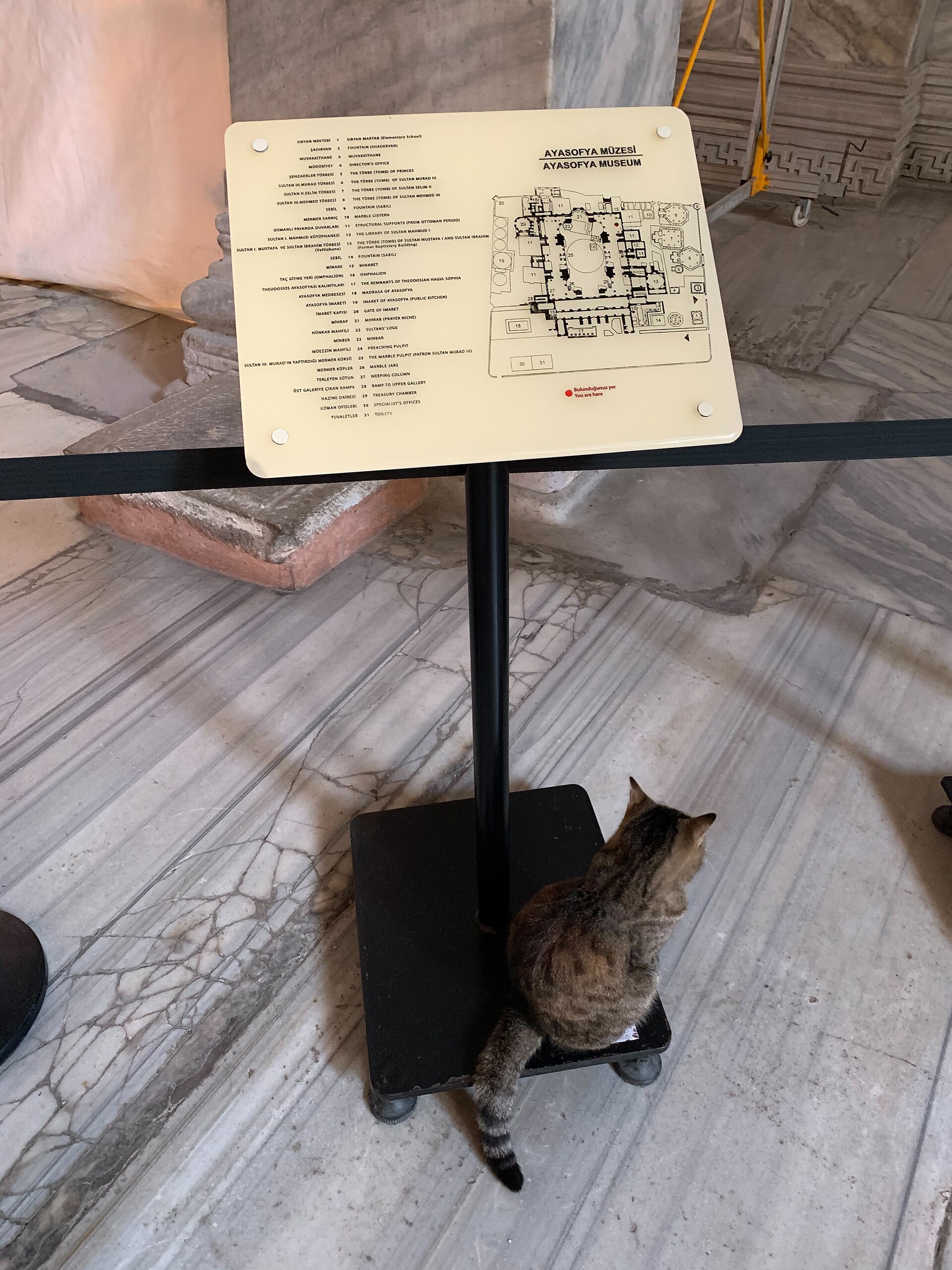
The visitors’ entrance takes you to the ground floor. Shoes off, quiet, and look for the cats on the marble: the new Gli, usually, and one or two others who have inherited the run of the place. Outside prayer times only.
Inside. The cats know where the warm marble is.willow wilcox fox, CC BY-SA 2.0 The Blue Mosque
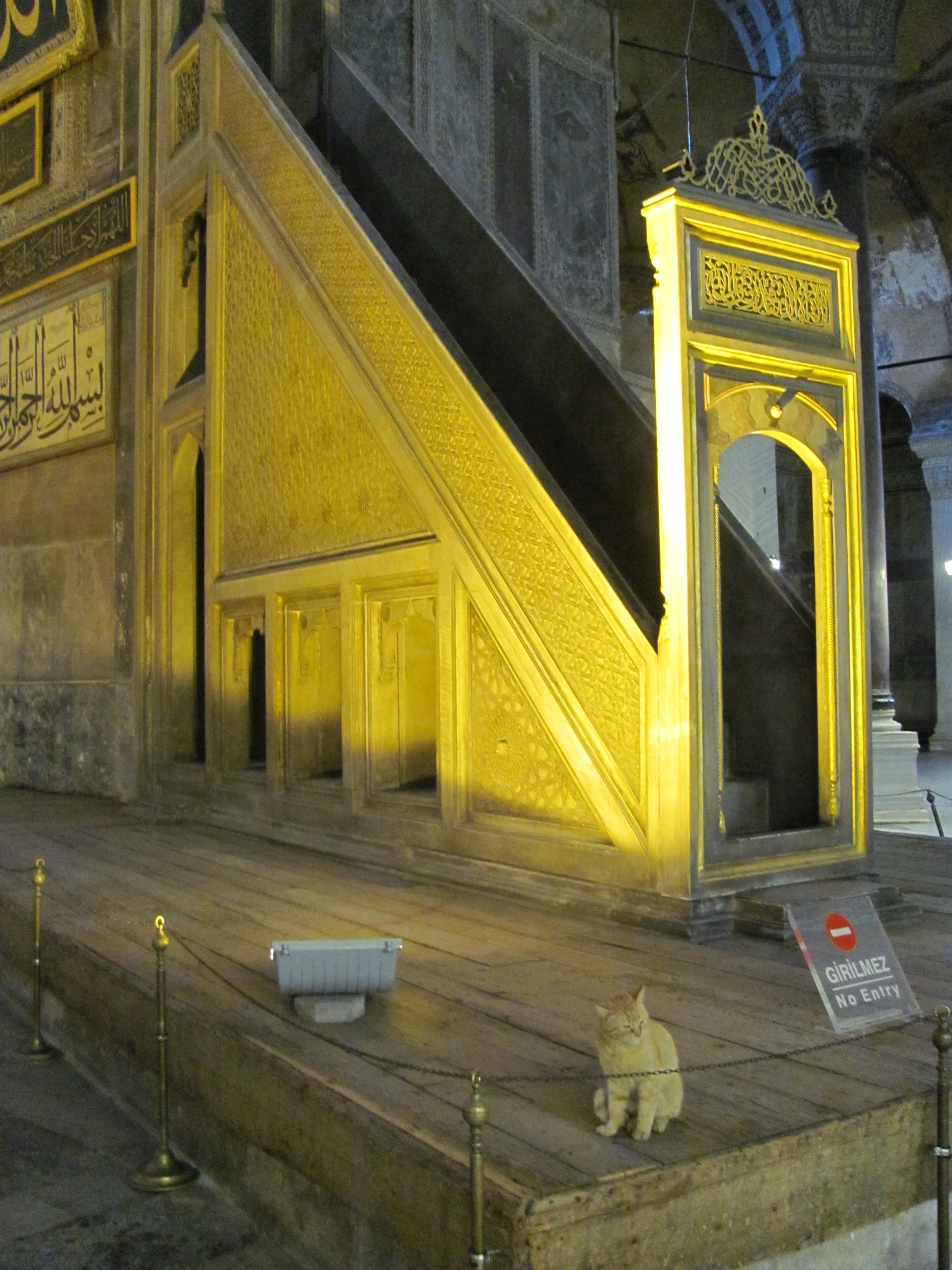
Across the square, through the courtyard, shoes off at the door. The courtyard cats are the tame ones; the ones inside keep their distance. Visitors use the side entrance and go between prayers.
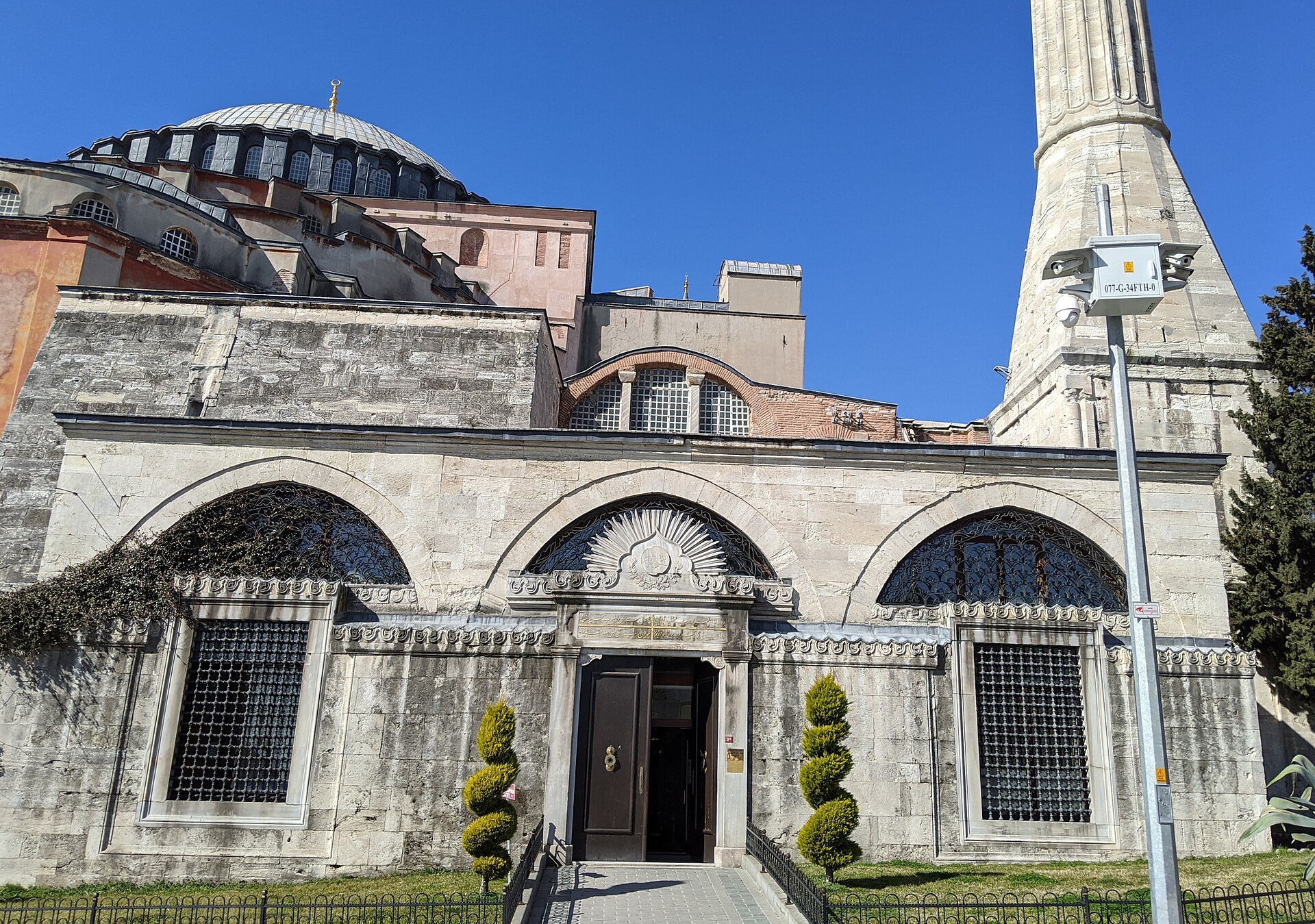
The mosques keep their cats. They always have.Mustafa-trit20, CC BY-SA 4.0 The Arasta Bazaar
Behind the Blue Mosque, a small covered bazaar of carpet and tile shops. Every shop has a cat and every shopkeeper will tell you its name if you ask, and try to sell you a carpet if you linger.
Shop cats, mosque cats, square cats. Same cats, different jobs.Safa Hovinen, CC BY 2.0 Gülhane Park
Down the hill behind Hagia Sophia, the old palace garden, now the old city’s park. Cats in the flowerbeds and under the tea-garden tables at the far end, where the view opens onto the Bosphorus. Sit down and stay.
Off duty. The park is where they go.Slyronit, CC BY-SA 4.0
Same numbers as the list. Worth keeping open on your phone.
The cats you will meet
Old-city cats, which means the best-fed in Istanbul: the mosques feed them, the shops feed them, the tour groups feed them, and the municipality treats them. Grey tabbies mostly, calm to the point of indifference, and used to being the second-most photographed thing in the building.
Grey tabbies
Grey stripes, green eyes, sometimes crossed.
Gli was one. Her successors tend to be too, which may not be a coincidence.
Mosque courtyard cats
Any colour, asleep in the shade of the arcade.
The tamest cats in the city. They have never been chased in their lives.
Park cats
Rounder, slower, in the flowerbeds.
Gülhane. The tea garden ones will sit on your lap if the chair is warm.
Everybody says Gli is still there.
Actually Gli died in November 2020 and is buried in the grounds. The cat on the visitors’ floor now is a different animal that the internet has decided is the new Gli. It is a good cat. It is not her.
How not to be the annoying one
- The buildings are mosques. Shoes off, shoulders and knees covered, heads covered for women, and quiet. The cats are allowed to ignore all of this; you are not.
- Do not feed inside. The mosque staff feed the cats and they do not want food on the carpets.
- Outside, the usual Istanbul rules: dry food in a quiet corner, no milk, let them come.
- Prayer times close the buildings to visitors. Five a day. Check the board at the door and plan the park for the gap.
- Do not lift a mosque cat for a photograph. They are somebody’s, in the way all Istanbul cats are, and here the somebody is a congregation.