Landmark Kyoto, Japan
Cats in Nyan Nyan Ji and the cats of Kyoto
A hundred-year-old farmhouse in the hills north of Kyoto that a painter turned into a cat temple, with a cat abbot and a museum of cat art next door. Plus the real colonies: the cats among the torii at Fushimi Inari and along the canal of the Philosopher’s Path.
Where to find cats in Nyan Nyan Ji and the cats of Kyoto: Nyan Nyan Ji in Iwakura, in the hills north of Kyoto; the Fushimi Inari shrine in the south; and the Philosopher’s Path along the canal below the eastern hills. When: The temple is closed on Tuesdays and over the New Year and Golden Week holidays. Fushimi Inari at dawn, before the crowds. The path in cherry blossom or autumn. Why here: The one place in Japan where a cat is the abbot, and the two places in Kyoto where the real cats live.
The short version
- Where
- Nyan Nyan Ji in Iwakura, in the hills north of Kyoto; the Fushimi Inari shrine in the south; and the Philosopher’s Path along the canal below the eastern hills
- When
- The temple is closed on Tuesdays and over the New Year and Golden Week holidays. Fushimi Inari at dawn, before the crowds. The path in cherry blossom or autumn
- How long
- An hour at the temple, a morning at Fushimi Inari, an hour on the path. A day for all three, with the bus between
- What it costs
- The temple asks a small entry; the cat museum next door another. Fushimi Inari and the path are free
- Why here
- The one place in Japan where a cat is the abbot, and the two places in Kyoto where the real cats live
What to bring
- Not a TuesdayNyan Nyan Ji closes on Tuesdays and on irregular holidays. Check the site before the bus.
- Yen for the doorThe temple and the cat museum beside it are a painter’s family project, not a public institution. The entry keeps the cats.
- Legs for Fushimi InariThe torii climb the mountain for two hours. The cats are in the first half, around the shops and the small shrines.
- Nothing for the catsThe shrine’s cats are fed by the stall holders, the path’s by the neighbours, the temple’s by the abbot’s staff.
Why there are cats everywhere
A painter who loved cats bought a hundred-year-old farmhouse north of Kyoto and made it a temple to them. The abbot is a cat.
Nyan Nyan Ji, the meow meow temple, is not a temple in the religious sense. It is a kominka, a traditional wooden farmhouse a century old, in the quiet district of Iwakura at the foot of the northern hills, converted by the painter Toru Kaya and his family into a temple-shaped museum of cat art: cat Buddhas, cat scrolls, a cat altar, and a resident cat who holds the office of abbot, with junior cat monks in attendance. There is a sacred tree at the gate and a sacred rock, an iwakura, beside it, which is what the district is named for. Visitors pay a small entry, look at the paintings, and sit with the cats, who take the whole thing with the seriousness it deserves.
It became popular enough that in 2025 the collection got its own building, the Nyan-paku, a cat family history museum next door, and the temple went back to being the temple. It is small, it is a bus ride from anywhere, and it is worth it because it is sincere: a family that loves cats and paints them, in a beautiful old house, with the cats in charge.
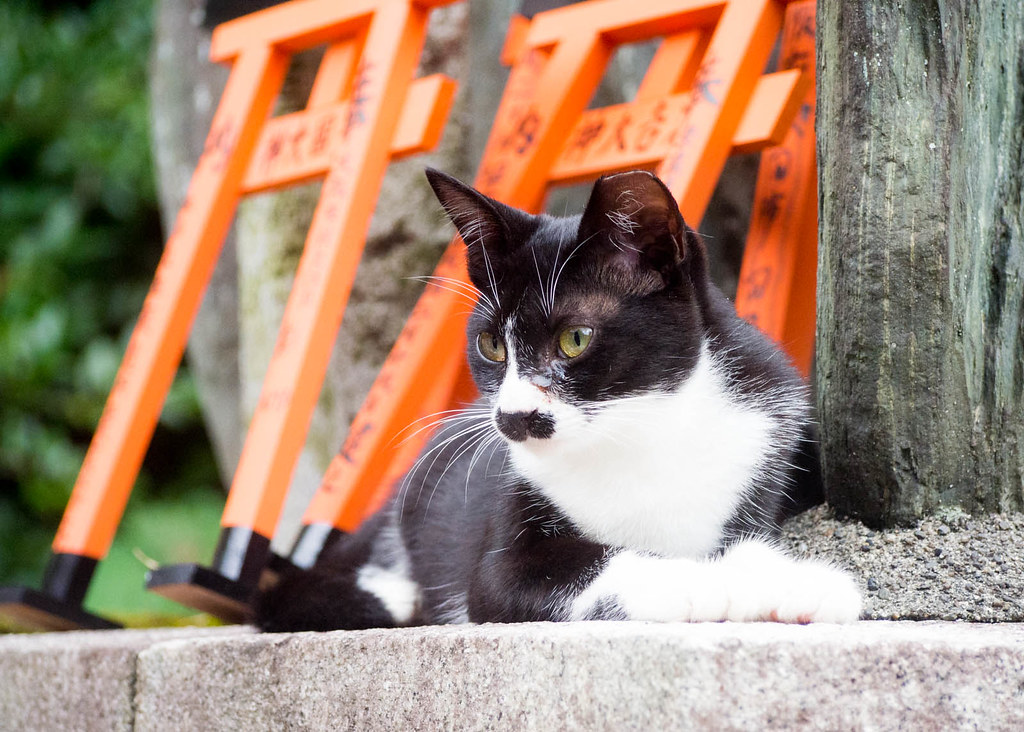
The real cats of Kyoto are elsewhere, and the two best places are famous for other things. Fushimi Inari, the shrine of ten thousand orange torii climbing the mountain in the south of the city, has a colony among the gates and the small shrines, fed by the stall holders, and the photograph at the top of this page is one of them among the miniature torii. The Philosopher’s Path, the canal-side walk under the cherry trees below the eastern hills, has cats on its walls and in its gardens, fed by the neighbours and photographed by everyone who walks it in April.
The walk
Three places, a bus and a train apart. Fushimi Inari at dawn, the Philosopher’s Path late morning, and the bus north to Iwakura for the temple in the afternoon.
- From Kyoto stationJR Nara line to Inari5 minTwo stops. The shrine gate is across the road from the platform.
- From Central KyotoBus 5 or 17 to Ginkakuji-michi for the Philosopher’s Path35 minOr a taxi. The path runs south from Ginkaku-ji.
- From DemachiyanagiEizan line to Iwakura, then walk30 minCheck the temple’s website for the walking directions; the lanes are unmarked.
Fushimi Inari
The shrine of the orange gates, open all hours. Go at dawn, climb into the first tunnels of torii, and look around the small shrines and the tea houses on the way up: the cats are there, in the leaves, by the fox statues, on the steps.
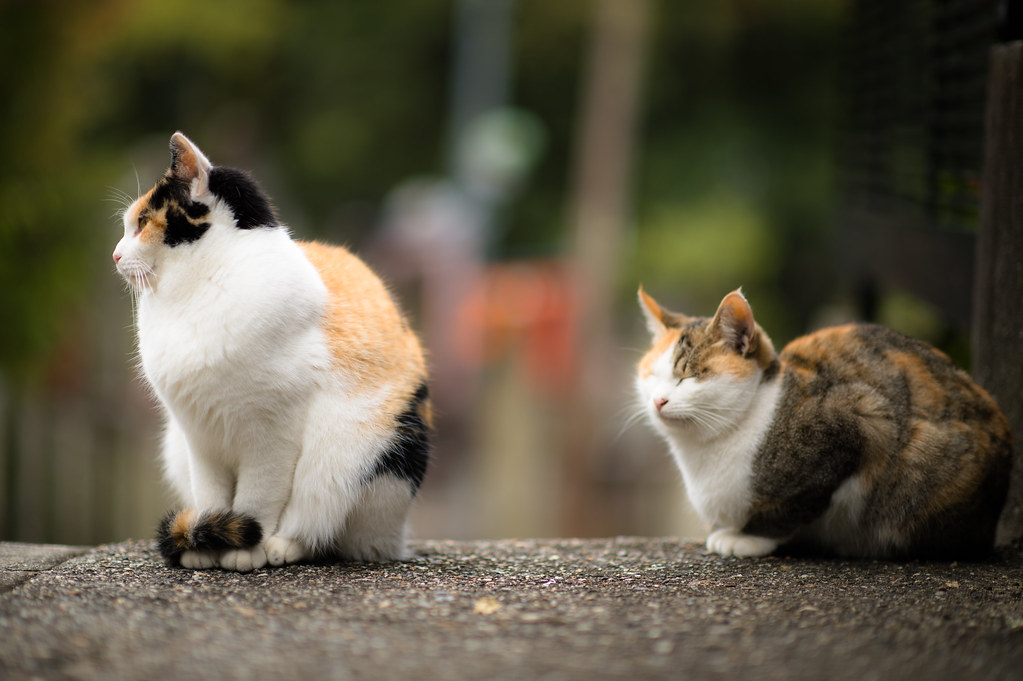
Two calicos on the shrine path, with the gates blurred behind. The famous view, improved.Takashi(aes256), CC BY-SA 2.0 The Philosopher’s Path
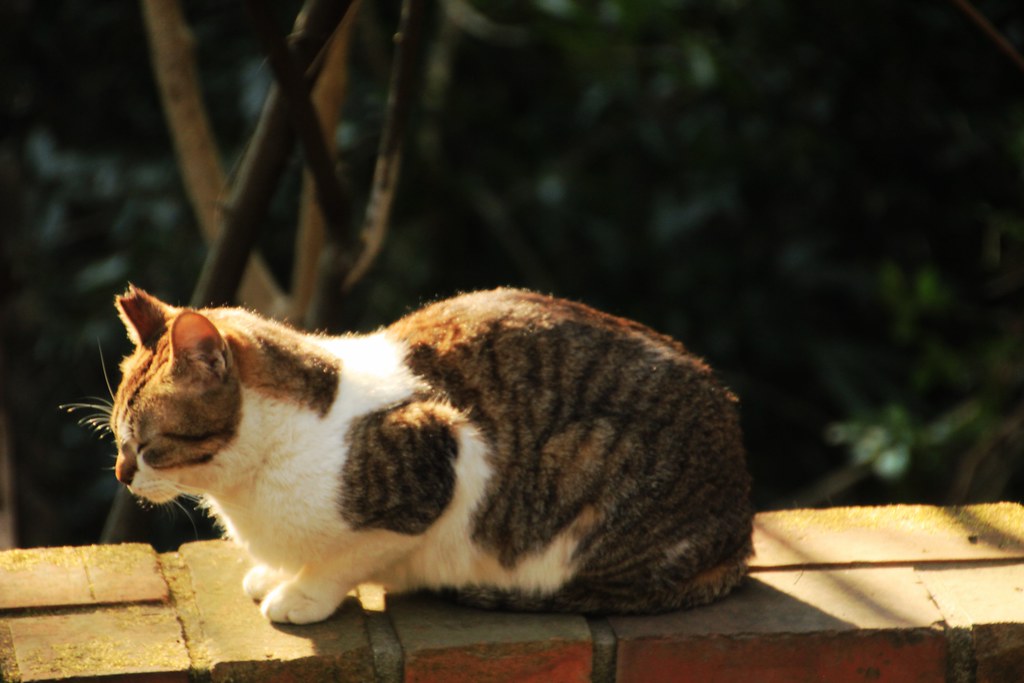
Train and bus across the city to the canal walk from Nanzen-ji to Ginkaku-ji under the cherry trees. Cats on the brick walls of the gardens along it, fed by the houses. Two kilometres, slowly.
The path’s wall, and its philosopher.nahid-v, CC BY 2.0 The lanes of Kyoto
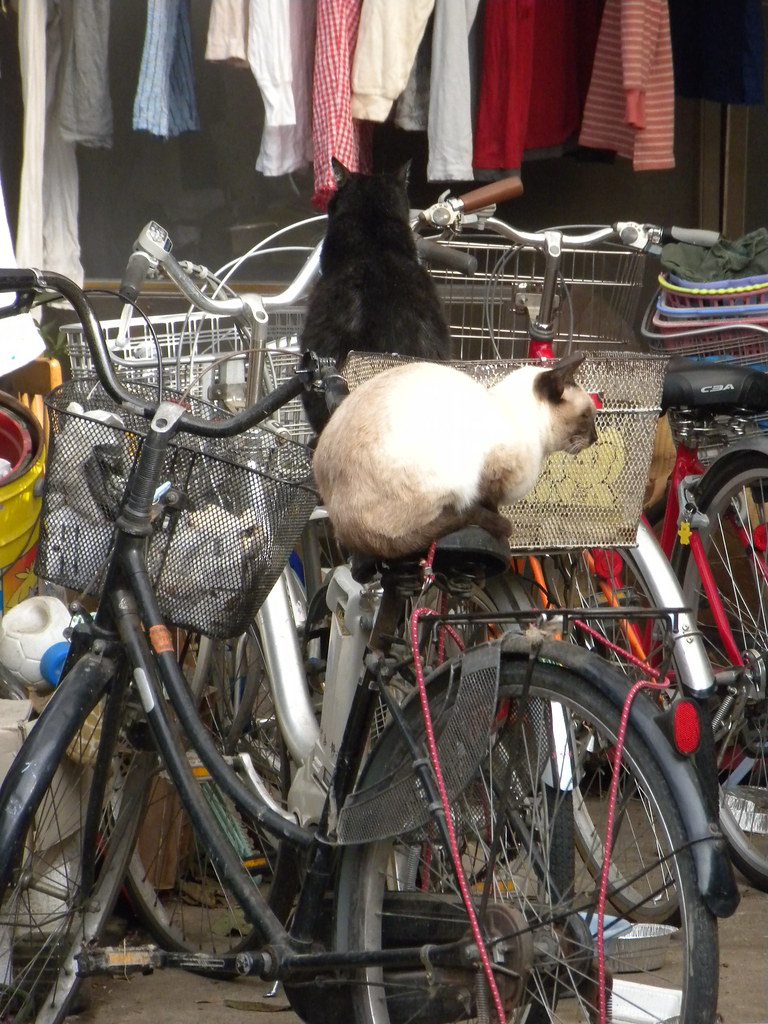
Between the two, any old lane in the east of the city: bicycles, shopfronts, and cats on the bicycles. The photograph is from one of them. Kyoto’s cats are in the neighbourhoods, not the temples the tour buses go to.
On the bicycles, outside a shop. Kyoto’s cats keep to the neighbourhoods.np&djjewell, CC BY 2.0 Nyan Nyan Ji, Iwakura
Bus or the Eizan line north to Iwakura and a walk to the farmhouse with the sacred tree at its gate. Entry at the door, shoes off, the abbot on the cushion, the paintings on the walls, and the museum next door. Closed Tuesdays.
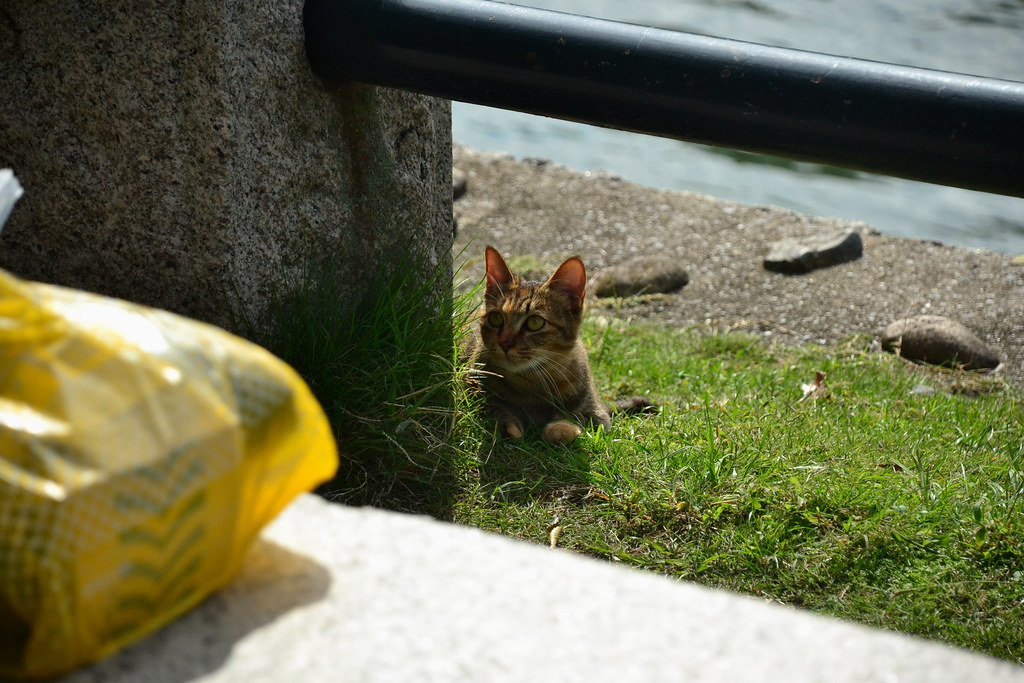
A Kyoto cat by the water, on the way north.Indicated Paprika, CC BY-SA 2.0
Same numbers as the list. Worth keeping open on your phone.
The cats you will meet
Kyoto’s cats: calico, black, tabby and the occasional Siamese-pointed, well fed by neighbours and stall holders, calm in a city that photographs everything, and, at one farmhouse in the north, employed in the priesthood. Sociable at the shrine stalls, watchful on the walls, ceremonial at the temple.
Shrine cats
Among the torii and by the fox statues at Fushimi Inari.
Fed by the tea houses. Early morning is theirs.
Path cats
On the brick walls of the Philosopher’s Path.
The neighbours’. Photograph from the path.
The abbot
On the cushion at Nyan Nyan Ji, in robes if it feels like it.
A real cat with a real office. Bow.
Everybody says Nyan Nyan Ji is a Buddhist temple.
Actually It is a painter’s farmhouse dressed as one, with a cat in the abbot’s seat and a family’s art on the walls. Nobody there claims otherwise, and it is better for being honest about it. The Buddhist temples of Kyoto have their own cats, and those are not on the tour either.
How not to be the annoying one
- At Fushimi Inari, the gates are offerings and the paths are for pilgrims. Stay off the small shrines, whatever the cat is doing on them.
- Do not feed at the shrine. The tea houses do, and the crows and the foxes, the real ones, take the rest.
- The Philosopher’s Path walls are garden walls. Photograph the cat; do not lean in.
- At Nyan Nyan Ji, shoes off, quiet, and let the abbot come to you. It is a home as well as a museum.
- Check Tuesday. It will be closed.