Neighbourhood Cairo, Egypt
Cats in Islamic Cairo
The medieval city of mosques, gates and bazaars, where the cats sleep on the tombs of Mamluk sultans and the descendants of the animals Egypt once worshipped work the Khan el-Khalili for kebab scraps.
Where to find cats in Islamic Cairo: Islamic Cairo, the medieval city east of downtown: Al-Muizz Street, the Khan el-Khalili bazaar, Al-Azhar, and the mosques of Darb al-Ahmar. When: Morning, before the heat and the bazaar crowds, or after dark when Al-Muizz Street is lit. October to April. Why here: The country that first made a god of the cat, and the medieval quarter where its descendants live on the tombs.
The short version
- Where
- Islamic Cairo, the medieval city east of downtown: Al-Muizz Street, the Khan el-Khalili bazaar, Al-Azhar, and the mosques of Darb al-Ahmar
- When
- Morning, before the heat and the bazaar crowds, or after dark when Al-Muizz Street is lit. October to April
- How long
- A day. Two if you do the Citadel and the City of the Dead
- What it costs
- The streets are free. The mosques ask a small fee or a tip for the caretaker. Bargain for everything in the Khan
- Why here
- The country that first made a god of the cat, and the medieval quarter where its descendants live on the tombs
What to bring
- Shoes that come offEvery mosque means shoes off at the door and a caretaker to tip. The cats go in with their shoes on.
- Small Egyptian poundsFor the caretakers, the tea, the kebab whose scraps feed the cats, and the ten-pound note that ends any negotiation.
- Early, or lateIslamic Cairo at eight in the morning is bread carts and cats. At noon it is heat. At nine at night, Al-Muizz is lit and the Khan is roaring.
- A guide, or a good mapDarb al-Ahmar and the mosques south of the Khan are a maze. A licensed guide for the mosques is worth it; the cats are free.
Why there are cats everywhere
Egypt made a goddess of the cat three thousand years ago. Cairo has never quite stopped.
Bastet, the cat-headed goddess, had a city and a festival, and the Egyptians mummified cats by the hundred thousand. The reverence did not survive the pharaohs, but something did: cats in Egypt are tolerated, fed and generally left alone, and the medieval city the Fatimids and Mamluks built east of the Nile is full of them. On the tombs of sultans, in the courtyards of the mosques, under the stalls of the bazaar.
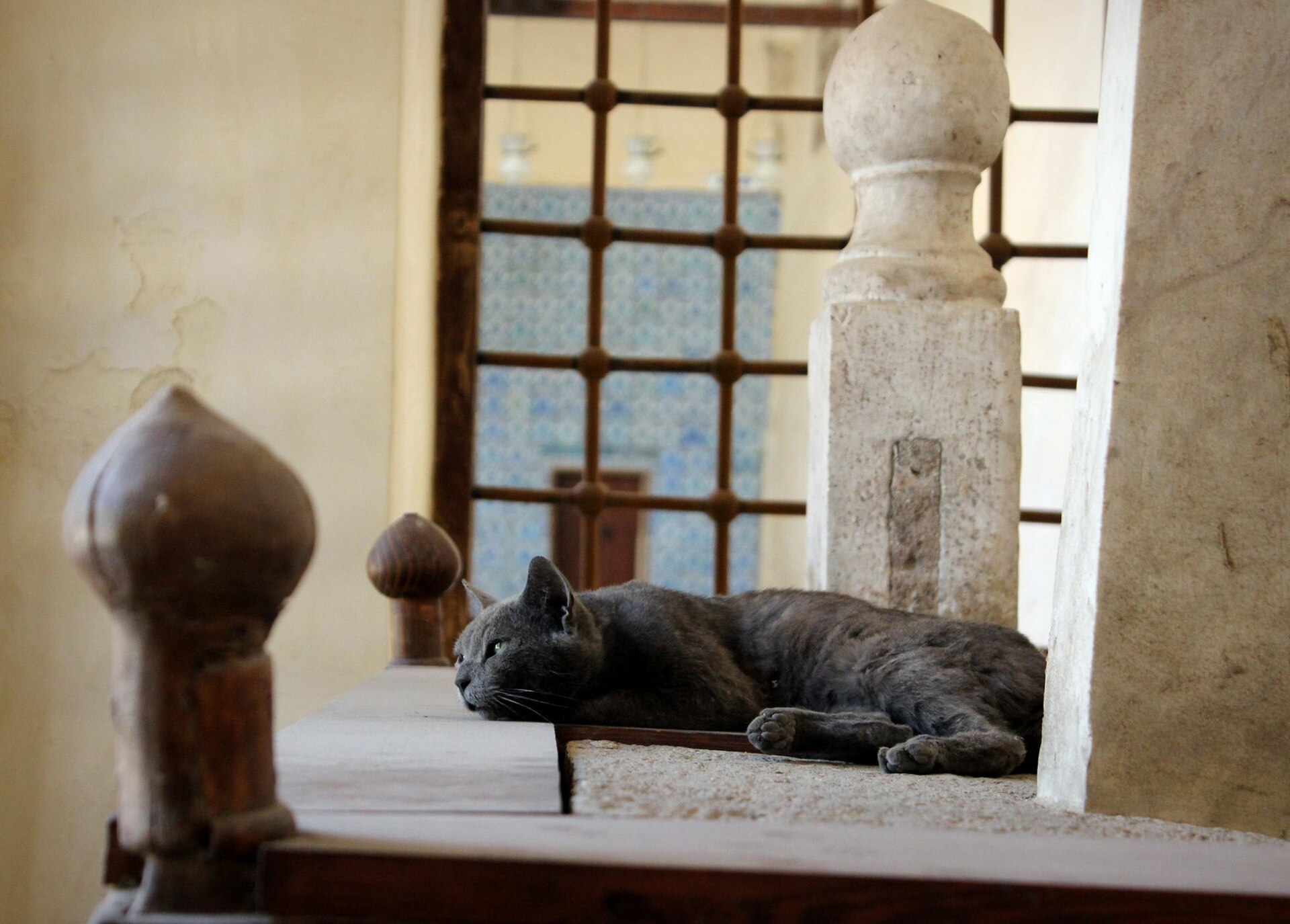
Islamic Cairo is a mile of Al-Muizz Street, the old spine of the city, from the northern gates to Bab Zuwayla, with the Khan el-Khalili bazaar in the middle and the great mosque of Al-Azhar beside it. South of the Khan, Darb al-Ahmar is a district of Mamluk mosques that few visitors reach, including the Blue Mosque of Aqsunqur, where the cat in the photograph at the top of this page sleeps on the rail of a fourteenth-century shrine. The caretakers feed them. So do the kebab sellers, the shopkeepers, and the ladies who come at dawn with plastic bags.
It is not an easy life. Cairo is enormous, hot and short of everything, and the cats are thin, numerous and largely unneutered. A few small charities do what they can. But the culture is with them: a Cairene will step round a cat asleep in a doorway, and a mosque caretaker will move a shoe rather than a cat. That is Bastet’s last inheritance, and it is not nothing.
The walk
Down Al-Muizz Street from the northern gates through the Khan to Bab Zuwayla, then into Darb al-Ahmar for the Blue Mosque, and up to Al-Azhar Park for the view. A day, with tea.
- From Cairo airportTaxi or Uber to Al-Azhar50 minUber works and removes the negotiation. Ask for Al-Hussein for the Khan.
- From Downtown or TahrirTaxi or a long walk east along Al-Azhar Street20 minThe walk passes through Ataba market, which is its own experience.
- From Ataba metroWalk east to Al-Muizz Street15 minLine 2 or 3 to Ataba, then follow the crowds towards Al-Hussein.
Al-Muizz Street
The medieval spine, pedestrianised and restored, from Bab al-Futuh south past a dozen mosques and mausoleums. Cats on the steps of every one, and in the sabils, the old public fountains. Walk slowly.
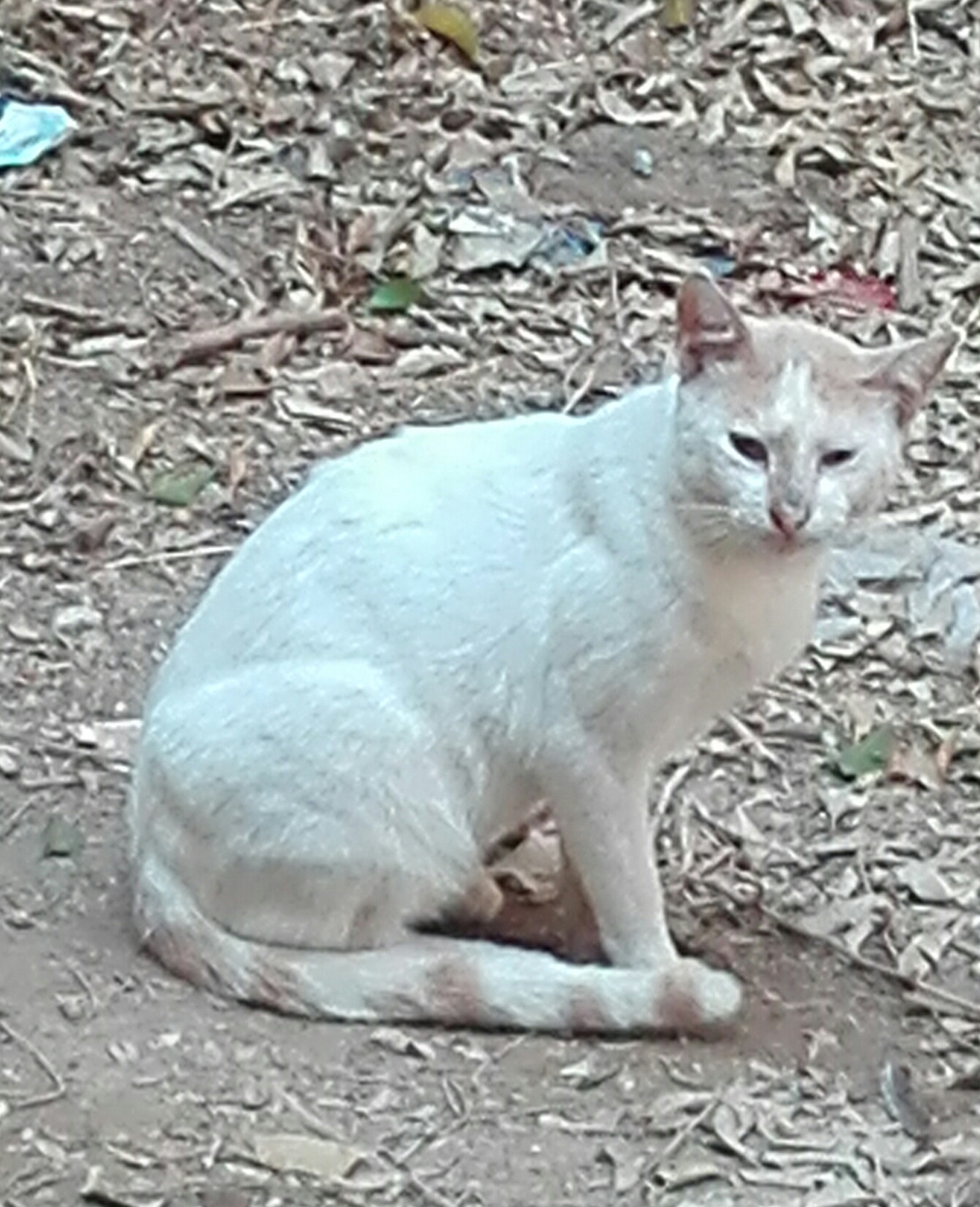
A Cairo cat, of the kind that was once a god.لا روسا, CC BY-SA 4.0 Khan el-Khalili
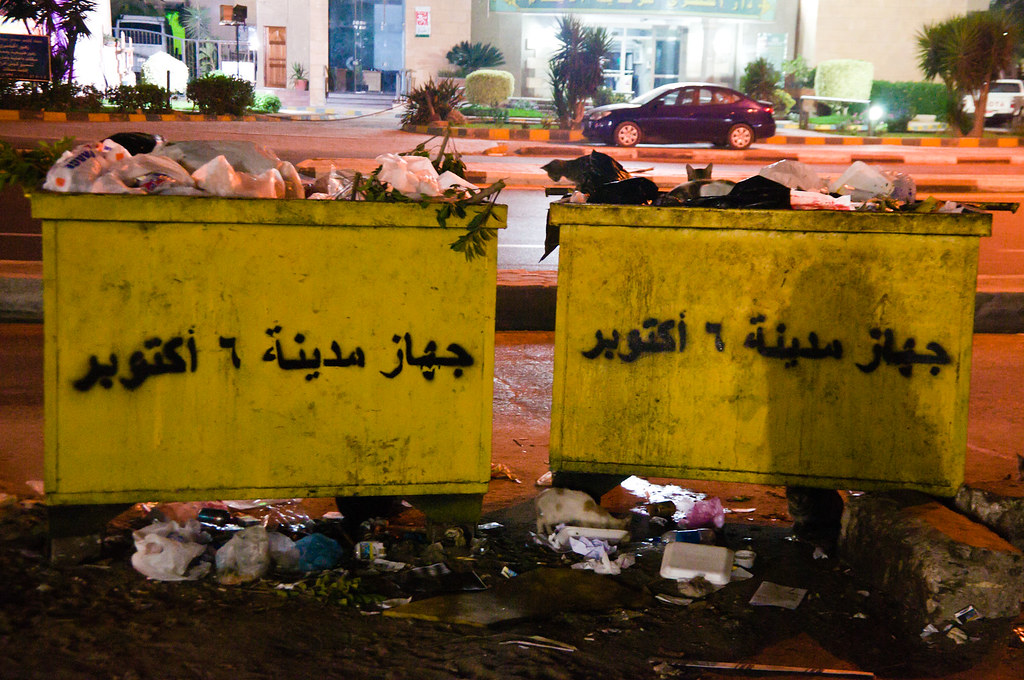
The bazaar, six hundred years old, lamps and spices and brass and tourists. Cats under the stalls and at the kebab restaurants around the edge, where the scraps are. Fishawi’s café has been open since 1773 and has had a cat under a table for most of that.
Behind the Khan. The bins are the buffet and the cats are regulars.maltman23, CC BY-SA 2.0 Bab Zuwayla
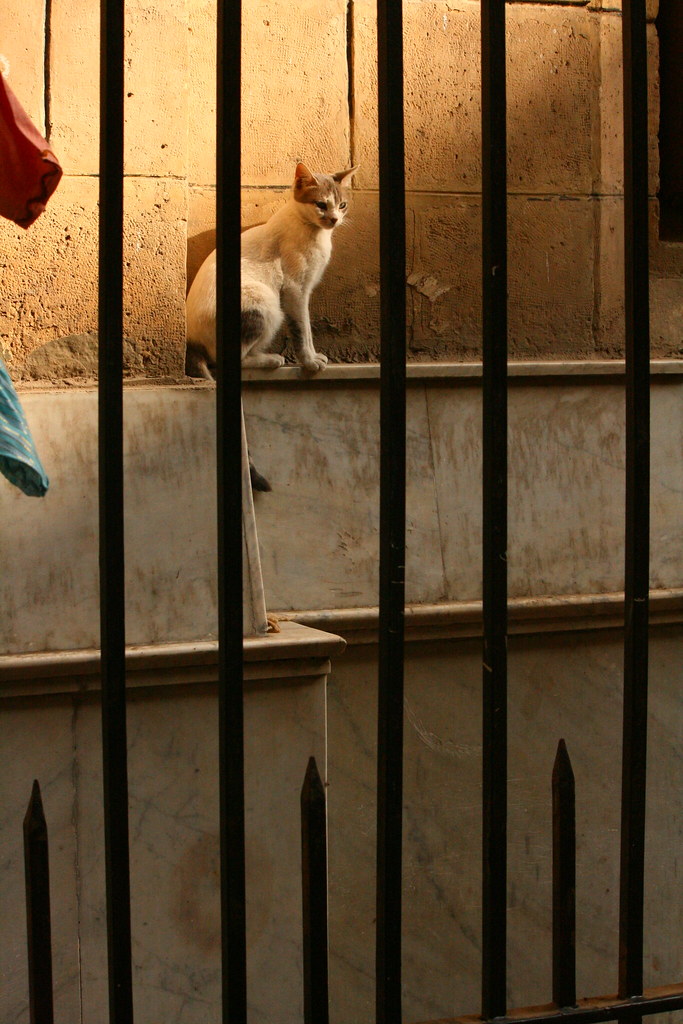
The southern gate of the Fatimid city, with two minarets you can climb for the best view in Islamic Cairo. Cats in the tentmakers’ street beyond it, on the bolts of cloth.
Near the gate. Thin, watchful, and fed by somebody.TheOnlyMoxey, CC BY 2.0 The Blue Mosque, Darb al-Ahmar
South-east into the old quarter to the Mosque of Aqsunqur, blue-tiled inside, quiet, with a caretaker who will show you the shrine and the cat asleep on it. A small tip; shoes off.
The Blue Mosque’s resident. The tiles are Ottoman; the cat is timeless.Ahmed Hamed Ahmed, CC BY-SA 4.0 Al-Azhar Park
Up the hill to the park built on the old rubbish dump, with lawns, fountains and the whole medieval city laid out below. Cats on the walls of the restaurant terrace. Come for sunset.
Elsewhere in Cairo, at the museum. The cats are on every institution.@bastique, CC BY-SA 2.0
Same numbers as the list. Worth keeping open on your phone.
The cats you will meet
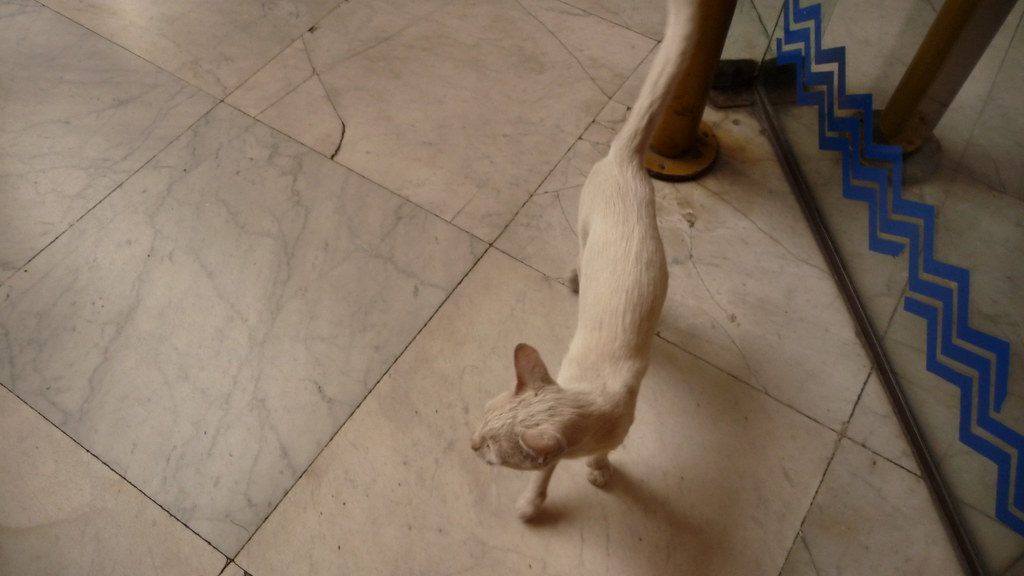
Egyptian street cats: lean, short-coated, often ticked or spotted like the Mau they gave rise to, with the big ears of the desert. In very large numbers, mostly unneutered, fed by caretakers and food sellers, calm in the mosques and quick in the streets.
Mosque cats
On the shrines and in the courtyards.
The caretaker’s. Tip him; he feeds them.
Khan cats
Under the stalls and at the kebab shops.
Fed on scraps. Well practised at the tourist.
Street cats
Around the bins and on the bread carts.
The majority. Thin, many, and still stepped round.
Everybody says Egyptians revere cats like the ancients did.
Actually They tolerate and feed them, which in a city of twenty million short of everything is a kind of reverence. The cats are thin and unneutered and the charities are tiny. Bastet would want you to give to one.
How not to be the annoying one
- Mosque rules: shoes off, modest dress, no photographs of people praying, a tip for the caretaker.
- Do not feed inside a mosque. The caretaker does, and the courtyard is his to clean.
- Buy the kebab, not the cat food. The restaurant feeds its cats from the grill.
- Bargain in the Khan, but not with the cat.
- Cairo’s cats are thin. That is the city, not neglect. Give to a charity rather than judging a caretaker.