Neighbourhood Zanzibar, Tanzania
Cats in Stone Town
Coral-stone lanes, carved doors, a night market on the seafront and a Swahili tradition of feeding cats that goes back to the Omani sultans. They are on every doorstep and under every night-market table.
Where to find cats in Stone Town: Stone Town, the old city of Zanzibar, on the western tip of the island: the lanes behind the seafront, the market, and Forodhani Gardens. When: Early morning in the lanes, sunset at Forodhani. June to October for the dry season; January and February are hot and fine. Why here: A Swahili city where cats have been welcome since the sultans, in lanes built for them.
The short version
- Where
- Stone Town, the old city of Zanzibar, on the western tip of the island: the lanes behind the seafront, the market, and Forodhani Gardens
- When
- Early morning in the lanes, sunset at Forodhani. June to October for the dry season; January and February are hot and fine
- How long
- A day. Stone Town is small and the lanes are the point
- What it costs
- Free. The night market is cheap and the cats eat what falls
- Why here
- A Swahili city where cats have been welcome since the sultans, in lanes built for them
What to bring
- Six in the morningStone Town before the heat is bread sellers, schoolchildren and cats. By ten the lanes are a furnace.
- A sense of direction, loosely heldThe lanes are a maze on purpose. You will get lost. The sea is always west.
- Shillings for the night marketForodhani Gardens at sunset is grilled seafood on sticks and Zanzibar pizza. The cats work the tables.
- Modest dressZanzibar is Muslim and conservative. Shoulders and knees, and the cats will not mind either way.
Why there are cats everywhere
The Omani sultans ruled Zanzibar from Stone Town, and they brought the Islamic courtesy to cats with them.
Stone Town is the old city of Zanzibar: coral-stone houses with carved wooden doors, lanes too narrow for a car, mosques and Hindu temples and a cathedral on the site of the slave market, and a seafront of palaces built by the sultans of Oman who ruled the island in the nineteenth century. It is a Swahili city, which means Arab, African, Indian and Persian at once, and it has cats the way all Islamic port cities have cats: fed, tolerated, and on every step.
They are in the lanes, in the doorways under the carved doors, on the steps of the mosques, and at the market, where the fish comes in from the dhows. In the evening they are at Forodhani Gardens on the seafront, where the night market sets up at sunset and the grilled octopus and the Zanzibar pizza produce a steady fall of scraps under the tables. A cat at Forodhani is a cat with a career.
Zanzibar is not rich and the cats are thin in the hot months, but they are not chased, and a shopkeeper will put a bowl out. A small local charity does what neutering it can. The House of Wonders, the sultans’ great palace on the seafront, partly collapsed in 2020 and is being rebuilt; the cats sit on the fence around it, in the shade, waiting for the sultans to come back.
The walk
The lanes in the morning, the market, the seafront and the palaces, and Forodhani at sunset. A day, in and out of the shade.
- From Zanzibar airportTaxi to Stone Town20 minAgree the fare before you get in. Taxis cannot enter the lanes; they drop you at the edge.
- From Dar es SalaamFerry to Zanzibar port120 minThe fast ferry lands at the edge of Stone Town. Book the morning boat.
- From The beach resortsTaxi or dala-dala to town60 minThe east coast is an hour away. Come for the day and stay for the night market.
The lanes
Anywhere behind the seafront. Carved doors, coral stone, bicycles, and cats in every doorway. Get lost on purpose; the lanes were designed to confuse raiders and they still work.
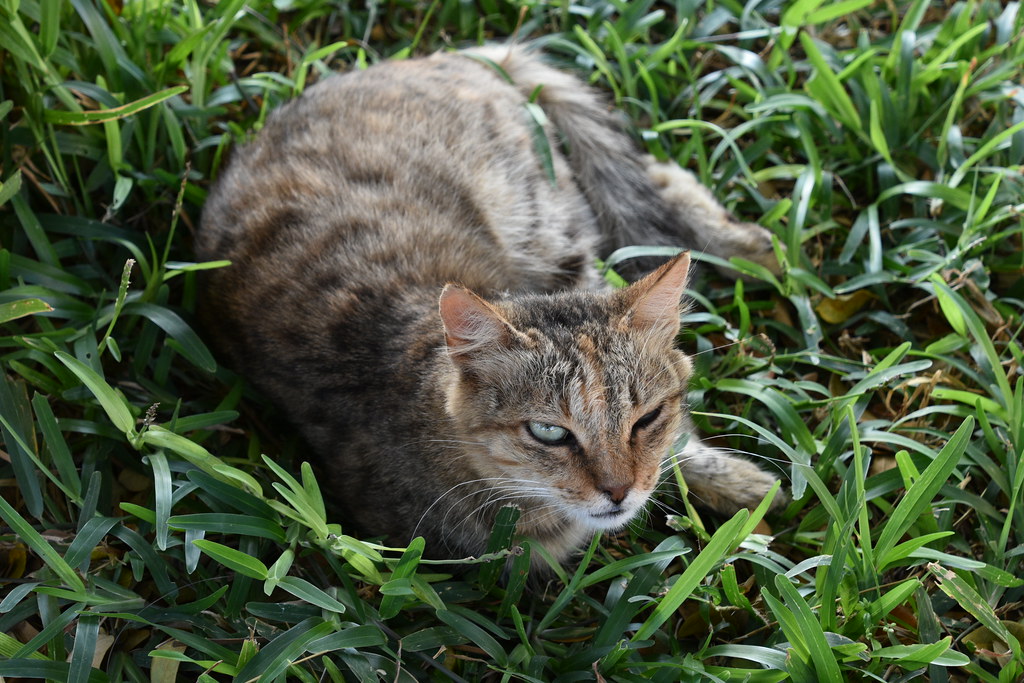
A doorstep under a carved door. The best address in town.Prof. Mortel, CC BY 2.0 Darajani market
The main market on the edge of the old town: fish from the dhows, spices, fruit, and cats under the fish tables where the scraps are. Early, before the fish is gone and the heat has come.
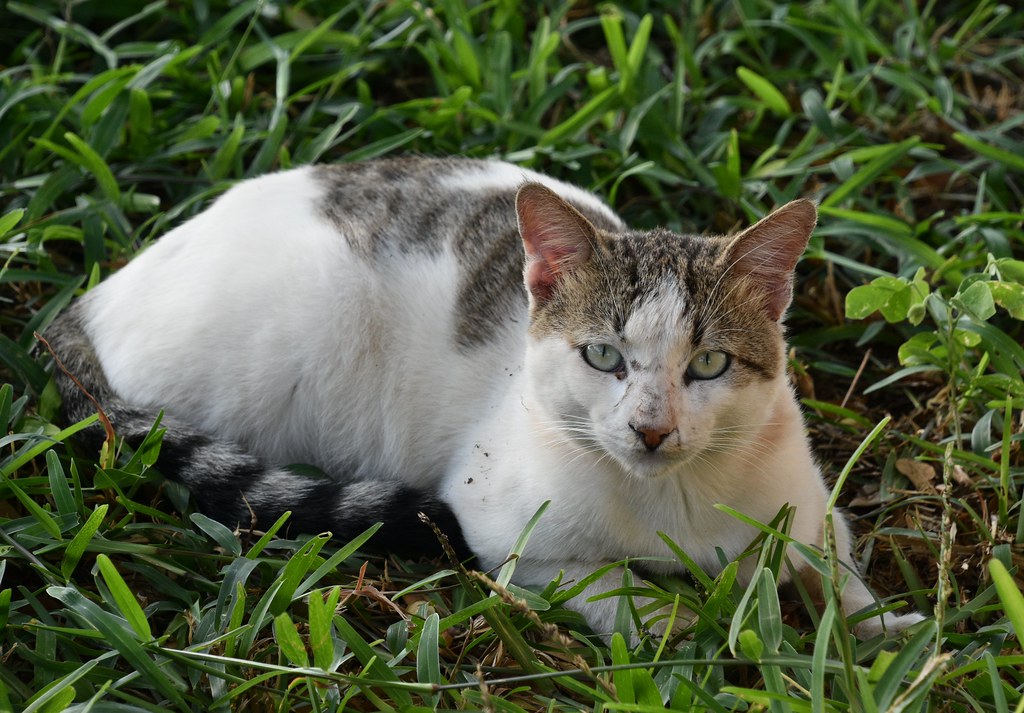
Near the market. Fish comes in; cats come out.cdrummbks, CC BY 2.0 The House of Wonders
Back to the seafront and the sultans’ palace, the tallest building in East Africa when it was built and partly collapsed since 2020. Under restoration; look from the outside. Cats on the fence and in the shade of the Old Fort next door.
In the shade by the palaces. The sultans left; the cats did not.cdrummbks, CC BY 2.0 Forodhani Gardens
The seafront gardens where the night market sets up at sunset: grilled seafood on sticks, Zanzibar pizza, sugar-cane juice, and cats under every table. Eat, and drop something.
Forodhani side. A cat with a career.Toni Birrer, CC BY-SA 2.0
Same numbers as the list. Worth keeping open on your phone.
The cats you will meet
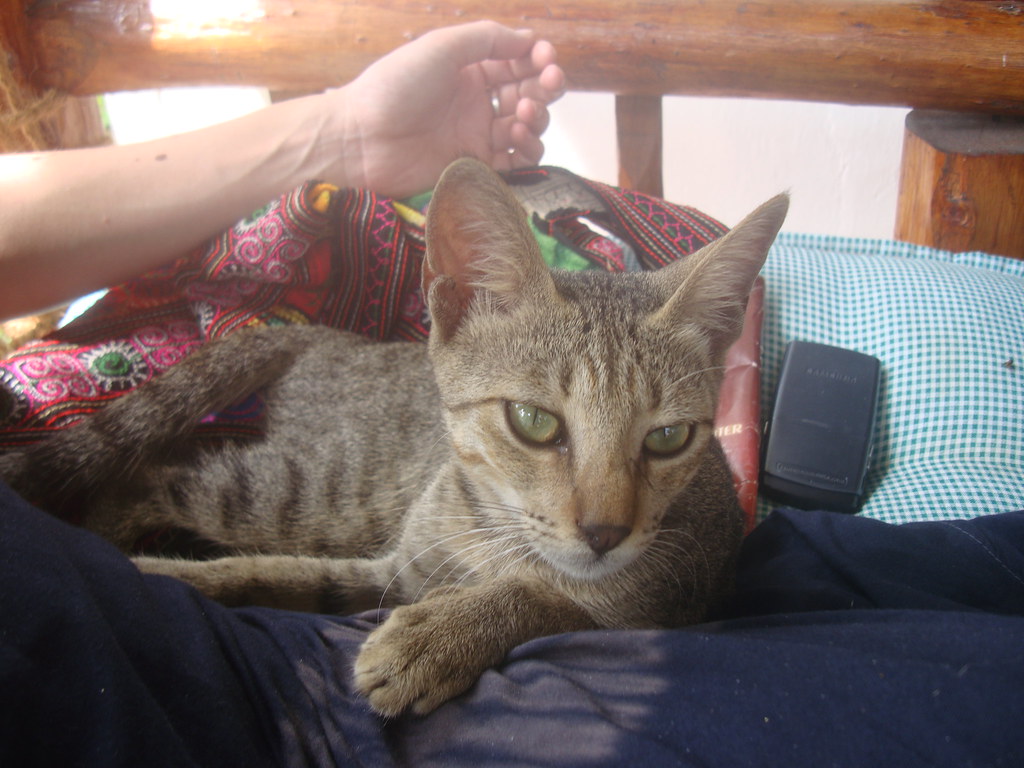
Swahili coast cats: small, short-coated, tabby and ginger and white, with the big ears of the tropics, fed by shopkeepers and the night market, thin in the hot months and calm in the lanes. Sociable at Forodhani, private in the doorways.
Doorstep cats
Under the carved doors in the lanes.
Somebody’s, in the Swahili sense. Photograph the door and the cat together; both are the point.
Market cats
Under the fish tables at Darajani.
Early shift. Gone with the fish.
Forodhani cats
Under the night-market tables at sunset.
The professionals. Drop the octopus.
Everybody says The cats are strays nobody wants.
Actually They are the ordinary cats of an Islamic port, fed and tolerated for two centuries. Zanzibar is poor and the cats show it in the hot months, but a shopkeeper will still put a bowl out, and the night market feeds them every evening.
How not to be the annoying one
- Modest dress, always. This is a conservative Muslim town and the cats are the least of its concerns.
- The carved doors are people’s front doors. Photograph from the lane; do not pose on the step.
- Drop scraps at the night market under your own table, not by the stalls.
- Ask before photographing people. The cats do not mind; the people may.
- The slave market memorial is a place of mourning. Go, and be quiet.