Island Ishinomaki, Miyagi, Japan
Cats in Tashirojima
The cat island. About a hundred cats, about fifty people, one rule that has held since the beginning, and a ferry that takes an hour from a town most visitors have never heard of.
Where to find cats in Tashirojima: An island in Ishinomaki Bay, Miyagi, an hour by ferry from Ishinomaki port. When: Spring and autumn. Winter ferries get cancelled; summer holidays sell out. Why here: Cats have been the point of this island since it made silk, and the islanders have kept it that way on purpose.
The short version
- Where
- An island in Ishinomaki Bay, Miyagi, an hour by ferry from Ishinomaki port
- When
- Spring and autumn. Winter ferries get cancelled; summer holidays sell out
- How long
- A full day from Sendai, or a night on the island if you want the cats to yourself
- What it costs
- About ¥1,250 each way on the ferry, cash. The island itself costs nothing
- Why here
- Cats have been the point of this island since it made silk, and the islanders have kept it that way on purpose
What to bring
- Cash, in yenFor the ferry ticket and the two or three places to eat. Cards are not a thing here.
- Your own lunch and waterThere is almost nothing to buy on the island and the cafes keep short hours.
- Shoes for a hillThe walk between the two ports goes up and over. The road is paved but it climbs.
- The ferry timetable, checked that morningThree sailings a day at the last check, weather permitting. Miss the last one and you are staying.
Why there are cats everywhere
The cats are here because of silkworms.
Tashirojima raised silkworms, and silkworms are eaten by mice, so the islanders kept cats. When the silk went, fishing was left, and the fishermen kept the cats too: they watched how the cats behaved to read the weather, and took a cat that stayed calm as a good sign for the day’s catch. The cats became lucky, and then they became sacred.
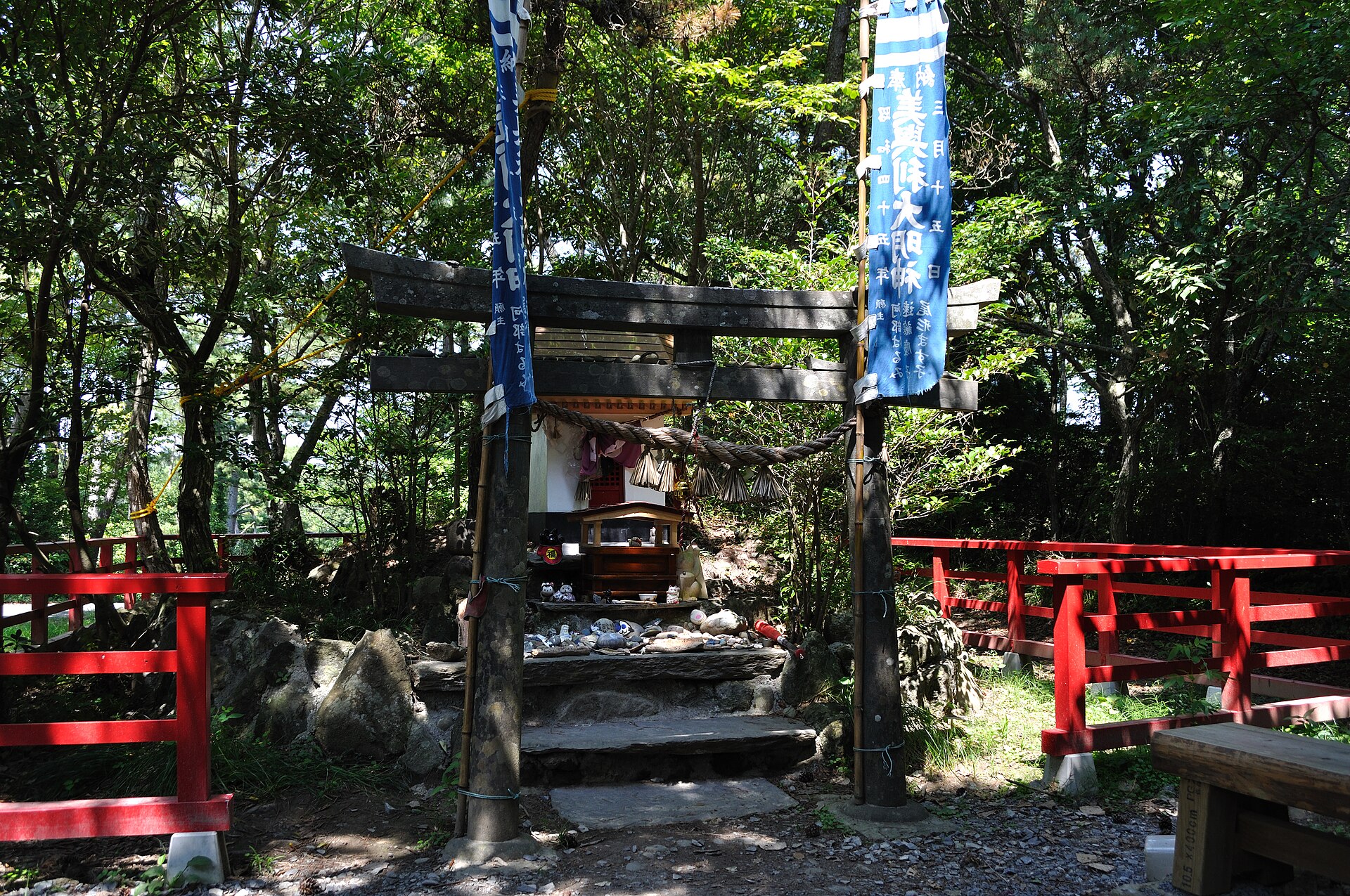
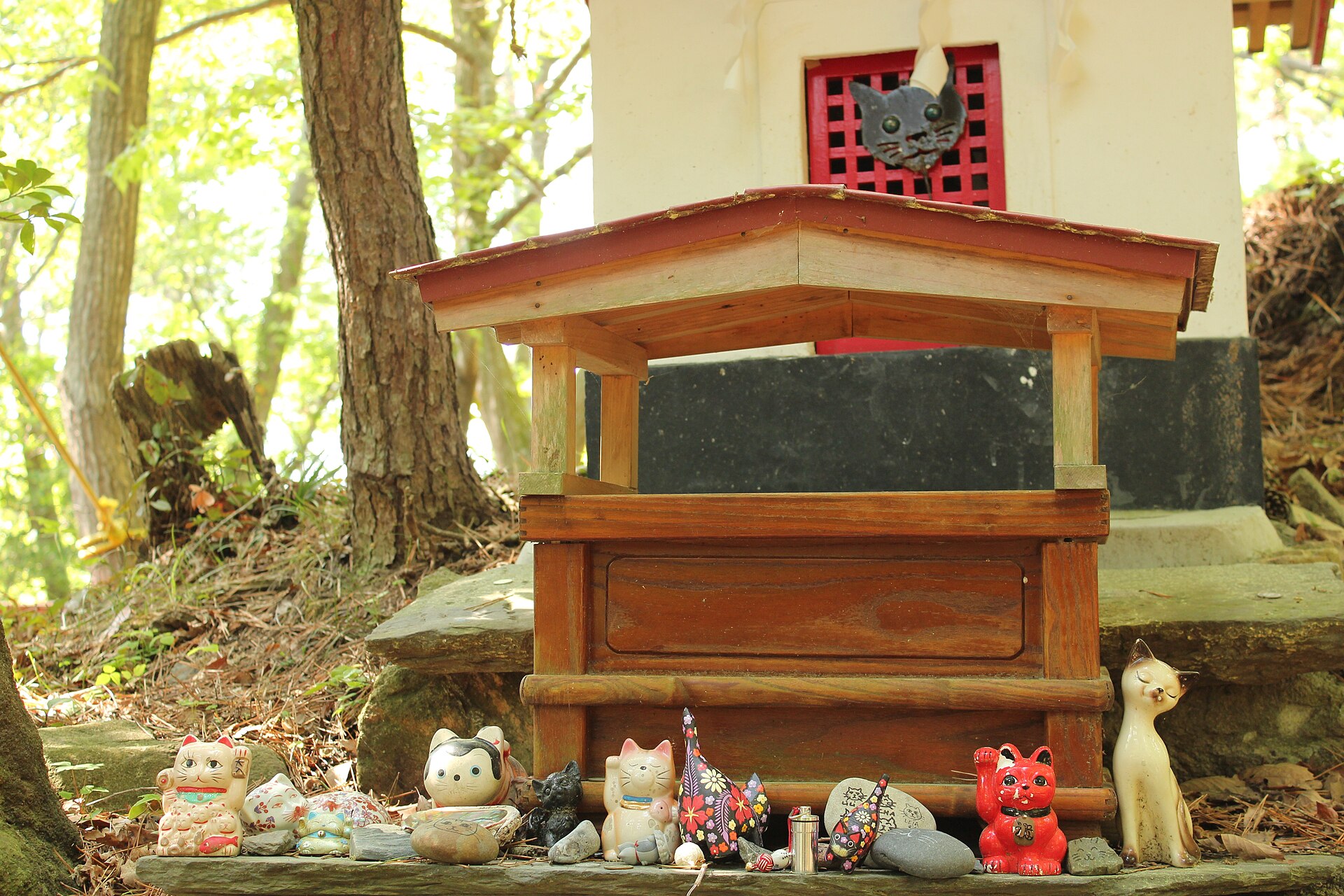
One day a rock fell during work on the shore and killed one of them. The fishermen buried the cat and built a small shrine over the grave, and that shrine, Miyori Daimyojin, is still there, halfway between the two villages, with maneki-neko and stones and small offerings piled around it. It is the reason the island has a cat shrine and no dog.
That is the rule: no dogs. It has been the rule since the beginning and it is enforced. The cats on this island have never had to run from anything, which is why they will walk up to you at the pier.
The people who feed them are the roughly fifty residents, most of them elderly, in two hamlets called Nitoda and Ōdomari. The 2011 tsunami hit both. The island rebuilt, the cats stayed, and the visitors who came afterwards to see them are a fair part of why the ferry still runs.
The walk
Off the ferry at Nitoda, up through the village, over the hill past the cat shrine, and down to Ōdomari for the boat back. Two hours if you never stop. You will stop.
- From SendaiJR Senseki-Tōhoku Line rapid to Ishinomaki60 minThen a 10 to 15 minute walk, or a short taxi, from Ishinomaki Station to the Ajishima Line ferry terminal.
- From Ishinomaki ferry terminalAjishima Line ferry to Tashirojima50 minThree sailings a day at the last check, morning, midday and mid-afternoon, weather permitting. Buy the ticket at the terminal, in cash.
- From TokyoShinkansen to Sendai, then as above95 minIt is a long day trip. Manageable, if you take the first ferry.
Nitoda pier
The cats meet the boat. Not a figure of speech: they know the timetable better than you do and they are on the concrete when it docks. Look, do not feed. Everything they need arrives from the houses behind you.
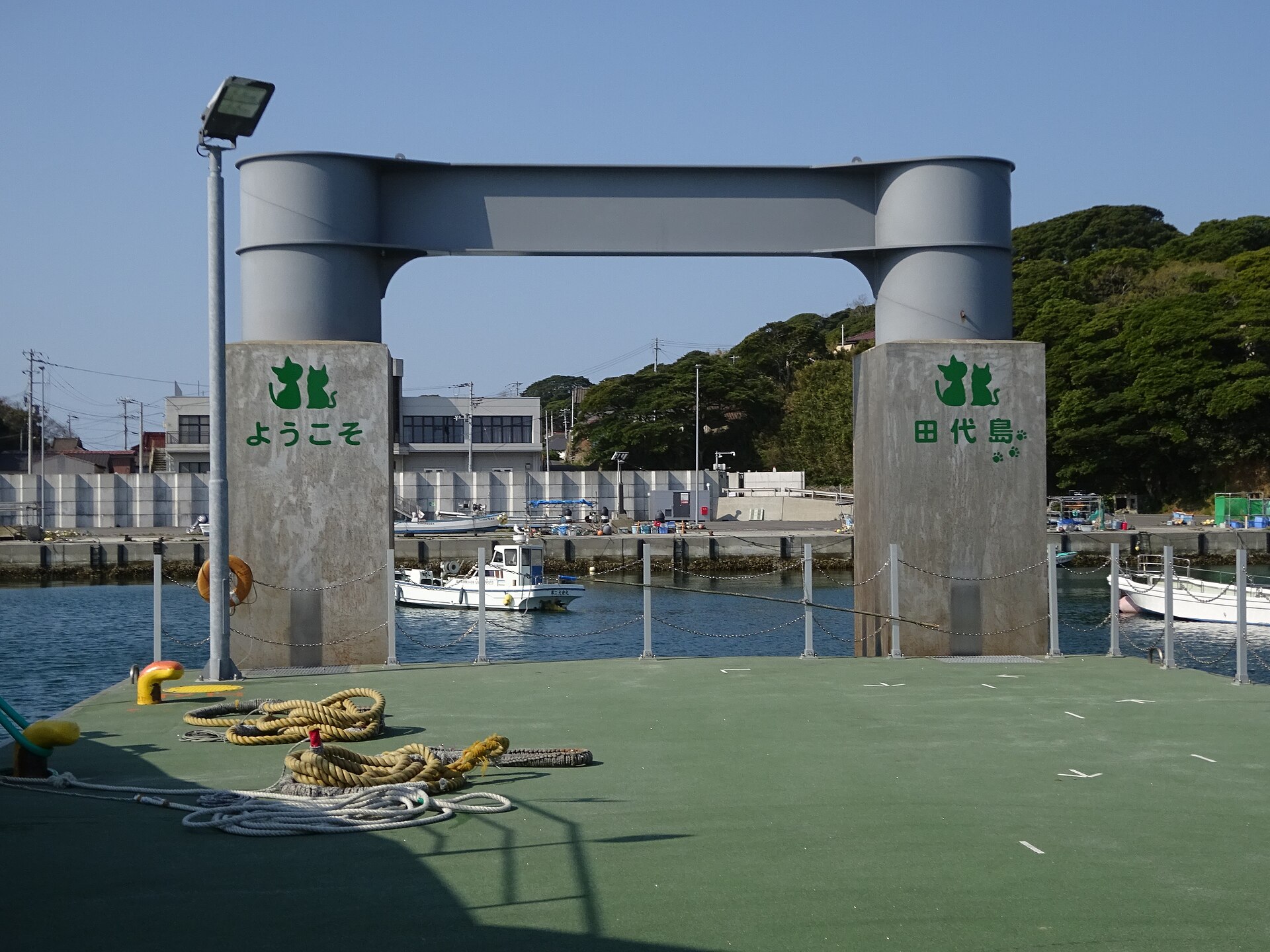
The pier. The welcoming committee is not in shot because it was behind the photographer.ブルーノ・プラス, CC BY-SA 4.0 Nitoda village
Narrow lanes between corrugated houses, most of them with a cat on the step. Keep to the lanes, not the gardens. Manpuku-ji temple is up the slope on the left and the cats use its steps as a lookout.
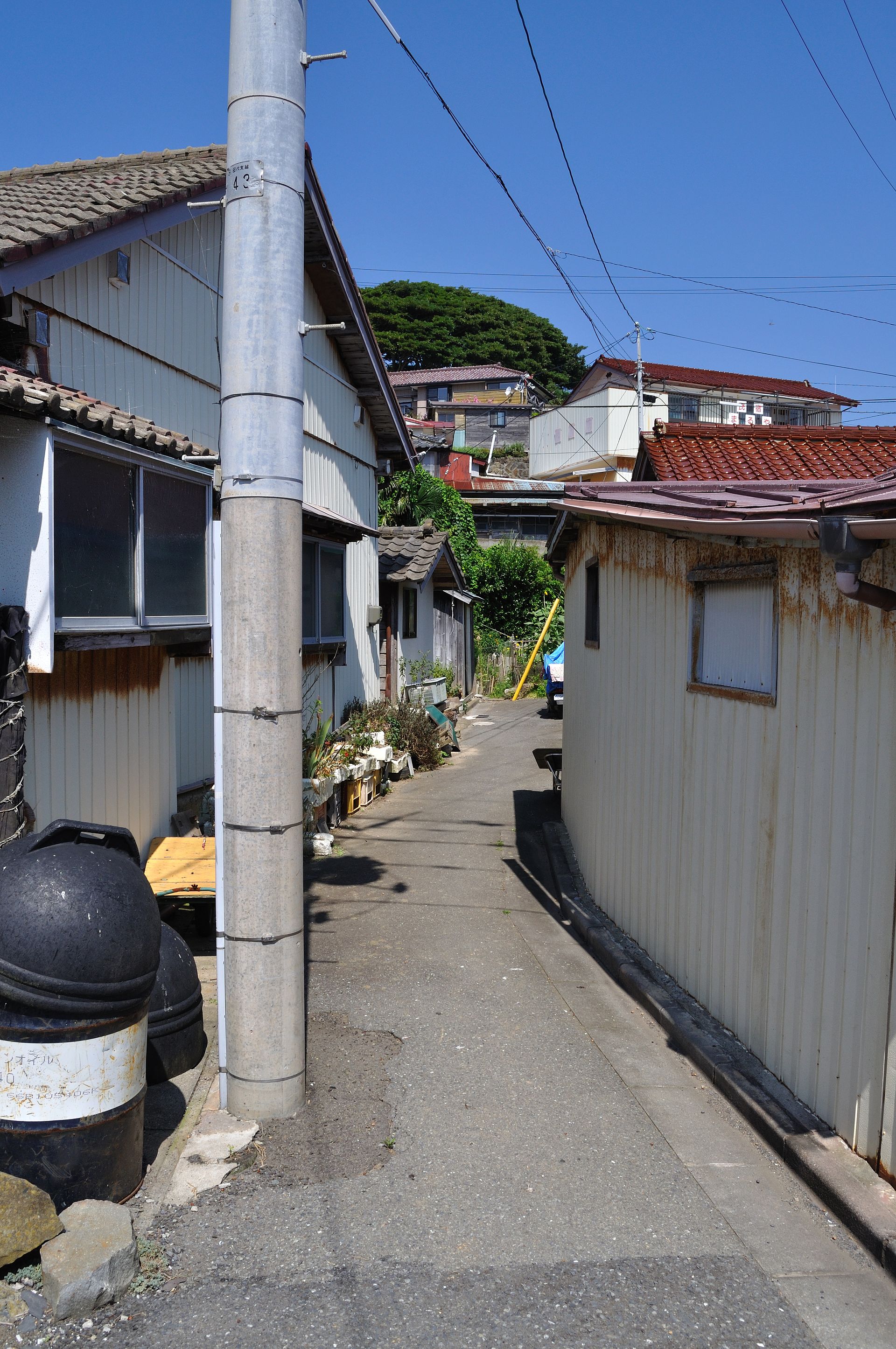
The lanes. Every one of those doorsteps is somebody’s cat’s.AMANO Jun-ichi, CC BY 3.0 The steps
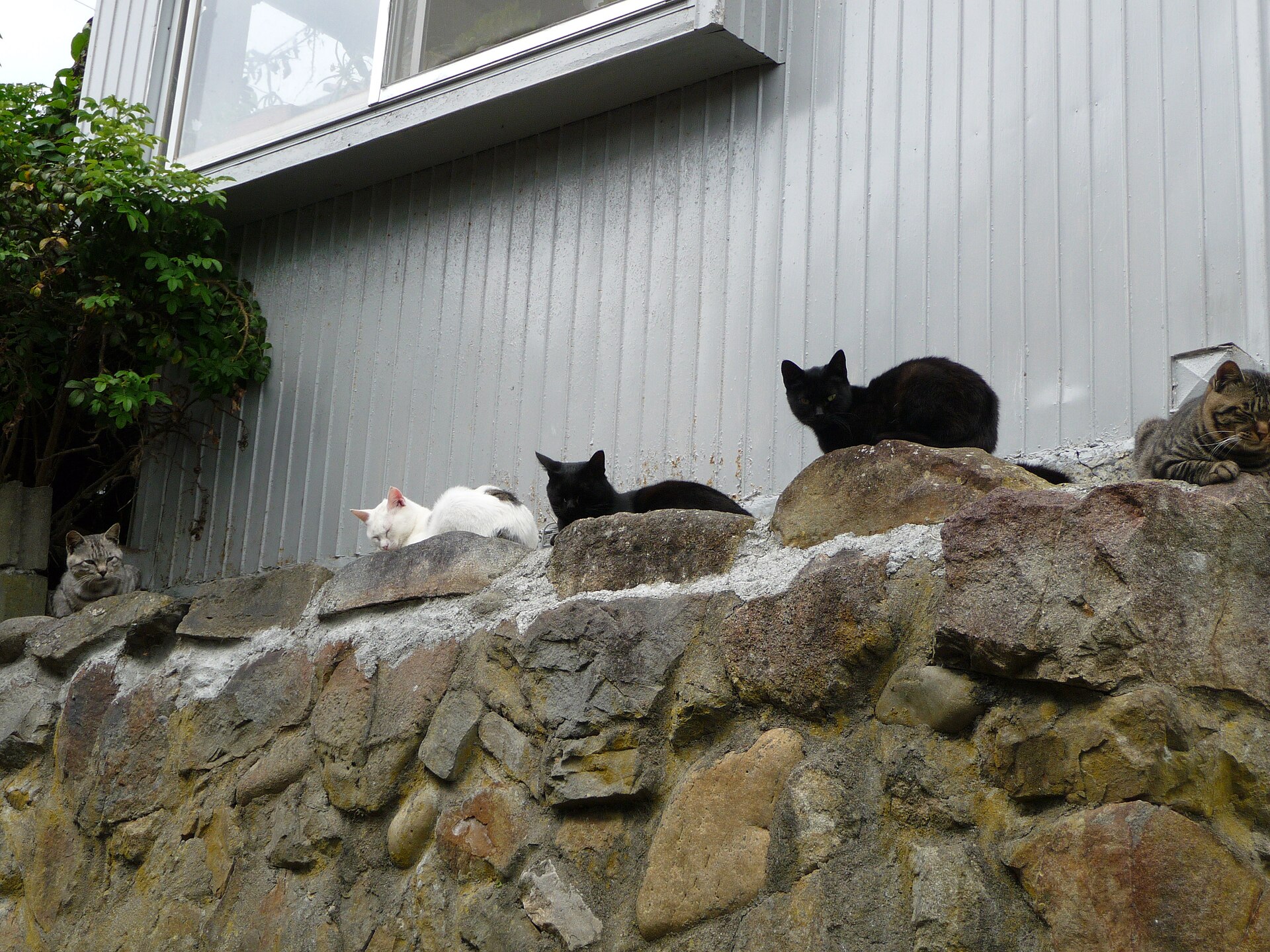
The village climbs in flights of stone steps between stone walls. Cats sleep on the warm ones. Go slowly; this is where you use the day.
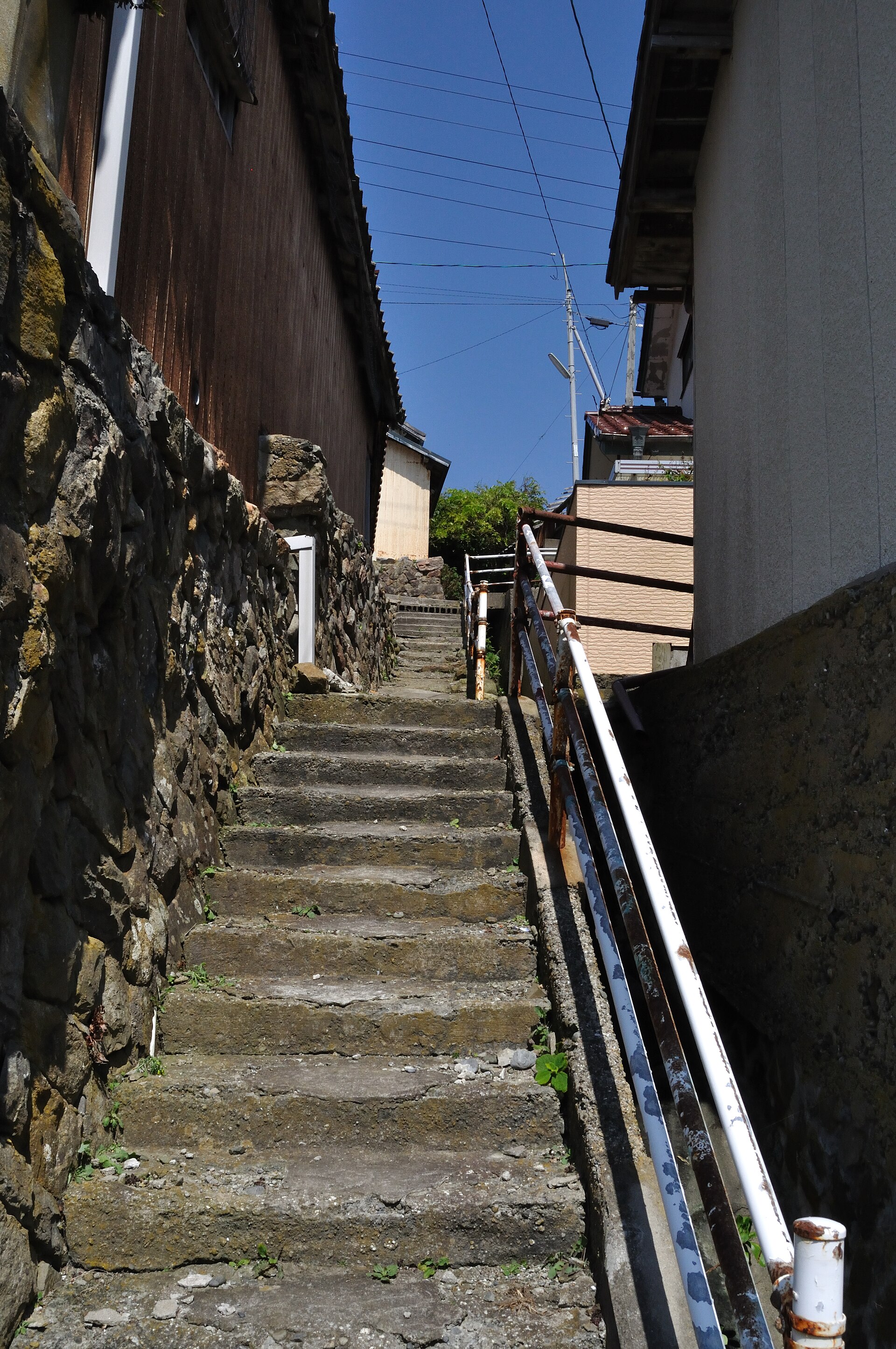
Stone steps, stone walls, warm in the afternoon. Sit on one and wait.AMANO Jun-ichi, CC BY 3.0 Miyori Daimyojin, the cat shrine
On the road between the villages, in the trees. A small torii, blue banners, and a shrine the size of a cupboard heaped with cat figures people have carried out here. Leave a coin if you like. Do not leave food.
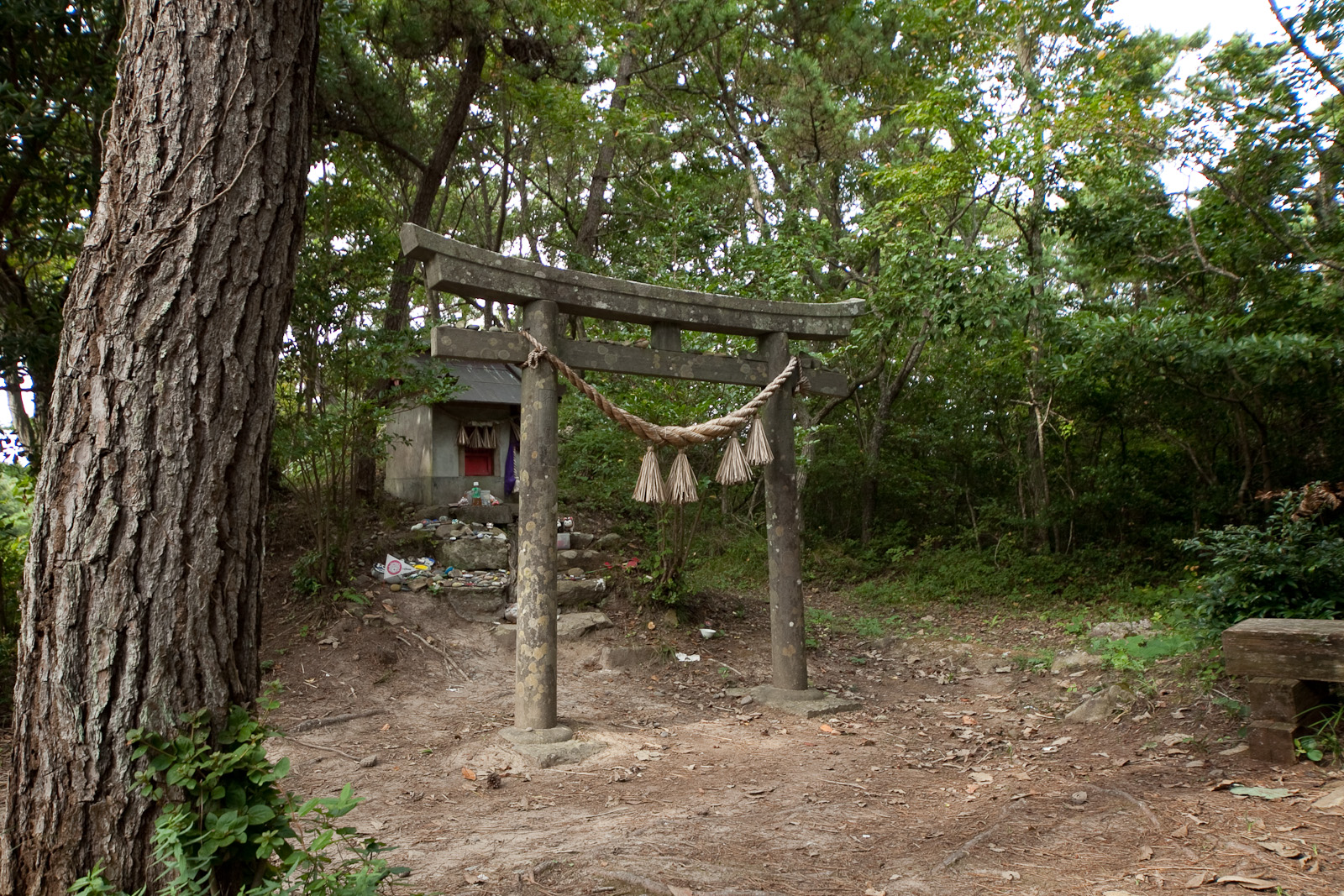
The grave of one cat, and a shrine to all of them.ja:user:ダダ, Public domain Ōdomari
The other village and the other pier, smaller and quieter. The boat back calls here too. Check which port your return sailing uses before you commit to the walk.
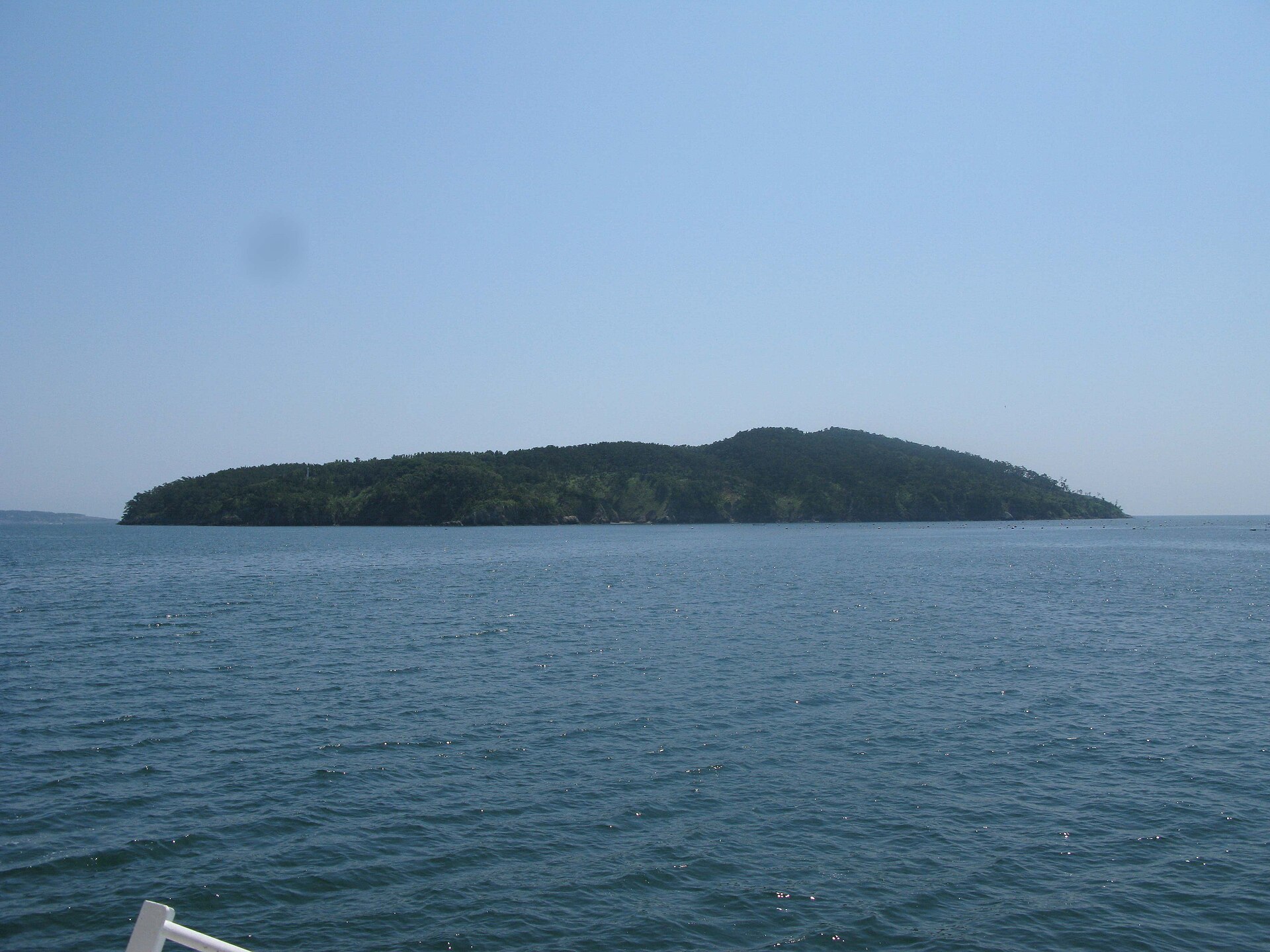
The whole island from the boat. Two villages, one hill, a hundred cats.ひでゆき, Public domain
Same numbers as the list. Worth keeping open on your phone.
The cats you will meet
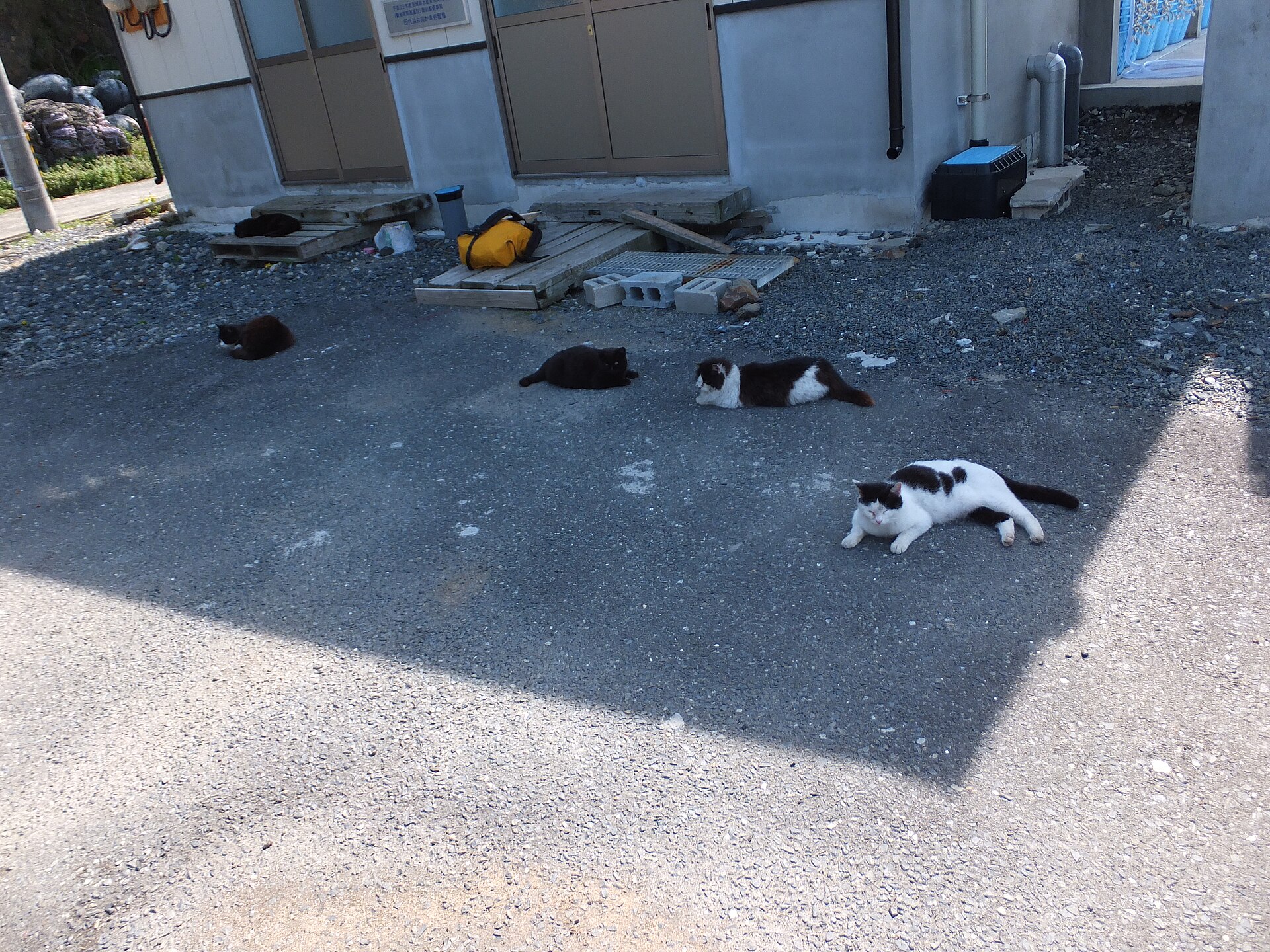
Around a hundred, on an island of about fifty people. Well fed, entirely unbothered, and the tamest street cats you will ever meet, because nothing here has ever chased them.
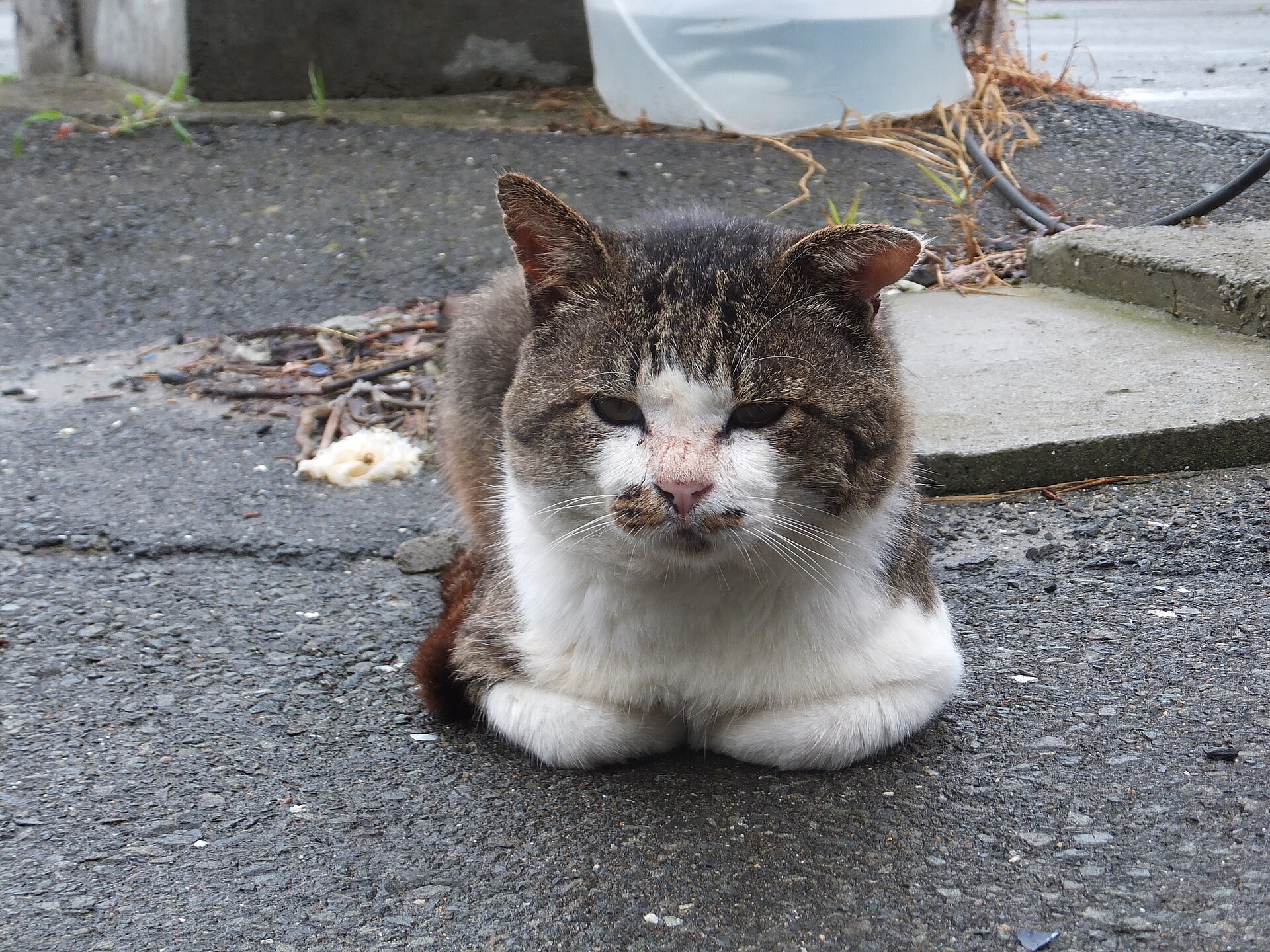
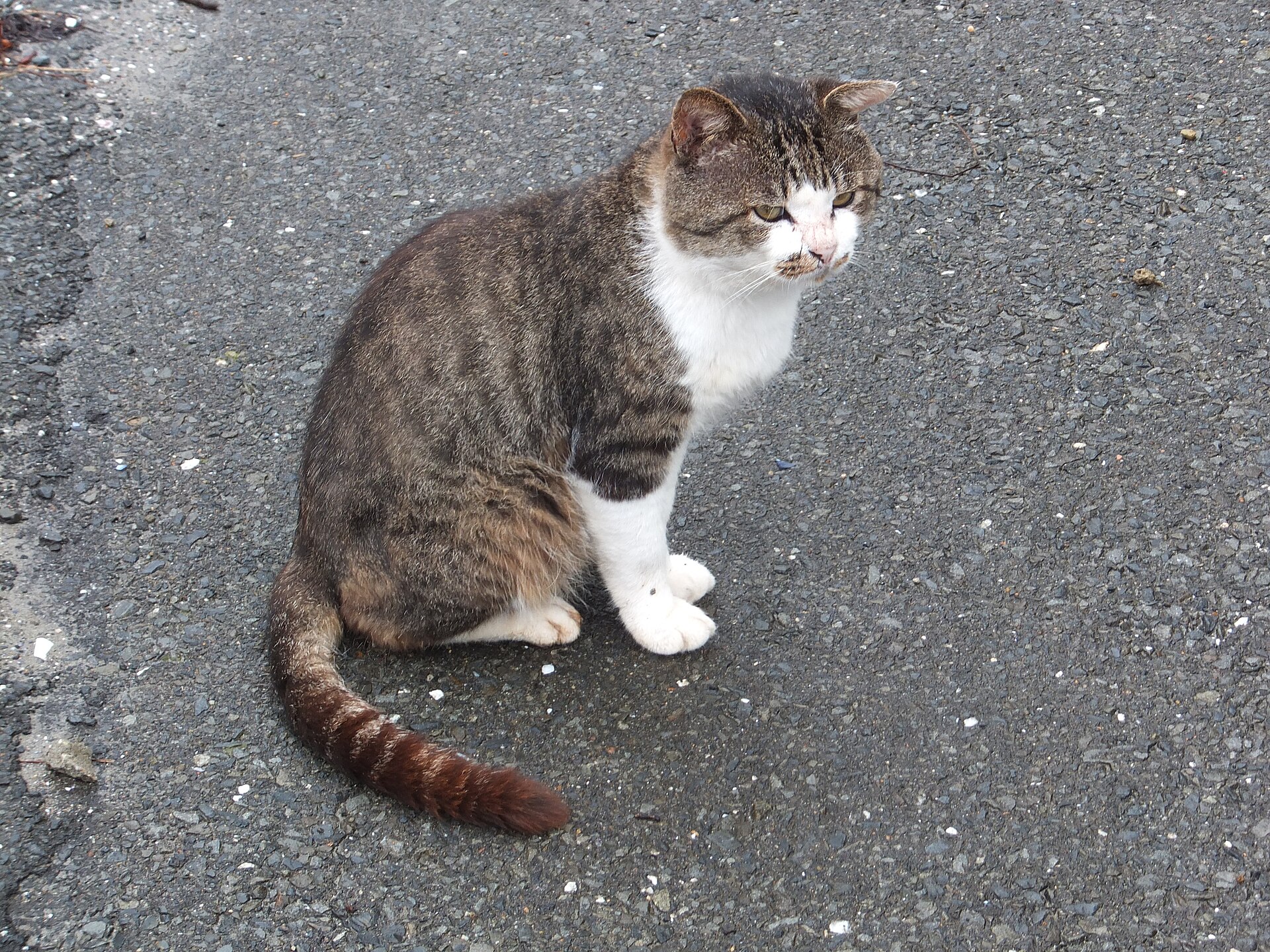
Tabby and white
Grey-brown stripes with a white bib and paws. Solid, wide-faced.
The island default. Nekotaro, the best-known cat here, is one.
Calicos
White with orange and black patches, the classic Japanese mike-neko.
Nearly all female, and the ones photographed most.
Black cats
All black, often with a kink or a bob in the tail.
Shyer, and more likely to watch you from a wall than come down.
Bobtails
Any colour, with a short, kinked or pom-pom tail.
Common all over Japan and here too. Not a breed, just an old local gene.
Everybody says It is an island overrun by cats.
Actually It is a fishing island where the cats outnumber the people, which is a different thing. There are around a hundred, spread over two villages and the road between. You will not be mobbed. You will be met at the pier, followed up the lane, and mostly ignored on the hill.
How not to be the annoying one
- Do not feed them. This is the one that matters. The islanders feed the cats, and food from visitors is why some of them are the shape they are. There are signs; obey them.
- No dogs, and it is not a request. Service dogs are the only exception.
- No toys. They swallow the string. No flash, and no picking anybody up.
- The lanes are public and the gardens are not. A cat on a doorstep is on somebody’s doorstep.
- Let a sleeping cat sleep. There are a hundred others.
- Buy something. A drink, a lunch, a night at Manga Island. The people feeding the cats are fifty mostly elderly islanders, and the ferry runs because visitors spend money.