Neighbourhood Chania, Greece
Cats in Chania Old Harbour
A Venetian harbour, an Ottoman mosque, a lighthouse at the end of the mole, and cats under every taverna table along the water. Plus a monastery in the hills where the monks keep a colony among the olives.
Where to find cats in Chania Old Harbour: The old town and Venetian harbour of Chania, in western Crete, and the Agia Triada monastery on the Akrotiri peninsula. When: Early morning on the harbour, evening in the lanes. April to June and September to October. Why here: The prettiest harbour in Crete, and the most reliably cat-populated tavernas on it.
The short version
- Where
- The old town and Venetian harbour of Chania, in western Crete, and the Agia Triada monastery on the Akrotiri peninsula
- When
- Early morning on the harbour, evening in the lanes. April to June and September to October
- How long
- A morning for the harbour and the old town. Half a day more for the monastery
- What it costs
- Free. The monastery asks a small entry. The tavernas are where the money goes
- Why here
- The prettiest harbour in Crete, and the most reliably cat-populated tavernas on it
What to bring
- Seven in the morningThe harbour before the tavernas open is fishermen, the mole, and the cats waiting for the boats. By ten it is a promenade.
- Shoes for the moleThe walk to the lighthouse is a kilometre of uneven Venetian stone with the sea on both sides.
- Fish skin from your plateThe taverna cats are fed by the tavernas. Your contribution is what is left of the sea bream.
- A car or bus fare for AkrotiriAgia Triada is out on the peninsula past the airport. The monks make wine and oil and keep the cats.
Why there are cats everywhere
The Venetians built the harbour, the Ottomans added the mosque, and the cats have run it since.
Chania’s old harbour is a curve of Venetian houses around a basin, with the domed Ottoman mosque on the quay, the arsenali where the galleys were built, and a long mole out to a lighthouse rebuilt by the Egyptians in the eighteen-thirties. Behind it, the old town is lanes of Venetian and Turkish houses, some restored and some falling down, and the Splantzia quarter, once Turkish, with its plane-tree square. It is the most beautiful town in Crete and it knows it.
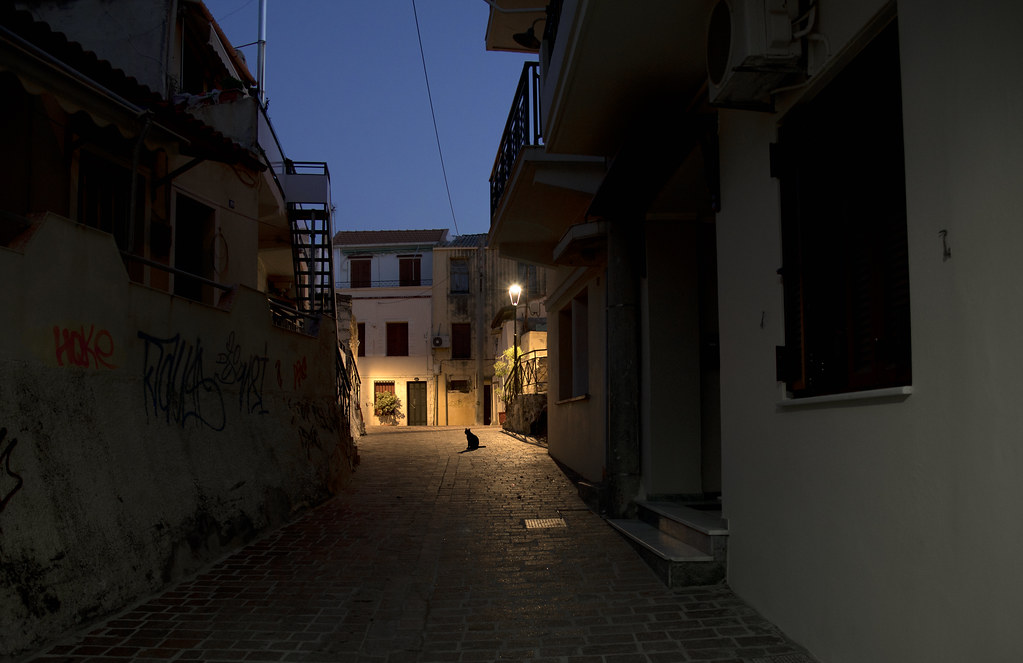
The cats are on the harbour, where the tavernas are, and in the lanes, where the houses are. The tavernas feed them, as tavernas do; the residents feed them, as Cretans do; and a local welfare association neuters them, as the good ones do everywhere now. In the morning they are on the mole with the fishermen, in the afternoon they are under the tables, and in the evening they are in the lanes under the streetlamps, which is where the photograph on this page was taken.
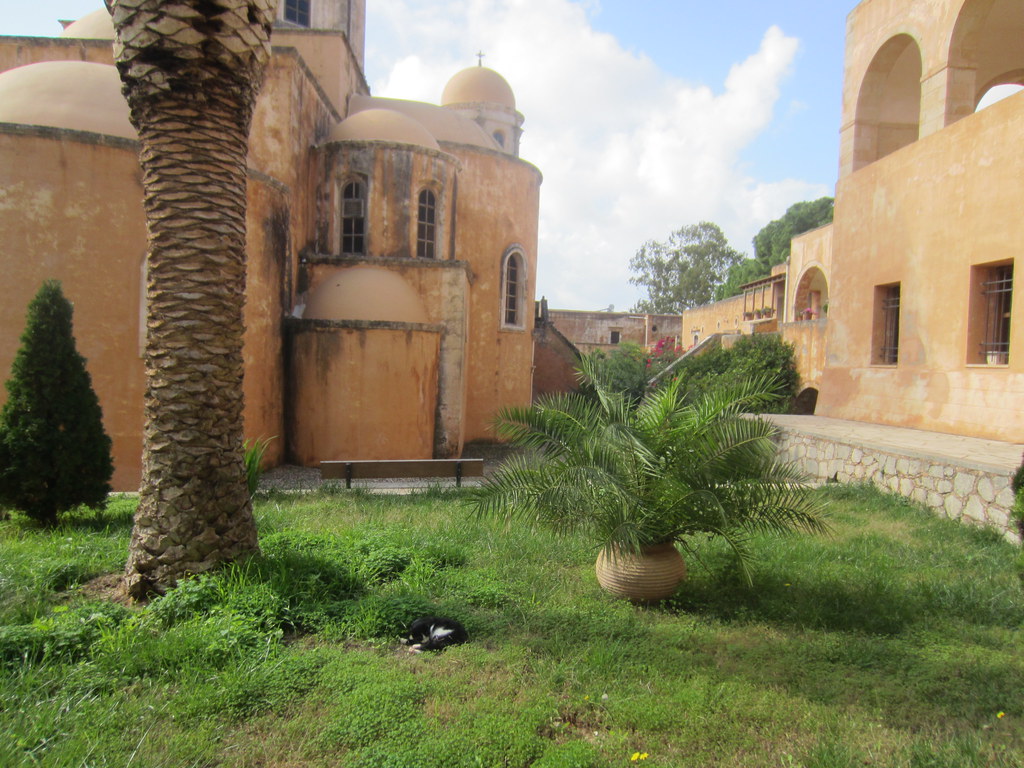
Out on the Akrotiri peninsula, past the airport, the seventeenth-century monastery of Agia Triada Tzagarolon sits among its own olives and vines, makes very good oil and wine, and keeps a colony of cats in the courtyard, fed by the monks and photographed by everyone who buys the oil. It is the quiet counterpart to the harbour, and worth the drive.
The walk
The harbour and the mole to the lighthouse first thing, back through the old town to Splantzia, and, with a car, out to the monastery in the afternoon.
- From Chania airportBus or taxi to the old town30 minThe airport is on Akrotiri, so the monastery is on the way if you have a car.
- From Souda portBus to the town centre20 minThe overnight ferry from Piraeus lands here at dawn, which is harbour time.
- From The bus stationWalk to the harbour10 minDownhill through the market hall. Everything is close.
The harbour and the mosque
The curve of the old harbour with the domed mosque on the quay. Cats along the wall by the fishing boats in the morning and under the taverna tables the rest of the day. Coffee on the quay is the start.
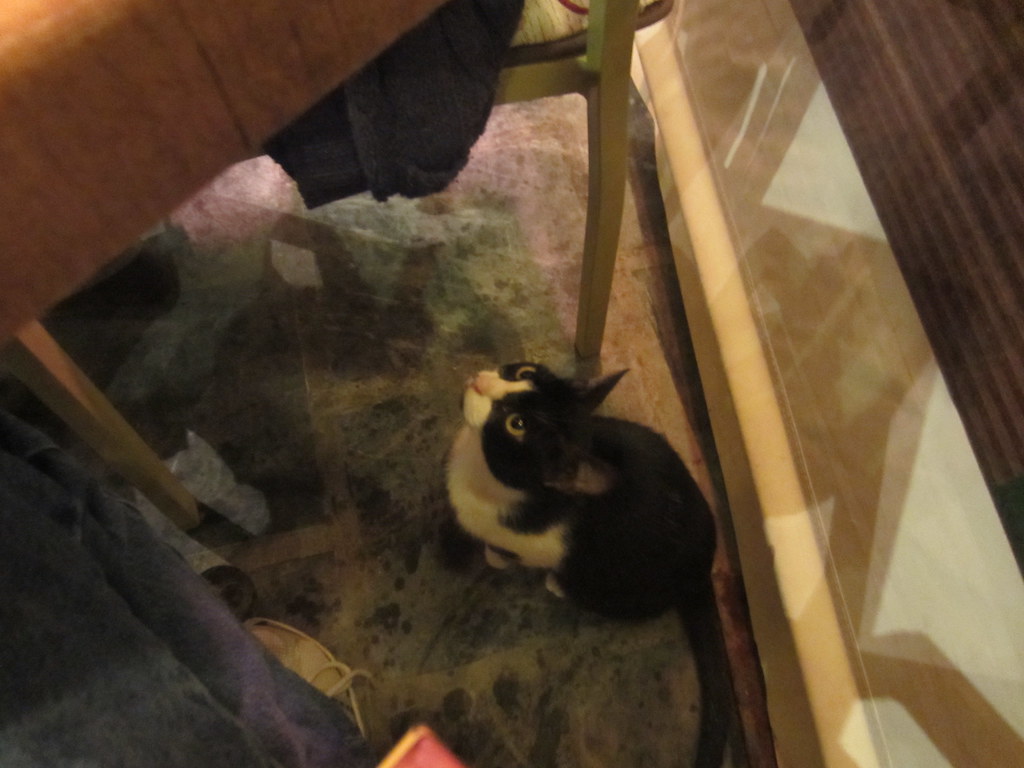
A taverna cat, unafraid, under the table it regards as its own.Nelo Hotsuma, CC BY 2.0 The lighthouse
Out along the mole, a kilometre of Venetian stone, to the lighthouse at the end. Cats on the mole where the fishermen sit. The view back across the harbour is the postcard.
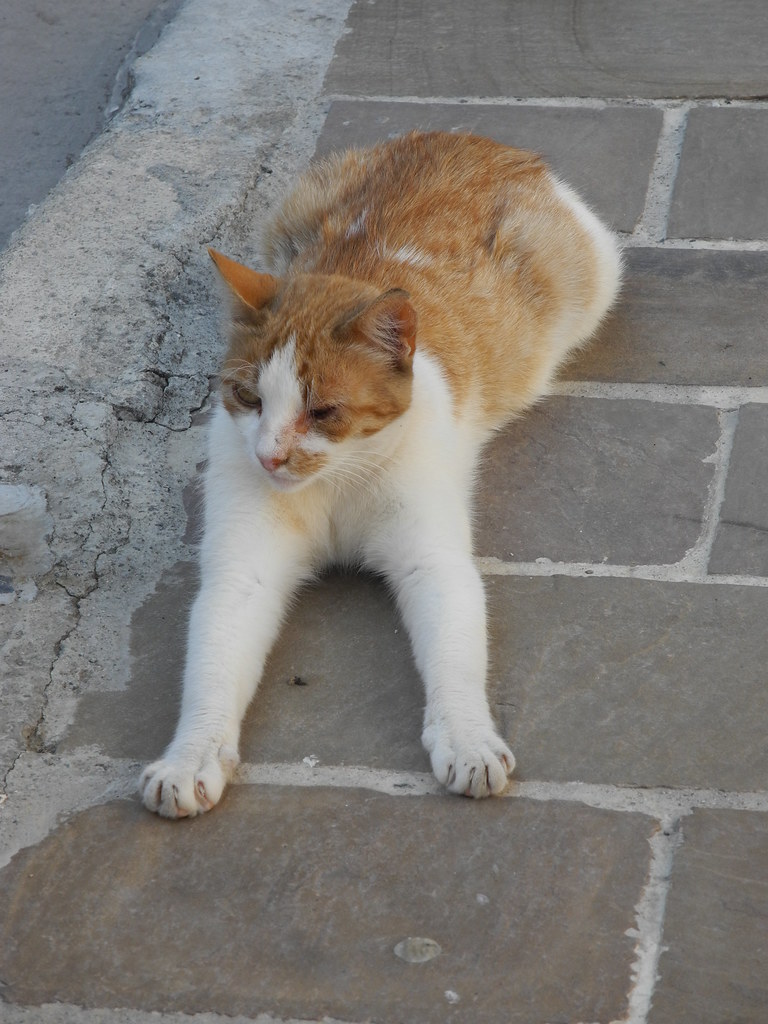
On the quay, stretching for the day’s work.Shepard4711, CC BY-SA 2.0 Splantzia
Back through the lanes to the old Turkish quarter and its square under the plane tree, with the church of Agios Nikolaos that has both a bell tower and a minaret. Cats in the lanes and on the square in the evening.
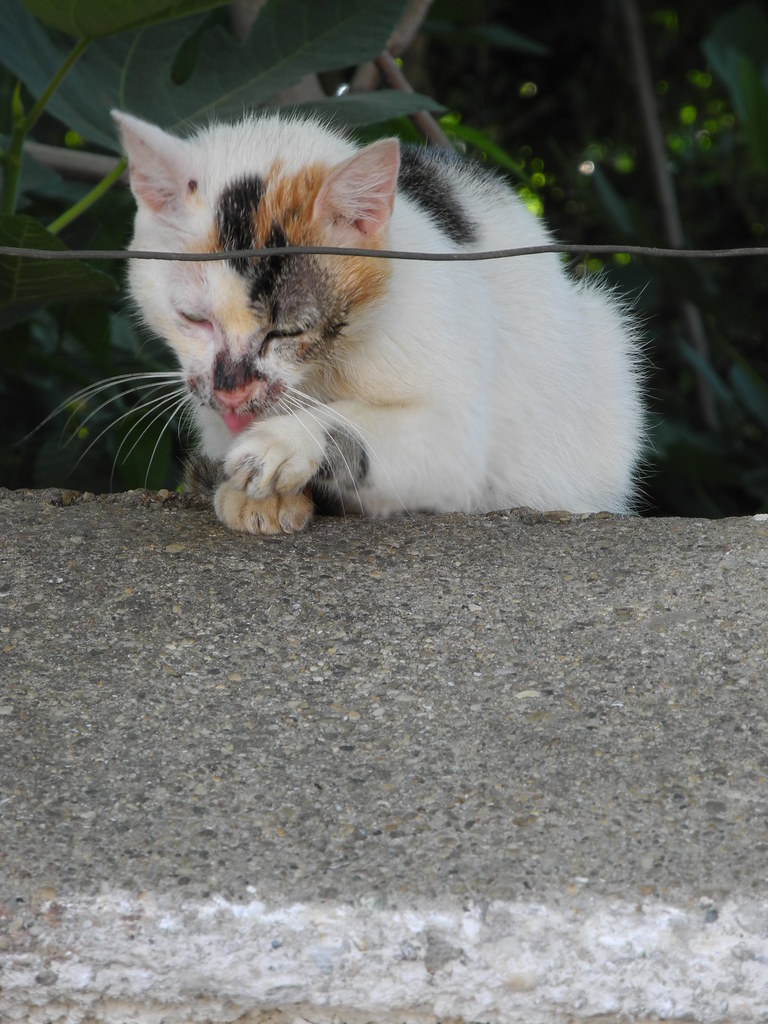
Splantzia. A calico on a wall, at her toilet.Shepard4711, CC BY-SA 2.0 Agia Triada monastery
A drive or bus out to Akrotiri, past the airport, to the monastery among the olives. Small entry; oil and wine for sale; cats in the courtyard, fed by the monks. Quiet, and the right end to the day.
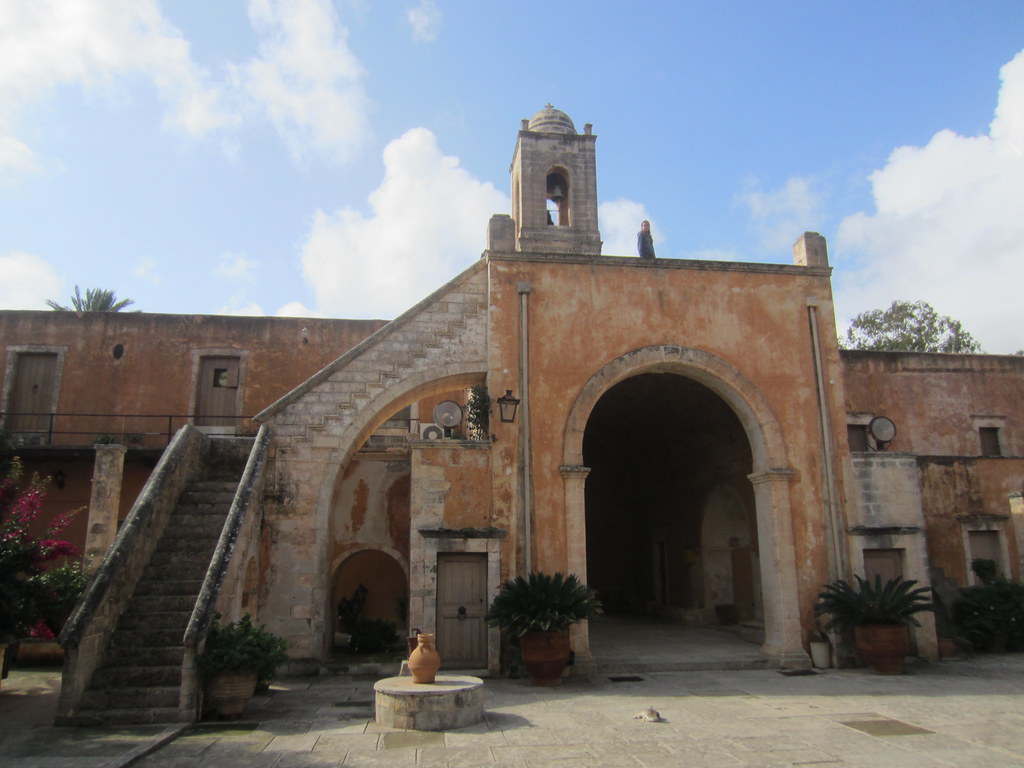
Agia Triada. Olives, wine, and a courtyard colony.Nelo Hotsuma, CC BY 2.0
Same numbers as the list. Worth keeping open on your phone.
The cats you will meet
Cretan harbour cats: short-coated, ginger and calico and black, fed by tavernas and residents, neutered by the local association, and used to a promenade of people every evening. Sociable under the tables, quick on the mole, private in the lanes.
Taverna cats
Under the tables along the harbour.
Fish skin. They know which tables tip.
Mole cats
With the fishermen on the Venetian stone.
Morning only. They go home when the boats do.
Monastery cats
In the courtyard at Agia Triada.
The monks’. Photograph; do not feed.
Everybody says The tavernas keep cats to charm the tourists.
Actually The tavernas feed the cats because the cats are there and a Cretan does not let an animal go hungry. That the tourists like it is a bonus nobody planned.
How not to be the annoying one
- Feed from your plate at a taverna, not from a bag on the quay.
- The mole has no railings. Watch the cat, not your feet, and you are in the harbour.
- The lanes are people’s homes. Photograph the cat, not the doorway.
- The monastery is working. Quiet, modest dress, and buy the oil; it is excellent.
- A cat that walks away has answered. Cretan cats are polite about it.