Neighbourhood Jerusalem, Israel
Cats in The Old City
Four quarters, eight gates, three religions, and a street cat population that the city itself counts in the hundreds of thousands. They are on every step of the souk and every wall of the Via Dolorosa, fed by everyone who disagrees about everything else.
Where to find cats in The Old City: The walled Old City of Jerusalem: the Muslim, Christian, Armenian and Jewish quarters, and the souks between the gates. When: Early morning, before the tour groups, and Friday afternoon when the souk winds down. Spring and autumn; summer is hot and stone holds it. Why here: The densest street cat population of any old city on this site, in the most contested square kilometre on earth.
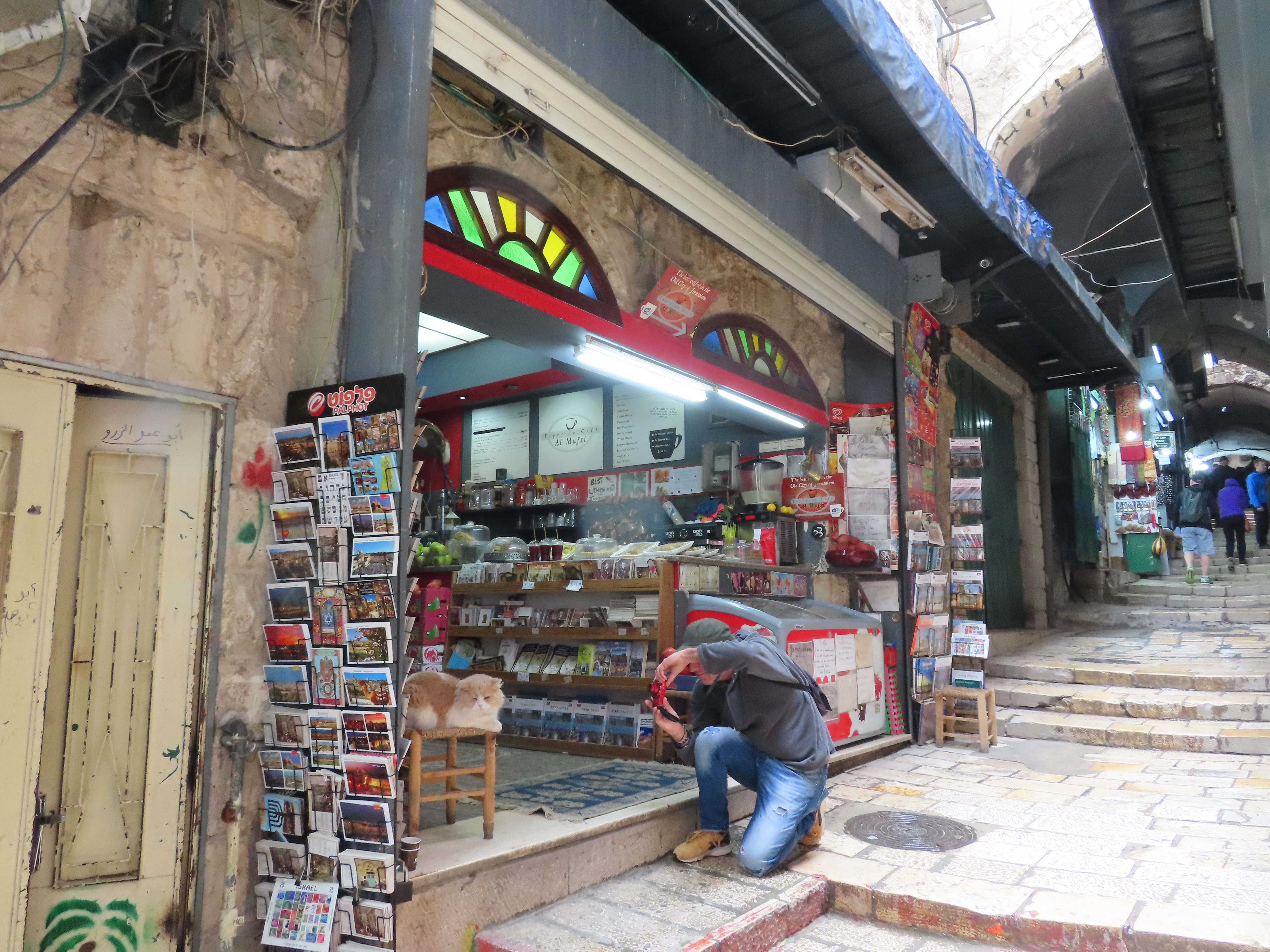
The short version
- Where
- The walled Old City of Jerusalem: the Muslim, Christian, Armenian and Jewish quarters, and the souks between the gates
- When
- Early morning, before the tour groups, and Friday afternoon when the souk winds down. Spring and autumn; summer is hot and stone holds it
- How long
- Half a day for the cats and the souk. A lifetime for the rest
- What it costs
- Free. Cash for tea, hummus and a bag of dry food from a shop inside the walls
- Why here
- The densest street cat population of any old city on this site, in the most contested square kilometre on earth
What to bring
- Seven in the morningThe souk shutters go up, the shopkeepers put the bowls out, and the cats come off the roofs. By ten it is a crowd.
- Dry food, bought insideFeeding is normal here and the bowls are everywhere. Top one up; do not start one on a holy site’s steps.
- Shoes for polished stoneThe lanes are steps and the steps are worn to glass. The cats manage; you may not.
- Modest dress and a low voiceEvery corner is somebody’s sacred place. Shoulders, knees, and quiet, and the cats are the least controversial thing you will see.
Why there are cats everywhere
Jerusalem has more street cats than almost any city in the world, and the Old City is where they are thickest.
The city’s own estimates put its cat population in the hundreds of thousands, which for a city of under a million people is a cat for every few residents. The reasons are the usual ones, mild winters, abundant food waste, a culture of feeding, and one unusual one: the British, during the Mandate, are said to have brought cats in to deal with the rats, and never took them home. Whatever the history, the Old City, a square kilometre of stone lanes, souks, courtyards and roofs, is a cat’s idea of a city.
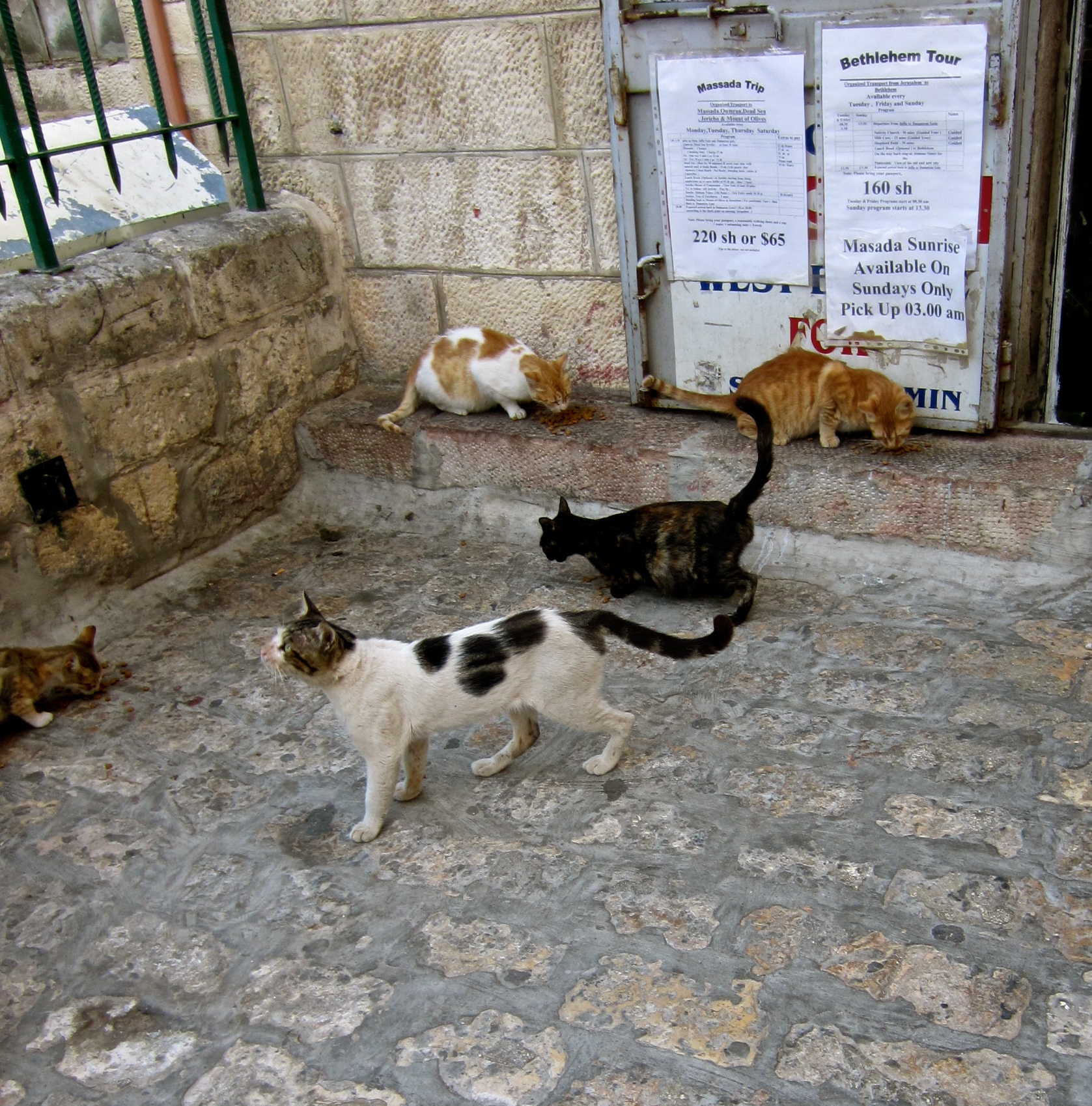
They are everywhere. On the steps of the souk in the Muslim Quarter, where the shopkeepers put bowls out at opening. On the walls of the Via Dolorosa, watching the pilgrims carry crosses. In the courtyards of the Armenian Quarter, in the alleys of the Christian Quarter, on the plaza above the Western Wall, and on every roof, which in the Old City is a connected landscape of its own. Feeding them is one of the few things every community here does the same way.
The municipality has run sterilisation programmes and, at times, funded feeding; the argument about how many cats is too many is a live one in the city. Inside the walls it is simpler. A cat on a step is fed by the shop behind it, and a visitor who tops up the bowl is doing a small, uncontroversial good in a place that has few of them to spare.
The walk
In at Jaffa Gate, through the souk to the Via Dolorosa, out at Damascus Gate, and back round to the Western Wall. Three hours, more with every stop you cannot help making.
- From Ben Gurion airportTrain to Jerusalem Yitzhak Navon, then the light rail60 minFast train, then tram to City Hall or Damascus Gate. The Old City is a short walk.
- From Jerusalem central bus stationLight rail to Damascus Gate15 minThe tram runs along the Old City’s north wall.
- From Anywhere in West JerusalemWalk to Jaffa Gate20 minJaffa Road leads straight to it.
Jaffa Gate
The western gate, by the Citadel. Straight ahead is David Street, the first souk, stepped and covered, with the first cats on the shop steps. Follow it downhill.
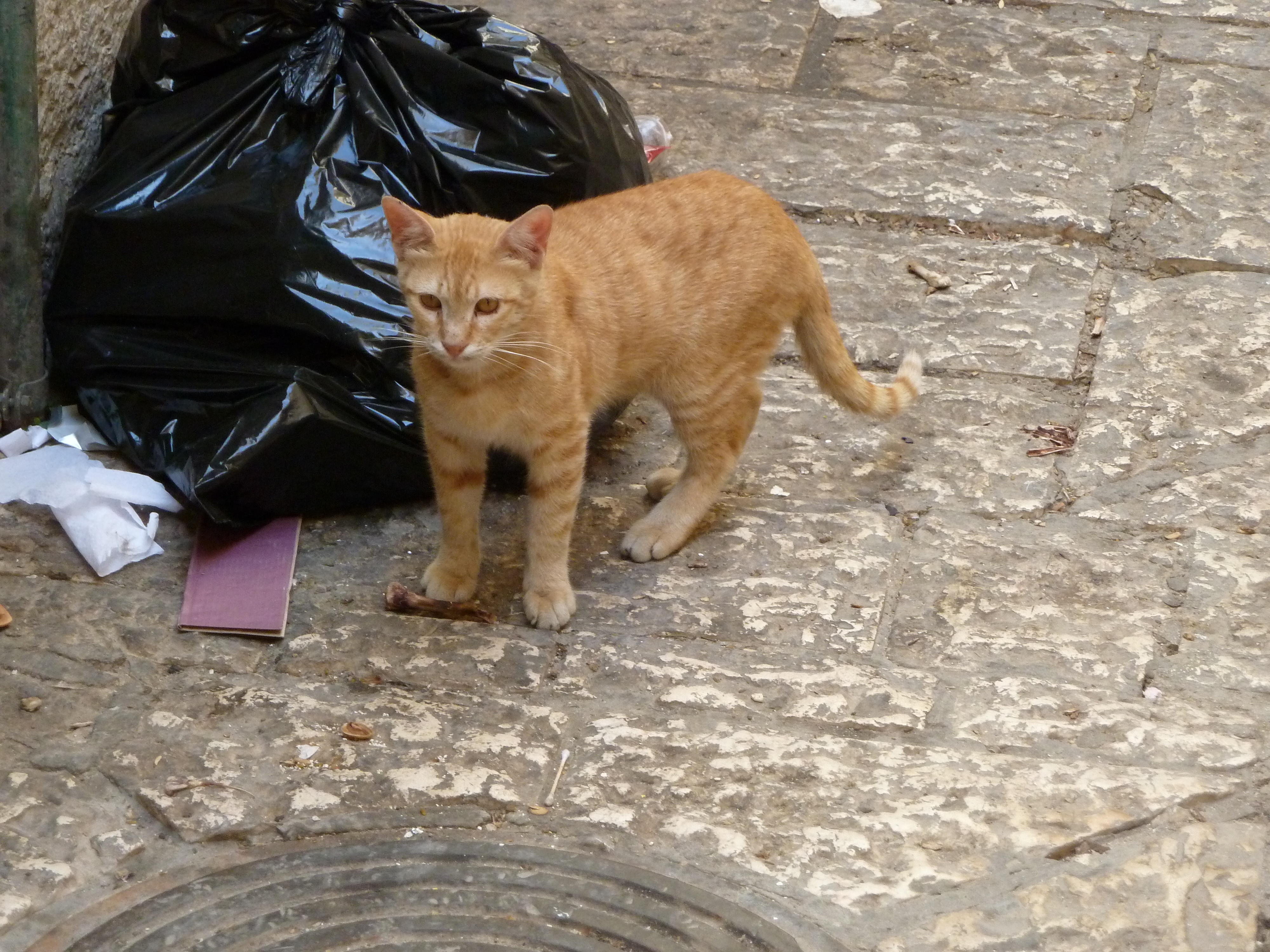
A lane off David Street. Stone, steps, and a cat in the shadow.IPPA photographer, CC BY 4.0 The souk and the Via Dolorosa
Deep in the Muslim Quarter, the covered markets meet the Via Dolorosa, the pilgrim route with its stations. Cats on the walls at every station and under the spice stalls. This is the densest stretch.
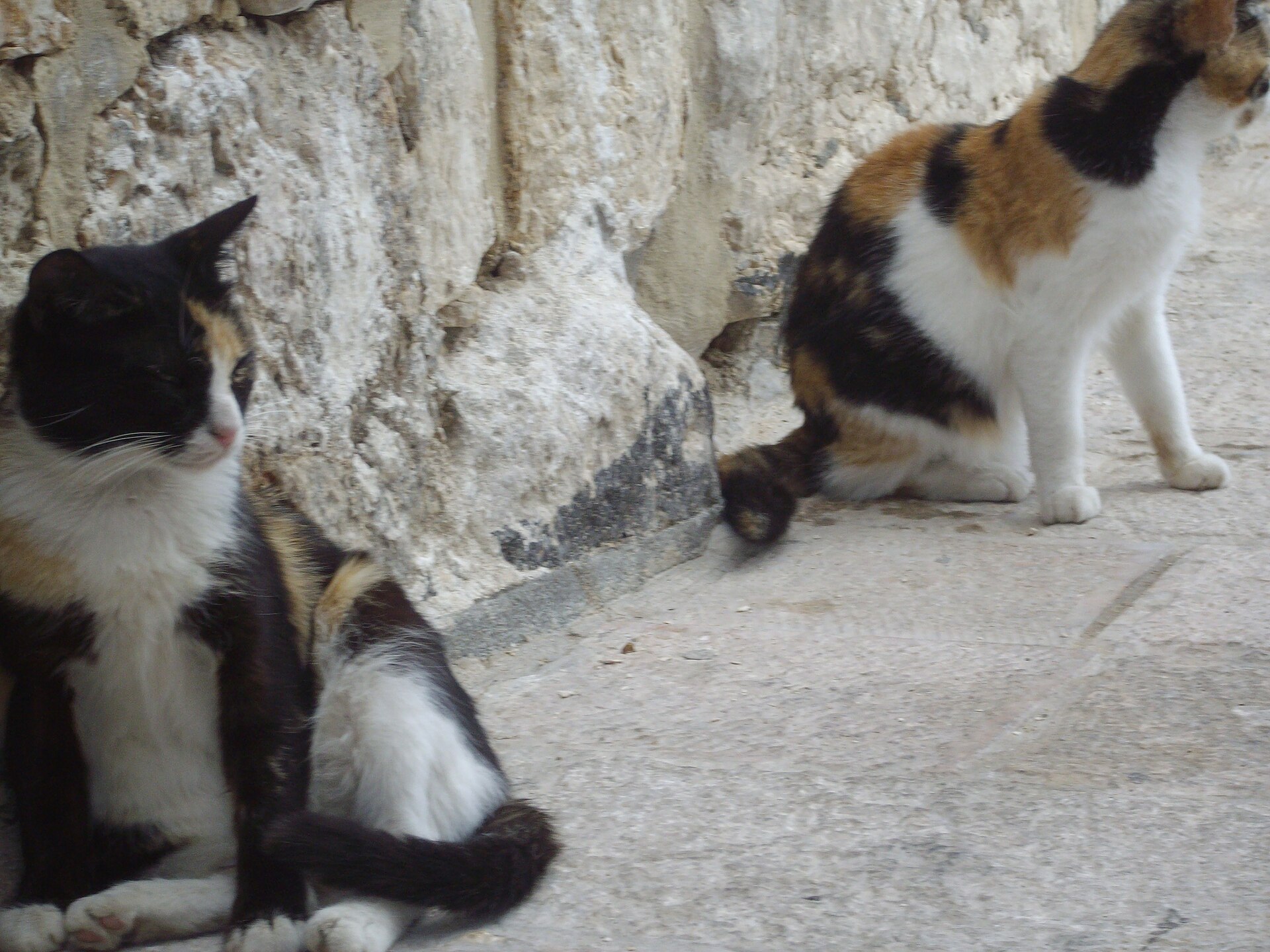
Two calicos on the Via Dolorosa. They have seen every procession.Rudolph.A.furtado, Public domain Damascus Gate
The grandest gate, at the north, with its stepped plaza and the market outside. Cats on the steps inside the gate and in the lanes off it. Sit on the steps with tea and count.
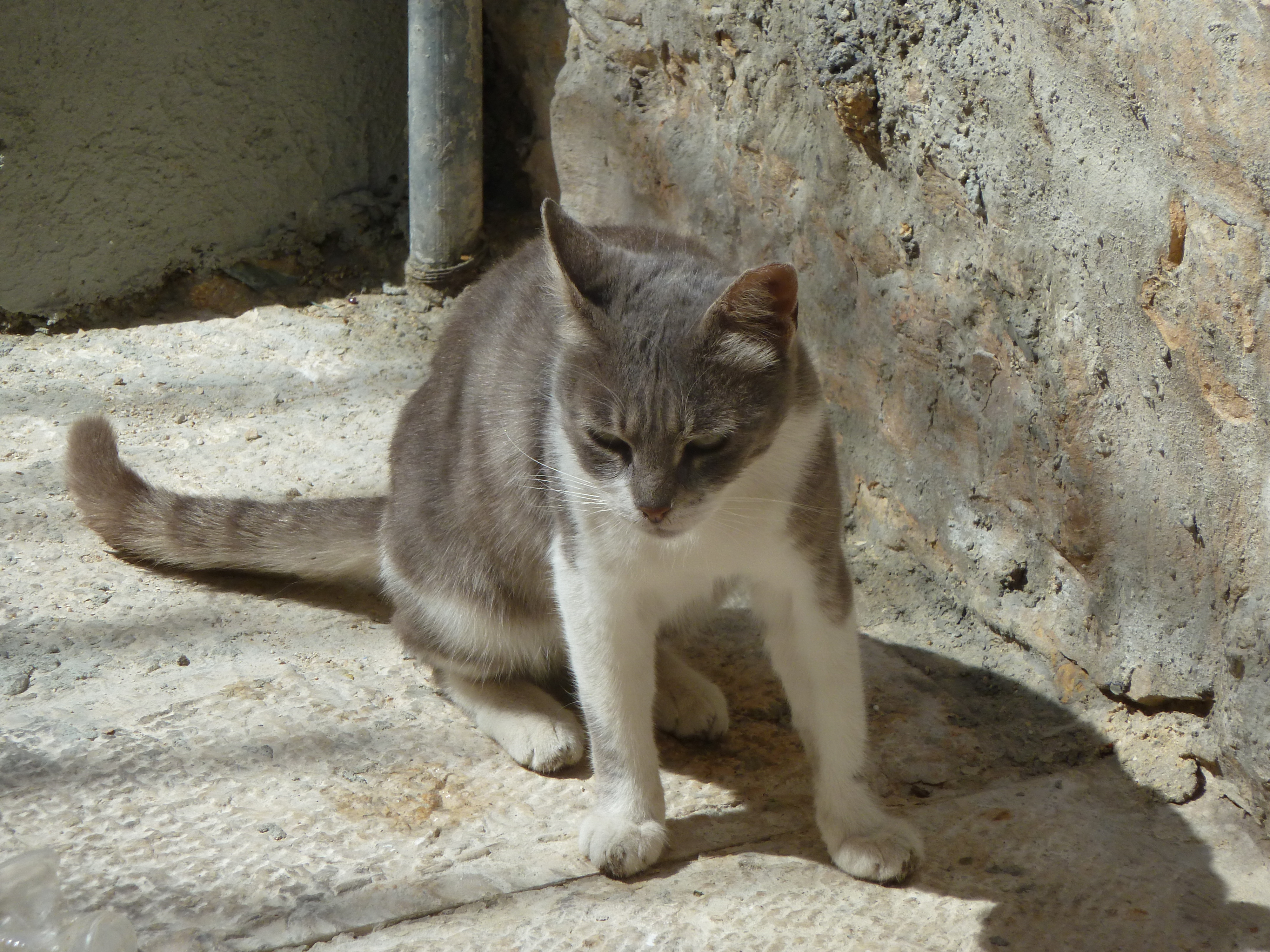
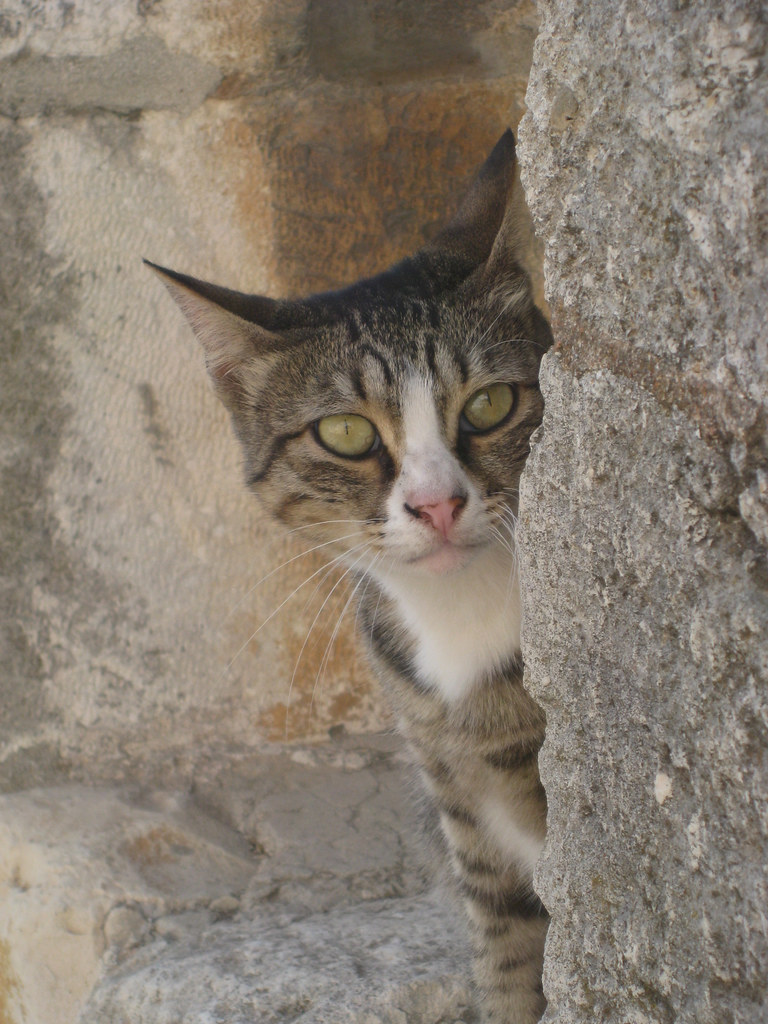
Inside Damascus Gate. Everyone passes; the cat stays.Utilisateur:Djampa, CC BY-SA 4.0 The Western Wall plaza
Through the Jewish Quarter to the plaza above the Wall. Cats on the edges of the plaza and in the excavations. Security at the entrance; modest dress; heads covered at the Wall itself.
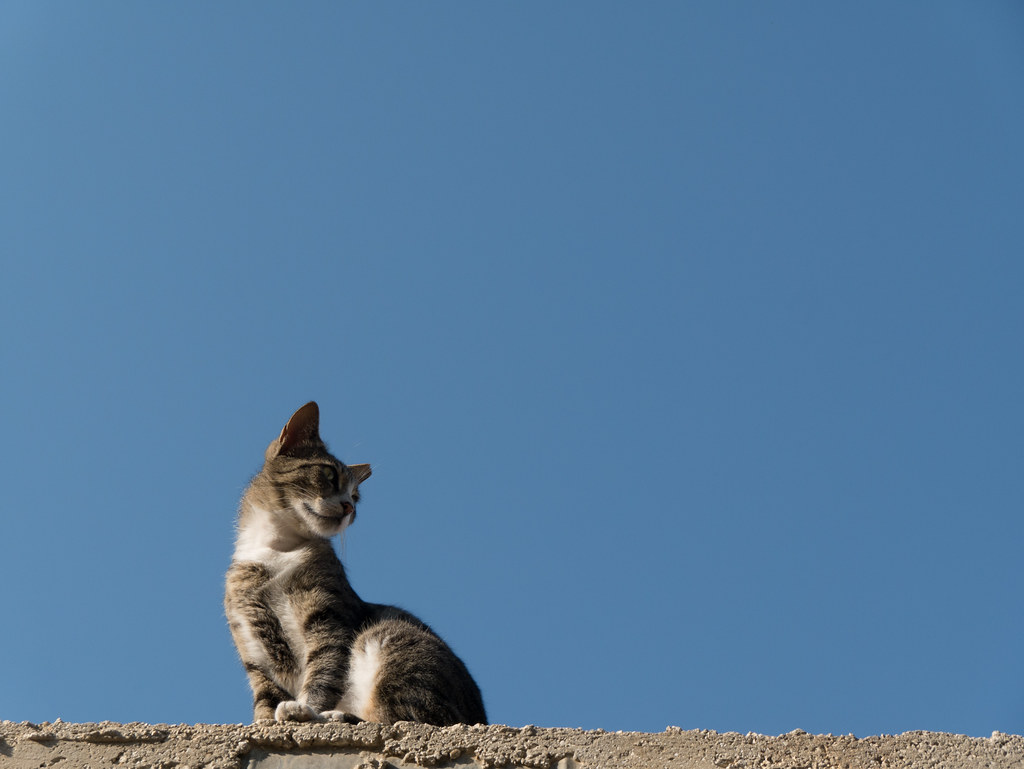
At the edge of the plaza. The oldest wall, and one of its many tenants.GRI SHA, CC BY-SA 2.0
Same numbers as the list. Worth keeping open on your phone.
The cats you will meet
Levantine street cats: short-coated, calico and tabby and ginger, in very large numbers, fed by shopkeepers and residents of every community, and used to more people per square metre than any cats on this site. Sociable at the bowls, fast on the roofs.
Souk cats
On the shop steps under the covered markets.
Fed at opening. The shopkeeper knows which is which.
Roof cats
On the connected rooftops above the quarters.
A city above the city. Watch from the rooftop walks.
Plaza cats
At the edges of the Western Wall plaza.
Quiet, and in a place that asks for quiet.
Everybody says The British brought the cats.
Actually The story is that the Mandate authorities imported cats to deal with rats, and the story is told confidently by people who cannot cite it. Cats have been in Jerusalem as long as grain has. What is true is the number, and that everyone feeds them.
How not to be the annoying one
- Holy sites first. Modest dress, quiet, heads covered where asked, and never a photograph of someone praying.
- Top up a bowl by a shop. Do not put food on the steps of a church, mosque or synagogue.
- Buy the tea, the bread, the hummus from the shop whose cat you photographed.
- The rooftops are people’s roofs. Use the marked rooftop walks only.
- Politics stays outside this page and, ideally, outside your conversation with the shopkeeper.