Neighbourhood Kochi, India
Cats in Fort Kochi
Chinese fishing nets on the beach, a fish market where you buy the catch and a stall cooks it, Portuguese churches, Dutch houses and a spice-warehouse lane in Jew Town. The cats work the fish stalls, and have since the Portuguese.
Where to find cats in Fort Kochi: Fort Kochi and Mattancherry, the old colonial quarter on the peninsula at the mouth of Kochi harbour, in Kerala, India. When: Early morning at the nets and the fish market, and the evening on the beach. October to February; the monsoon is June to September. Why here: Cats at the oldest fish market on the Malabar coast, under nets that came from China six hundred years ago.
The short version
- Where
- Fort Kochi and Mattancherry, the old colonial quarter on the peninsula at the mouth of Kochi harbour, in Kerala, India
- When
- Early morning at the nets and the fish market, and the evening on the beach. October to February; the monsoon is June to September
- How long
- A day for Fort Kochi and Jew Town. It is small and hot and best taken slowly
- What it costs
- Free to walk. The palace and the synagogue have small fees. The fish costs what you agree, and the cooking a little more
- Why here
- Cats at the oldest fish market on the Malabar coast, under nets that came from China six hundred years ago
What to bring
- Seven in the morningThe nets are lowered at dawn, the catch is on the stalls by seven, and the cats are under them. By ten the heat has everyone in the shade.
- Rupees, smallBuy the fish at the market, pay a stall to cook it, tip the man who works the net. The cats get the trimmings from all three.
- A bicycle or an autorickshawFort Kochi to Jew Town is a hot half hour on foot. Rent a bike, or take the tuk-tuk and agree the fare.
- Nothing for the catsThe fish market feeds them better than any bag you could bring.
Why there are cats everywhere
The fishing nets came from China, the churches from Portugal, the houses from Holland, and the cats have been under the fish stalls through all of it.
Fort Kochi is the tip of a peninsula at the mouth of one of the great harbours of the Indian Ocean, and everyone who traded on the Malabar coast left something on it. The Chinese, or so the story goes, left the cantilevered fishing nets on the beach, huge teak and bamboo contraptions lowered into the water by a team of men and a row of stone counterweights. The Portuguese built St Francis church, where Vasco da Gama was buried before they moved him home. The Dutch built the houses and the palace at Mattancherry. The Jewish traders built the synagogue in the spice-warehouse lane the city still calls Jew Town.
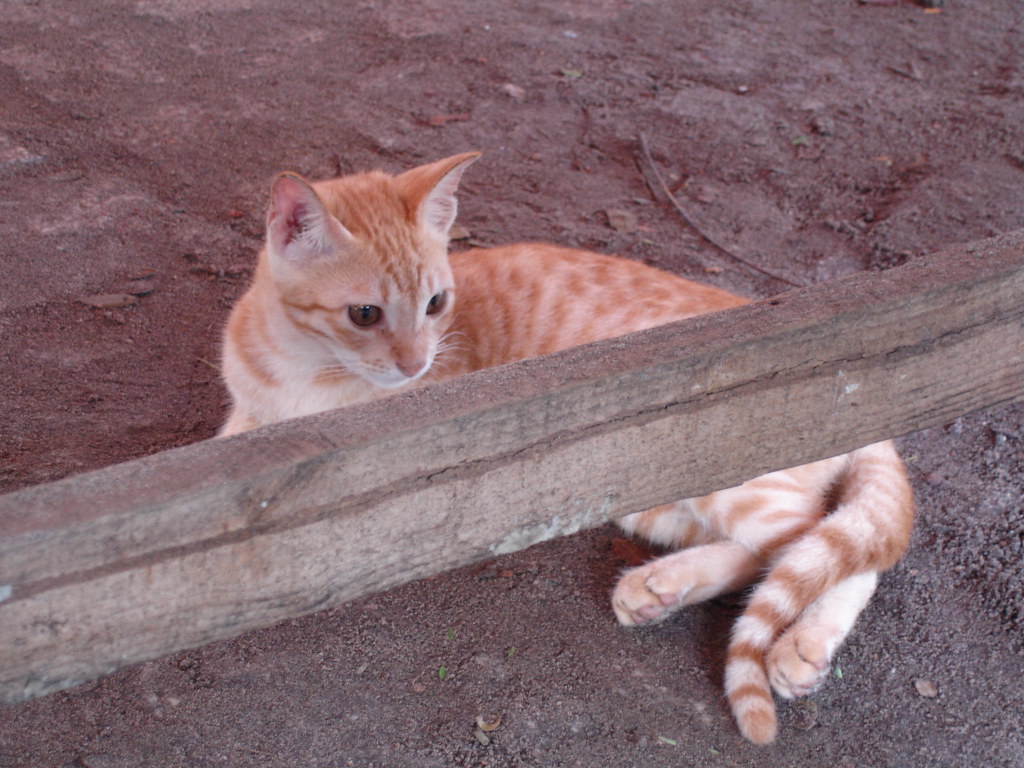
The cats are at the nets. Next to them on the beach is the fish market, a row of stalls where the morning’s catch is laid out, and beside those a row of shacks where, for a fee, they will cook what you have just bought. That arrangement, you buy, we cook, produces a great deal of trimming, and the cats of Fort Kochi have organised their lives around it. The kitten in the photograph at the top of this page is at one of those stalls, and is doing well.
Kerala is a gentle place for animals by Indian standards, and the cats here are fed by the fishermen, the stall holders and the homestays, and are calm about people in the way of cats that have always had enough. Walk the beach at dawn for the nets, eat the fish, and take a bike down the coast road to Mattancherry for the spice warehouses and the synagogue. The cats are on the warehouse steps too, where the ginger is drying.
The walk
The nets and the fish market at dawn, the beach, the church, then a bike or a tuk-tuk to Mattancherry for the palace and Jew Town. A day, slowly.
- From Kochi airportTaxi to Fort Kochi90 minThe airport is far out. Book a prepaid taxi; the road is slow.
- From Ernakulam, the mainland cityFerry to Fort Kochi20 minThe public ferry from the Ernakulam jetty is the right way to arrive and costs almost nothing.
- From Ernakulam Junction railway stationAutorickshaw to the jetty, then the ferry40 minTrains from across Kerala arrive here. The ferry is the last leg.
The Chinese fishing nets
On the beach at the tip of the peninsula, the row of cantilevered nets lowered into the water at dawn. The fish market is beside them and the cats are under it. Watch a net go down, then walk the stalls.
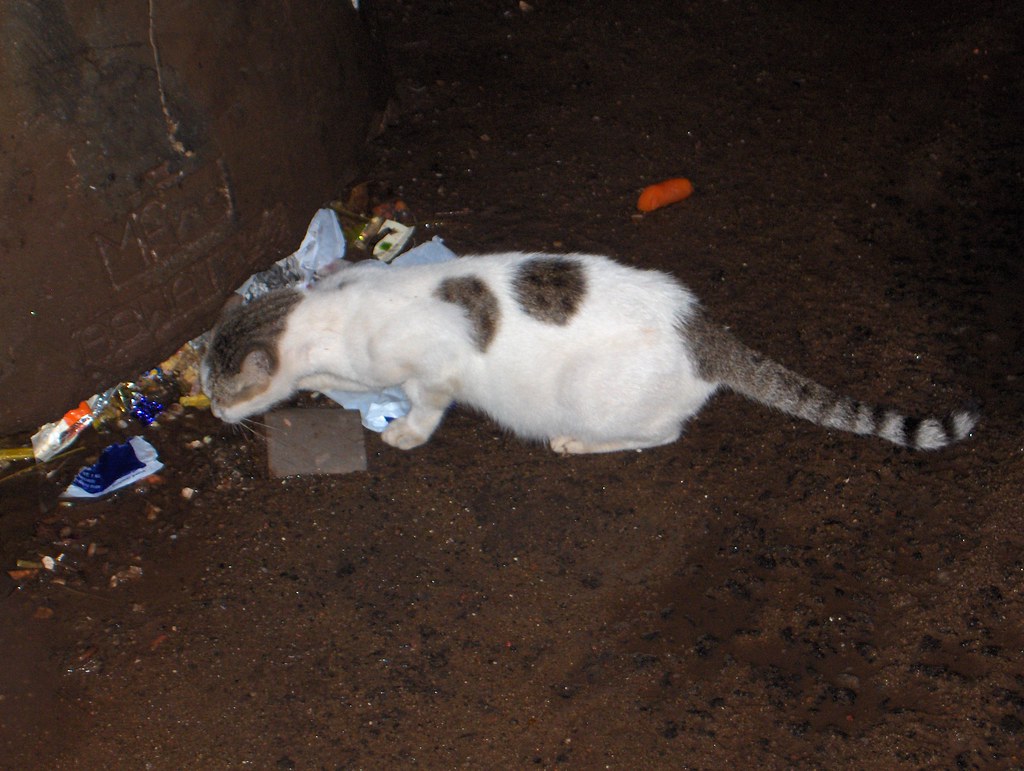
By the nets, at the market, at the right time of day.C+H, CC BY-SA 2.0 Fort Kochi beach
The beach along the front, with the sea wall and the ships going into the harbour. Cats on the wall and in the shade of the trees. The evening is the promenade; the morning is theirs.
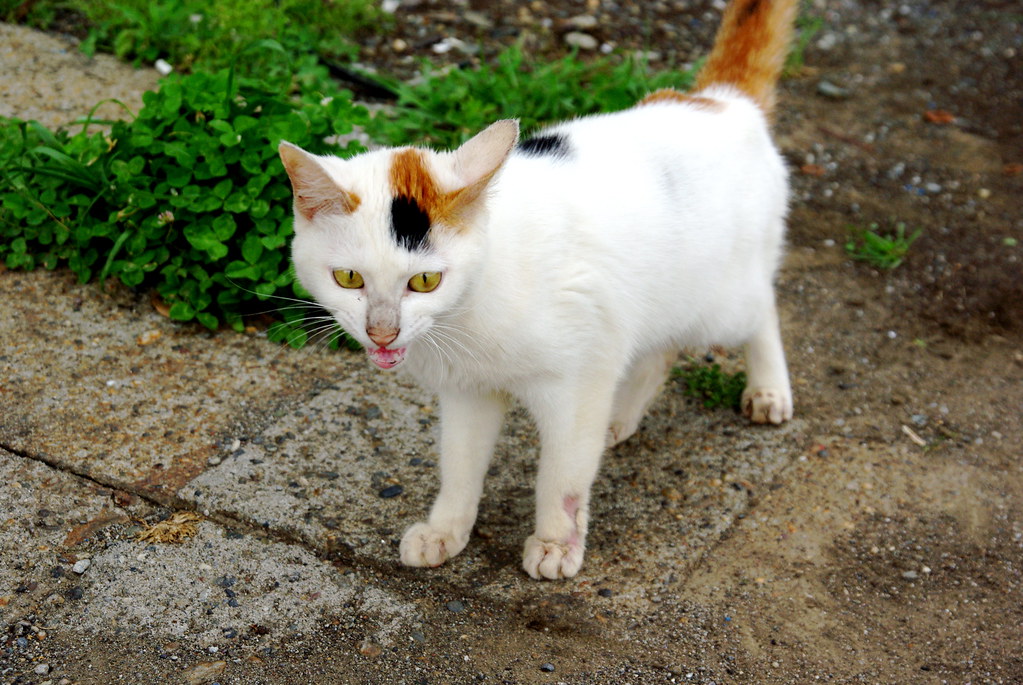
On the front. Ships to the harbour, cat on the wall.pelican, CC BY-SA 2.0 Mattancherry Palace
Down the coast road to the Dutch Palace, built by the Portuguese and repaired by the Dutch, with the Kerala murals inside. Small fee. Cats in the grounds and on the steps of the temple beside it.
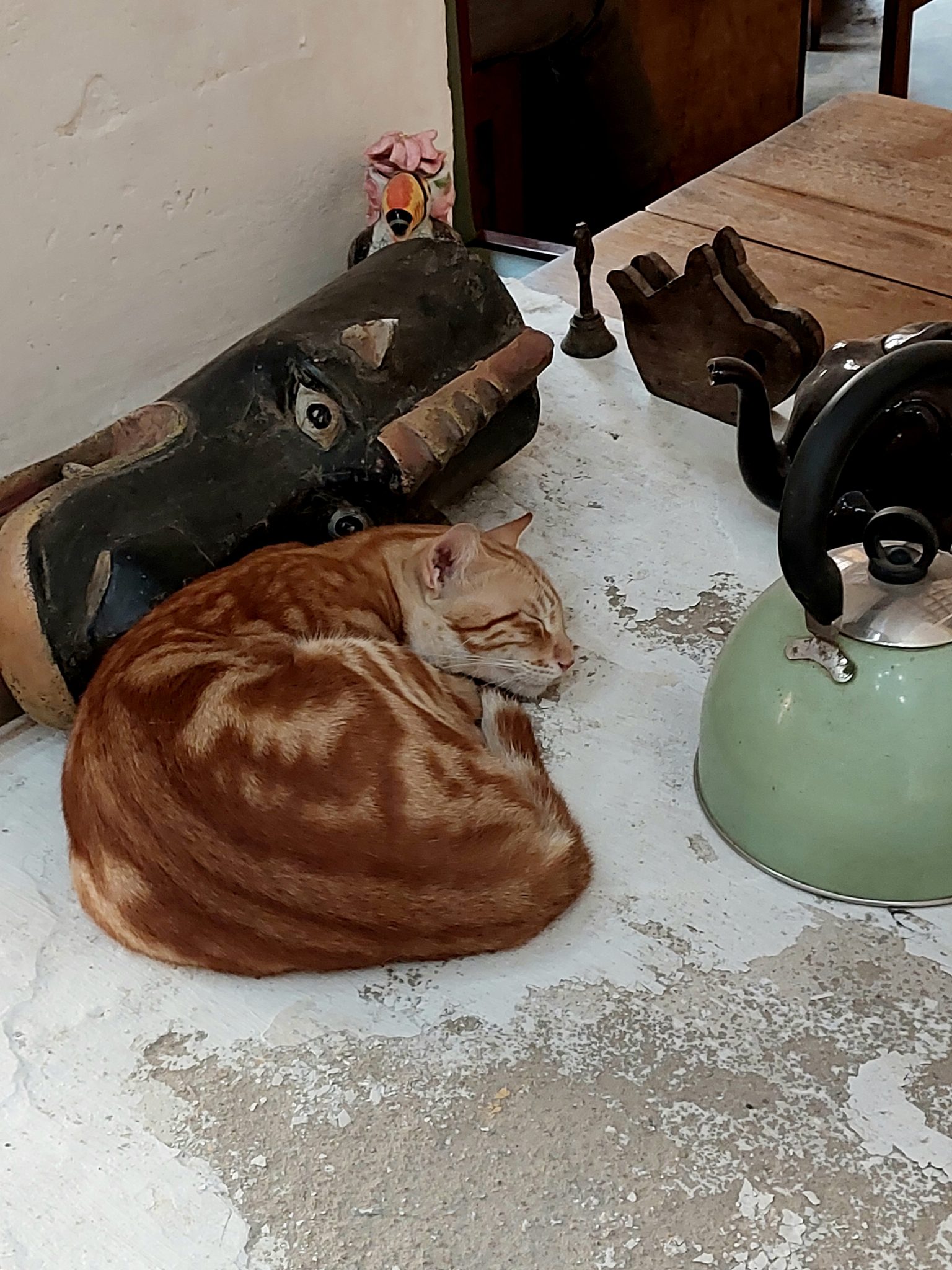
Asleep against an old wall, of which Fort Kochi has a great many.Bigul Malayi, CC0 1.0 Jew Town
The lane of spice warehouses and antique shops leading to the Paradesi synagogue, the oldest in the Commonwealth. Ginger drying on the warehouse floors, and cats on the steps. Shoes off at the synagogue; small fee.
Jew Town. Spice on the floors, cats on the steps.C+H, CC BY-SA 2.0
Same numbers as the list. Worth keeping open on your phone.
The cats you will meet
Malabar coast cats: small, short-coated, tabby and white and ginger, with the kinked tails of the region, fed on fish trimmings and homestay scraps, and calm in the way of cats in a gentle state. Sociable at the stalls, asleep against old walls the rest of the day.
Fish market cats
Under the stalls by the nets.
Morning shift. The stall holders know them.
Homestay cats
On the verandas of the old houses.
The guest houses feed them. Sit on the veranda and one arrives.
Warehouse cats
On the steps of the spice warehouses in Jew Town.
On the ginger. Do not disturb the drying.
Everybody says Indian street cats are wild and unwelcome.
Actually Kerala is gentler than most of the country, and Fort Kochi, with its fish market and its homestays, feeds its cats well. They are calm, approachable, and better off than most of the cats on this site.
How not to be the annoying one
- Buy the fish from the market and let the stall cook it. That is the economy the cats live in.
- Do not feed at the nets. The fishermen do, and the crows are faster than you.
- The synagogue and the churches ask for covered shoulders and, at the synagogue, shoes off.
- Agree the tuk-tuk fare before you get in. The driver will suggest a spice shop; you may decline.
- The homestay cat is the homestay’s. Enjoy the veranda together.