Sanctuary Rome, Italy
Cats in Torre Argentina
A colony of about 130 cats living in the sunken ruins where Julius Caesar was killed, fed by volunteers, open to visitors six days a week, and closed on Mondays.
Where to find cats in Torre Argentina: Largo di Torre Argentina, in the middle of Rome, between the Pantheon and Campo de’ Fiori. When: Tuesday to Sunday, noon to half past four. Closed Mondays. Any hour for the ruins from the rail. Why here: It is the only place in the world you can watch cats sleep on the spot where Caesar died.
The short version
- Where
- Largo di Torre Argentina, in the middle of Rome, between the Pantheon and Campo de’ Fiori
- When
- Tuesday to Sunday, noon to half past four. Closed Mondays. Any hour for the ruins from the rail
- How long
- Half an hour at the rail, an hour if you go down to the shelter
- What it costs
- Free. The shelter runs on what visitors leave in the box
- Why here
- It is the only place in the world you can watch cats sleep on the spot where Caesar died
What to bring
- A few eurosThe colony gets no public money at all. The donation box at the shelter is how the vet gets paid.
- A Tuesday to SundayThe shelter is shut on Mondays. The cats are visible from the street regardless.
- Nothing to feed themIt is forbidden to leave food in the archaeological area, and the sign says so in two languages.
- An open mind about adoptionThey rehome cats abroad, with paperwork. People have flown home with one.
Why there are cats everywhere
Caesar was stabbed here, in 44 BC, and the cats have had the place since 1929.
Largo di Torre Argentina is a square with a hole in it. In the 1920s Mussolini’s planners knocked down a block of medieval Rome and found four Republican temples underneath, and the remains of the Curia of Pompey, the meeting hall where the Senate was sitting the day Julius Caesar was killed. The excavation was left open, several metres below street level, and Rome’s cats moved in almost immediately. They have been there ever since.
For decades the gattare, the cat ladies of Rome, fed them over the railings. In the 1990s two of them, Lia Dequel and Silvia Viviani, organised it: a shelter in the vaults under the pavement at the corner, a vet, a sterilisation programme, and a register. Today the association looks after around 130 cats on the site, all of them neutered, vaccinated and ear-marked, and a lot of them elderly, three-legged, one-eyed or blind. This is where Rome’s cats go when nobody else will take them.
None of it is funded by the city or the state. The shelter has fought off eviction more than once, most recently when the archaeologists wanted the space back, and won each time because Rome’s cats are protected by law and because a very large number of people wrote letters. It runs on donations, a small shop, and volunteers who clean cages and feed cats every day of the year.
Since 2023 you can also walk through the ruins themselves on a raised path, with a ticket. The cats did not consent to this and mostly ignore it.
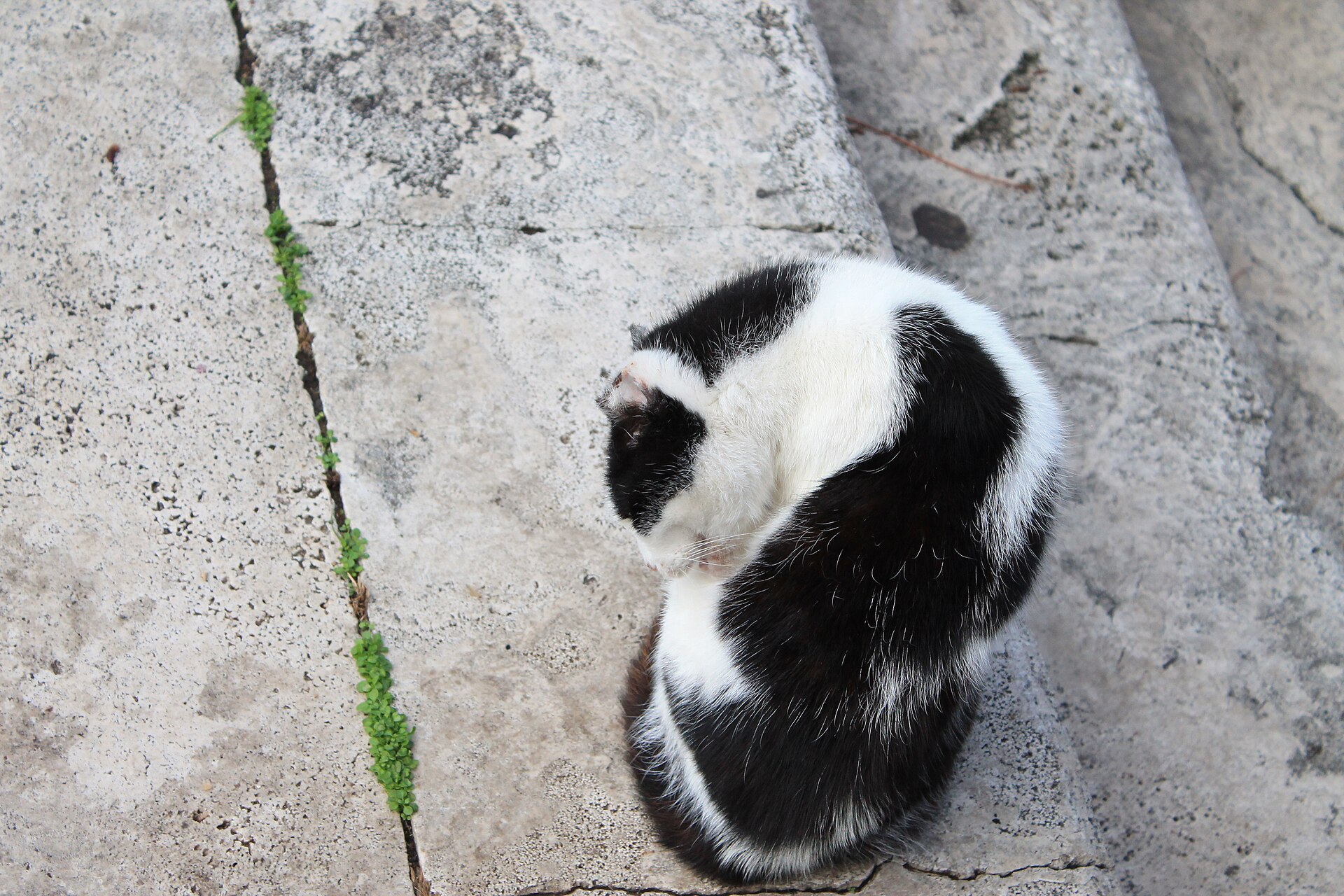
The walk
It is a square, not a walk, so this is a lap of it: the rail, the corner, the stairs, the shelter, and back up into the traffic. Half an hour, or as long as the cats hold you.
- From The PantheonWalk south down Via di Torre Argentina5 minYou cannot miss it. The square is a hole with a fence round it and buses on three sides.
- From Campo de’ FioriWalk east along Via dei Giubbonari5 minDo the market first and end here; the cats are out from late morning.
- From TerminiBus 40 or 64 to Largo Argentina20 minBoth routes stop on the square. Hold your bag; they are also the routes pickpockets prefer.
The railing
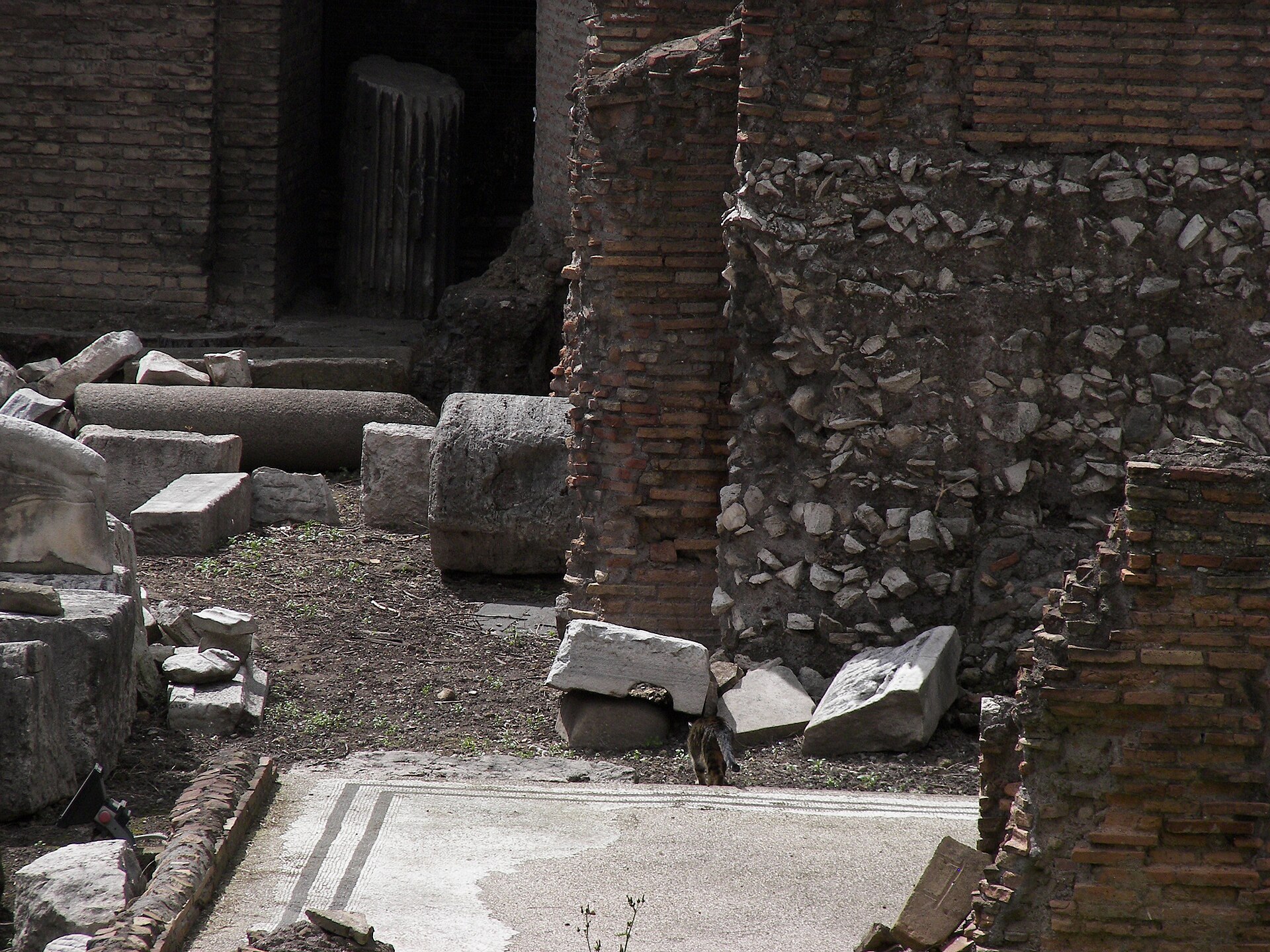
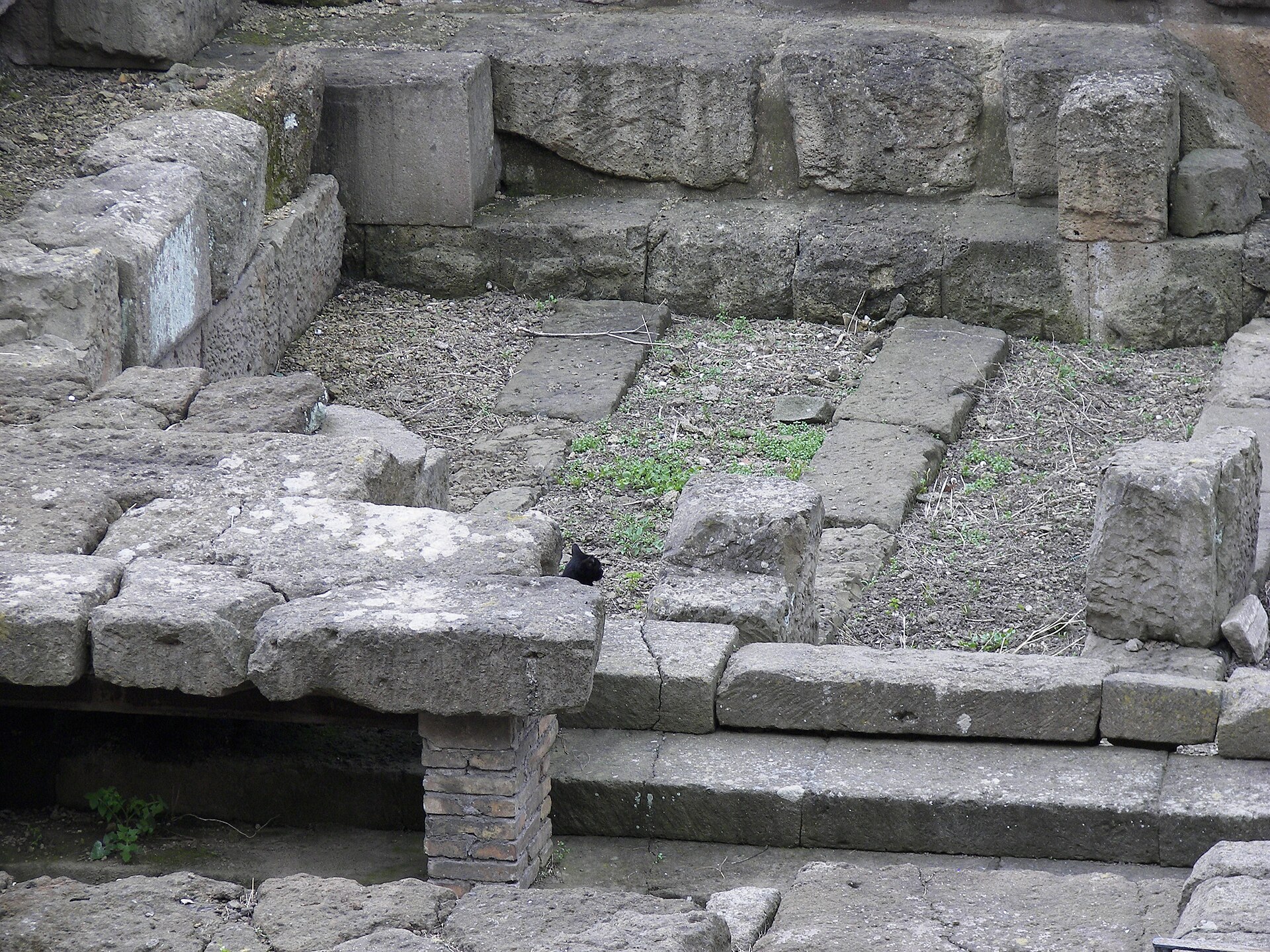
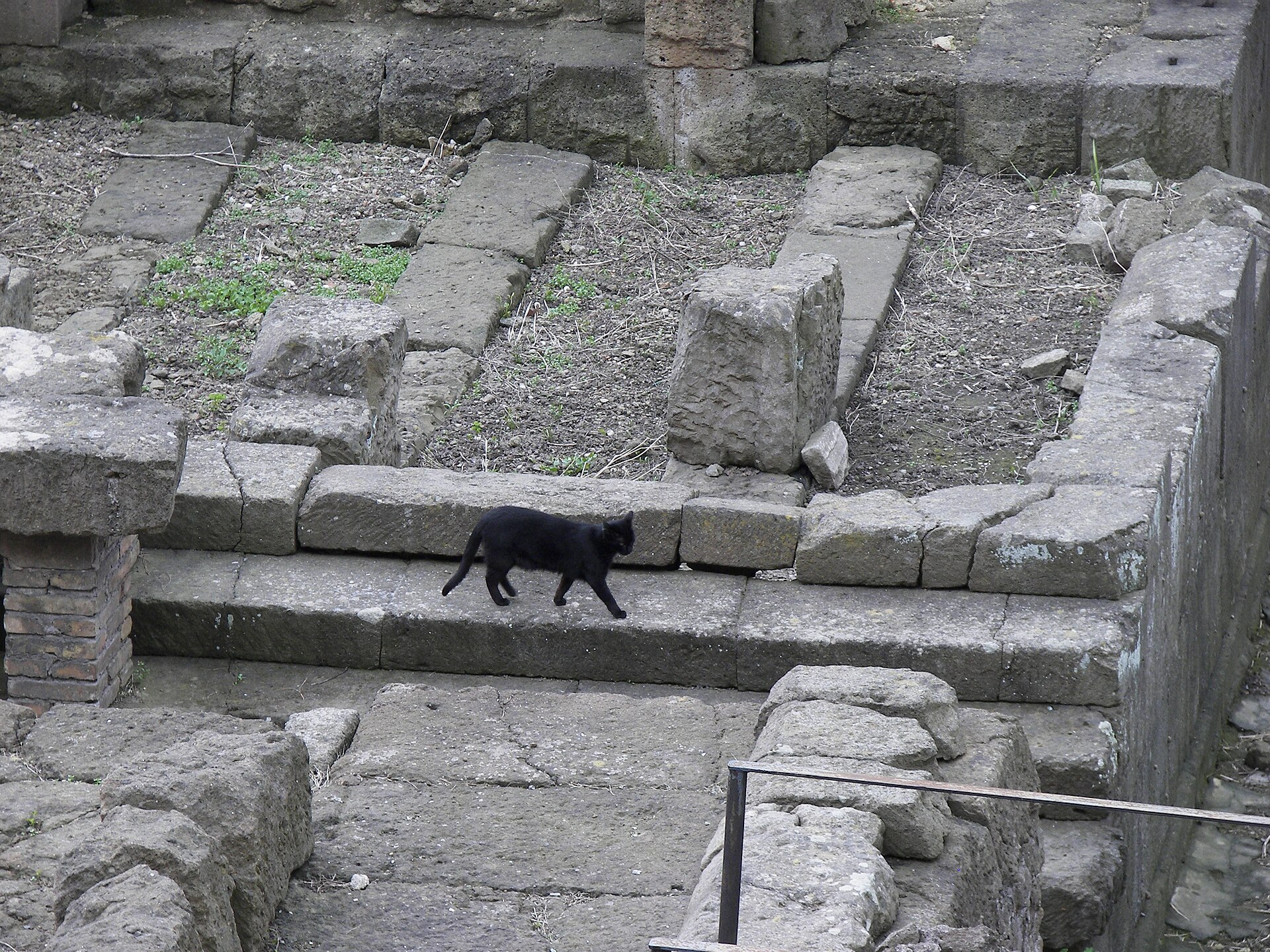
Any side of the square. Lean on it and look down. The cats are on the temple steps, in the grass, on the column bases, and in the sun. This part costs nothing and is open at every hour. The morning light comes from the Via Arenula side.
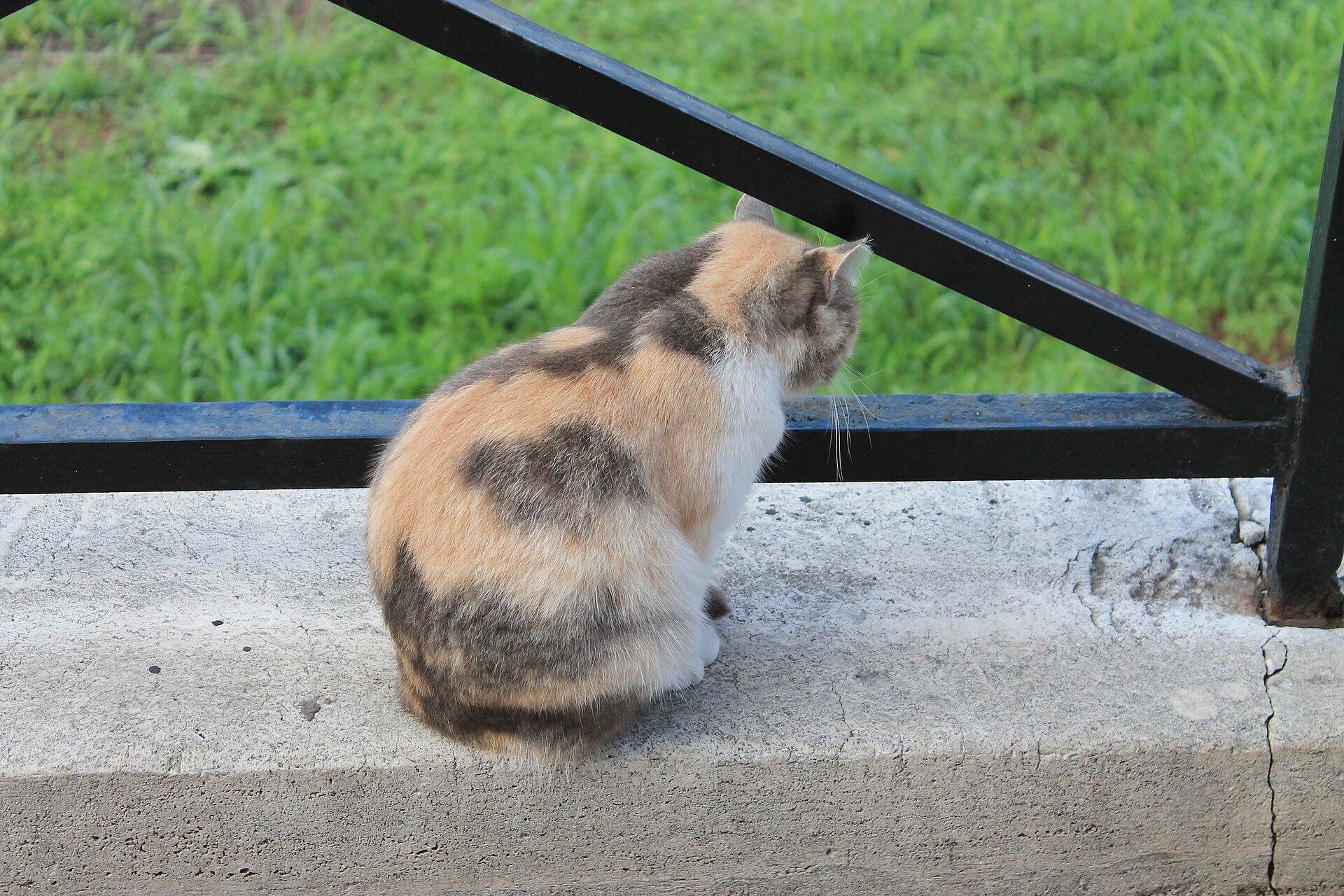
From the rail. This is the free bit, and most people never go further.John Samuel, CC BY-SA 4.0 The corner of Via Florida
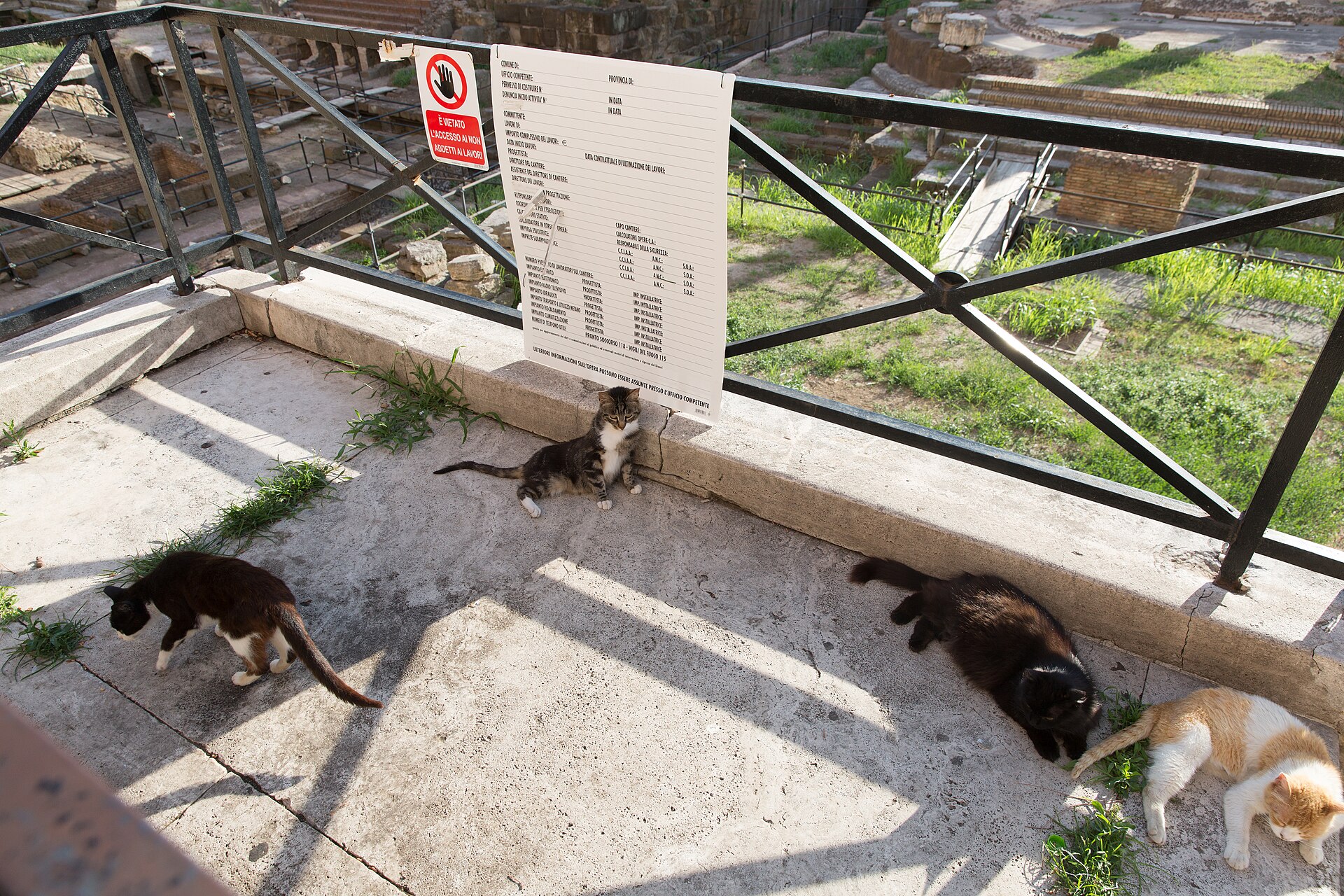
The south-west corner, where Via Arenula meets Via Florida. The sign on the railing explains the rules and points you to the iron stairs. Read it: the whole etiquette section of this page is on it.
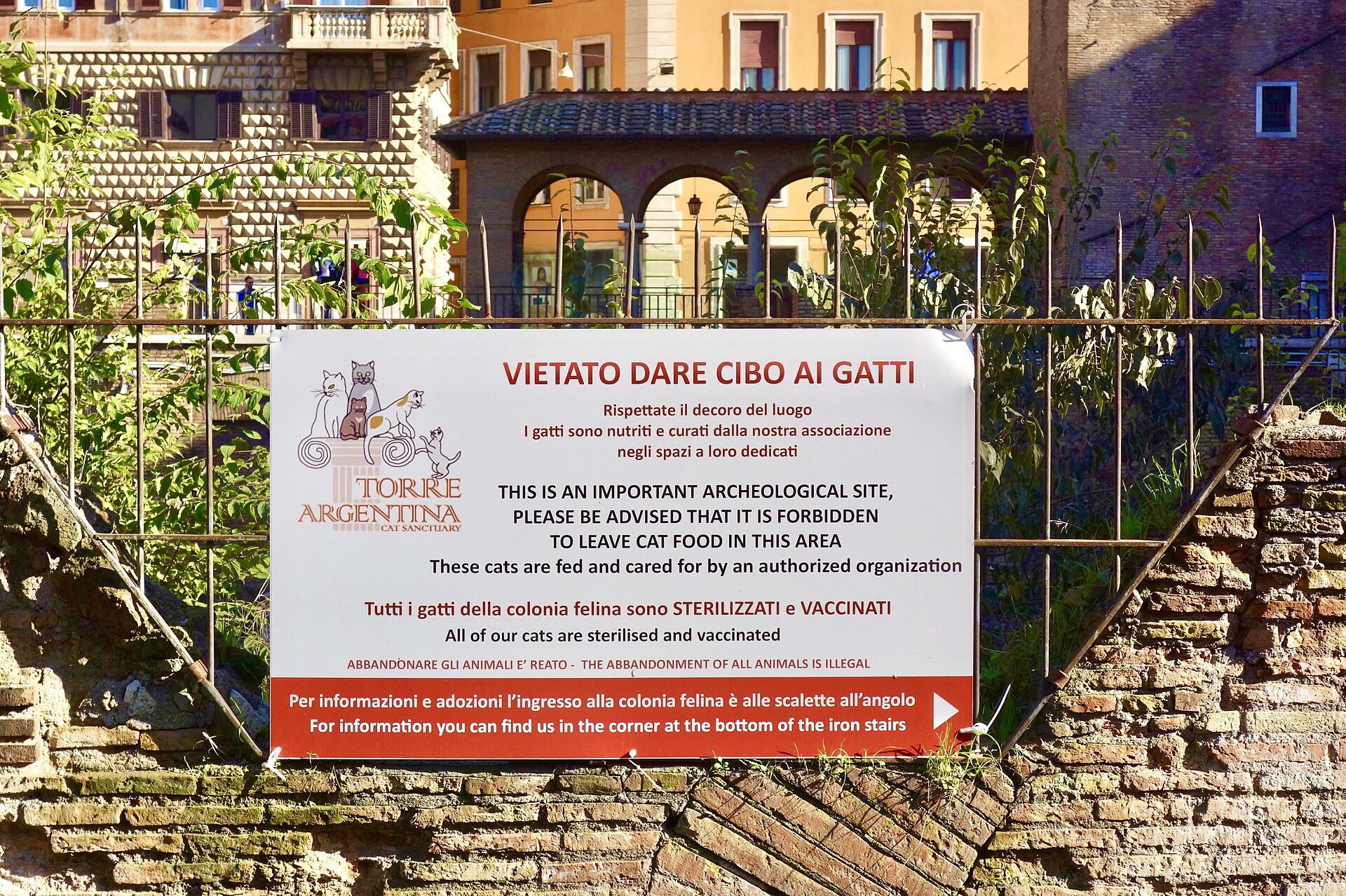
The sign. Everything you need to know, in two languages, on a fence.Sonse, CC BY 2.0 Down the iron stairs
A short flight of metal steps at the corner goes down to street-below-street level and the door of the shelter, in the vaults under the pavement. Tuesday to Sunday, noon to half past four.
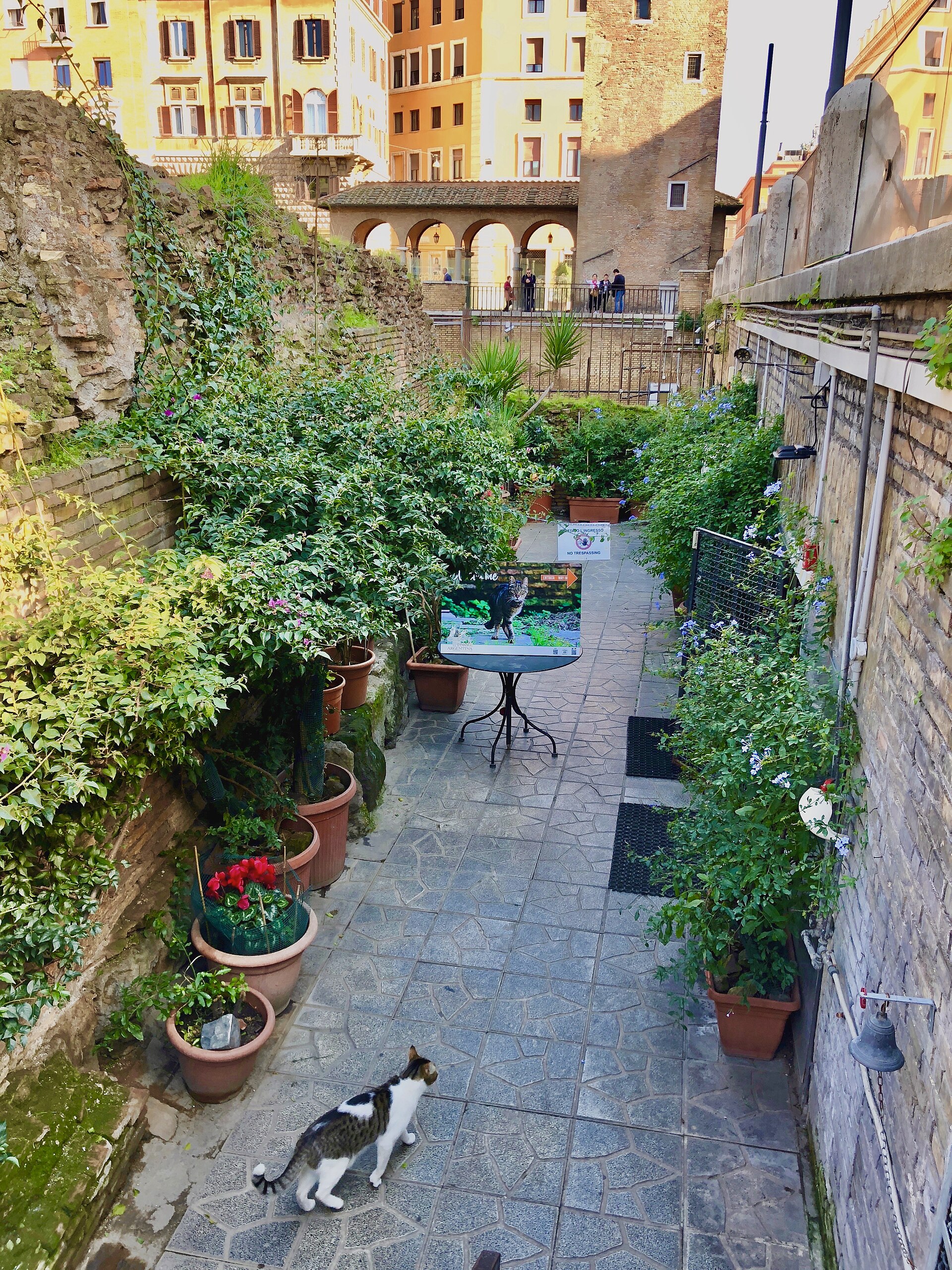
The door. Ring, or just go in during hours.Sonse, CC BY 2.0 The shelter
A few low rooms full of cats who cannot live outside: the blind, the very old, the ones on medication. Volunteers will tell you every name. There is a donation box and a small shop of cat things, and this is where you ask about adopting.
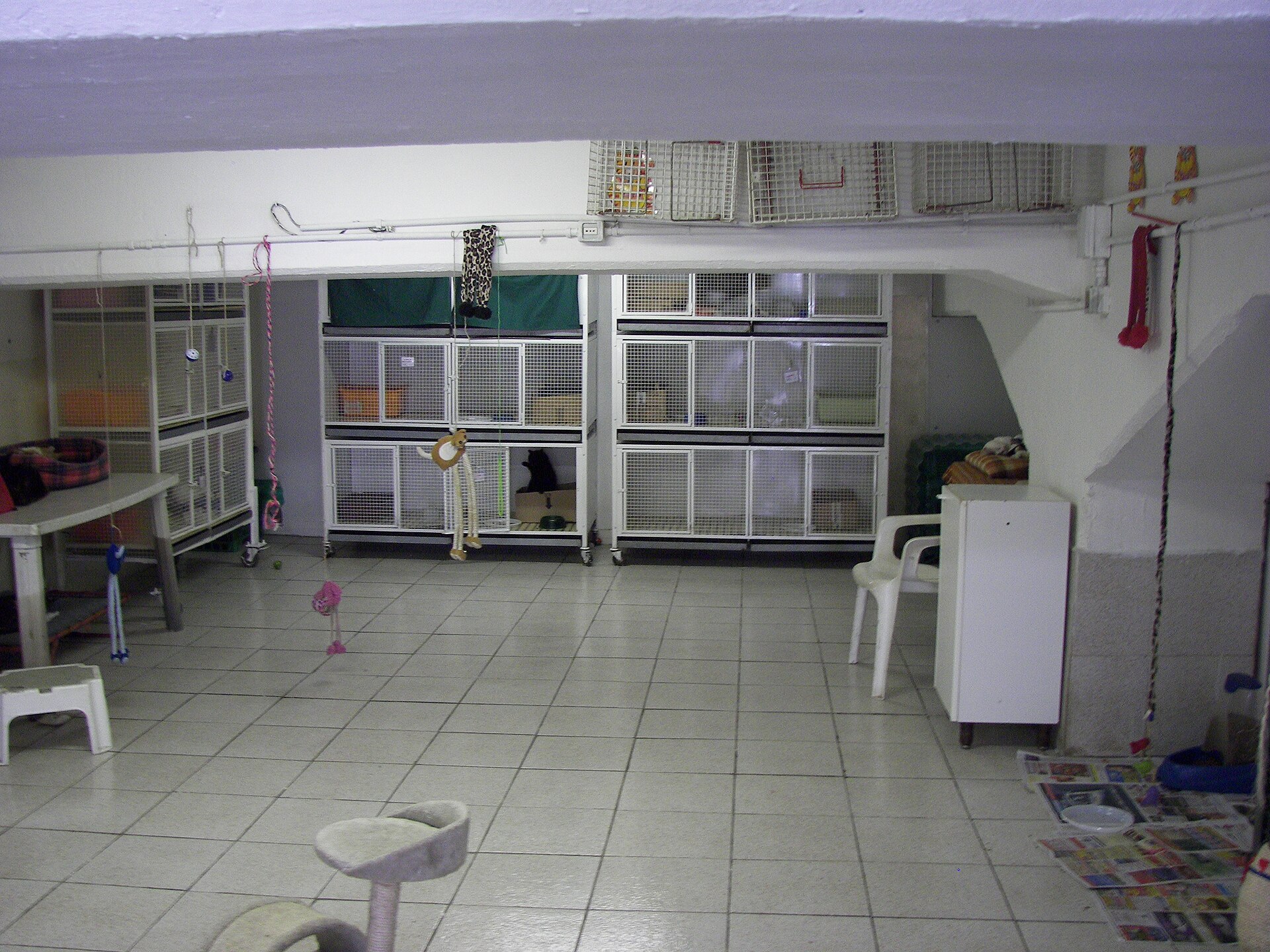
The vaults. Where the ones who cannot manage the ruins live.Wknight94, CC BY-SA 3.0
Same numbers as the list. Worth keeping open on your phone.
The cats you will meet
Around 130, and not a random sample of Rome’s cats: these are the ones nobody else could keep. Old, three-legged, one-eyed, blind, diabetic, on pills. All sterilised, all vaccinated, all with a name and a file. They are used to being watched from above and mostly do not care.
The ruins cats
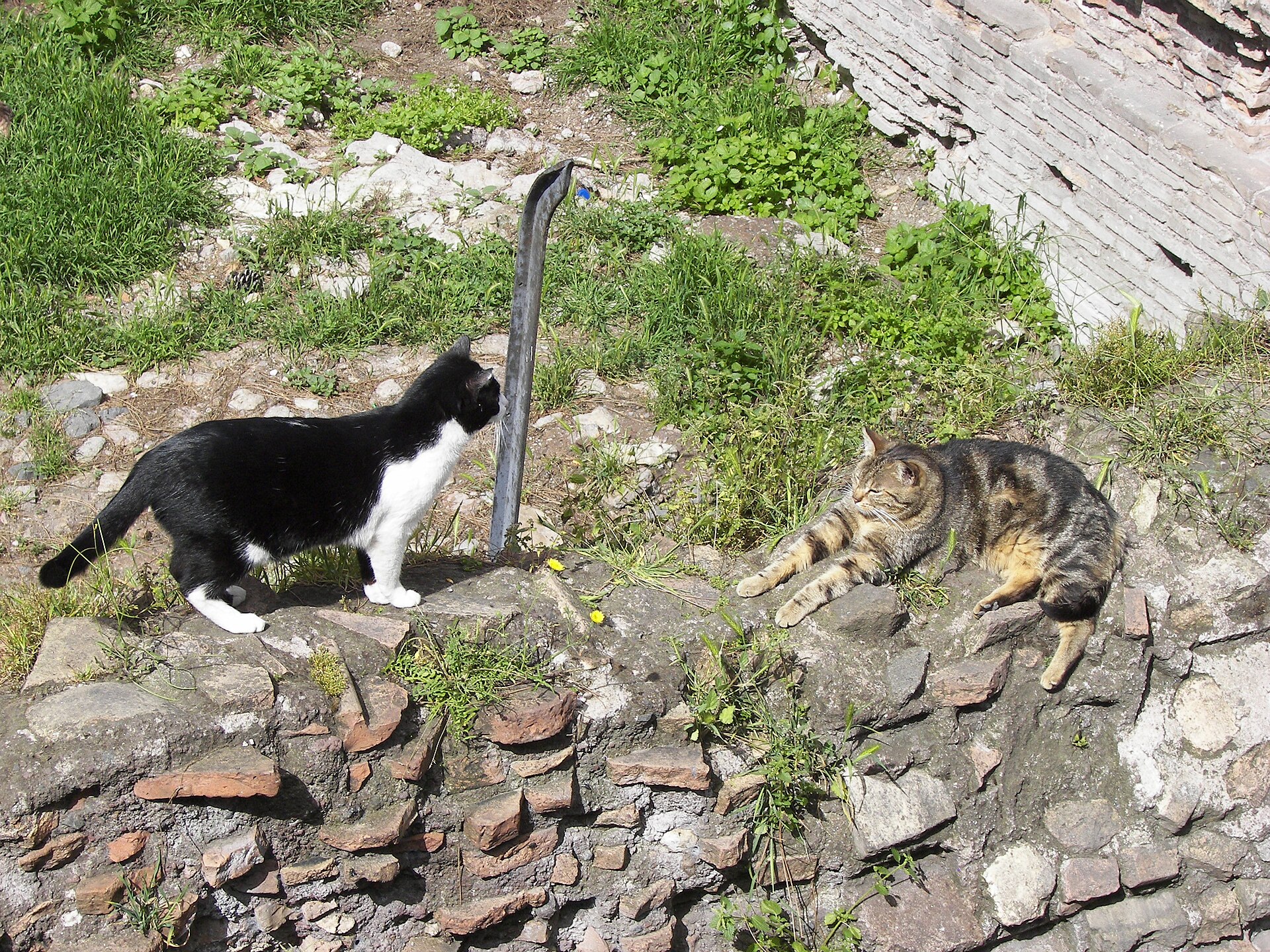
Any colour, every age, most with a clipped ear tip.
The able-bodied residents, out on the temple steps in the sun. The ear notch means neutered and registered.
The shelter cats
Older, slower, some blind, some missing a leg.
Indoors in the vaults. These are the ones the volunteers will introduce you to by name.
The adoptables
Younger, sociable, waiting.
The association rehomes cats, including abroad, with the paperwork done. Ask.
Everybody says It is a wild colony of street cats living in ruins.
Actually It is a managed sanctuary that happens to be in ruins. Every cat is counted, neutered, vaccinated and known by name, and most arrived because they were dumped, injured or too old for the street. The wildness is the setting, not the animals.
How not to be the annoying one
- Do not leave food. It is forbidden in the archaeological area and it says so on the fence. The cats are fed properly, twice a day, by people who know which of them are on a diet.
- Do not climb in. The rail is the rail. The ruins are a protected site and the drop is a real drop.
- The shelter is shut on Mondays. Do not knock on a Monday.
- Put something in the box. There is no other money. A euro from everybody who leans on that rail would fund the vet for a year.
- If you want a cat, ask. They will talk you through it seriously, and they have sent cats to several countries.