Neighbourhood Istanbul, Türkiye
Cats in Balat and Fener
The old Greek and Jewish quarters on the Golden Horn, all coloured houses, steep steps and washing lines, with a cat on every one of the steps. The neighbourhood the cat film was made in, and still the best place in the city to walk with them.
Where to find cats in Balat and Fener: Balat and Fener, side by side on the south shore of the Golden Horn in Fatih, Istanbul, below the old city walls. When: Weekday mornings, before the photo crowds reach Kiremit Caddesi. Spring and autumn. Any day the ferry is running. Why here: Istanbul’s cat culture at its densest, on the steepest and most photogenic streets in the city.
The short version
- Where
- Balat and Fener, side by side on the south shore of the Golden Horn in Fatih, Istanbul, below the old city walls
- When
- Weekday mornings, before the photo crowds reach Kiremit Caddesi. Spring and autumn. Any day the ferry is running
- How long
- Half a day. A day with the Chora church and the walls
- What it costs
- Free. The churches ask for nothing; the cafés are where the money goes
- Why here
- Istanbul’s cat culture at its densest, on the steepest and most photogenic streets in the city
What to bring
- Shoes for stepsBalat climbs from the water to the walls, and half the streets are staircases. The cats live on the stairs.
- A morningBy noon the coloured houses on Kiremit Caddesi have a queue of people posing in front of them. At nine it is a street with cats in it.
- A small bag of dry foodThis is Istanbul; feeding is normal and the bowls are everywhere. Top up a bowl, do not start a new one.
- Lira for tea and the ferryThe Golden Horn ferry is the right way to arrive, and the tea gardens by the water are the right way to stop.
Why there are cats everywhere
Istanbul looks after its cats the way other cities look after their pigeons, and Balat is where you see it done properly.
Fener was the Greek quarter, and still holds the Ecumenical Patriarchate, the seat of the Orthodox church, behind a modest wall on a back street. Balat, next door, was the Jewish quarter, with synagogues that still stand. Both emptied out in the twentieth century and were left to crumble, and in the last fifteen years both have been rediscovered, repainted and photographed until the coloured houses of Kiremit Caddesi are on every postcard. Between the two runs the iron Bulgarian church of St Stephen, cast in Vienna in the eighteen-nineties and shipped down the Danube in pieces.
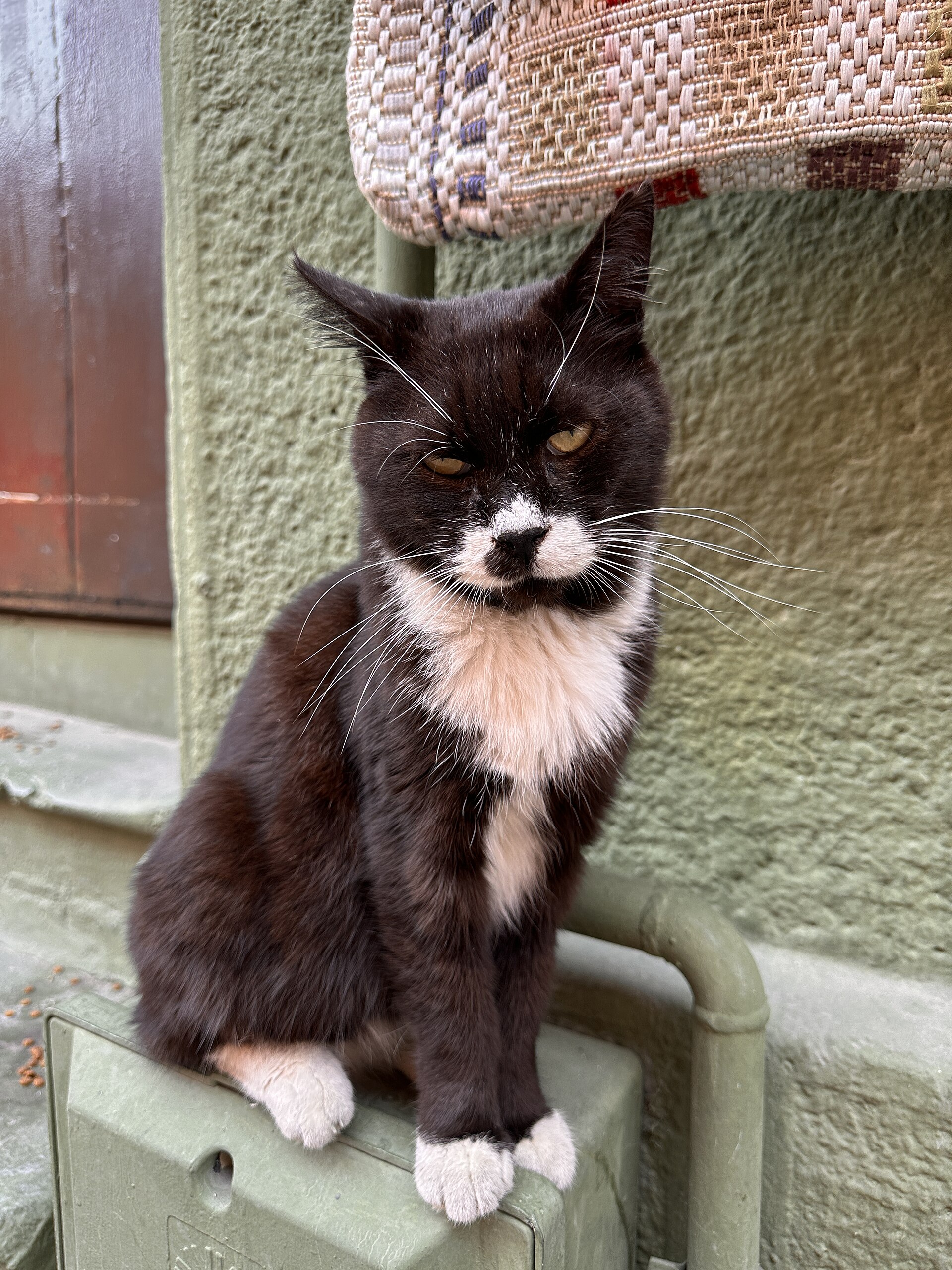
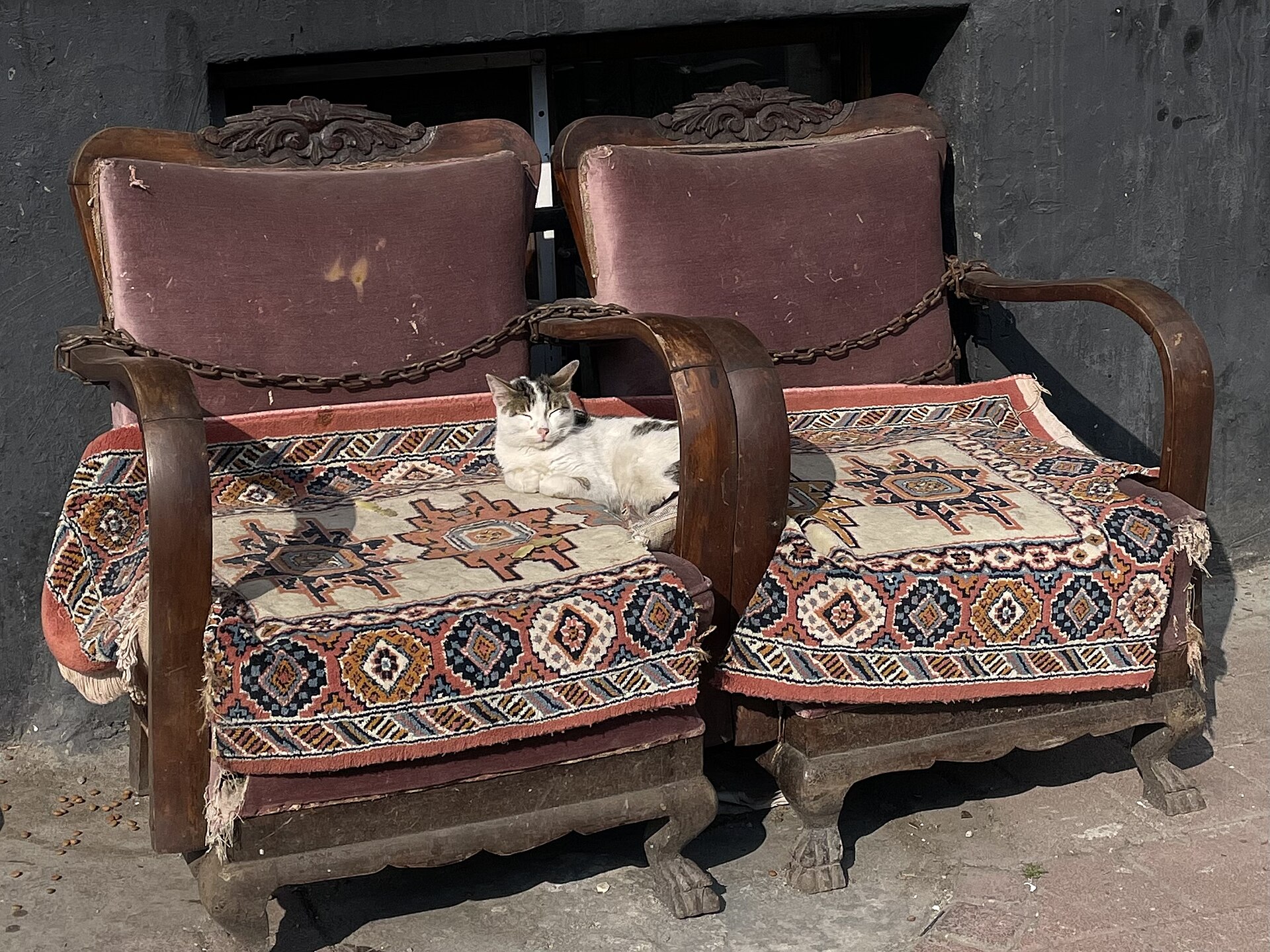
The cats predate all of that. Istanbul has fed its street cats for as long as it has had streets, on the principle that a cat is a neighbour, and the 2016 film Kedi, which followed seven of them around the city, was partly made here. What you see in Balat is the system at work: bowls on doorsteps, cat houses knocked together from crates on the corners, the grocer with a cat on the scales, the tea garden with three on the chairs, and nobody minding. The steps, of which there are hundreds, are the cats’ preferred furniture.
Walk it from the water up. The ferry drops you at Balat pier; the coloured street is five minutes up; the Patriarchate and the iron church are along the shore; the staircases climb to the old walls and the Chora church with its mosaics. There are cats at every one of these, and by the top you will have stopped counting.
The walk
Ferry to Balat pier, up to the coloured street, along the shore to the iron church and the Patriarchate, then up the stairs to the walls. Three hours, more with tea.
- From Eminönü or KaraköyGolden Horn ferry to Balat20 minThe best transport in Istanbul. Sit on the right for the old city.
- From SultanahmetBus 99 or a taxi along the shore road25 minThe buses run along the Golden Horn. Get off at Balat.
- From TaksimMetro to Haliç, then walk over the bridge35 minThe station is on the bridge across the Horn. Balat is a fifteen-minute walk west along the shore.
Balat pier
The Golden Horn ferry stop, with a tea garden and the first cats on the benches. Cross the road and head uphill into the lanes.
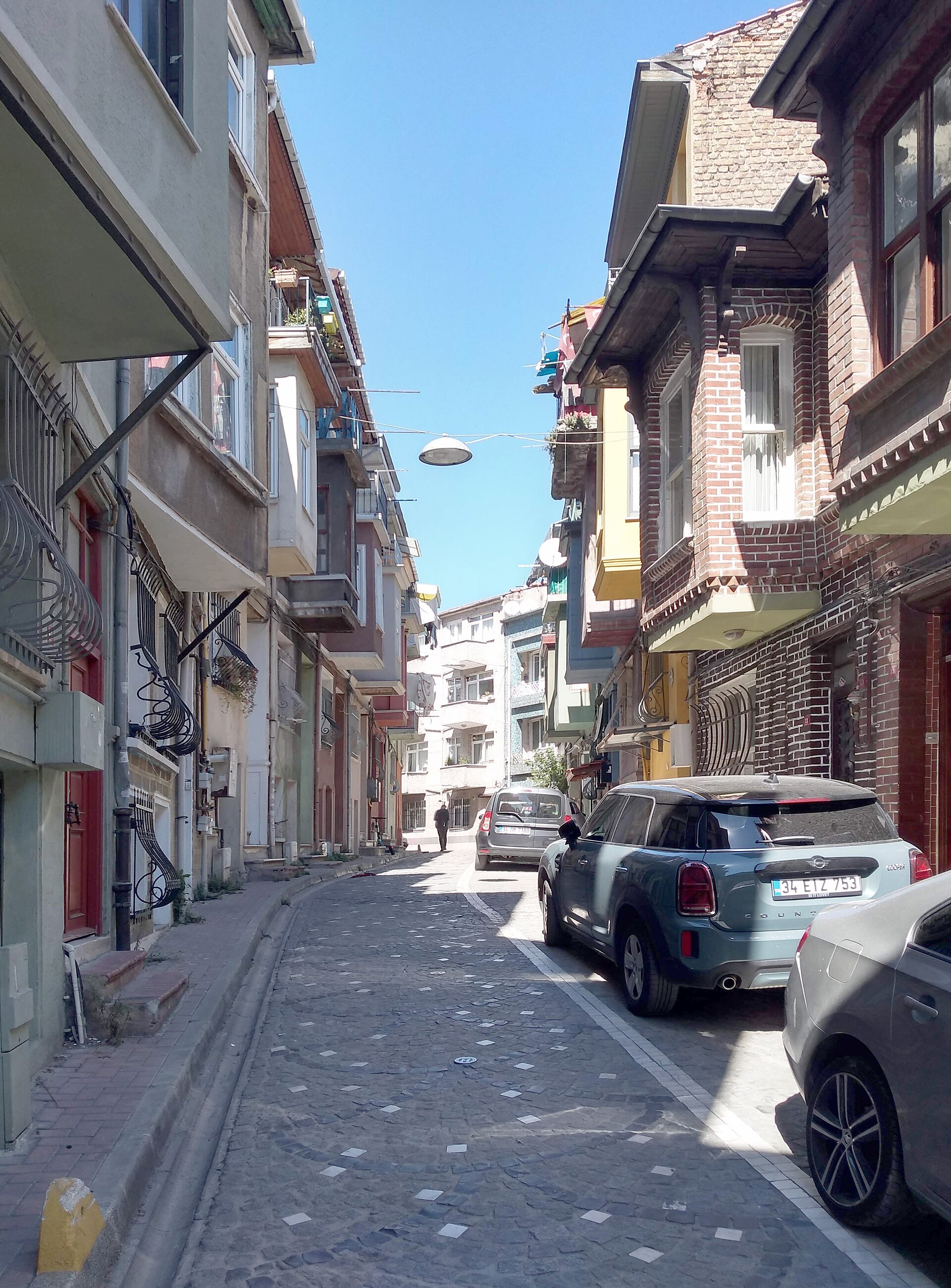
Up from the water. The lanes start climbing immediately.Milica Buha, CC BY-SA 4.0 Kiremit Caddesi
The street of coloured houses, the one in every photograph. Cats on the steps of the pink one, the blue one and the yellow one. Come early or share it with a hundred people and their phones.
Kiremit Caddesi at a quiet hour. Each doorstep has an occupant.Milica Buha, CC BY-SA 4.0 Merdivenli Yokuş
The staircase street, steep and painted, climbing between the houses. The cats treat it as a grandstand. Stop halfway and look back at the Golden Horn.
The stairs. Cats on every third step, people on the rest.Milica Buha, CC BY-SA 4.0 St Stephen, the iron church
Down to the shore and along to the Bulgarian church, a whole neo-Gothic church in cast iron, prefabricated in Vienna and floated here. Cats in the garden by the water.
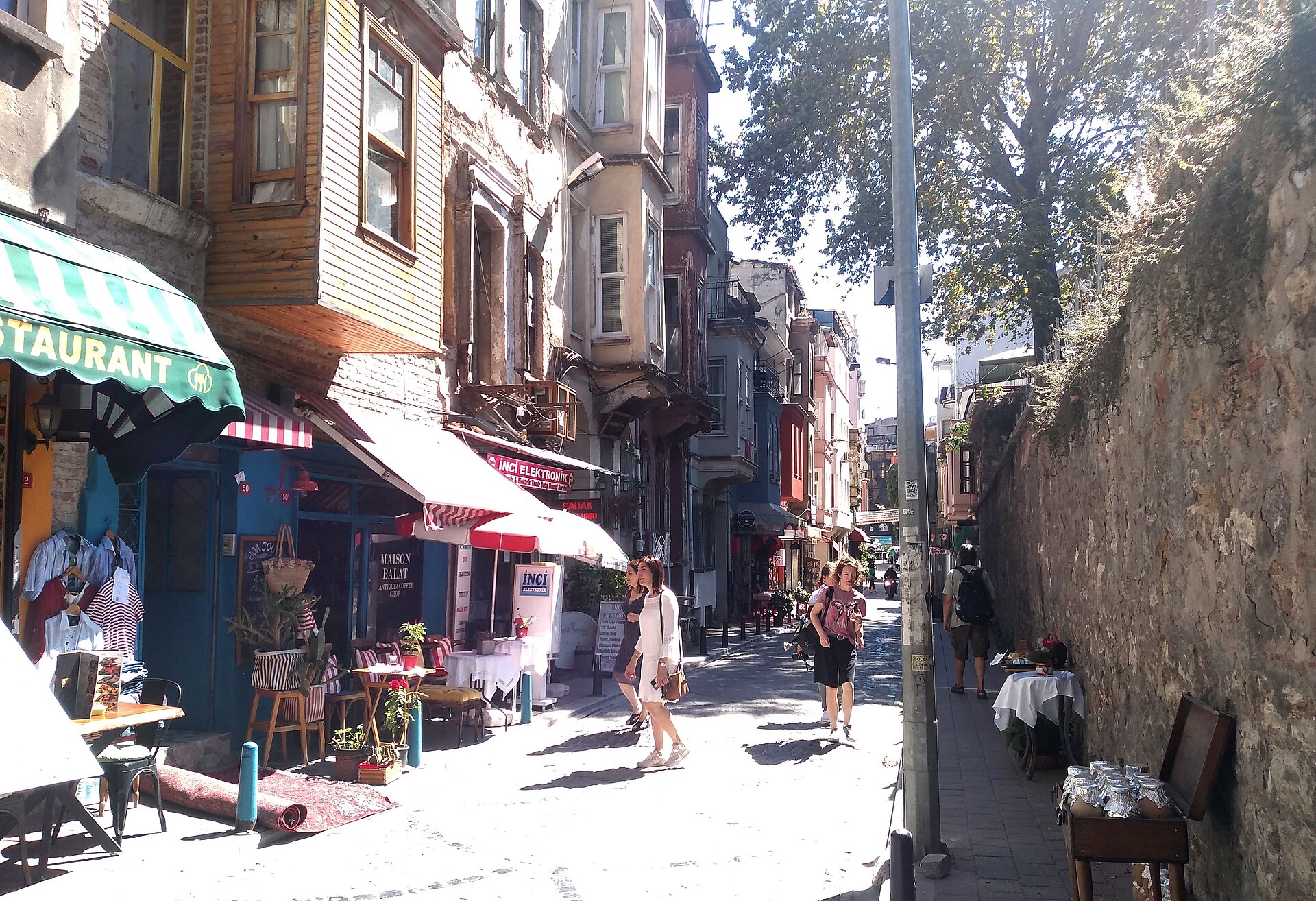
By the water. The iron church is the odd one out on the shore.Milica Buha, CC BY-SA 4.0 The Patriarchate
A few minutes along in Fener, behind a plain wall, the church of St George and the seat of the Ecumenical Patriarch. Open to visitors most mornings. Cats in the courtyard, as everywhere else.
Fener side. Old Greek houses, and the same cats.Mehman, CC BY-SA 4.0
Same numbers as the list. Worth keeping open on your phone.
The cats you will meet
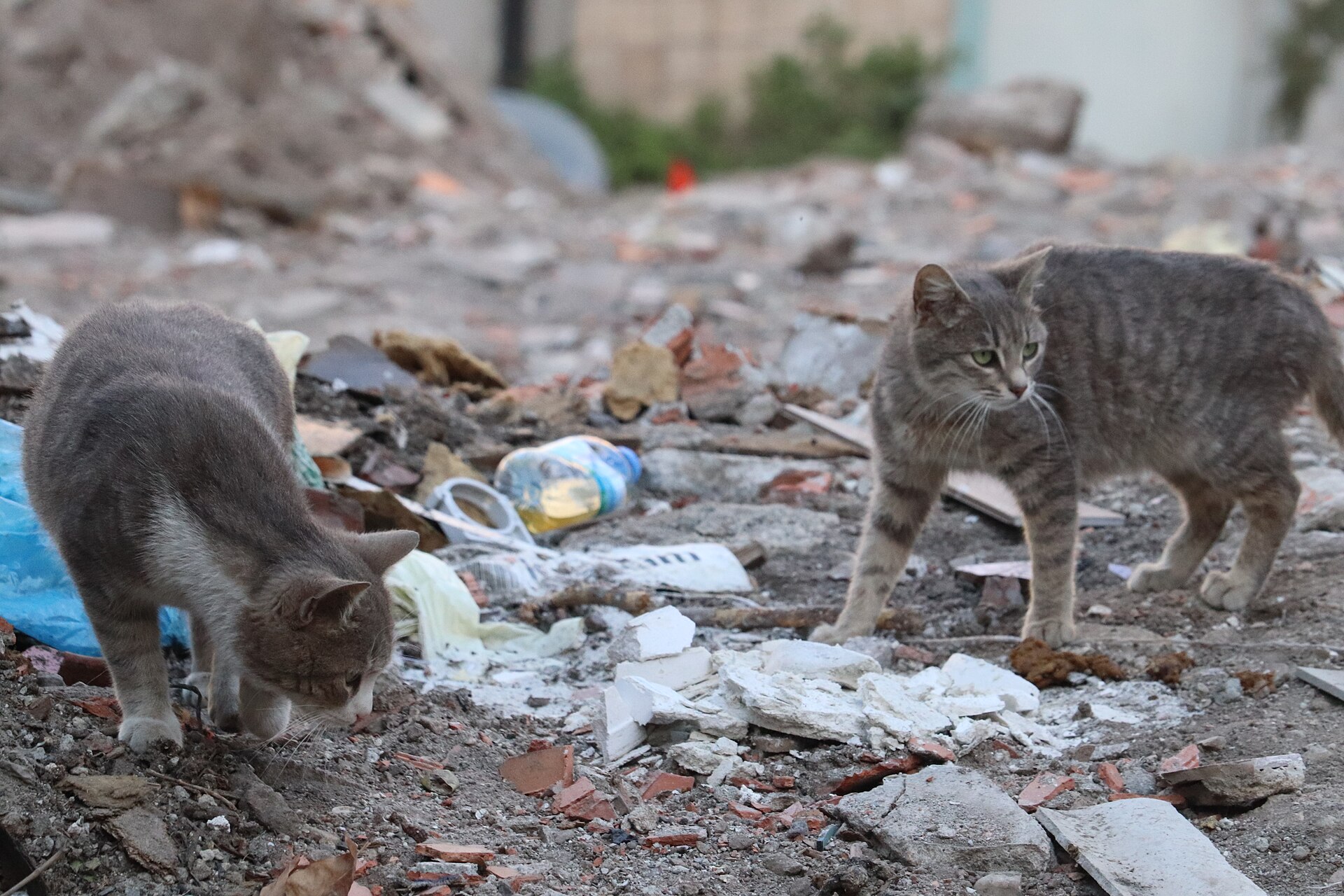
Istanbul street cats, which is to say the best-looked-after street cats in the world: tabby, white, ginger, tortoiseshell, glossy on a diet of doorstep bowls and grocer scraps, and entirely used to being a neighbour. Sociable on the steps, asleep in the tea gardens.
Step cats
On the doorsteps and staircases.
The main population. Fed by the house behind the step.
Shop cats
On the counter of the grocer or the antique shop.
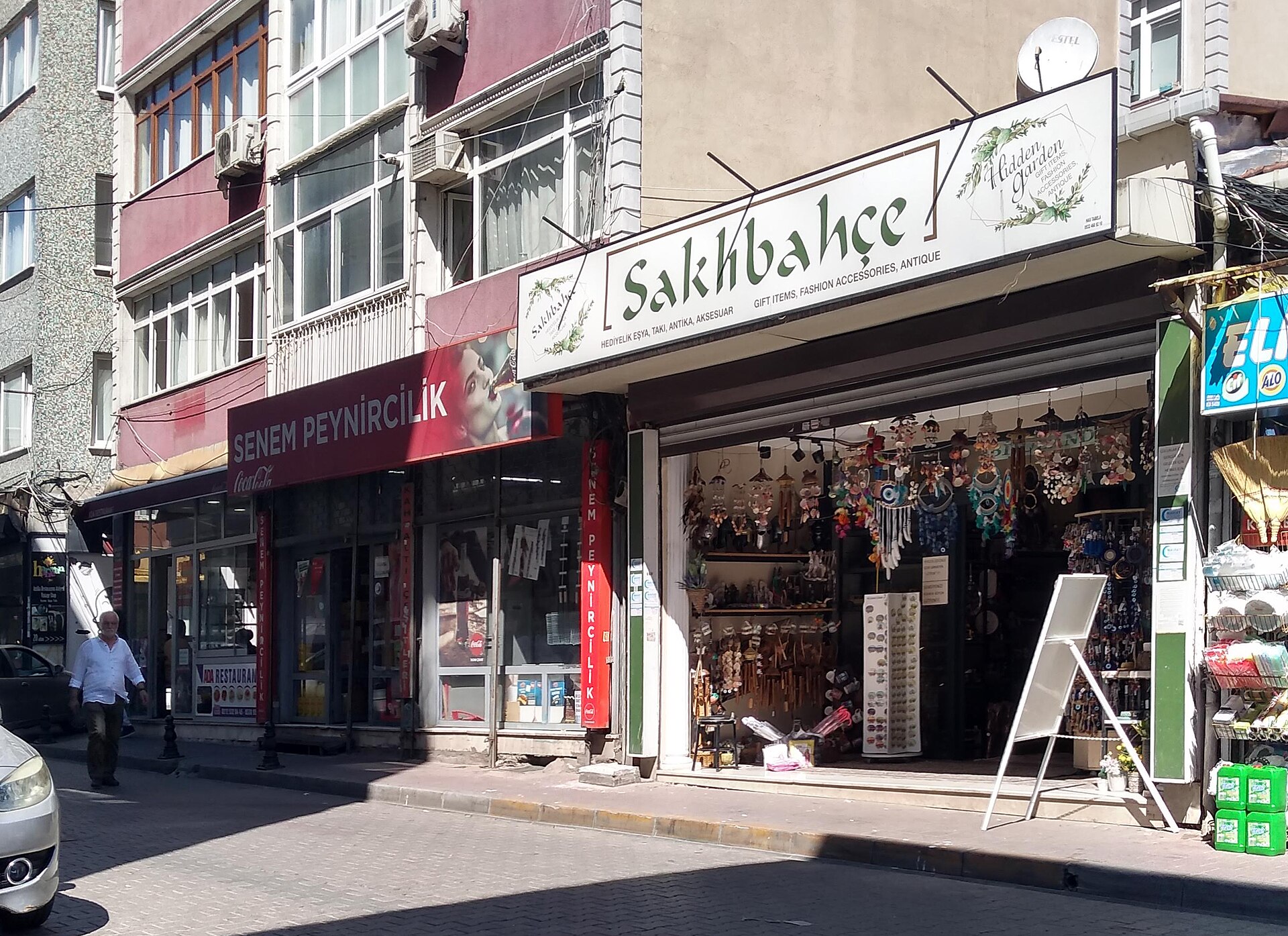
Balat is full of antique shops and every one has a cat on the good chair.
Tea garden cats
On the chairs by the water.
Order a tea and share the chair.
Everybody says The white one with odd eyes is a Van cat.
Actually Almost never. The look is common in Istanbul’s ordinary street cats. The real Van cats are at a university a thousand kilometres east, and we have a page for them. The one on the step in Balat is a Balat cat, which is a fine thing to be.
How not to be the annoying one
- The coloured houses are people’s homes. Photograph the street, not through the windows, and do not sit on the steps for a portrait.
- Top up a bowl that exists. The households have a system and a new bowl confuses it.
- The Patriarchate and the churches ask for covered shoulders and quiet.
- Tip the tea garden. The cats on the chairs are theirs.
- It is a conservative neighbourhood in places. Dress as you would for a church, and everyone is happy.