Neighbourhood Istanbul, Türkiye
Cats in Kadıköy and Moda
The Asian side of Istanbul, twenty minutes by ferry from the old city: a market, a seafront, more cats per park bench than anywhere in Europe, and a bronze statue of the one who went viral.
Where to find cats in Kadıköy and Moda: Kadıköy, on the Asian shore of the Bosphorus, and Moda, the neighbourhood on the point below it. When: Morning for the market, late afternoon for the seafront, sunset on the Moda wall. Why here: Same city, same cats, more room: parks, a seafront, a market, and the neighbourhood that put up a statue to one of them.
The short version
- Where
- Kadıköy, on the Asian shore of the Bosphorus, and Moda, the neighbourhood on the point below it
- When
- Morning for the market, late afternoon for the seafront, sunset on the Moda wall
- How long
- A full afternoon. Add an hour to go out to Tombili
- What it costs
- The ferry, which is the cheapest great view in Istanbul. Everything else is free
- Why here
- Same city, same cats, more room: parks, a seafront, a market, and the neighbourhood that put up a statue to one of them
What to bring
- Dry cat food from any marketThe Kadıköy market has it by the kilo. Never milk, never your lunch.
- Coins and an IstanbulkartThe card for the ferry and the bus out to Tombili. Coins for the feeding boxes.
- Shoes for four kilometresPier to Moda to the point and back is a real walk, mostly flat.
- The last ferry timeThey run late but not all night, and the walk back along the water at dusk is the best part.
Why there are cats everywhere
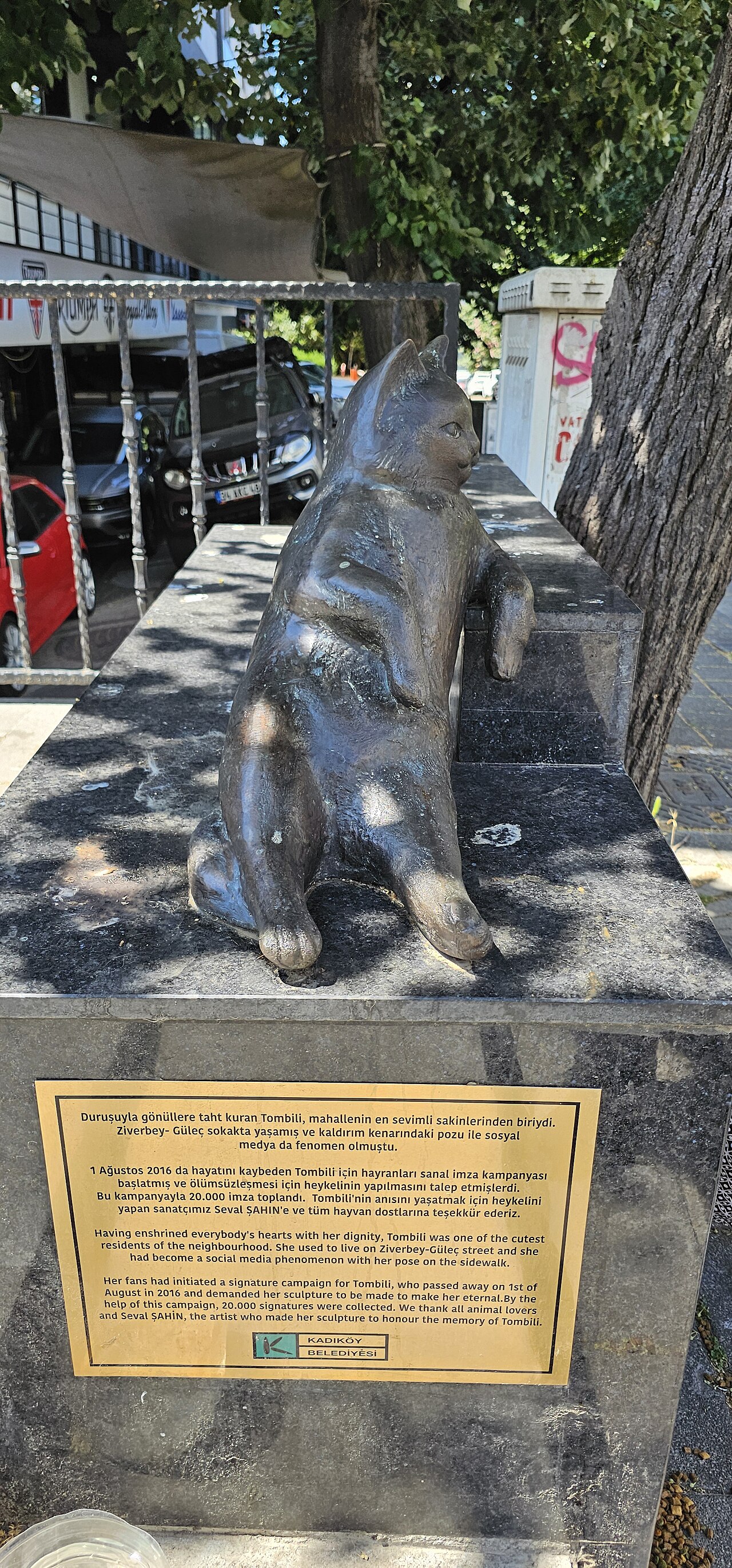
In 2016 a photograph of a fat cat leaning on a kerb went round the world, and Kadıköy built him a statue.
His name was Tombili, which means roughly "chubby", and he lived on a street in Ziverbey, a residential neighbourhood inland from the Kadıköy waterfront. The photograph showed him reclining against the pavement edge with one paw on the kerb like a man at a bar, and it became one of the most shared cat pictures of the year. He died on 1 August 2016. Within two months the local council had cast him in bronze, in the same pose, on the same street, and people still leave food and water at his feet.
It could only have happened here. Kadıköy is the Asian side’s market district, a warren of fishmongers and pickle shops and cafes that spills down to the sea, and it has the same communal-cat arrangement as everywhere in Istanbul: fed by everybody, owned by nobody, treated by the municipality. What Kadıköy has that Cihangir does not is space. Parks, a long seafront, a whole peninsula at Moda, and the cats spread out into all of it.
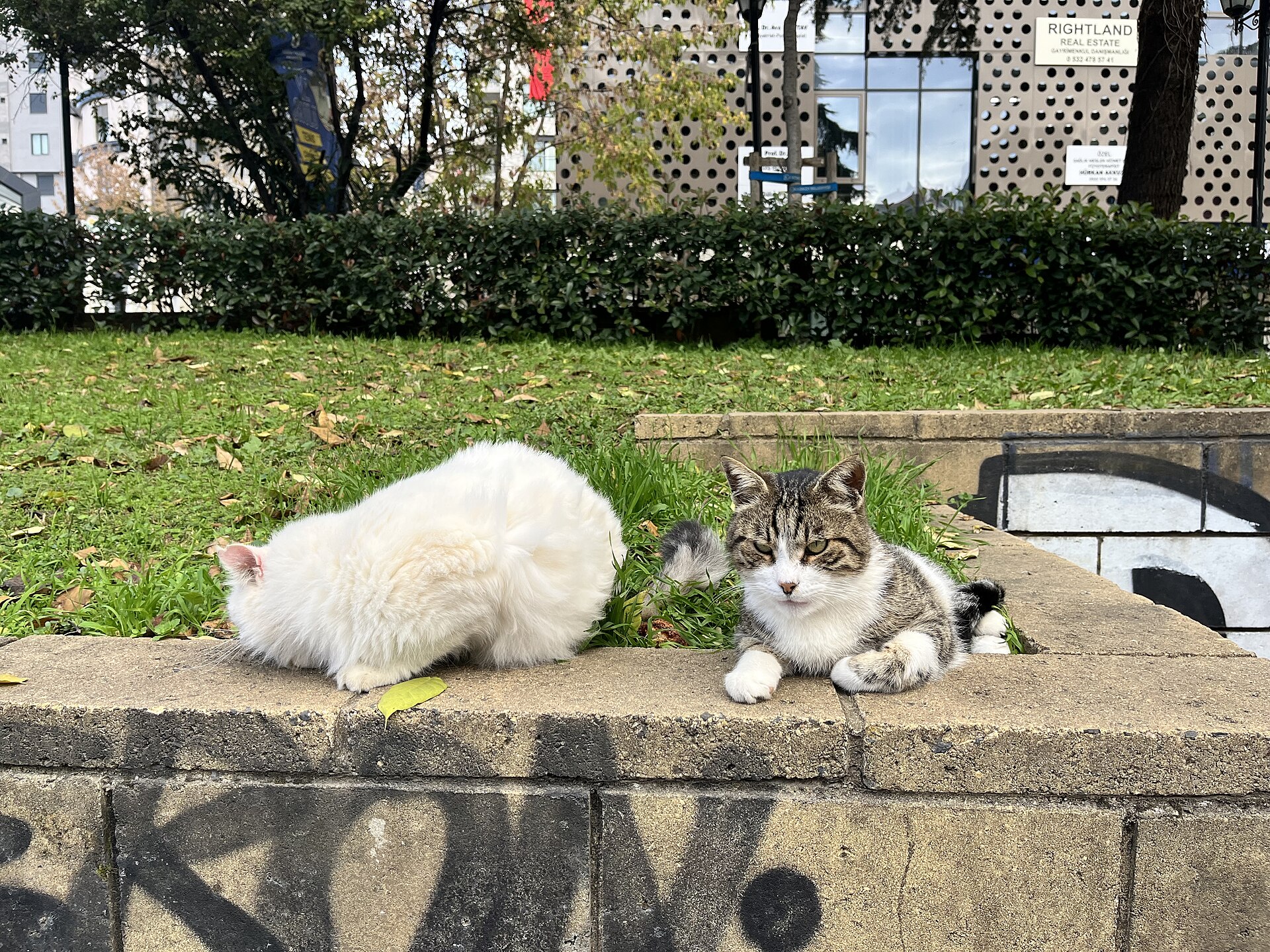
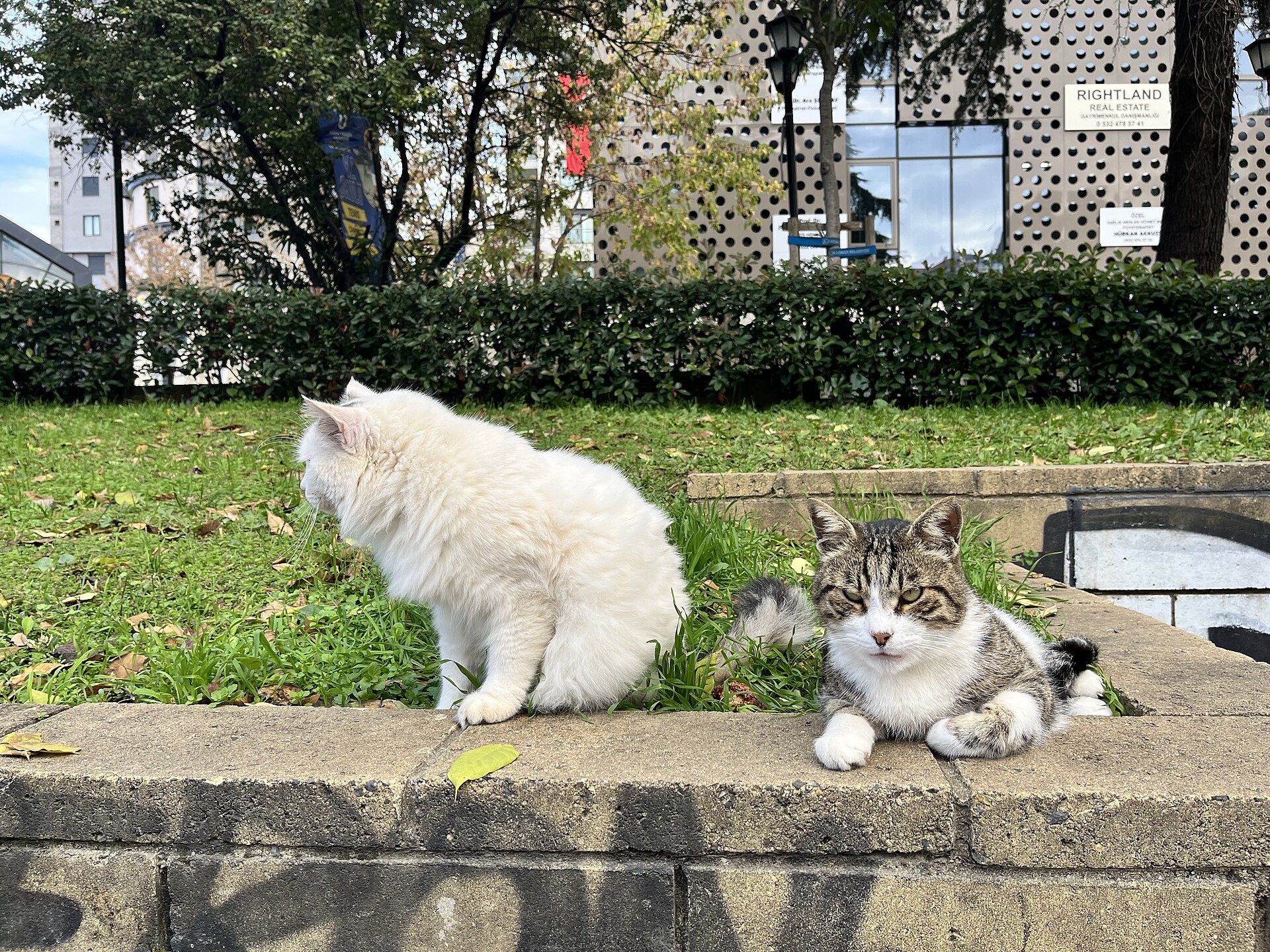
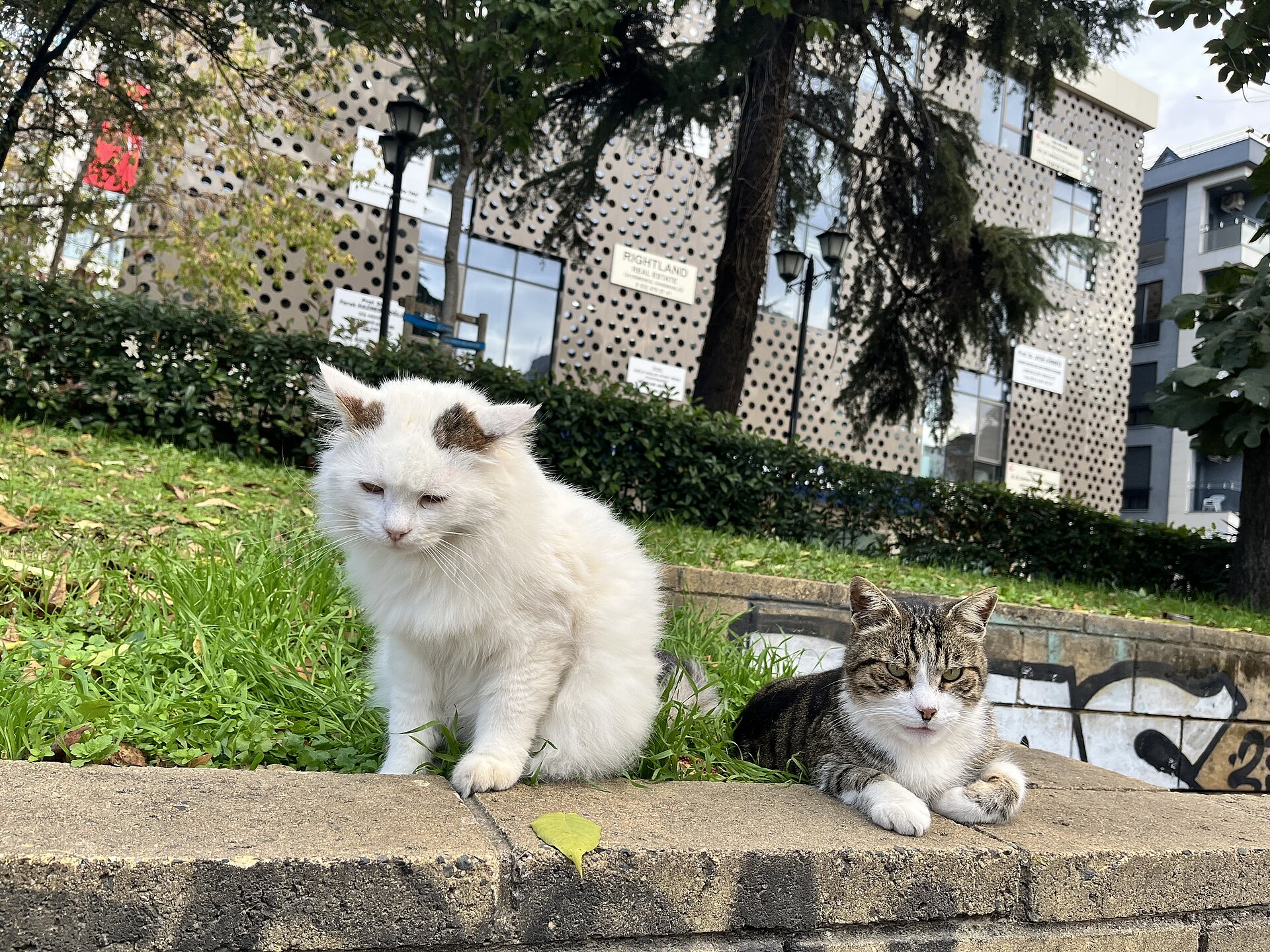
The result is bigger colonies in the open. Fenerbahçe Park and the Moda seafront have dozens in one place, in the sun, on the benches, on the sea wall. There are feeding stations everywhere and there are mama boxes on the lampposts. On a warm evening the Moda wall is people, tea, and cats, in roughly equal numbers.
Cross on the ferry from Eminönü or Karaköy. It takes twenty minutes and it is the best thing the city does for the price of a bus ticket.
The walk
Off the ferry, through the market, down the pedestrian street to Moda, along the sea to the point, and back along the wall at sunset. Then, if you have the legs, a bus out to Tombili. Four kilometres and an afternoon.
- From EminönüŞehir Hatları ferry to Kadıköy20 minEvery twenty minutes or so. Sit outside, on the right, for the old city.
- From KaraköyFerry to Kadıköy20 minSame boats, other pier. Whichever is nearer.
- From TaksimMetro to Yenikapı, Marmaray under the Bosphorus to Ayrılık Çeşmesi, walk down35 minFaster in the rain. The ferry is better in every other weather.
Kadıköy pier
The ferries from Eminönü and Karaköy land here. The cats meet them, because the fish restaurants are behind the terminal. Cross the road and go straight into the market streets.
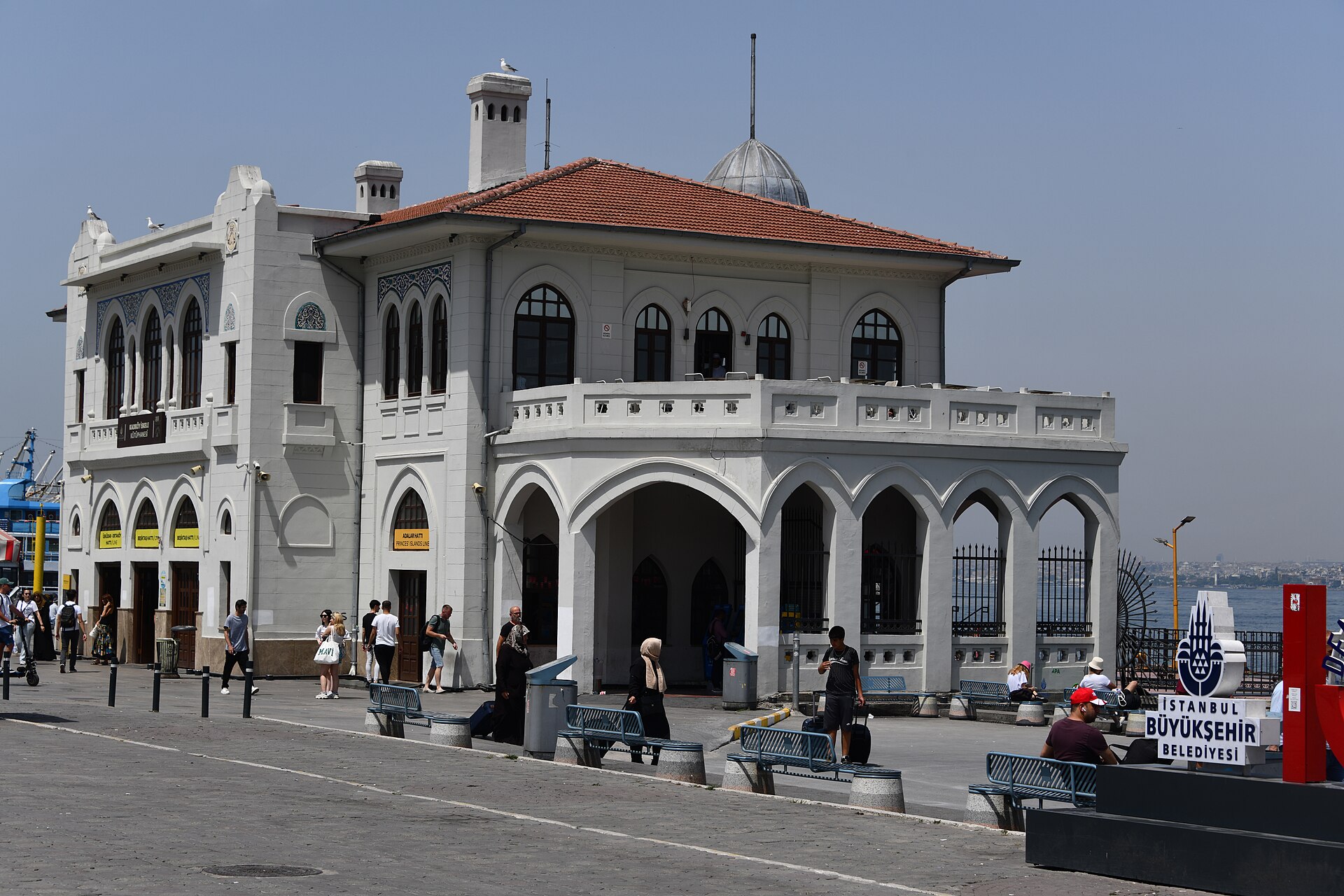
The pier. The ferries land here every twenty minutes, and the cats already know.Dosseman, CC BY-SA 4.0 Bahariye Caddesi and the market
The pedestrian street through the middle of Kadıköy, and the market streets either side of it: fish, pickles, cheese, and a cat asleep on every second stall. Buy the dry food here.
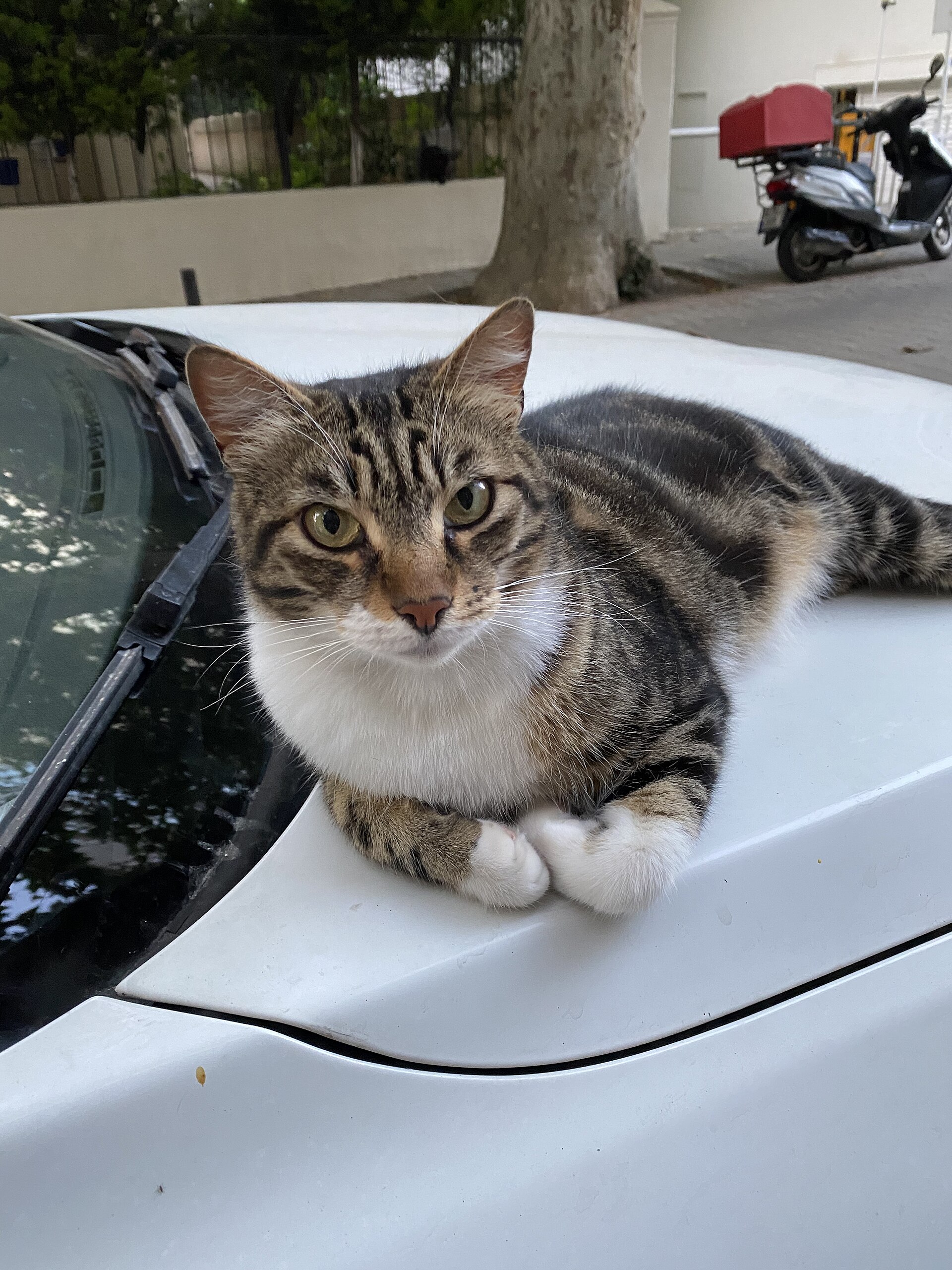
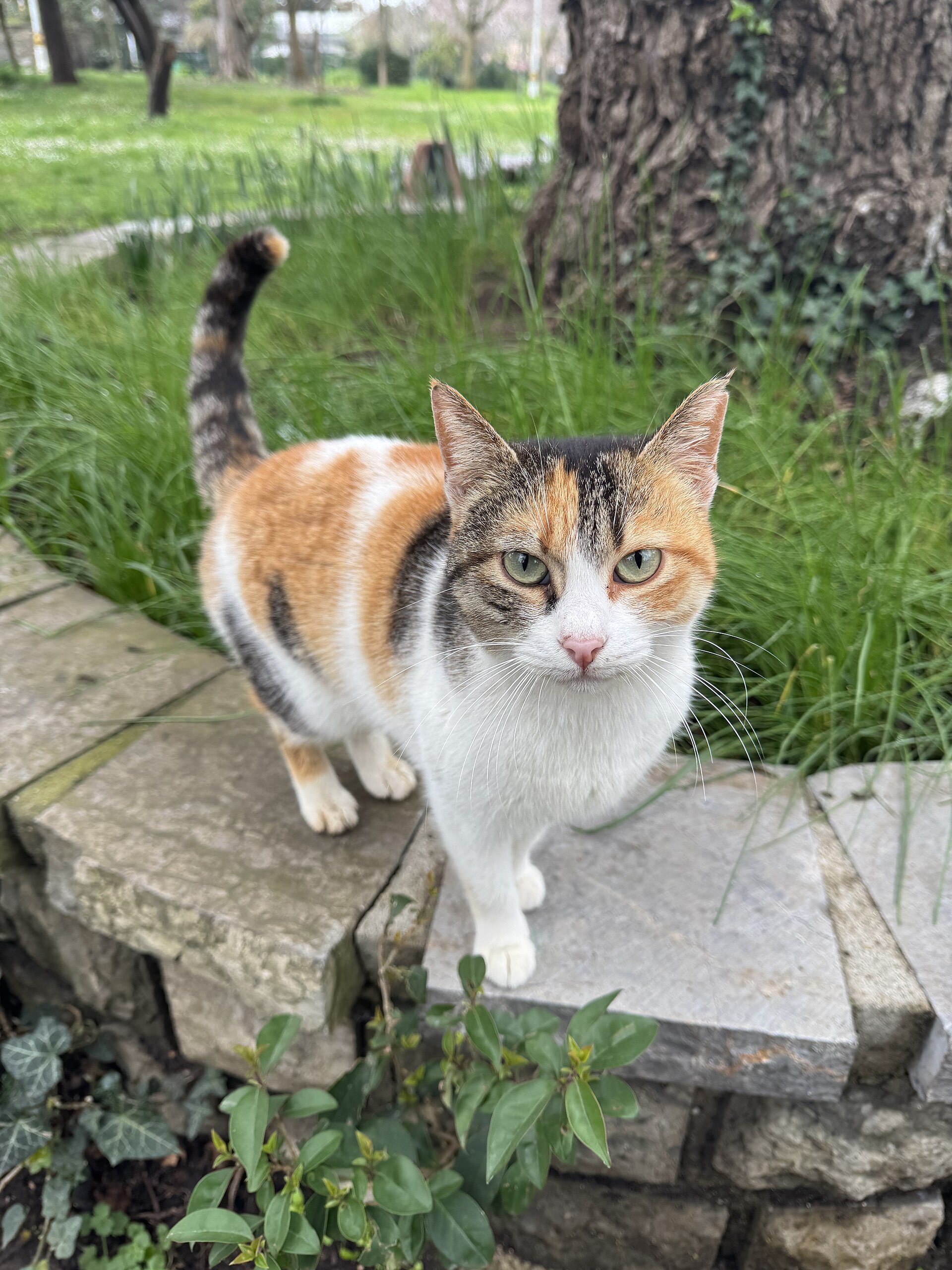
A market cat. The stallholders have names for all of them.Kadı This photo was taken with iPhone 11, CC BY 3.0 Moda Caddesi
Turn south and the street runs down the spine of the Moda peninsula, past the cafes and ice cream shops, to the sea. The cats here are cafe cats: on the chairs, under the tables.
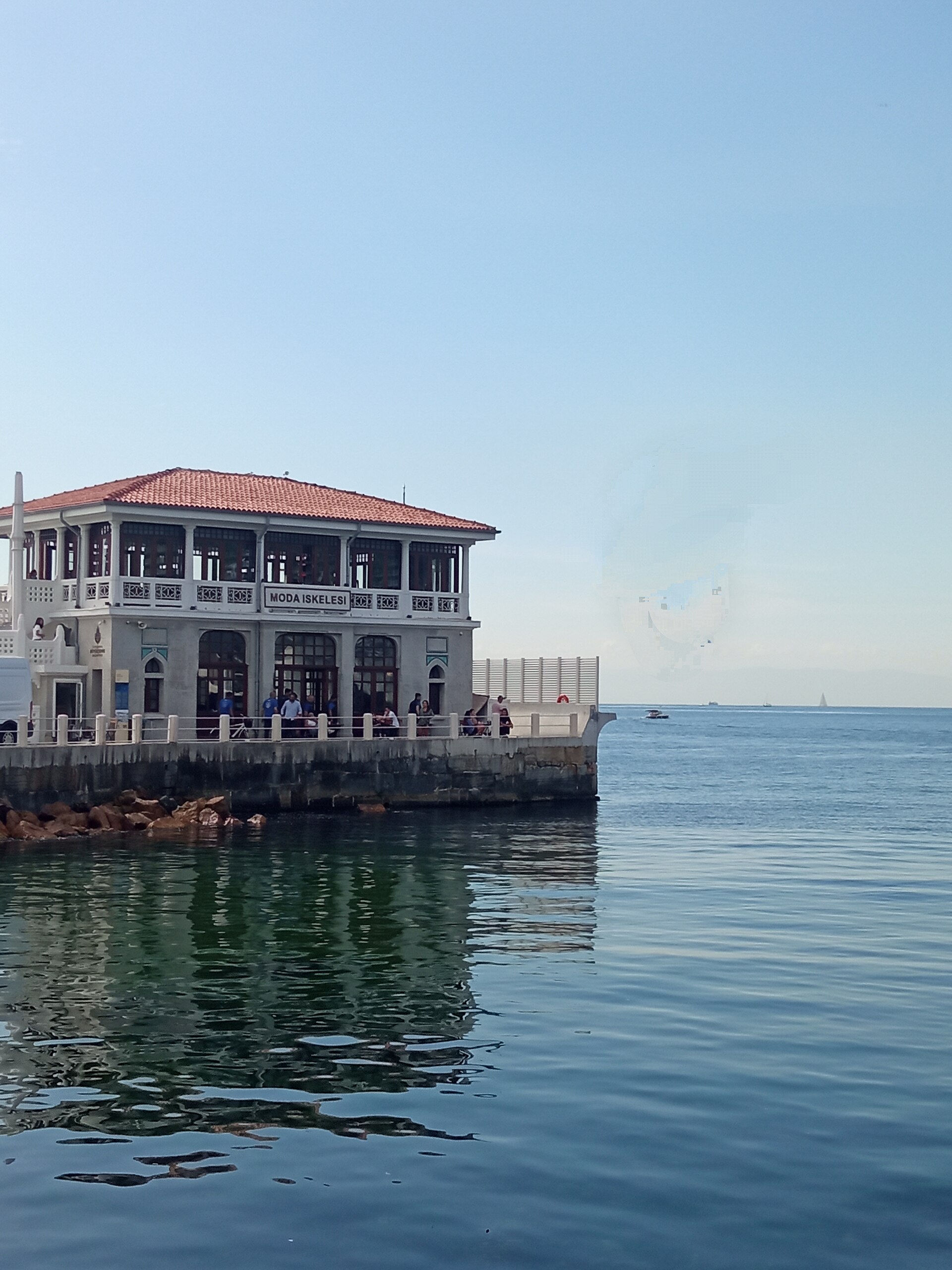
The old Moda pier at the bottom of the street. The tea garden on it is where you stop.YamanB, CC BY-SA 4.0 The Moda seafront
A long walk along the water round the point, with the sea wall on one side and grass on the other. This is where the cats are in numbers, on the wall, on the benches, on the rocks. Sit down and one arrives.
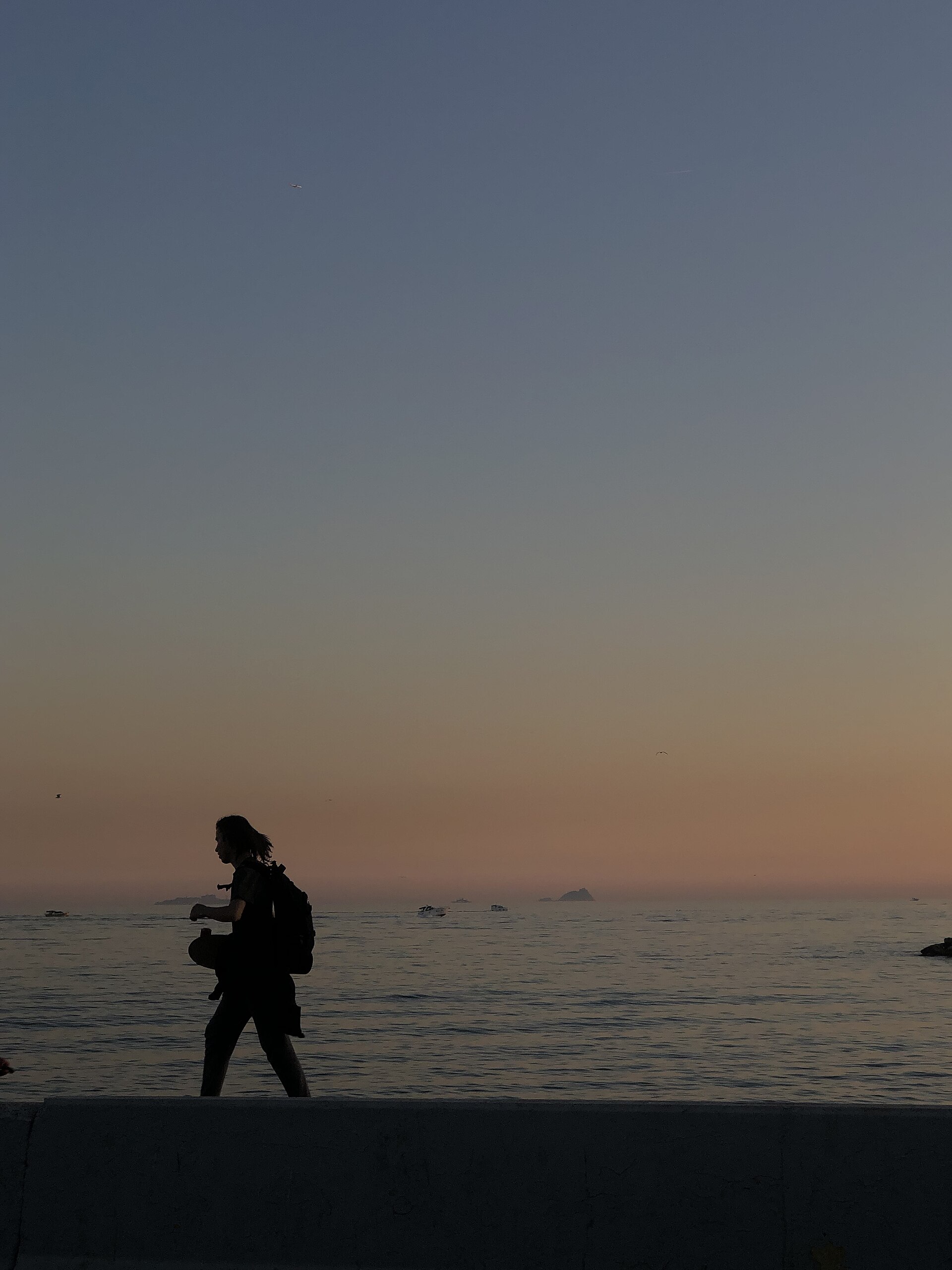
The sea wall at dusk. Every third silhouette is a cat.Fatima ezzahra el bouabi, CC0 Tombili, Ziverbey
Inland, on a quiet cul-de-sac called Güleç Çıkmazı. Bus 20K from the pier towards Kazım Karabekir, get off at Ziverbey, or a taxi. The statue is on the pavement at the corner, and there is usually food beside it.
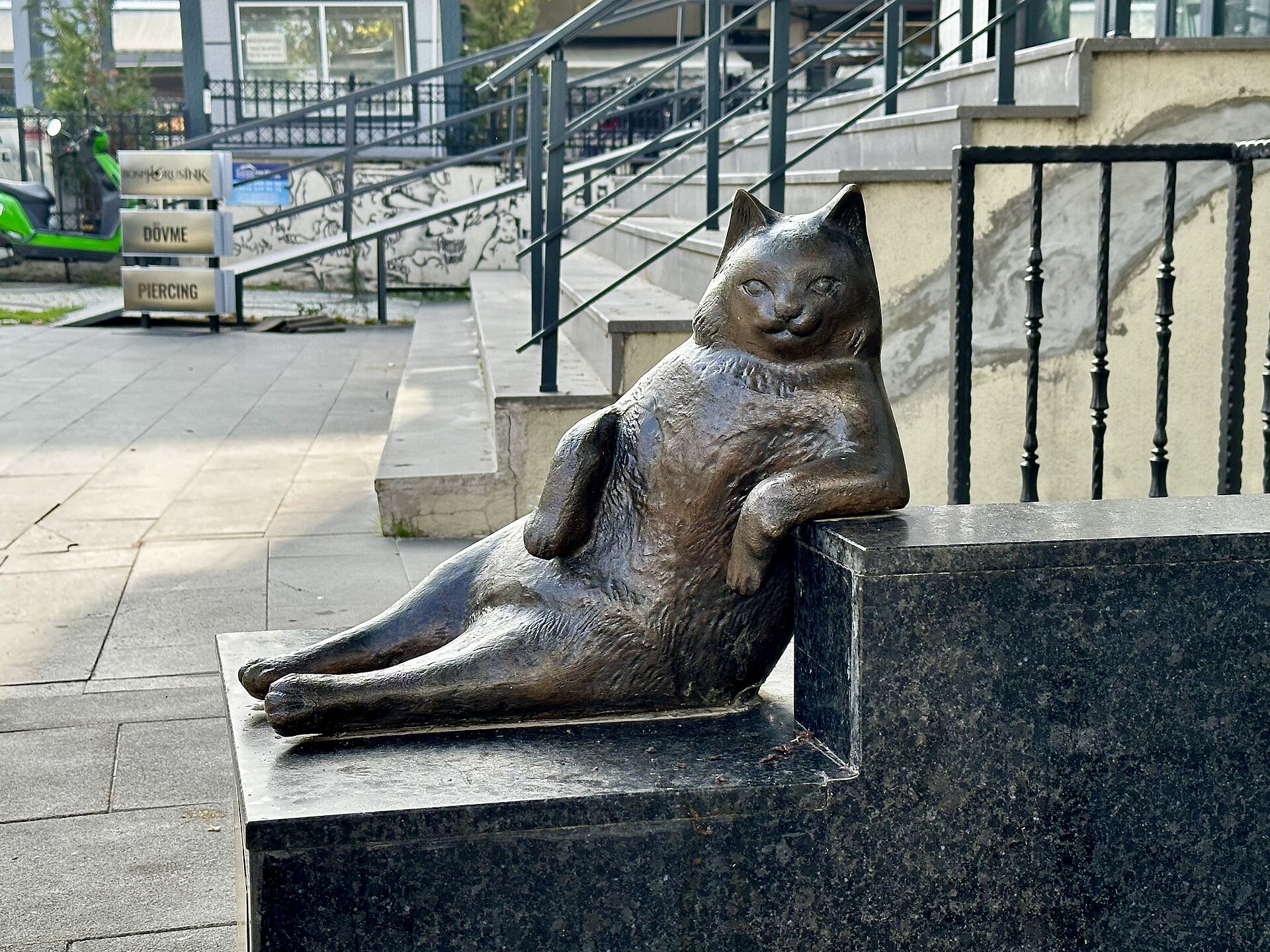
Güleç Çıkmazı. The pose is exact.Painjet, CC0 Fenerbahçe Park
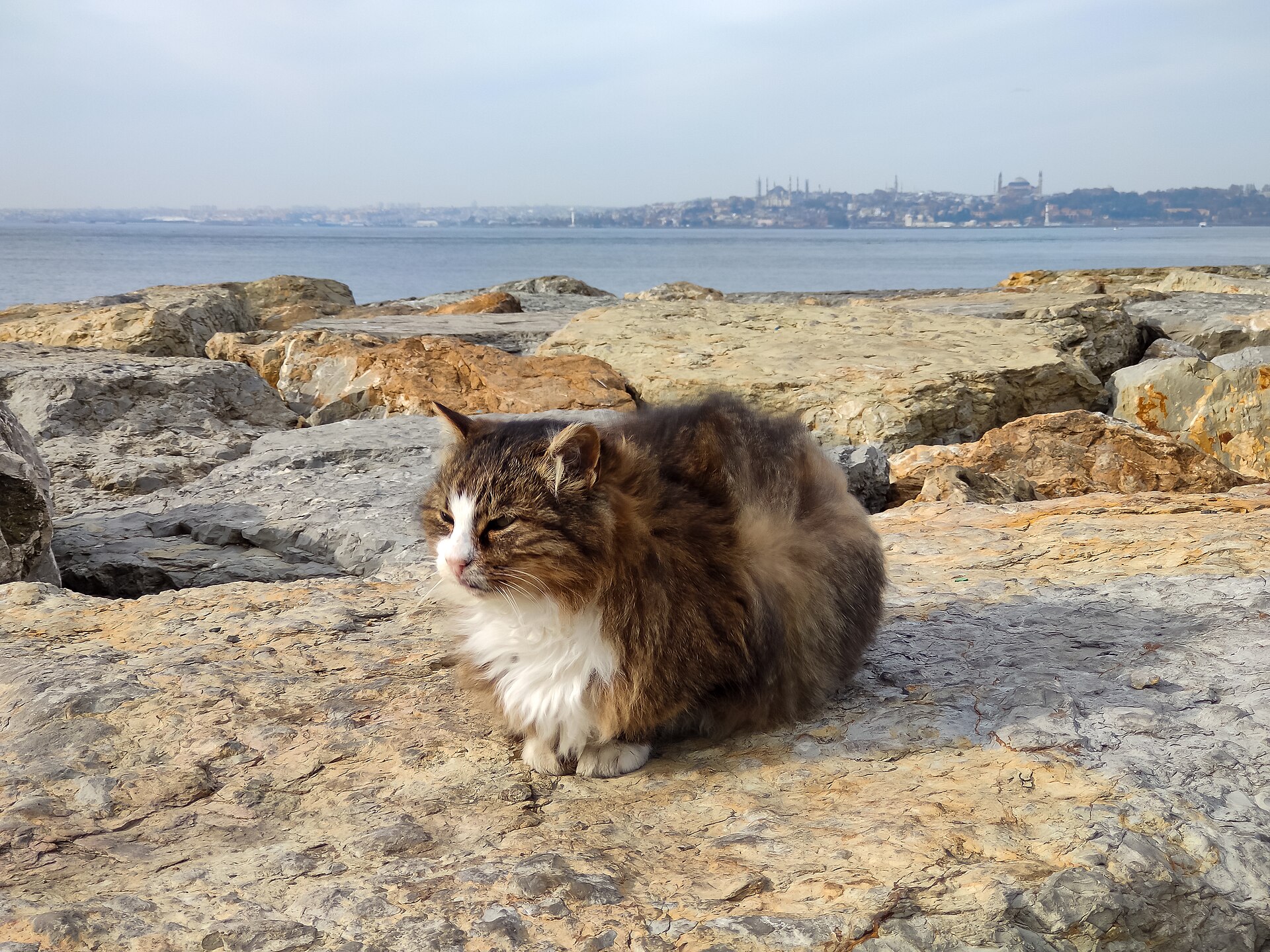
The park on the point beyond the marina, with a lighthouse and one of the largest cat colonies on the Asian side. Feeding stations along the paths, and cats in the flowerbeds. A good end to the day if you have gone out to Tombili.
Fenerbahçe Park. The colony is looked after, and it shows.Kadı, CC BY 4.0
Same numbers as the list. Worth keeping open on your phone.
The cats you will meet
The same cats as the rest of Istanbul, the ordinary mixed-breed moggies of a city with 125,000 of them, but in bigger groups and more open ground. Used to people, quick to come over, and heavier than the ones on the hills.
Tabbies
Brown or grey striped, M on the forehead.
The default. The market ones are the biggest cats you will see in the city.
Ginger toms
Broad-faced, orange, confident.
The bench cats on the Moda wall. Tombili was one of these, roughly.
Tortoiseshells
Black and orange mottled.
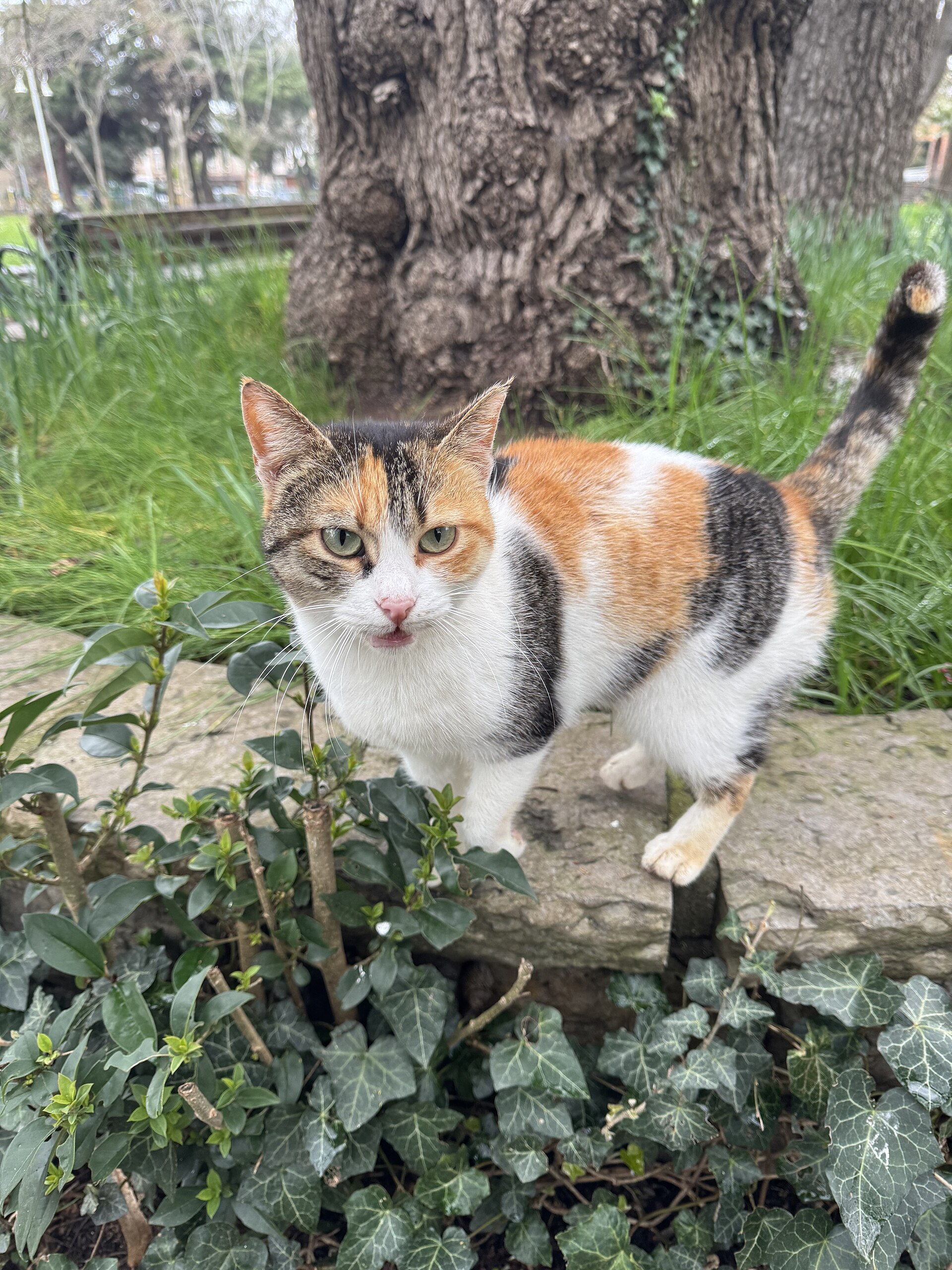
Nearly all female, and more likely to be in the park than on the street.
White and tabby
White with coloured patches, sometimes odd eyes.
Photographed and misnamed as Van cats. They are not. Van is a thousand kilometres east.
Everybody says Tombili was a stray.
Actually Tombili was a neighbourhood cat in the Istanbul sense: fed by the street he lived on, known by name, owned by nobody, and mourned by a district. The statue was not for a stray. It was for a neighbour.
How not to be the annoying one
- Same as everywhere in Istanbul: these cats are looked after, not abandoned. Treating them as strays in need of rescue reads badly.
- Let them come. Hand low, no reaching over the head. Read the tail.
- Dry food in a quiet corner, not on the sea wall path where people walk. Water matters more than food in summer.
- The mama boxes on lampposts and the donation boxes in shops pay for the vet. Ten lira and no Turkish.
- Tombili’s statue is not a bench. Sit beside him, not on him, and leave the bowl where it is.