Neighbourhood Onomichi, Hiroshima, Japan
Cats in Onomichi
A hillside port town on the Inland Sea with a lane officially called Cat Alley, a hundred and eight painted stone cats hidden along it, and real ones on the temple steps above.
Where to find cats in Onomichi: Onomichi, a port town on the Seto Inland Sea in Hiroshima prefecture, on the hillside between the station and Senkō-ji temple. When: Late morning, when the cafes on the lane open, through to the late-afternoon light on the water. Autumn is the best of it. Why here: The one town in Japan that gave its cats a street, and then put a hundred and eight stone ones on it in case the real ones were out.
The short version
- Where
- Onomichi, a port town on the Seto Inland Sea in Hiroshima prefecture, on the hillside between the station and Senkō-ji temple
- When
- Late morning, when the cafes on the lane open, through to the late-afternoon light on the water. Autumn is the best of it
- How long
- Half a day for the hill, the alley and the temple. A full one if you take the ropeway and walk down slowly
- What it costs
- The alley and the temple paths are free. The ropeway up is a few hundred yen. The cafes are the expense
- Why here
- The one town in Japan that gave its cats a street, and then put a hundred and eight stone ones on it in case the real ones were out
What to bring
- Shoes for stairsOnomichi is a hillside. The Cat Alley is steps, the temple path is steps, and there is no flat way up.
- A late-morning startThe galleries and cafes on the lane open around eleven. Before that it is a pretty alley with nothing to go into.
- Coins for the ropewayUp to the summit by cable car, down on foot past the temple and through the alley. The right way round.
- An eye for stonesA hundred and eight fukuishi-neko, lucky stone cats, painted by one artist and tucked into walls and steps along the lane. Finding them is the walk.
Why there are cats everywhere
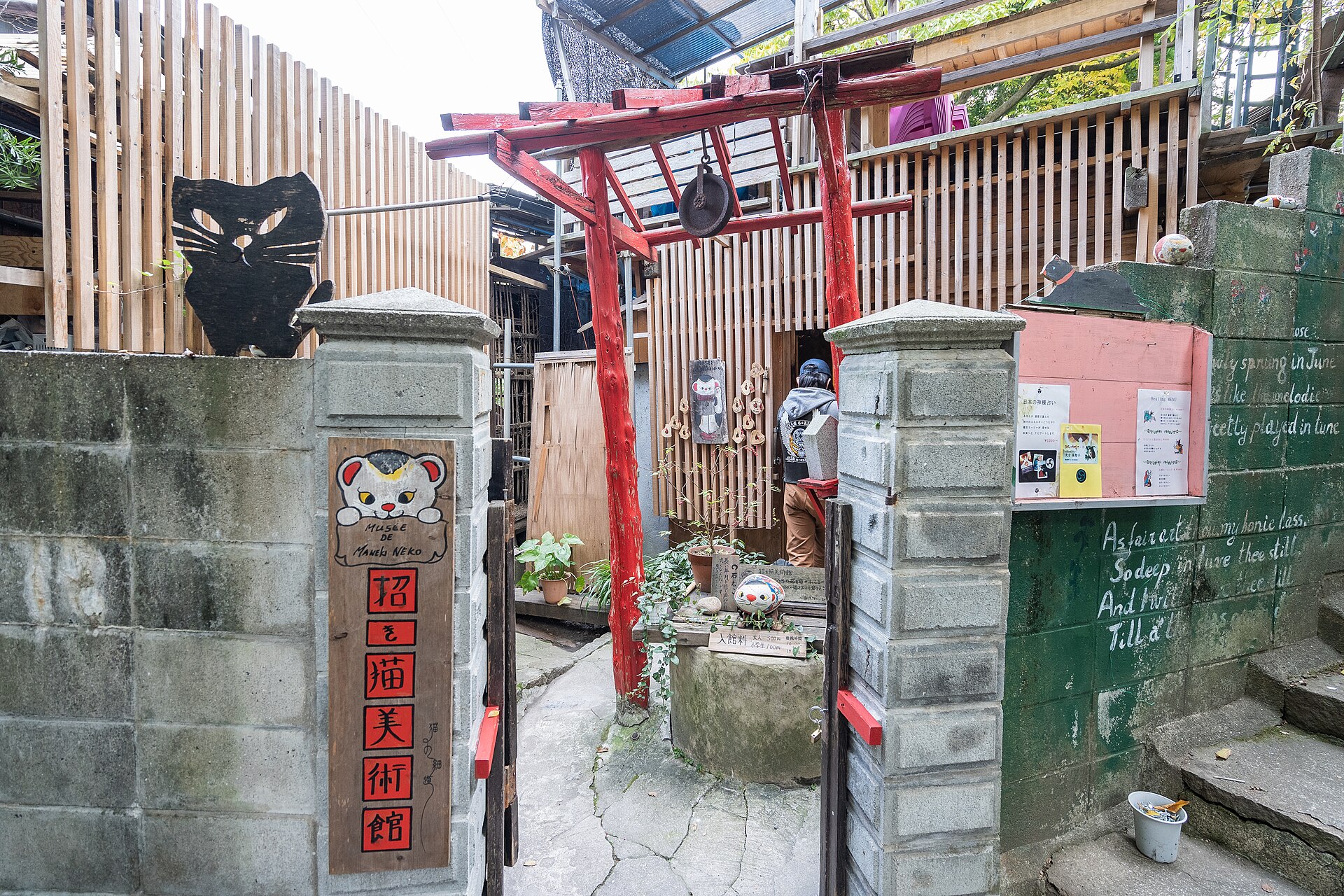
In 1998 an artist started painting cats onto stones and leaving them in a lane, and the lane became Cat Alley.
The artist was Shunji Sonoyama, and the lane was a two-hundred-metre stepped path on the hillside above the old town, running from the Ushitora shrine up towards Senkō-ji temple. He painted a hundred and eight fukuishi-neko, lucky stone cats, each with a different face, and set them into the walls and steps and gardens along the way. The number is the number of worldly desires in Buddhism, and also, in Onomichi, the number of stone cats you can spend an afternoon failing to find all of.
The lane already had real cats. Onomichi is a port on a steep hill, an old town of temples and wooden houses climbing from the water to the summit, and its cats live on the temple steps and the hillside lanes where the town’s residents have fed them for generations. The painted ones brought visitors, the visitors brought cafes and galleries into the old houses along the alley, and the real cats, being cats, moved into the cafes.
The town leans into it. There is a cat-themed guesthouse, cat art in the shop windows, and a whole hillside of Instagram. But the hill is real, the temple is real, and the view from the top across the Inland Sea to the islands of the Shimanami cycling route is one of the best in western Japan. The cats are on the way up and on the way down, and that is where this page sends you.
The walk
Up by ropeway, down on foot: the summit, the temple, then the alley and its stone cats, ending at the shrine near the station. Three hours if you go into the cafes, which is the point.
- From HiroshimaJR Sanyō line to Onomichi90 minAbout ¥1,520. Usually a change at Itozaki. The highway bus is the same time and drops at the station.
- From Osaka or OkayamaShinkansen to Shin-Onomichi, then bus or taxi down70 minShin-Onomichi is up the hill, not in town. Fukuyama and the local line is often simpler.
- From The stationWalk along the waterfront to the ropeway15 minFlat, along the sea. The last flat walk of the day.
Onomichi Station and the ropeway
Out of the station, along the waterfront, and fifteen minutes to the foot of the Senkō-ji ropeway. Ride up. The hill is steep and the cats are on the way down.
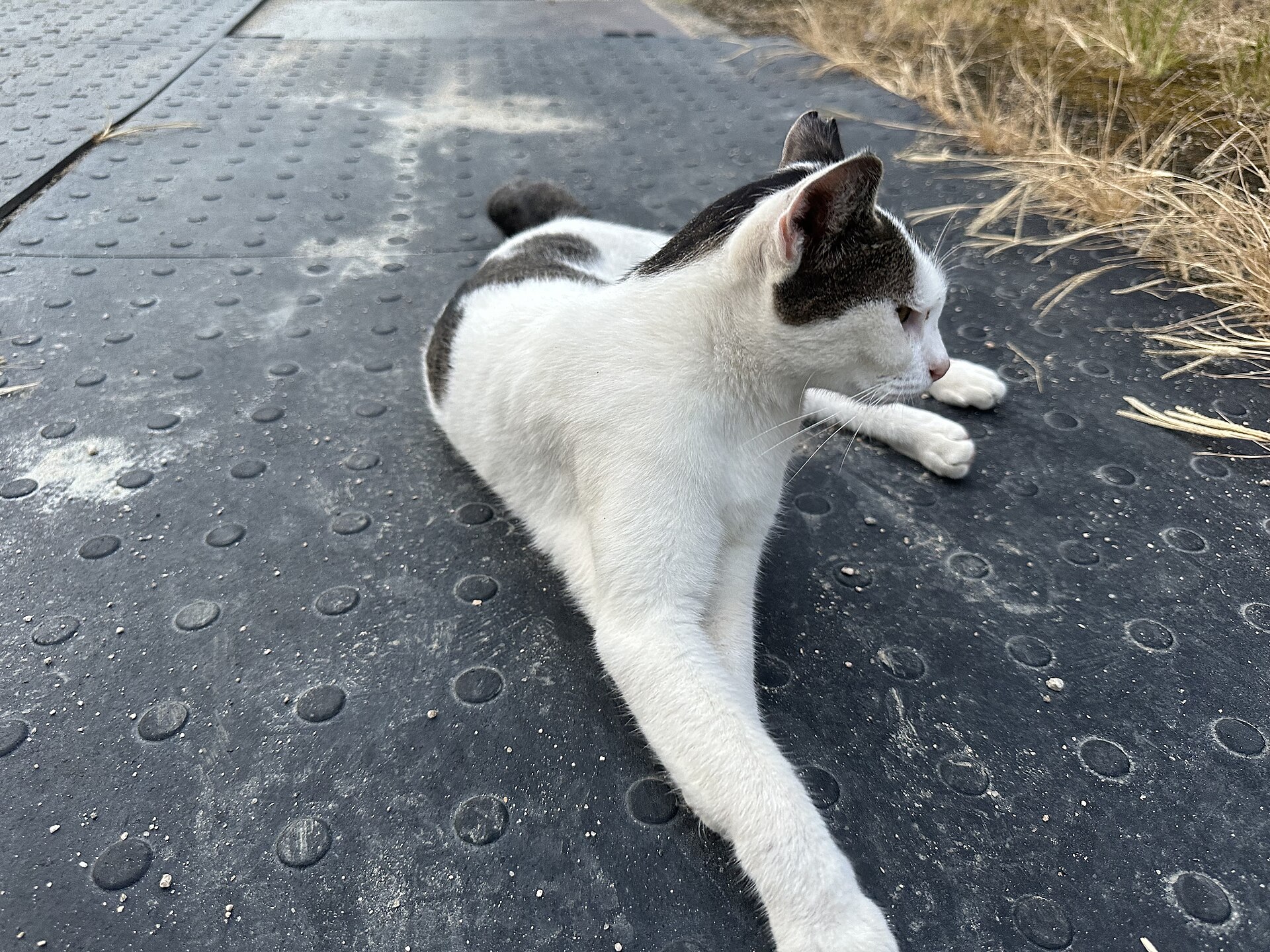
On the hill. They are all the way up it.ノボホショコロトソ, CC BY 4.0 Senkō-ji summit
The view: the town below, the Inland Sea, the islands and the bridges of the Shimanami route. Then walk down through the temple, past the big rocks and the red pagoda.
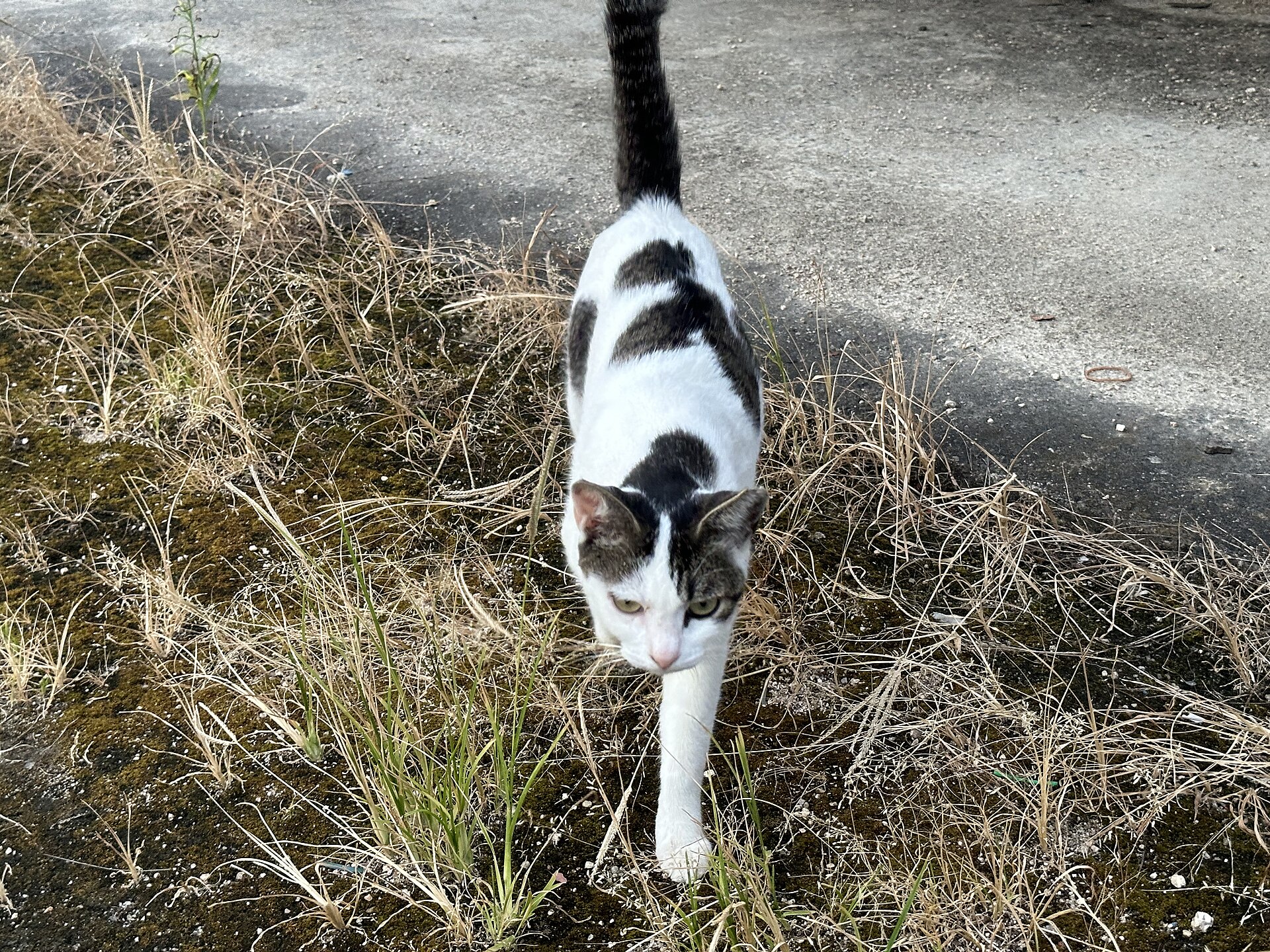
Temple cat, temple steps. The oldest arrangement in Japan.ノボホショコロトソ, CC BY 4.0 Senkō-ji temple
The town’s temple, on the hillside, founded in 806. Cats on the steps and under the eaves, fed by the temple. The path down from here joins the top of Cat Alley.
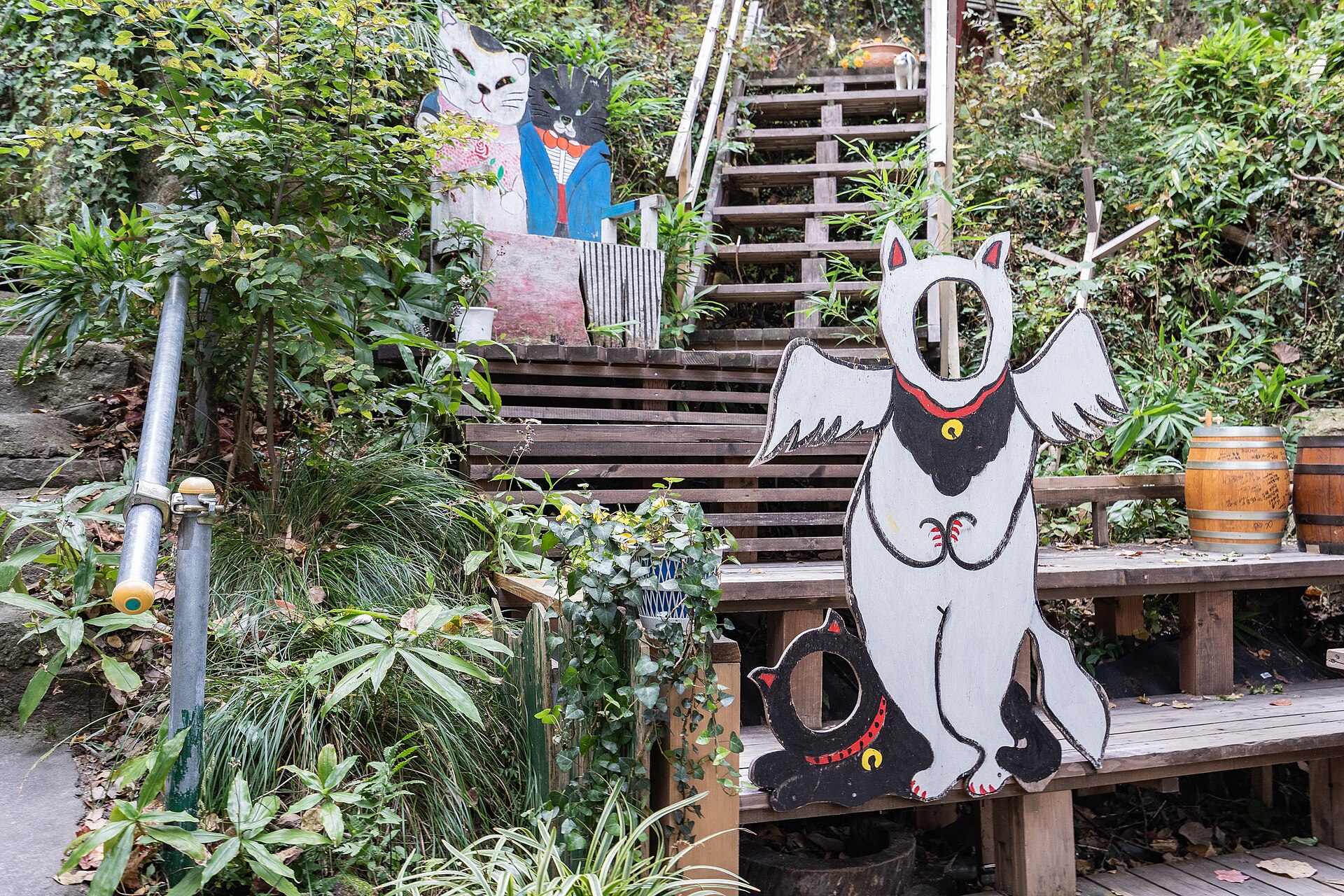
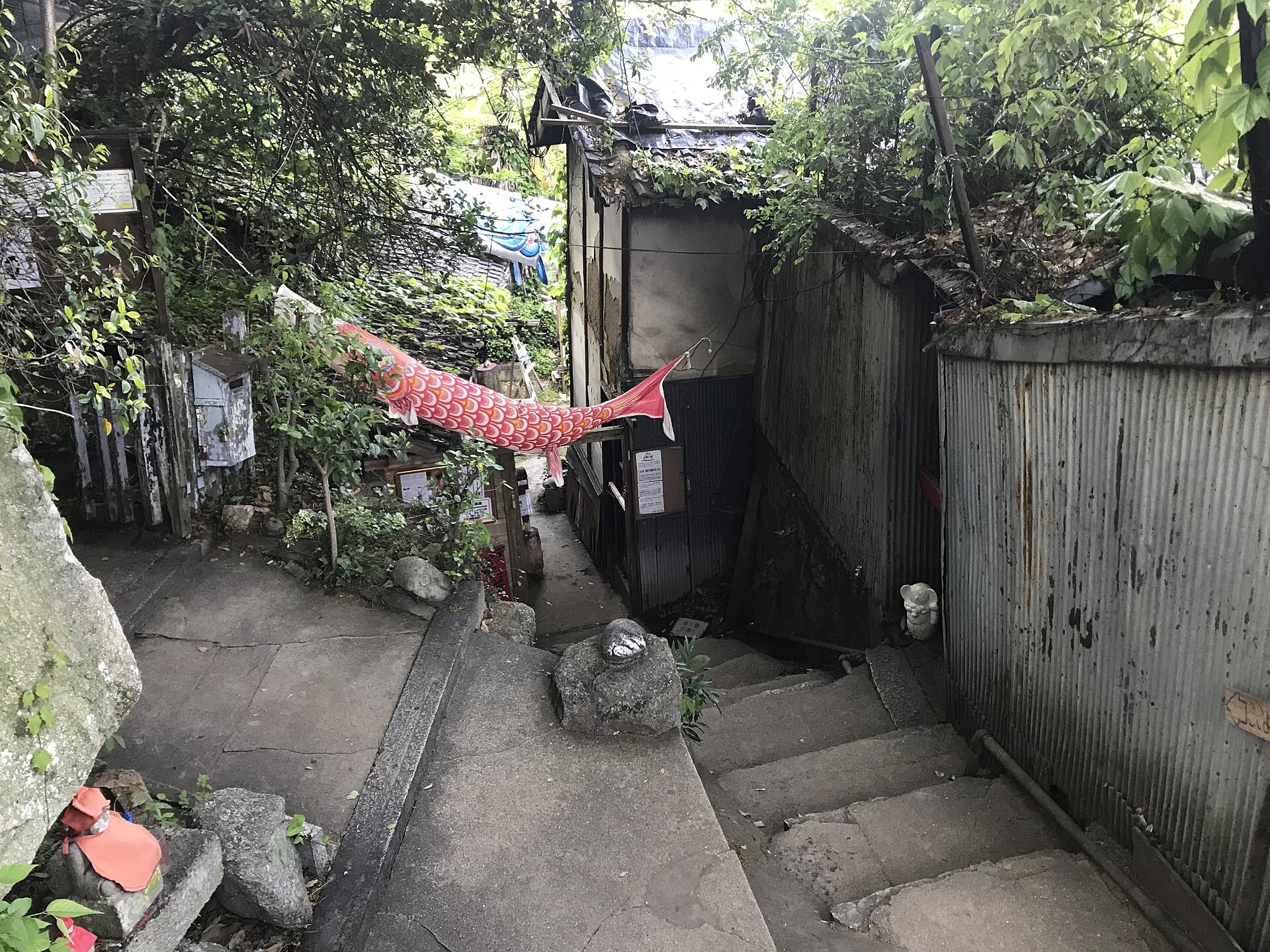
The top of the alley, from the temple side.wongwt, CC BY-SA 2.0 Neko no Hosomichi, the Cat Alley
Two hundred metres of stepped lane between old houses turned into cafes and galleries. Look for the painted stones in the walls, the steps and the plant pots. Then look for the actual cats, which will be in the cafes.
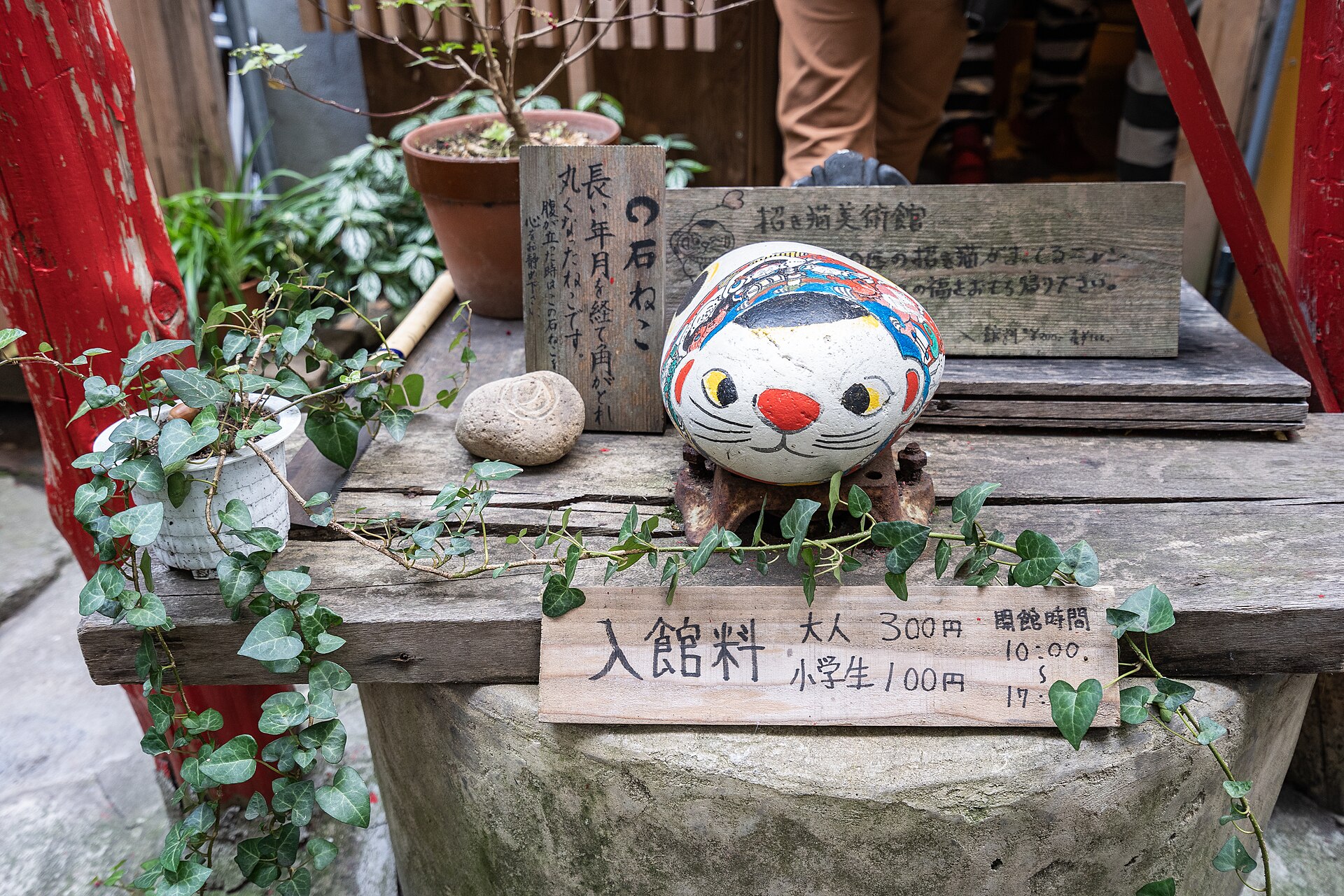
The alley. Every stone with a face is one of the hundred and eight.wongwt, CC BY-SA 2.0 Ushitora Shrine
At the bottom of the alley, an old shrine with enormous camphor trees and the real cats asleep in their roots. The end of the walk, five minutes from the station.
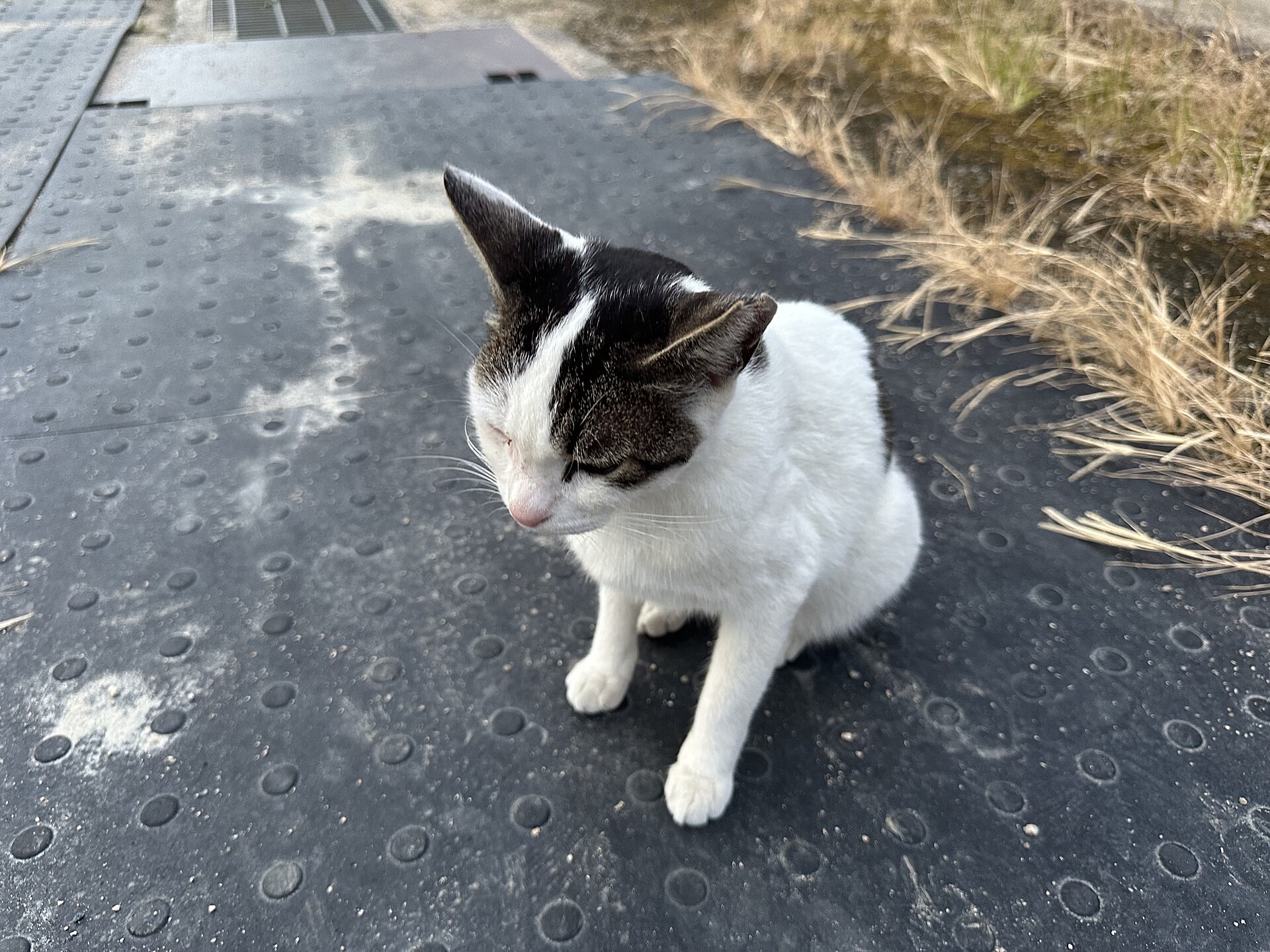
Near the shrine at the bottom. Off duty.ノボホショコロトソ, CC BY 4.0
Same numbers as the list. Worth keeping open on your phone.
The cats you will meet
Temple and hillside cats, fed by the temples and the residents for as long as anyone remembers, and lately by the cafes. Fewer than the branding suggests and more than enough. Plus a hundred and eight stone ones, which never move.
Temple cats
Tabby, mostly, on the steps of Senkō-ji.
The oldest residents. The temple feeds them.
Cafe cats
Rounder, in a doorway on the alley.
They moved in when the cafes opened. Sensible.
Stone cats
Painted faces on smooth stones, in walls and steps.
A hundred and eight. Nobody has confirmed finding all of them on one visit.
Everybody says Cat Alley is full of cats.
Actually Cat Alley is full of stone cats. The living ones are on the temple steps, in the shrine roots at the bottom, and in the cafes, and there are a comfortable number rather than a crowd. Come for the hill and the sea; the cats are the reason to walk down slowly.
How not to be the annoying one
- The alley is a lane of homes and small businesses. Go into the cafes; do not go into the gardens.
- The stone cats are set in walls. Photograph them; do not pocket them. It has happened and the artist noticed.
- The temple cats are the temple’s. Quiet on the steps, no flash, and nothing to feed them.
- The hill is steep and the steps are old. Give way going down; the person coming up is suffering more.
- Spend money on the alley. The cafes and galleries in the old houses are why the houses are still standing.