Landmark Lima, Peru
Cats in Parque Kennedy
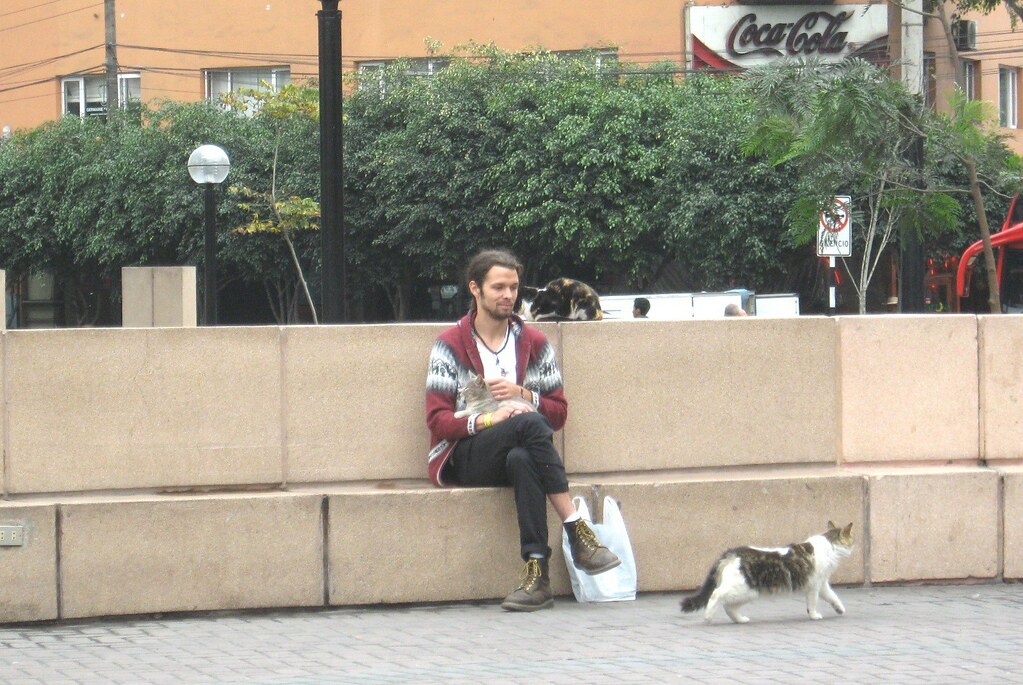
The main square of Miraflores has a colony of cats living in its flower beds, fed and neutered by volunteers, sat on by half the district, and famous enough that people fly in and go straight there from the airport.
Where to find cats in Parque Kennedy: Parque Kennedy and the adjoining Parque 7 de Junio, the central square of Miraflores, Lima, by the church and the Óvalo. When: Late afternoon and evening, when the park fills and the cats come out for the feeders. Any month; Lima is grey but mild. Why here: The most famous park cats in South America, in the safest, most walkable square in Lima.
The short version
- Where
- Parque Kennedy and the adjoining Parque 7 de Junio, the central square of Miraflores, Lima, by the church and the Óvalo
- When
- Late afternoon and evening, when the park fills and the cats come out for the feeders. Any month; Lima is grey but mild
- How long
- An hour on a bench. Longer if a cat chooses you
- What it costs
- Free. The volunteers take donations and sell things at a stall on weekends
- Why here
- The most famous park cats in South America, in the safest, most walkable square in Lima
What to bring
- Five in the afternoonThe park is at its best when the office workers come through and the feeders arrive. The cats know both.
- Soles for the volunteersGatos del Parque Kennedy, the volunteer group, neuters, vaccinates and feeds the colony on donations and a weekend stall.
- Nothing of your ownThe volunteers feed on a schedule. A tourist’s tuna on the flower bed is a mess for the gardeners and a fight for the cats.
- A bench and timeThe cats pick you. Sit still and one will arrive.
Why there are cats everywhere
A park in a good neighbourhood became a dumping ground for unwanted cats, and the neighbourhood decided to keep them.
Parque Kennedy is the heart of Miraflores, the seafront district of Lima where most visitors stay: a square with a church at one end, the Óvalo roundabout at the other, flower beds, a small amphitheatre, and an artisans’ market in the evenings. In the nineteen-nineties people started leaving cats there, because it was green and safe and somebody would feed them. Somebody did. By the two-thousands there were well over a hundred, and the district had a decision to make.
It kept them. A volunteer group, Gatos del Parque Kennedy, formed to trap, neuter, vaccinate and feed the colony and to find homes for the friendly ones, and the municipality, after some argument, let them. The cats became a feature: on the benches, in the flower beds, on the church steps, sat on by office workers at lunch and photographed by everyone. The colony is smaller now than it was, which is what neutering does, and the ones that remain are the residents.
It is one of the easiest cat encounters on this site. Sit on a bench in the late afternoon and wait. A cat will come. The volunteers’ stall is there at weekends; give them something. And then walk down to the Malecón, the cliff-top park along the sea, where the cats are fewer and the view is the reason Lima is worth it.
The walk
Not a walk so much as a sit. The park, the church steps, the flower beds, and then down to the Malecón for the sea.
- From Jorge Chávez airportTaxi or an airport express bus to Miraflores60 minBook the taxi inside the terminal. Lima traffic is real; allow more.
- From The historic centreMetropolitano bus to Miraflores35 minThe dedicated bus line is the fastest way through the city.
- From BarrancoWalk along the Malecón40 minThe cliff-top path from the artists’ district is the best walk in Lima.
Parque Kennedy
The main square. Cats in the flower beds, on the benches and on the low walls around the amphitheatre. Sit down. The volunteers’ stall is on the church side at weekends.
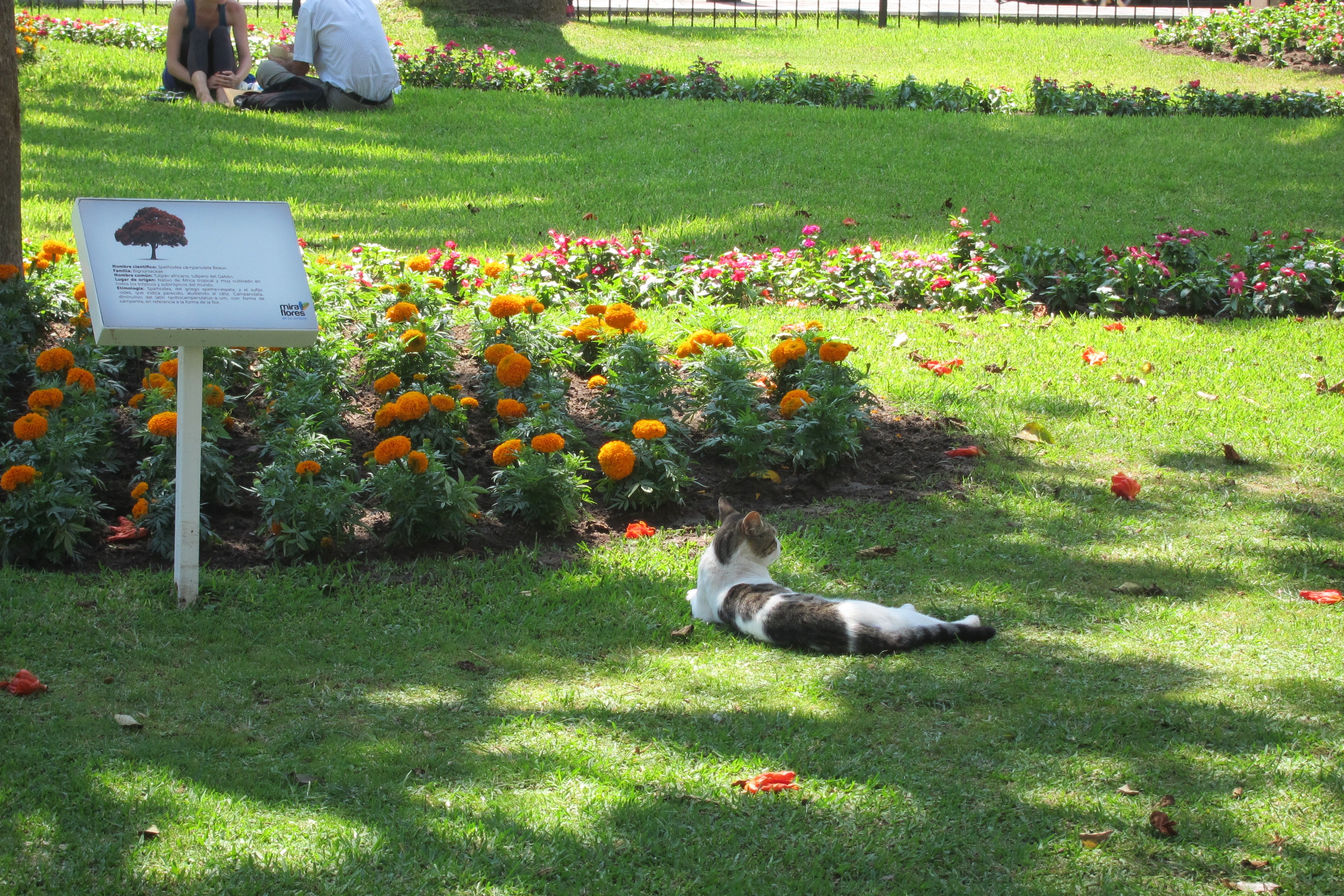
In the park. Residents, in the Miraflores sense.Stvabod, CC BY-SA 3.0 The church steps
The parish church of Miraflores at the top of the park. Cats on the steps and in the beds beside it, in the sun in the morning. The artisans’ market sets up along here in the evening.
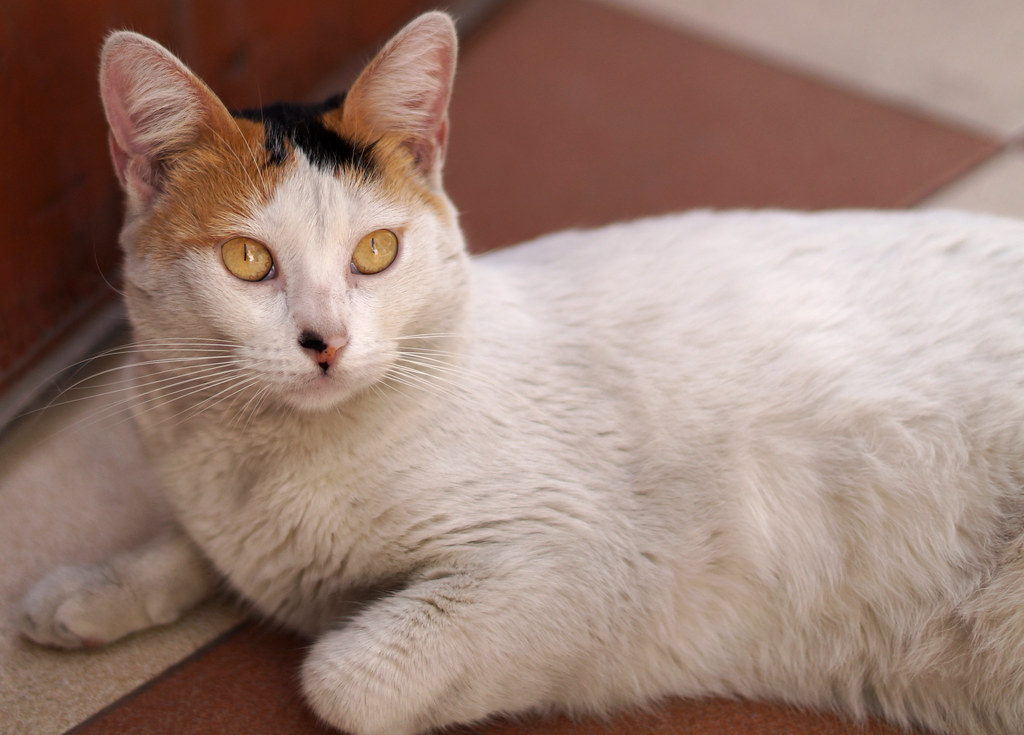
A calico on the tiles. Somebody named her.Thomas Flores, CC BY-SA 2.0 The Malecón
Ten minutes west down Avenida Larco to the cliff-top parks along the sea, the paragliders, and the Larcomar mall built into the cliff. Fewer cats, more Pacific. The evening light is the reason.
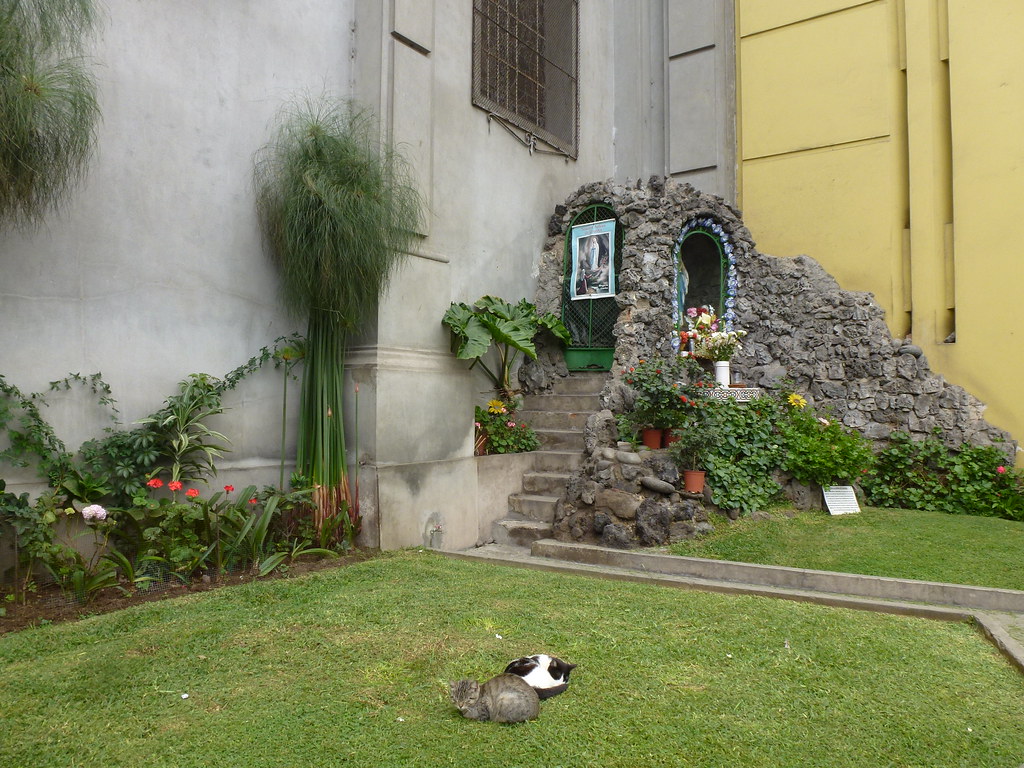
Miraflores. The park is behind, the sea ahead.tacowitte, CC BY 2.0
Same numbers as the list. Worth keeping open on your phone.
The cats you will meet
Park cats: every colour, well fed, mostly neutered and vaccinated by the volunteers, and used to laps. Sociable in the way only a cat that has been sat with by ten thousand strangers is. Calm, plump, and choosy.
Bench cats
On and under the benches, waiting for a lap.
The ambassadors. They pick.
Bed cats
In the flower beds, asleep.
Do not go in after them. The gardeners have opinions.
Step cats
On the church steps in the morning sun.
Quieter. Photograph from the path.
Everybody says The cats are abandoned and nobody looks after them.
Actually They were abandoned, most of them, and the volunteers have looked after them for twenty years: neutered, vaccinated, fed, and rehomed where possible. A donation at the stall is the way to help.
How not to be the annoying one
- Do not feed. The volunteers do, on a schedule, and the gardeners clean up.
- Stay out of the flower beds, even for a photograph.
- Do not take a cat. The volunteers have an adoption process and it works.
- Give at the stall. It is where the vaccines come from.
- Miraflores is safe; Lima is a big city. Keep your phone in your pocket when the cat is in your lap.